

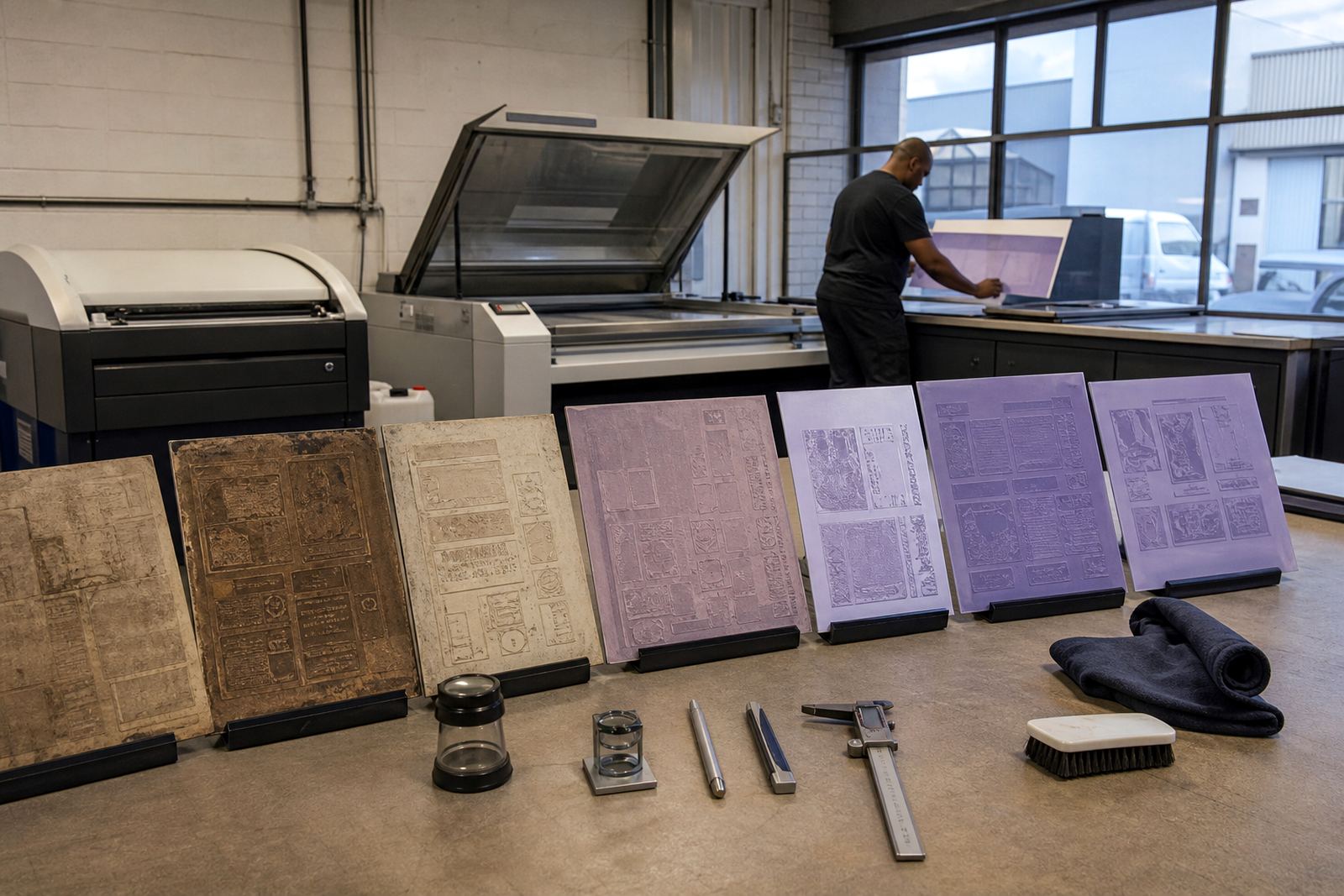
2007: Starting with plate-making basics in Midrand
Flexo Printer Plates began trading in 2007 in Midrand, Gauteng, with a clear focus on flexo photopolymer plate-making for label and packaging printers. The first jobs were handled with a hands-on approach, where every file, every line screen and every mount had to be checked properly before plates went out the door. In a trade where a small error can affect an entire press run, that care mattered from the start.
Those early years were shaped by the day-to-day realities of South African printing. Customers needed plates that could hold detail, print clean solids and stand up to repeat use. They also needed a supplier that understood courier collections, short notice changes and the pressure that comes with tight production schedules. That practical mindset set the tone for the years that followed.
2008 to 2011: Building a steady prepress routine
As more printers started placing repeat work, the process became more structured. Artwork preflight, file checking and imposition planning became part of the normal workflow, not just an added extra. This helped customers avoid avoidable plate problems such as missing strokes, poor image placement or artwork that did not suit the press layout.
During this period the team also became more consistent with screening support and proof comparison. Printers in Johannesburg, Pretoria and the East Rand often needed a second set of eyes before approval, especially on label jobs with fine text or packaging work with tight registration. The point was not to overcomplicate things, but to catch issues early and keep production moving. That habit has stayed in place ever since.
- Added more structured file checking and preflight support
- Improved layout planning for repeat and multi-version jobs
- Expanded support for printers working on labels and packaging
2012 to 2015: Growing with label and packaging printers
By 2012 the business was handling a wider mix of print work, from small label runs to larger packaging jobs. The growth came from understanding what printers actually need on press: reliable plates, sensible advice and careful preparation before delivery. For customers running different substrates, inks and cylinder setups, the right plate specification could make a real difference to print quality and consistency.
This was also the period when plate trimming, plate labelling and remake support became more important. In a busy print environment, plates need to be organised clearly so the right set reaches the pressroom without confusion. A missing label or a wrongly packed job can hold up a shift, especially when load-shedding or a late delivery has already put pressure on the day. The team learned to plan for those realities, not ignore them.
- Supported a broader range of label and packaging jobs
- Introduced clearer plate labelling and packing routines
- Handled remake support when artwork or production changes came through
2016 to 2019: Strengthening the production team and dispatch flow
As demand became more regular, the team behind the service also became more specialised. Sibusiso Mthembu continued to guide the business as Managing Director, with Ayesha Naidoo leading production, Pieter van Wyk handling prepress checks, Lerato Molefe supporting clients, Morne Jacobs managing plate mounting and Zinhle Dlamini coordinating logistics. Each role added a bit more control to the process, which matters when jobs need to move quickly between checking, making, mounting and dispatch.
These years were about tightening the full chain from enquiry to delivery. Technical job advice became a normal part of the service, especially when customers were working with new artwork, changing repeat orders or unusual press requirements. The team also refined dispatch packing and collection coordination so jobs could move by courier or collection with fewer delays. It was not flashy work, just careful work done properly.
- Built a clearer division of labour across production and logistics
- Improved dispatch packing for courier delivery across South Africa
- Gave printers more practical technical advice on job setup
2020 to 2022: Staying reliable through difficult operating conditions
Like many South African businesses, these years brought extra pressure around power interruptions, transport delays and changing production plans. For flexo printers, that often means work has to be scheduled more carefully, with plates checked, packed and sent at the right time to avoid lost machine time. Flexo Printer Plates responded by staying organised and keeping communication direct, so customers knew what was happening with their jobs.
During this period, the service around proof comparison, plate remakes and collection planning became even more valuable. Printers from Durban to Cape Town often needed deliveries coordinated around their own shift timing and the realities of local logistics. Midrand remained the operating base, but the service area kept widening as more customers relied on courier delivery rather than in-person visits. It showed that a steady process matters just as much as equipment.
2023 to today: A Midrand base serving printers nationwide
Today, Flexo Printer Plates continues from its Midrand, Gauteng base with the same practical focus it had in 2007, only with a more refined service structure. The company now supports label and packaging printers across Johannesburg, Pretoria, the East Rand, the West Rand, Durban, Cape Town and Gqeberha, with courier delivery arranged for customers further afield as well. The work still centres on photopolymer plate-making, but the service around it has become broader and more responsive.
Current services include plate making, artwork preflight, file checking, imposition planning, screening support, proof comparison, plate trimming, plate labelling, remake support, dispatch packing, collection coordination and technical job advice. That mix reflects how printing works in practice: a good plate is only part of the job, and the rest depends on getting the details right before it reaches the pressroom. The business has grown by keeping that simple truth in view, year after year.
From the first year of trading to today, the story has been one of steady improvement, careful handling and strong relationships with printers who need dependable support. The equipment may change, and the job mix may shift from one week to the next, but the standard has stayed the same. Get the preparation right, pack it properly, send it on time, and the printer can get on with the run.