Project brief from Bellville
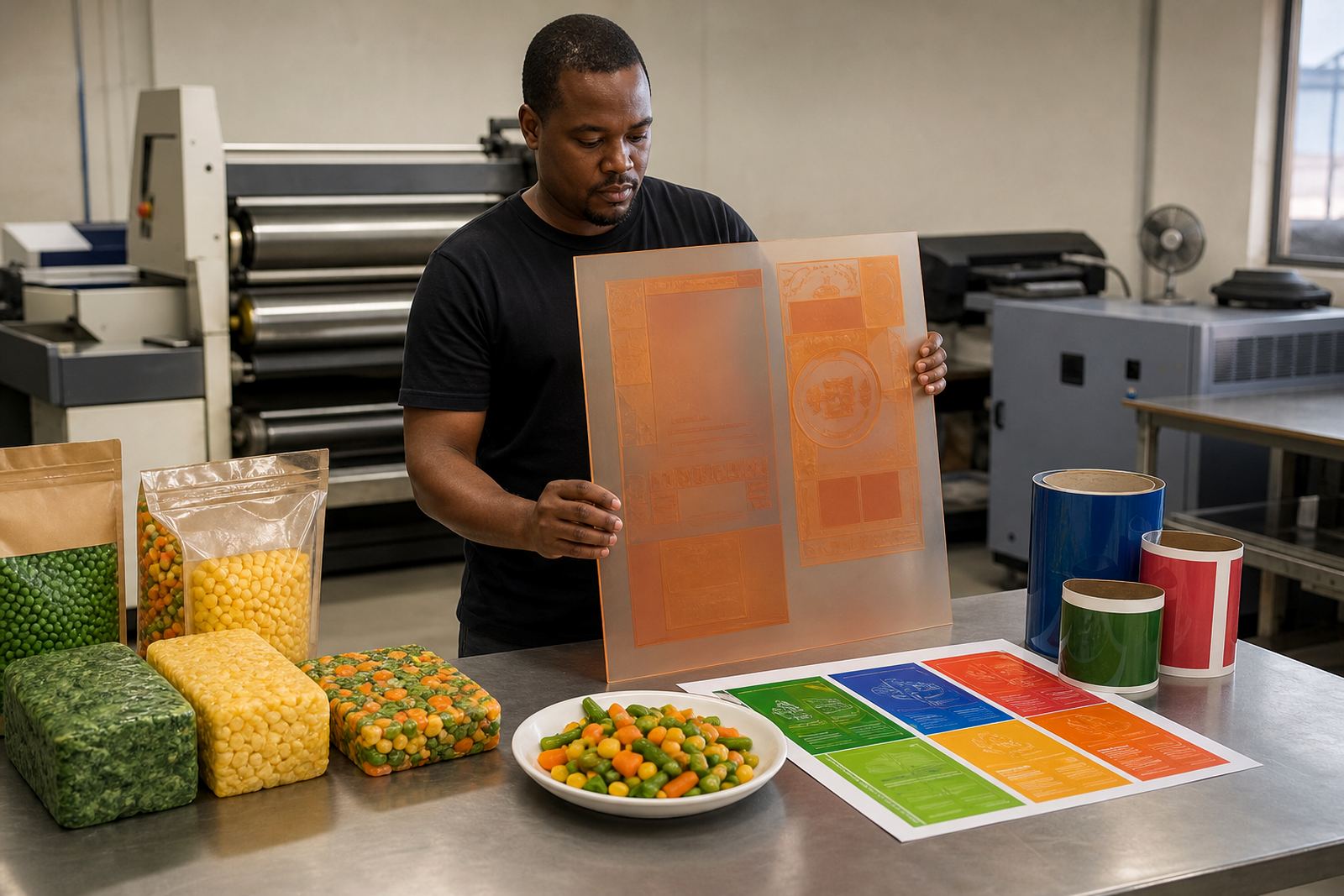
The brief came from a Bellville frozen foods operation that needed labels and packaging plates for a range of pack sizes, with artwork that had both compact ingredient copy and strong shelf appeal. The work had to support barcode areas, legal text, batch coding space and the sort of branding that still reads well once a carton is wrapped, handled and stored in cold conditions.
The client wanted a practical plate set for regular production runs, not something that would need constant correction on press. That meant checking line weights, small reversed text, registration marks and the balance between image detail and solid areas. We also had to plan for a print environment where condensation, cold storage and handling can all affect how a label performs after application.
- Client type: frozen food label and packaging printer
- Location: Bellville, Western Cape
- Use case: ingredient labels, outer packaging and branding panels
- Main need: fine detail, colour consistency and clean repeat work
Constraints we had to work around
Frozen food work brings a few practical limits. Artwork is often crowded because the legal copy has to fit alongside brand panels, barcodes and pack information. On top of that, the print must hold up in damp conditions and still read clearly after handling in a busy warehouse or cold room. The plate work therefore needed accurate reproduction of small type and sharp edges, with no softening in key areas.
We also had to allow for the way the job would be run by a flexographic printer. If a plate is too aggressive in the fine detail, small text can fill in. If the screening is too light, the brand colour can look uneven. The balance was especially important for the label face, because the customer needed a neat finish on compact pack sizes where every millimetre counts.
- Compact ingredient text with tight space allowance
- Registration sensitivity on small label layouts
- Need for clean solids and controlled highlights
- Pack use in cold, humid handling conditions
What we supplied and checked
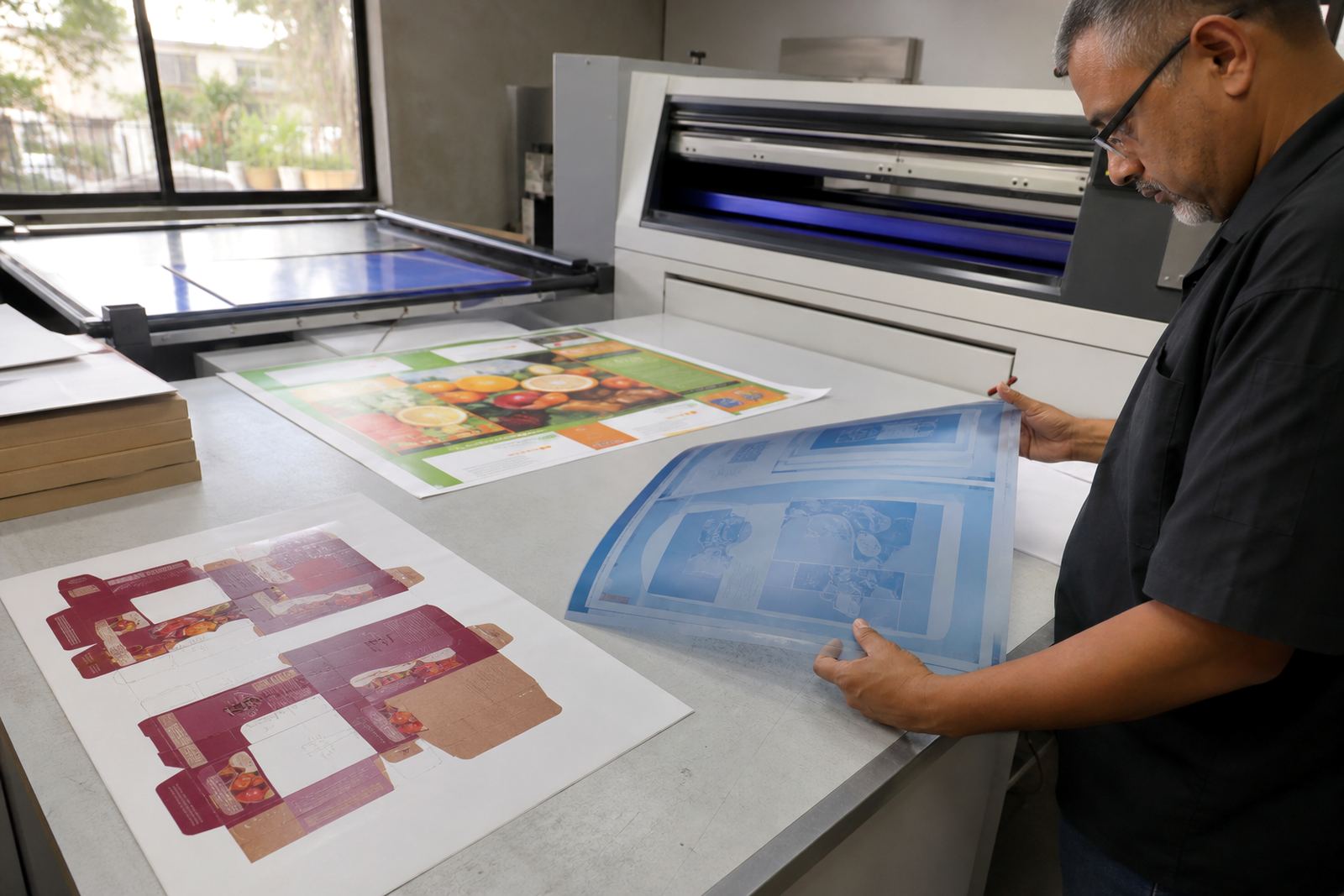
We handled the job as a full plate-making task, starting with artwork preflight and file checking. That meant checking image resolution, font integrity, overprint settings, bleed, trapping and the placement of all practical marks. We then worked through imposition planning so the plates would fit the press setup properly and the printer could keep a stable run without extra adjustments.
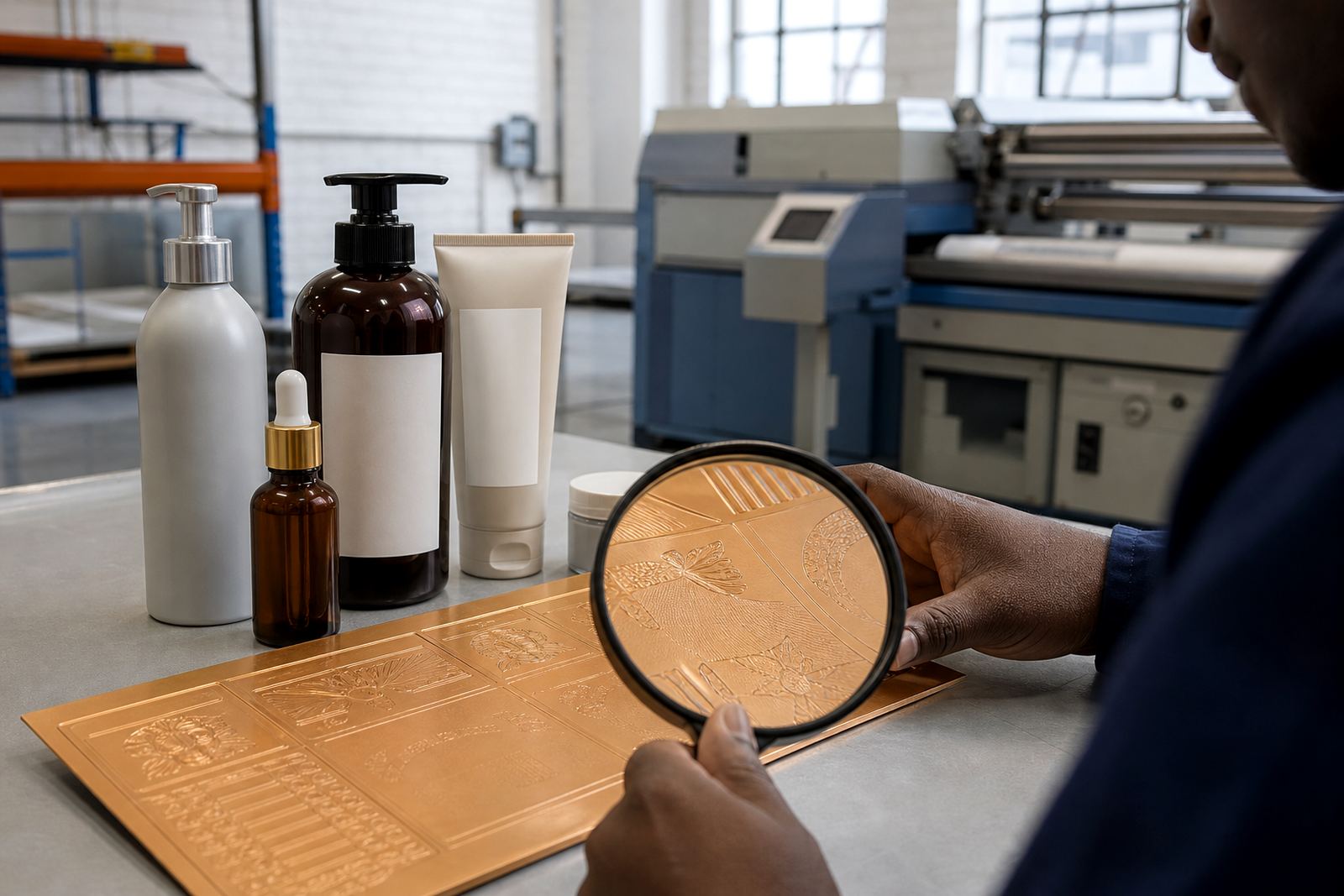
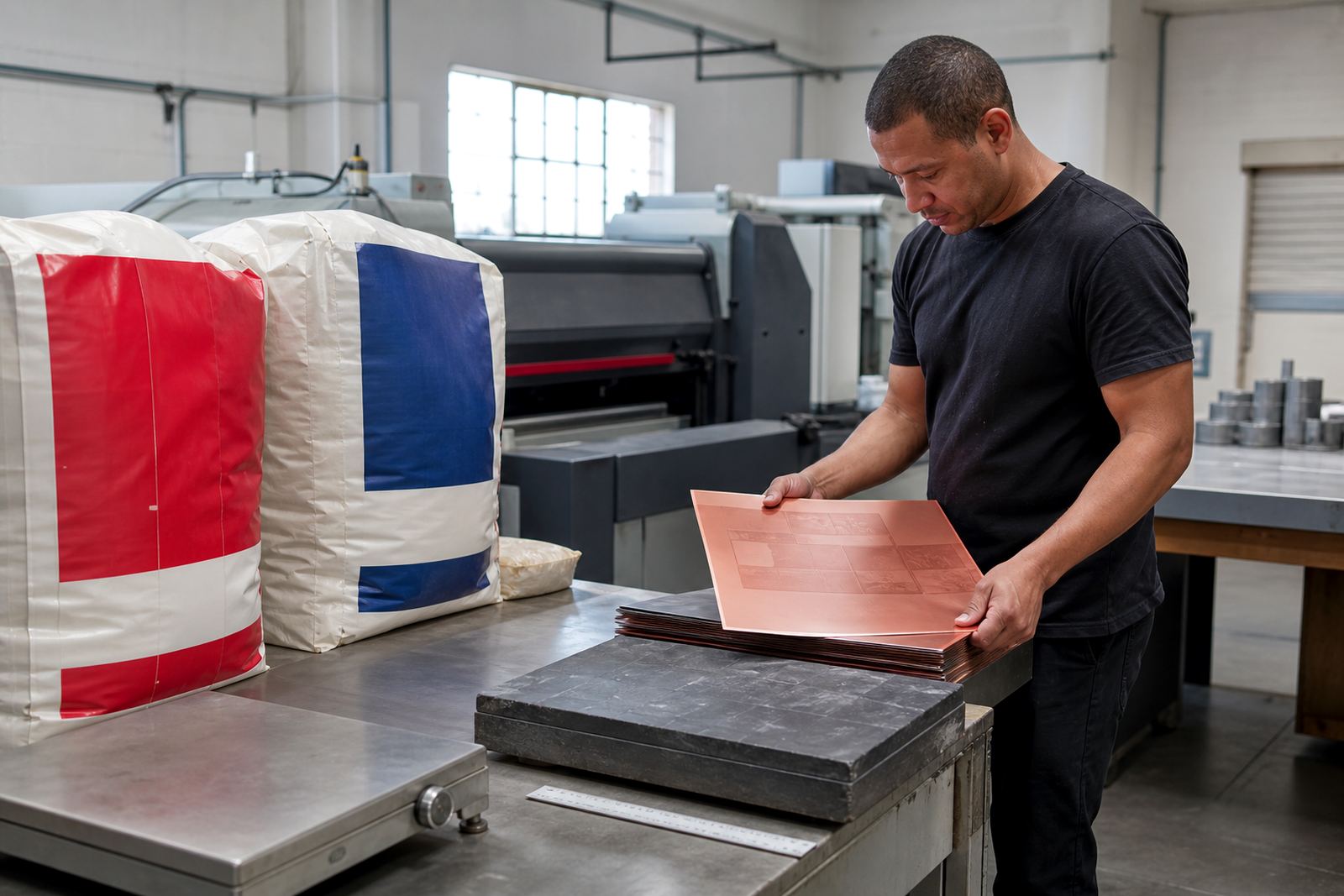
After the checks, we produced the photopolymer plates, trimmed them to the required size and labelled each item clearly for the press room. Remake support was kept available in case a revised panel or minor artwork correction came in later. The dispatch packing was done so that plates could travel safely by courier from Midrand to Bellville without edge damage or dust contamination.
- Artwork preflight and file checking
- Imposition planning for press layout
- Screening support for fine type and solids
- Plate trimming, plate labelling and dispatch packing
Timeline and production flow
The project ran over a measured 2 week production window, which gave enough time for review, plate preparation and final packing. That schedule worked well because the artwork had a number of small details that needed proper checking before cutting. It also allowed us to coordinate with the client on the final set, so the press team received a clear pack with no guesswork at the point of use.
Our process moved in a straightforward order. First came the files, then the prepress review, then plate output, trimming, labelling and courier dispatch. Because the job was for labels and packaging, the details around orientation and plate identification mattered as much as the plate surface itself. A clear handover saves time on press and reduces the chance of mix ups when multiple SKUs are on the same schedule.
Results on press and on shelf
The finished plates supported crisp small text, better control of the ingredient area and stronger brand presentation across the pack range. The printer could run the labels with less second-guessing because the plate set was set up for the job from the start. On frozen food packaging, that matters. If the label looks uneven or the copy is hard to read, the whole pack loses trust quickly.
The other result was consistency. Once a label format has been set properly, it is easier to repeat the same look on the next run, even when the line is busy. For the Bellville job, the plates were prepared with that repeat use in mind, so the client could keep the same standard across reprints and related pack versions.
- Sharper ingredient copy and cleaner fine detail
- Better brand colour control on compact labels
- Clearer plate identification for repeat production
- Less time spent sorting plates at press stage
What we would do again for a similar job
For another frozen label project, we would follow the same practical steps. Start with file checking early, keep the artwork review tight, and make sure the plate layout matches the press plan before output begins. That approach suits food labels where small copy, barcode space and brand graphics all have to sit together without crowding.
We would also keep the packaging and dispatch process as simple as possible. Plates should leave the premises clearly labelled, securely wrapped and ready for immediate use. In South Africa, where courier handovers can move through different climates and depot conditions, the packing matters just as much as the plate finish. The aim is always the same: deliver a set that reaches the printer clean, readable and ready for production.
Key facts
| Project type | Flexo photopolymer plates for frozen food labels and packaging |
|---|---|
| Client location | Bellville, Western Cape |
| Scope | Artwork preflight, file checking, imposition planning and plate output |
| Print requirements | Compact ingredient text, branding panels and barcode areas |
| Production window | 2 weeks |
| Dispatch | Courier delivery from Midrand to the client |