What the Durban pouch job needed
The brief came from a Durban packaging printer working on pouches with large printed panels, repeated brand elements and tight alignment requirements across the front, back and seal areas. The main concern was keeping the artwork stable through plate-making so the finished print would hold registration across the full run, including the wider image zones where movement shows quickly.
The job also had to suit flexo production on packaging film, where small distortions can become visible once the material is under tension on press. We were asked to check the supplied files, compare the final layout against the proof material, and prepare the photopolymer plates with the correct orientation and labelling for the press side.
- Job type: pouch graphics for packaging print
- Location: Durban
- Print use: flexo packaging production
- Main challenge: broad image areas and alignment control
Artwork checks before plate-making
Before any plate work began, we carried out artwork preflight and file checking to pick up issues that could affect the press run. That included panel placement, overprint set-up, bleed allowance, knockout areas and any elements that sat close to folds, seals or trim lines. On pouch work, those details matter because a small shift can affect the whole pack visually.
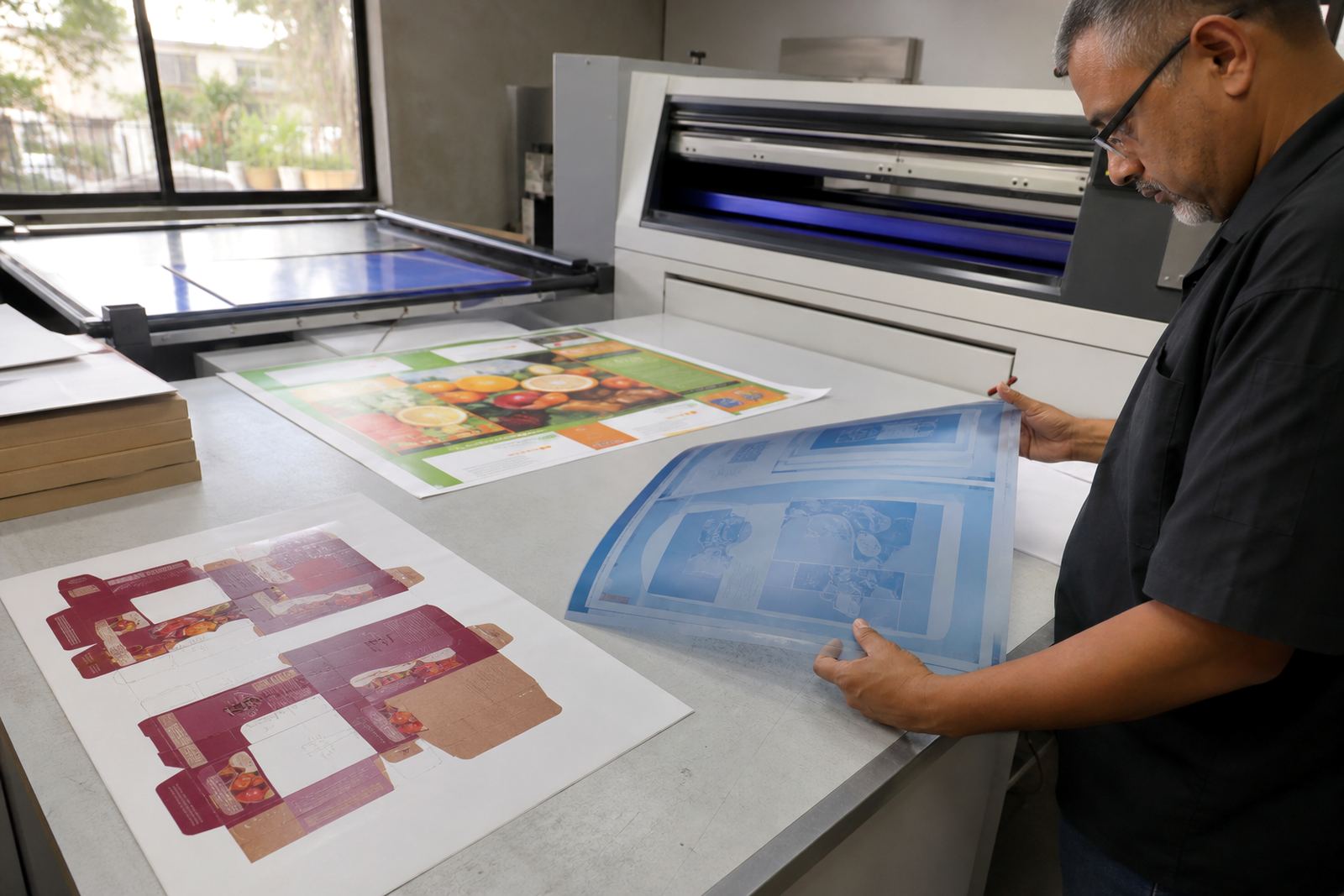
We also looked at screen builds, solid areas and fine type to make sure the artwork could reproduce cleanly at production size. Where needed, we gave technical job advice on image scaling and panel spacing, then compared the supplied proof against the production files so the printer could sign off with better confidence. It saved time later, and reduced the risk of avoidable remake work.
- Artwork preflight for print readiness
- File checking for panels, bleeds and key lines
- Proof comparison against supplied reference material
- Technical advice on repeat and image placement
How we prepared the plates
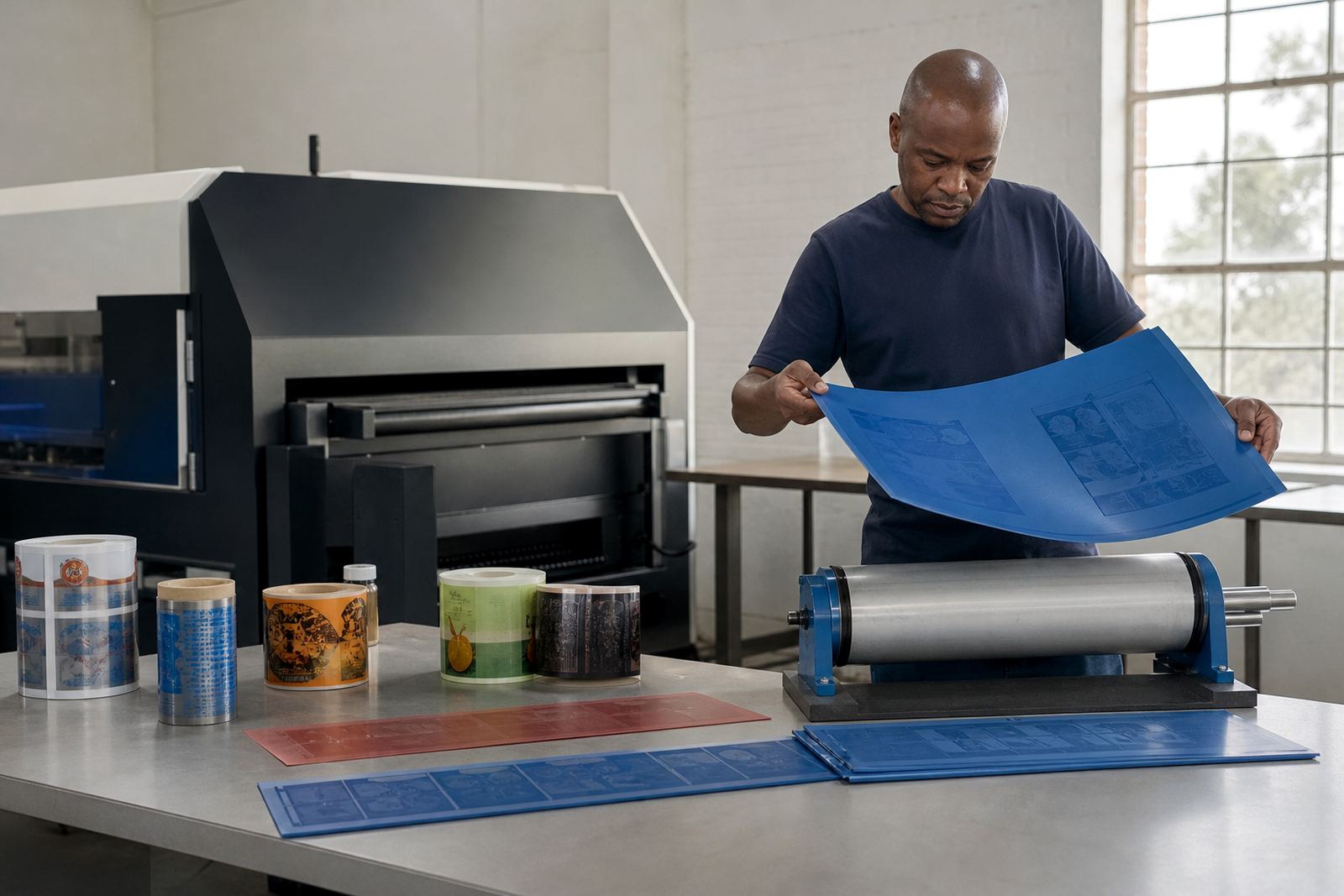
The photopolymer plates were made for the pouch layout with attention to clean solids, sharp detail and even transfer across the broad printed areas. We followed the approved layout, checked imposition planning for the press arrangement, and prepared the plates with proper trimming and labelling so the printer could identify each position easily on site.
Plate mounting support was included where the job needed careful fit-up, especially on areas that would show register variation quickly. We kept the workflow practical and direct, from plate making through to packing, with each set checked before dispatch. For this kind of work, the goal is not only a good plate, but plates that are easy to use on press under real production conditions.
- Photopolymer plate-making for pouch graphics
- Imposition planning for efficient press set-up
- Plate trimming and labelling for easy handling
- Plate mounting support where required
Constraints that shaped the job
The artwork had broad image blocks, which can show banding, pressure marks or slight alignment drift if the plate work is not handled properly. There were also areas with repeated design features that needed to stay even from one panel to the next. That meant paying close attention to proof comparison, registration marks and the edge details that frame the pouch once sealed.
Like many packaging jobs in Gauteng and KZN, timing around the press schedule mattered. The Durban team needed the plates packed securely and sent by courier, so dispatch packing and collection coordination formed part of the job. We also kept the plates prepared for handling in local conditions, where heat, dust and coastal humidity can affect storage if the pack is left open for too long.
- Broad image areas with visible registration risk
- Repeated elements needing panel-to-panel consistency
- Courier dispatch to Durban
- Practical packing for handling and storage
Timeline and handover
The job ran over a focused two week period from first file review to final dispatch. The first stage covered artwork checking, proof comparison and sign-off queries. The second stage covered plate production, trimming, labelling and packing. Once the plates were complete, we arranged collection coordination and sent the set to Durban with the required job notes.
That timeline worked because the printer had clear artwork points early and we kept the technical steps in sequence. There was no back-and-forth on avoidable layout issues, which helped keep the job moving. For a packaging printer, that sort of orderly handover matters because the press room needs plates that arrive ready to go, not plates that need extra sorting before mounting.
- Week 1: preflight, file checking and proof comparison
- Week 2: plate-making, trimming, labelling and dispatch
- Delivery: courier handover to Durban
- Output: press-ready set with clear identification
Result on press and what we would repeat
The finished plates were set up for clean transfer on the pouch artwork, with the key visual areas holding together better across the pack. The printer had a clear plate set, easier handling on the press side, and a result that matched the supplied intent more closely than a rushed setup would have allowed. The work was especially useful on the broad image zones, where consistent preparation makes a visible difference.
If we were doing the same job again, we would follow the same approach: early file checking, careful proof comparison, clear plate labelling and secure courier packing. For pouch work in particular, we would also keep a close eye on seal areas, side registration and any artwork that runs near the edges, because those are the places where small errors tend to show first.
- Cleaner plate handling for the press team
- Better control on broad printed areas
- Clearer job set-up for mounting and run-off
- Same process recommended for similar pouch jobs
Midrand support for Durban and other print towns
Although this project was for Durban, the work was handled from our Midrand base and sent out across South Africa by courier when needed. We support label and packaging printers in Johannesburg, Pretoria, Durban, Cape Town and Gqeberha, as well as East Rand and West Rand customers who need practical plate support without fuss.
Clients usually reach us through the enquiry form on our contact page when they need plate making, file checking, screening support, remake support or job advice. For pouch graphics, label runs and other packaging work, the same basics still apply: accurate files, sensible planning and plates that are prepared to suit the real press conditions.
- Midrand base with courier delivery nationwide
- Support for label and packaging printers
- Enquiry form for job requests and follow-up
- Services include remake support and technical advice
Key facts
| Project | Durban Pouch Graphics |
|---|---|
| Client type | Packaging printer |
| Town | Durban, KwaZulu-Natal |
| Process | Flexo photopolymer plate-making for pouch artwork |
| Timeline | 2 weeks |
| Fulfilment | Courier delivery from Midrand to Durban |