
What the Pinetown brief asked for
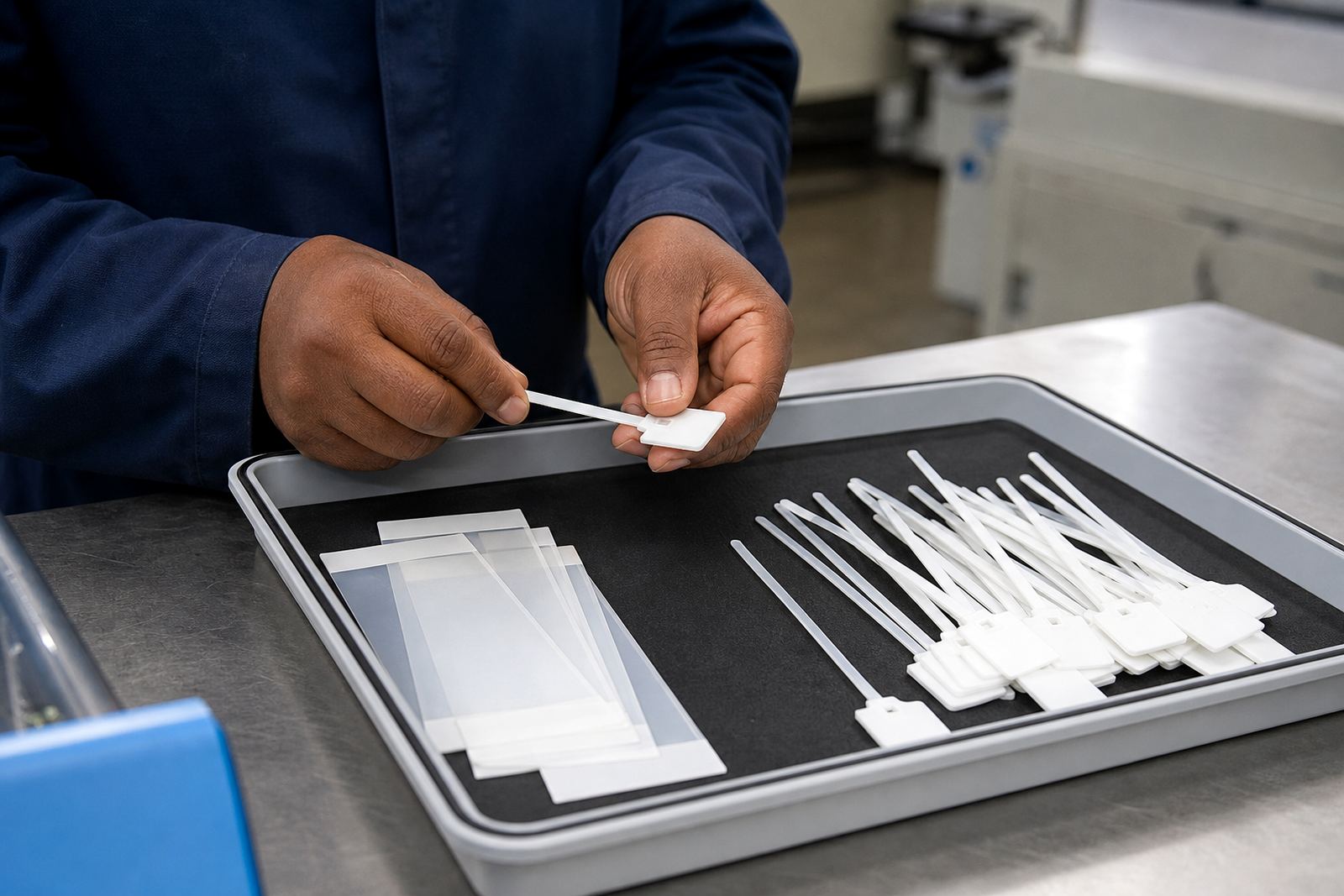
The request came from a label and packaging printer in Pinetown working on security seals for narrow-format application. The print area was small, but the information on the label still had to stay sharp enough for inspection and clear enough for day-to-day handling. The brief focused on stable reproduction, good edge definition, and a plate that would hold fine type without filling in during press runs.
The job also needed practical handling on the press side. The components were compact and the print layout left little room for error, so we had to keep image placement accurate and make sure the plate size matched the equipment setup. That meant careful preflight, line-by-line file checking, and attention to how the artwork would sit once mounted.
Artwork checks and plate-making approach
We started with artwork preflight and file checking, looking for the usual trouble points on security labels: thin strokes, tight spacing, reversed text, small registration marks, and any elements that could close up when transferred to plate. Where needed, we flagged adjustments before plate production so the printer would not be fighting avoidable issues on press.
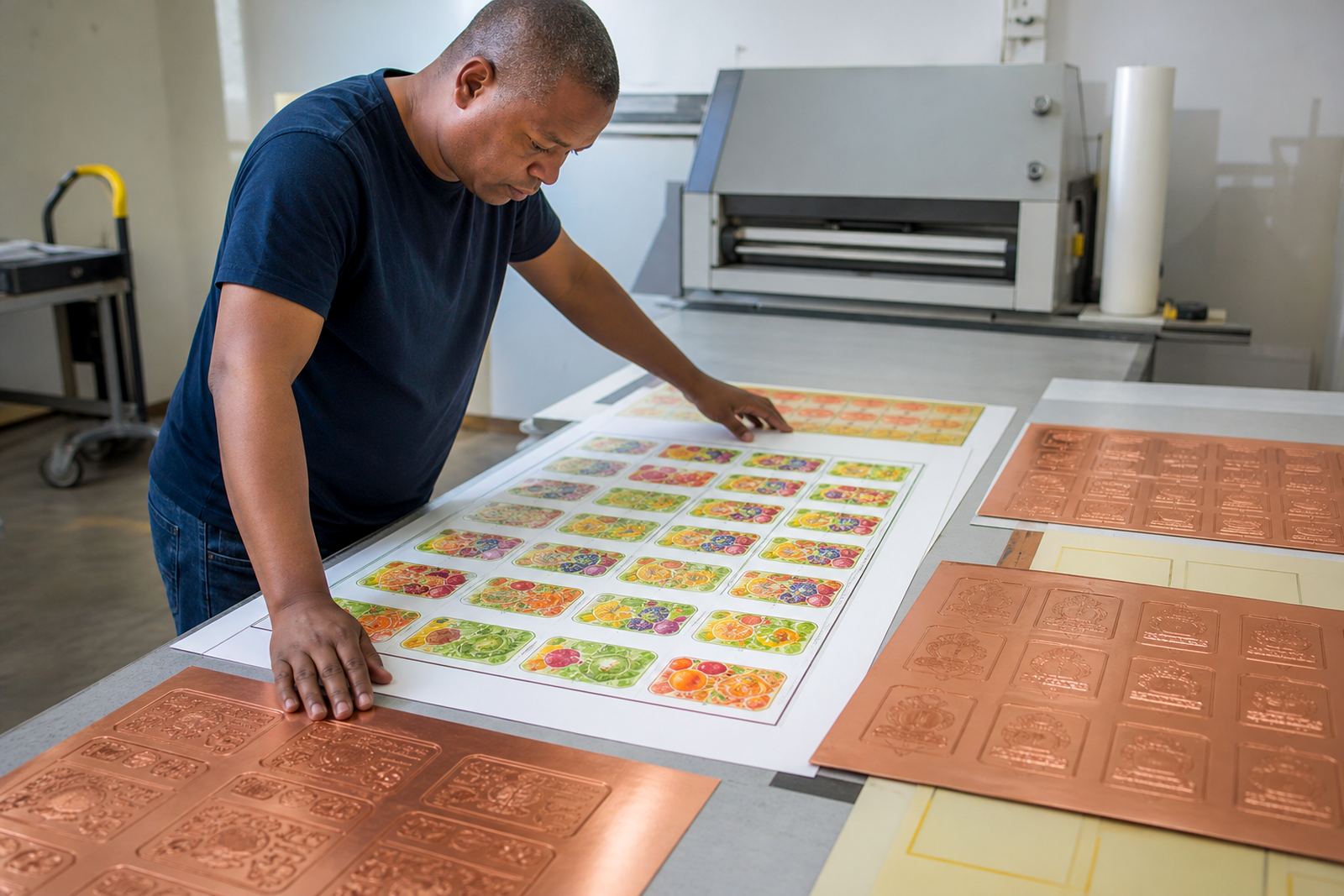
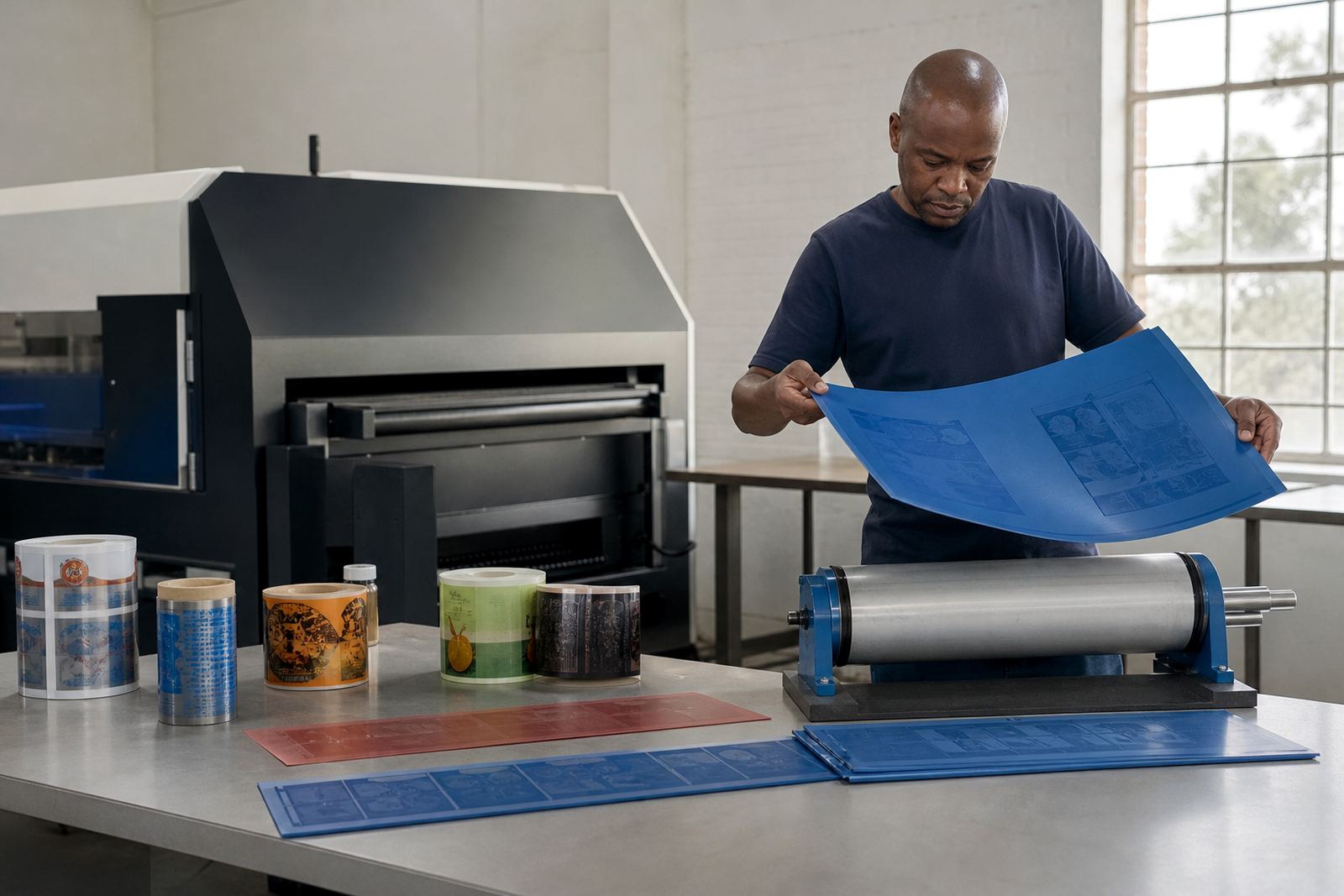
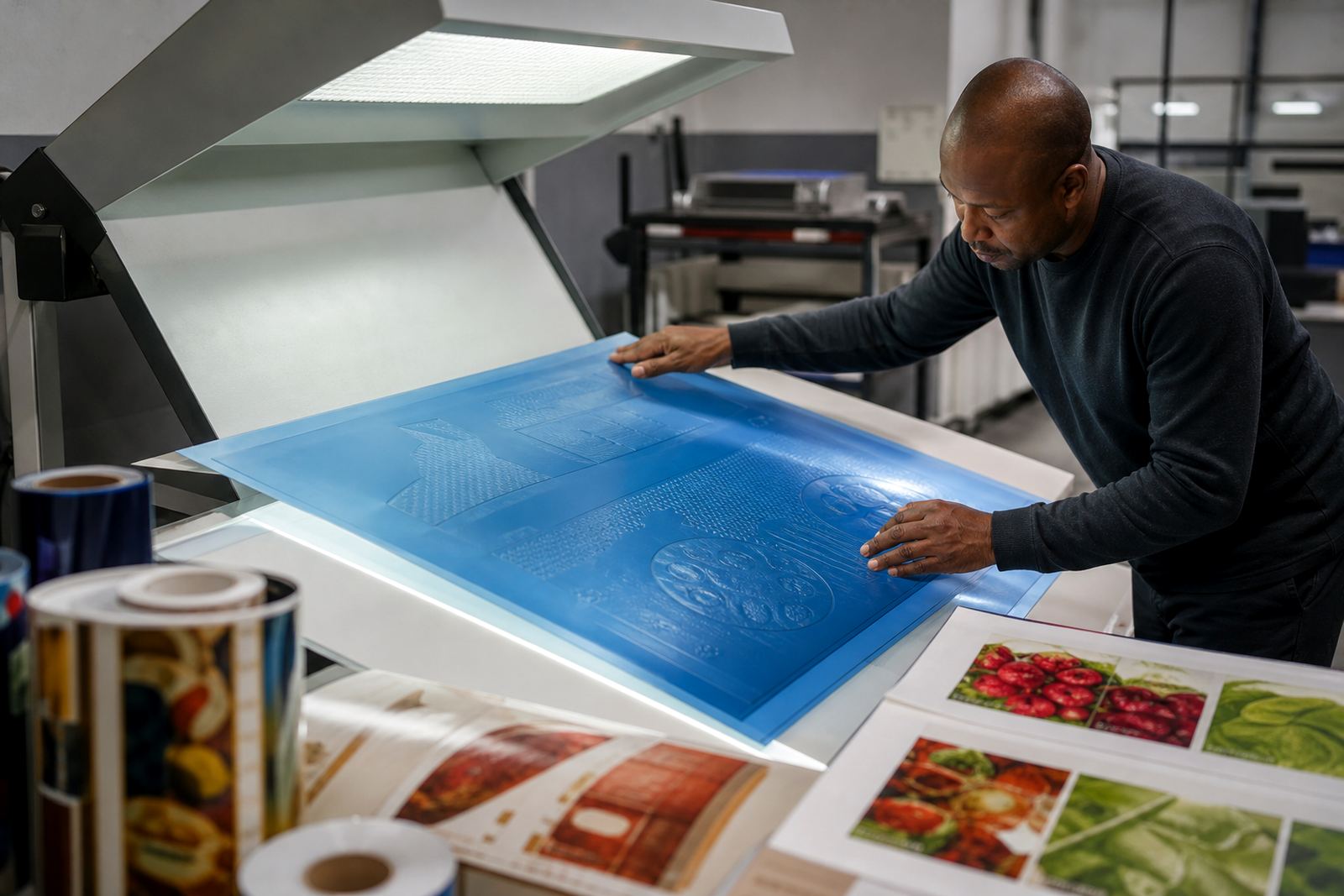
For this kind of work, plate-making is not just about making an image visible. It is about maintaining structure at small sizes and keeping the print consistent across the sheet or roll. We used a production method suited to flexo photopolymer plates, with screening support and proof comparison where required, so the final plate set matched the intended artwork as closely as possible.
- Artwork preflight for small type and fine rules
- File checking for image clarity and registration
- Imposition planning to suit the press layout
- Screening support for controlled tonal areas
- Proof comparison before plate output
Plate specs for narrow security components
The plates had to work on narrow components where a small shift can show up immediately on the finished label. We therefore paid close attention to plate trim, label positioning, and the mounting sequence. The aim was simple: a clean, well-finished plate that would sit properly on the press and reproduce stable detail without extra handling on site.
The label artwork included compact graphics and tight text blocks, which meant the plate surface had to stay even and the edges had to be clean. We also prepared the job for practical dispatch, with protective packing so the plates would arrive ready for mounting. With courier movement between Midrand and Pinetown, that packing matters more than people sometimes think, especially when a job has to stay flat and free from dust.
- Photopolymer flexo plates for narrow-format security labels
- Compact artwork with fine type and small graphic elements
- Plate trimming and plate labelling completed before dispatch
- Protective packing for courier transport
- Suitable for label and packaging press setups
Timing from approval to dispatch
The project ran over a short production window of two weeks from artwork review to dispatch. That gave enough time to check the files properly, confirm the layout, complete the plate-making, and carry out final packing without rushing the job. It also allowed room for a practical round of proof comparison before release.
Once the artwork was signed off internally, we moved through production and packing in sequence. The job was then sent out through our courier process from Midrand to Durban, with delivery support for KwaZulu-Natal as well as the main centres in South Africa. For a security label run, that kind of simple handover is important because the printer wants plates that are ready to go, not plates that need extra sorting at the loading bay.
What the printer needed from the finished plates
The final result had to be practical on press. The plates needed to hold the small security elements clearly, give the operator a stable starting point, and keep the image clean enough for repeat use. The feedback from the job was that the plates mounted well and the fine details reproduced as expected, with no unnecessary delay on the setup side.
For this sort of work, success is usually measured by what does not happen: no blurred edges, no poor fit on the mount, no confusion over labelling, and no unnecessary remake. The printer could move forward with confidence because the plates were prepared with the actual component size and press needs in mind, not just the artwork image on its own.
- Stable reproduction on narrow label components
- Clear fine detail for security marking
- Easy plate identification during setup
- Clean dispatch for immediate use on receipt
What we would repeat on a similar job
If this same brief came in again, we would follow the same process: preflight first, then plate production, then careful trim and packing before courier dispatch. Security labels tend to punish rushed work, so the method needs to stay disciplined from the first file check through to the final label on the plate.
We would also keep the same focus on narrow artwork, because that is where problems usually show up. Fine text, compact symbols, and tight spacing all need proper handling before output. A small adjustment at prepress stage is far better than trying to fix a press issue later and losing time, especially when a printer is balancing load-shedding, overtime, and delivery schedules in the same week.
From our Midrand base, we continue to support label and packaging printers in Gauteng, KwaZulu-Natal, and the major centres across South Africa. Clients can send enquiries through the contact page form, and we handle the job from there with the practical checks and packing needed for the work to arrive ready.
Key facts
| Project | Pinetown security seals for a label and packaging printer |
|---|---|
| Work type | Flexo photopolymer plate-making with prepress checks |
| Artwork challenge | Compact graphics and stable reproduction on narrow components |
| Timeline | 2 weeks from file review to dispatch |
| Service area | Midrand production with courier delivery to Pinetown and nationwide |
| Key handling | Artwork preflight, plate trimming, labelling, packing, and dispatch coordination |