
Food Label Jobs Need Clean Detail and Steady Ink Control
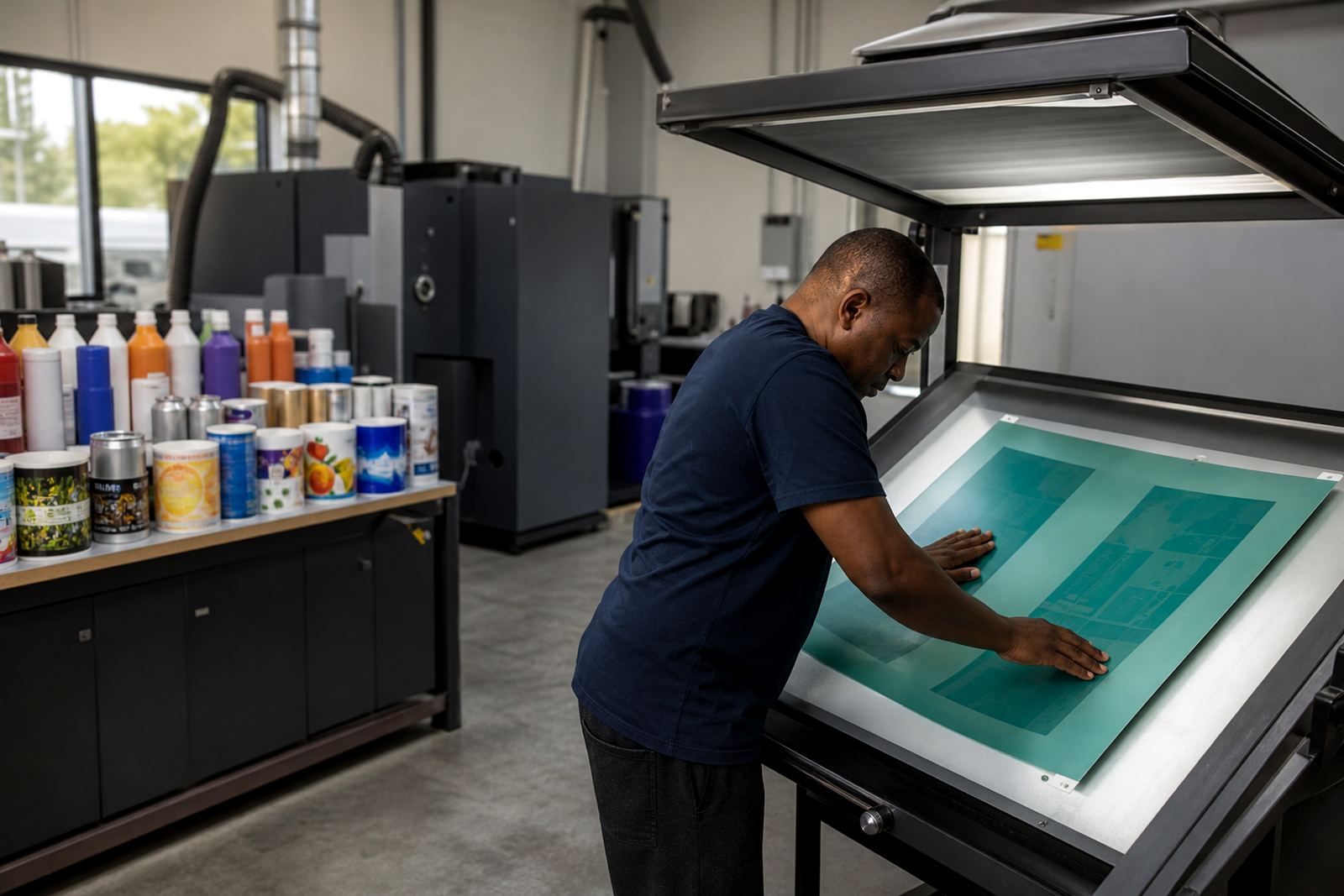
For food labels, the plate has to do more than transfer an image. It must keep the fine text readable, hold solid blocks without patchiness, and keep dot gain under control so ingredients, storage notes and batch details stay legible from the first label to the last. That matters whether you are printing short runs for a local deli in Midrand or longer repeat work for a national food packer.
We make flexo photopolymer plates for label printers who need consistent reproduction on paper, polypropylene, clear film and other common label stocks. In food work, stable solids and clean reverse text are just as important as picture quality. If the plate is not planned correctly, you can get muddy blacks, weak tints or type that closes up on press.
Many food labels also carry changing information, so the print layout needs to allow space for date codes, barcode areas, allergen lines and legal copy. That is why artwork checking and plate planning matter before the job goes to production.
Typical Press Setups Used for Food Labels
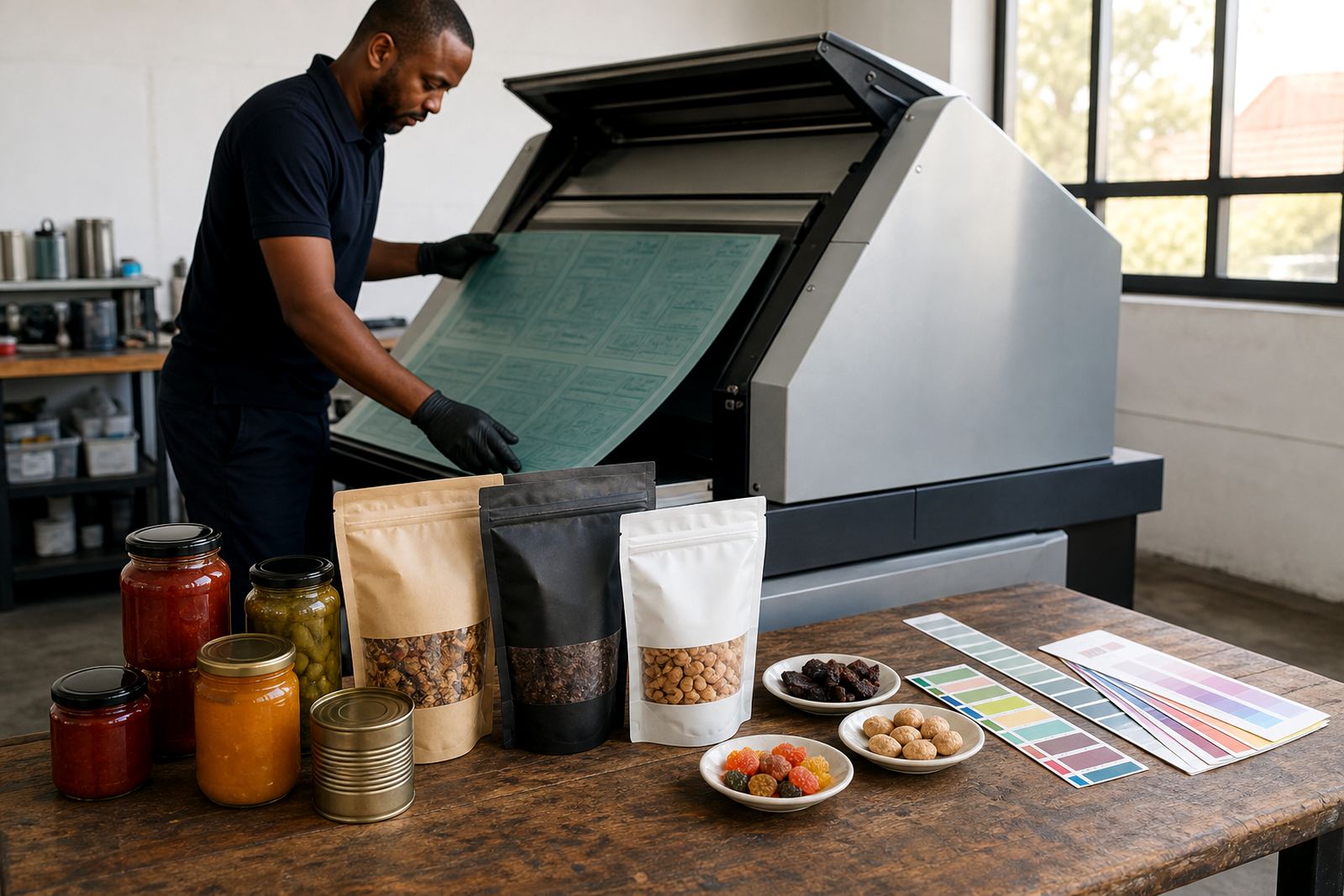
Food labels are usually printed on narrow web or small format flexo equipment, with jobs ranging from simple single-colour product labels to multi-colour packs with varnish or white underlay. The exact press setup changes from one printer to the next, but the plate needs to suit the way the job is being run, including anilox selection, substrate thickness and the finishing stage after printing.
- Paper labels for dry goods, tins and price stickers
- Film labels for chilled items and moisture-prone packs
- Clear labels for containers where the pack shows through
- White ink underprint for dark packs or transparent stock
- Serial numbers, batch data and barcode areas that must stay clean
In coastal areas such as Durban and Gqeberha, humidity can affect handling and storage, so plate packing and dispatch need to be done carefully. In Gauteng, load-shedding can interrupt production timing, so it helps when plate files are checked properly before release and mounting is planned with the press schedule in mind.
Planning Advice Before the Plate Is Made
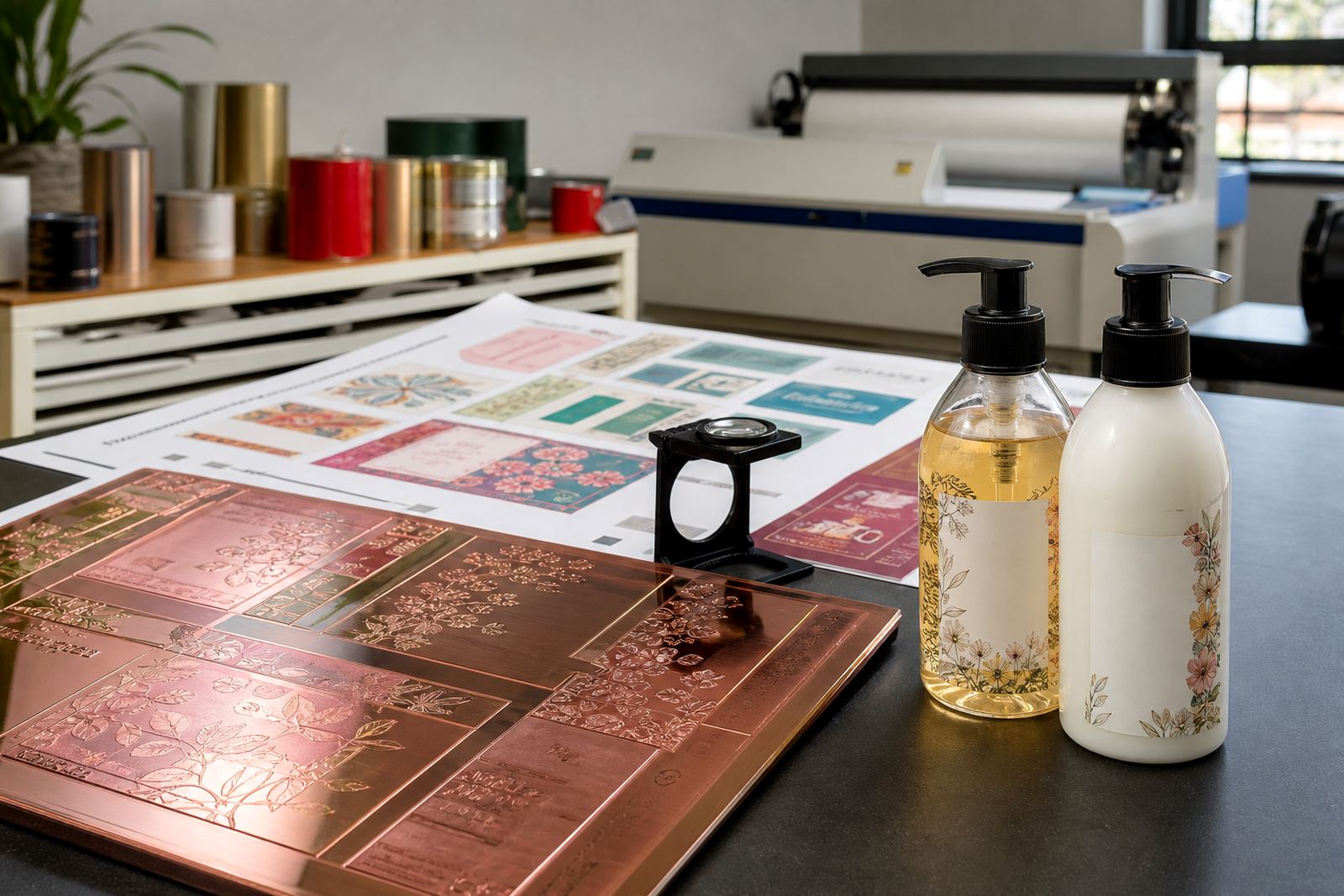
Good food label output starts with the artwork, not the pressroom. Before we make plates, we check the file for small type, trapping, overprint settings, barcode placement and fine rules that may break up on print. If the label has nutrition panels or ingredient panels, the layout must be set so text size stays readable after impression and die-cutting.
We also look at how many colours the job really needs. Sometimes a label can be simplified without losing shelf appeal, which reduces cost and helps with registration. For repeat work, consistent imposition planning can save time on setup and make remakes easier when a pack size changes. A minor typo in a food label can become a costly reprint, so file checking is not just a nice extra, it is part of the job.
- Keep barcode quiet zones clear and do not place artwork too close
- Avoid ultra-fine reversed text on dark grounds
- Leave enough room for mandatory copy and traceability details
- Confirm whether the job needs white underprint before the main colours
- Check that photos and solids are not being stretched or compressed in imposition
Common Mistakes That Cost Time and Money
Food label reprints often come from avoidable file problems. Thin lettering, weak contrast, incorrect trapping and poor proof comparison are frequent causes. Another issue is assuming that what looks fine on a screen will print clearly on a label at production speed. Small text can close up fast if the plate relief or screening is not matched to the job.
On some jobs, the mistake is in the planning. If the label includes a lot of copy but the artwork is built too tightly, the printer may struggle to keep the information clear once the plate is mounted. If the stock is glossy, soft solids can show scuffing or wear more easily and the print plan needs to account for that.
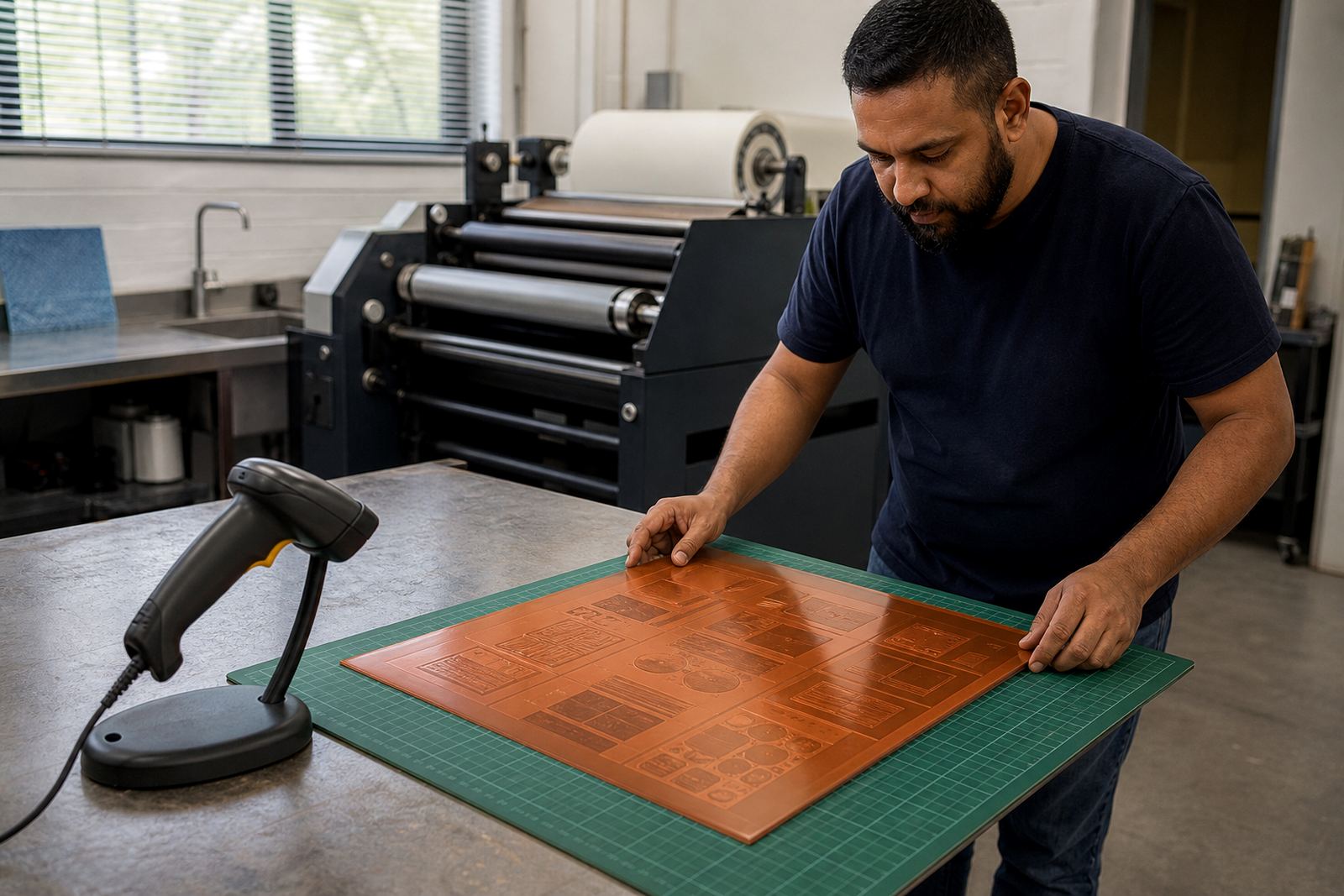
We also see avoidable handling damage when plates are trimmed badly or packed loosely for courier movement. For food labels, a nick on the edge of the plate can show up as a repeating mark on the final roll, which means waste on press and extra set-up time.
What You Can Expect on Budget for Food Label Plates
Plate cost depends on the size of the label, the number of colours, the amount of image detail and whether the job needs extra checking or remakes. A small single-colour food label plate set will usually sit at the lower end of the range, while a multi-colour label with fine text, screening support and special layout work will cost more. As a practical guide, many food label jobs fall somewhere between R450 and R3 500 per set, depending on quantity and complexity.
For repeat runs, the cost may be lower if the artwork is unchanged and the plates can be remade from a confirmed file set. If there are last-minute copy changes, the price can move up because the prepress work has to be done again. Courier packing and dispatch are usually planned separately so the plates arrive ready for mounting, whether the delivery is going to Johannesburg, Pretoria, Durban, Cape Town or Gqeberha.
Midrand remains a practical base for food label work in Gauteng because it sits close to major transport routes. That helps with collection coordination and delivery into the East Rand and West Rand as well as out-of-province freight.
Why Printers Choose a Specialised Plate Partner
Food label printers need more than a plate cutter and a courier bag. They need support with preflight, proof comparison, plate trimming, labelling and dispatch packing so the job lands in the pressroom in order. When one operator is handling a run of mixed SKUs, clear plate labelling can save real time at changeover.
Flexo Printer Plates works from Midrand, Gauteng and supports label and packaging printers across South Africa. The team includes Sibusiso Mthembu, Ayesha Naidoo, Pieter van Wyk, Lerato Molefe, Morne Jacobs and Zinhle Dlamini, with services that include plate making, artwork preflight, file checking, screening support, remake support and collection coordination. The aim is simple: plates that suit the job, arrive properly packed and print the way the file was intended.
For food labels, that practical approach matters. You need clean copy, steady solids and fewer surprises on press, especially when the run has to repeat month after month.