
Household labels that must read clearly on shelf and under use
Household product labels do more than carry a logo. They have to show usage notes, safety warnings, ingredients, batch codes and barcodes in a way that stays clear on the pack. For washing liquids, multipurpose sprays, dishwashing products and refills, the label often needs strong contrast and careful line work so the information still reads when the pack is wet, handled often or stored in a busy storeroom.
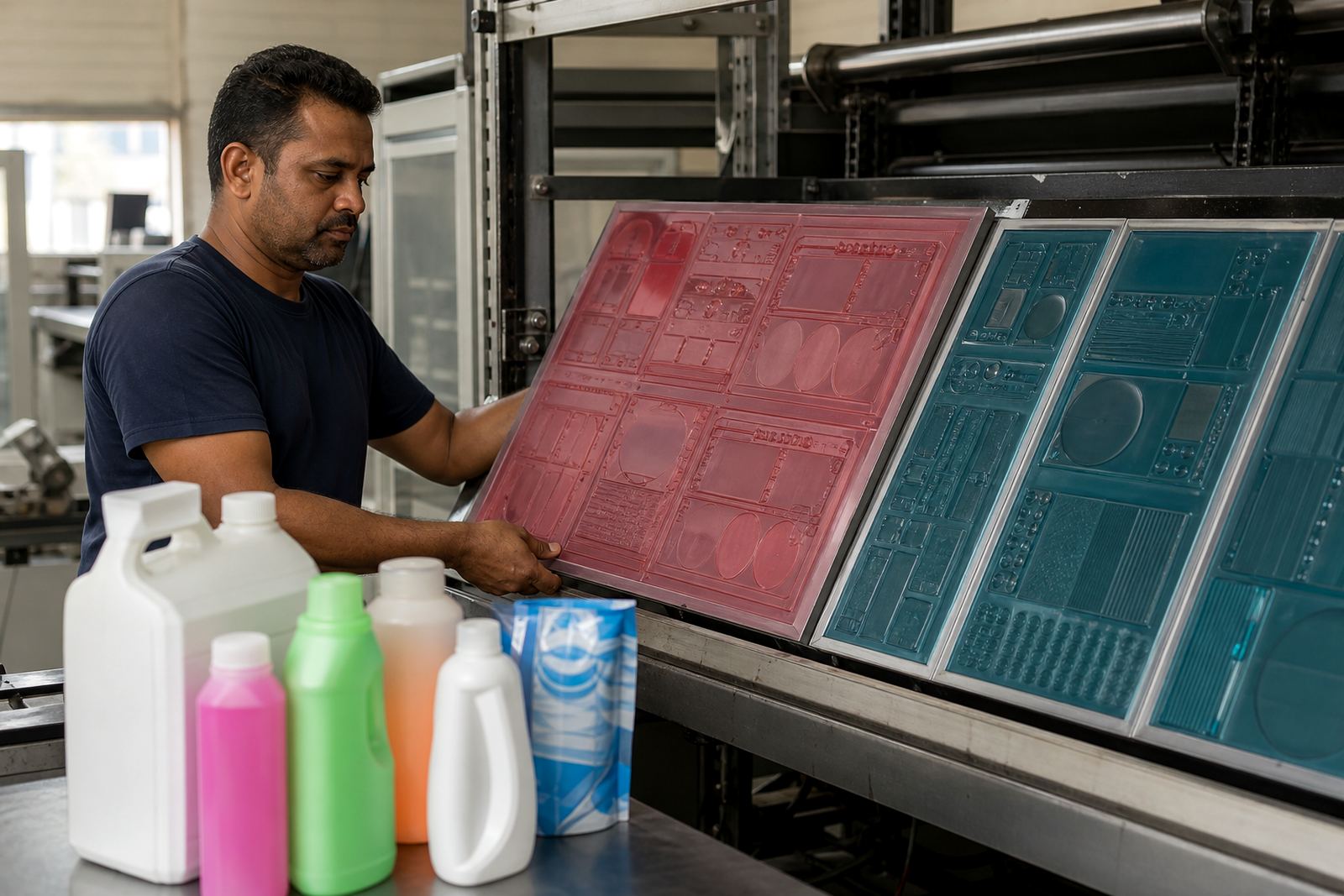
In Midrand and across Gauteng, many printers work with short runs for private label ranges, then move into repeat orders for expanding brands. That means the flexo plate setup has to suit both small and larger jobs. We prepare photopolymer plates for label and packaging printers who need consistent reproduction on film, paper or coated stocks, with enough detail to hold fine type and border lines.
- Clear warnings and usage notes for consumer packs
- Good reproduction on small text, logos and ingredient blocks
- Plate sets suited to repeat runs and changing pack sizes
- Packaging and label work for home care, cleaning and refill products
Typical equipment used on household label jobs
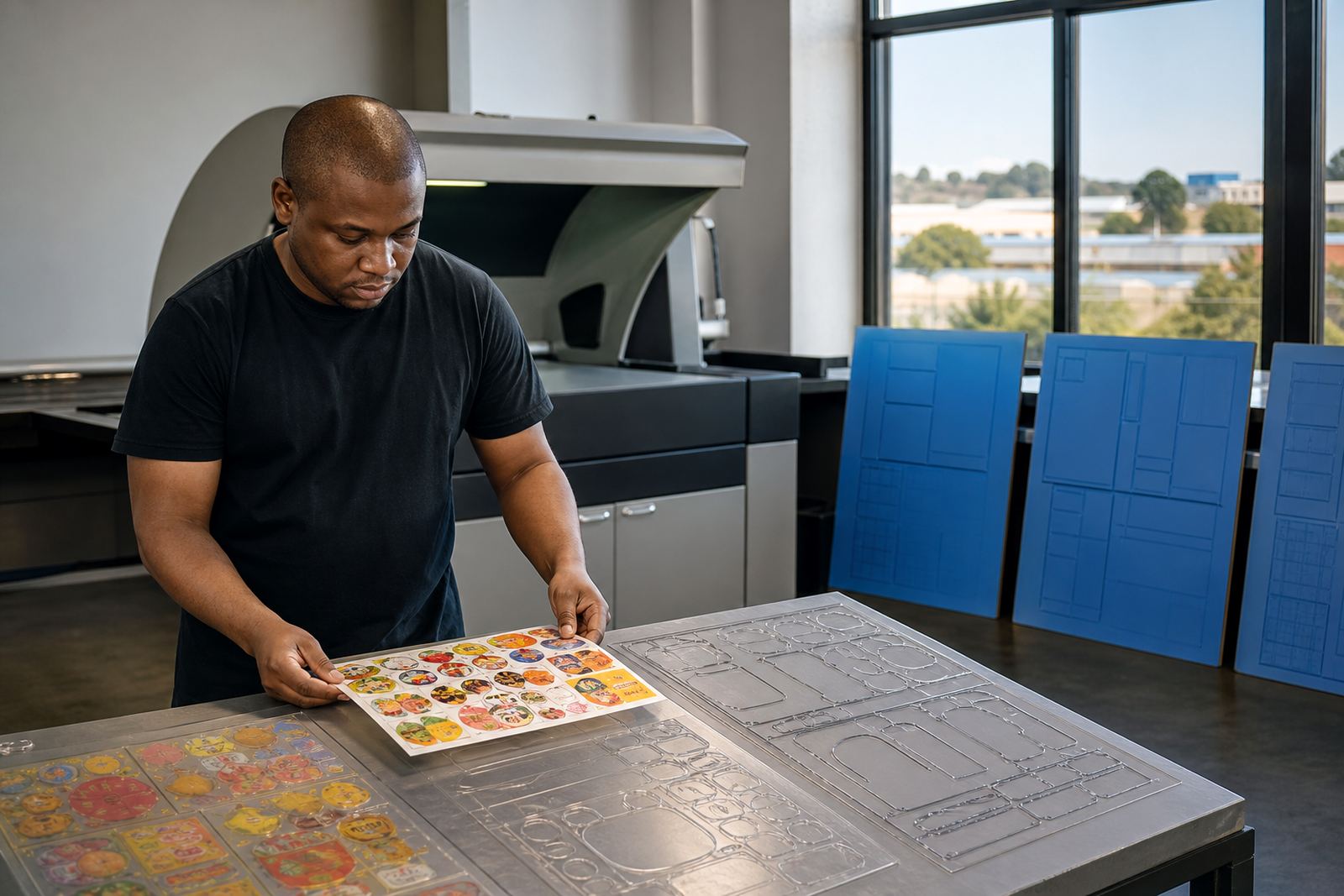
Household labels usually pass through narrow web presses, finishing lines and inspection stages before they are packed for dispatch. The print set-up may include colour stations for process work, varnish or coating units, and die-cutting for shaped labels. On many jobs the challenge is not only colour, but how the plate carries detail on small copy, thin rules and knockout text.
We work from supplied artwork and printer specifications, then check the file for plate suitability before production. Where needed, we look at screening, trap, solid areas and reverses so the final plate matches the way the job will run on press. A label for a floor cleaner can have heavy solids and strong contrast, while a small bottle label may need very fine legal text squeezed into a tight layout. The plate has to support both without losing sharpness.
- Narrow web flexo presses for labels and sleeves
- Die-cutting and rewinding for finished label rolls
- Barcode areas, warning panels and fine print zones
- Coated or uncoated label stocks depending on the pack
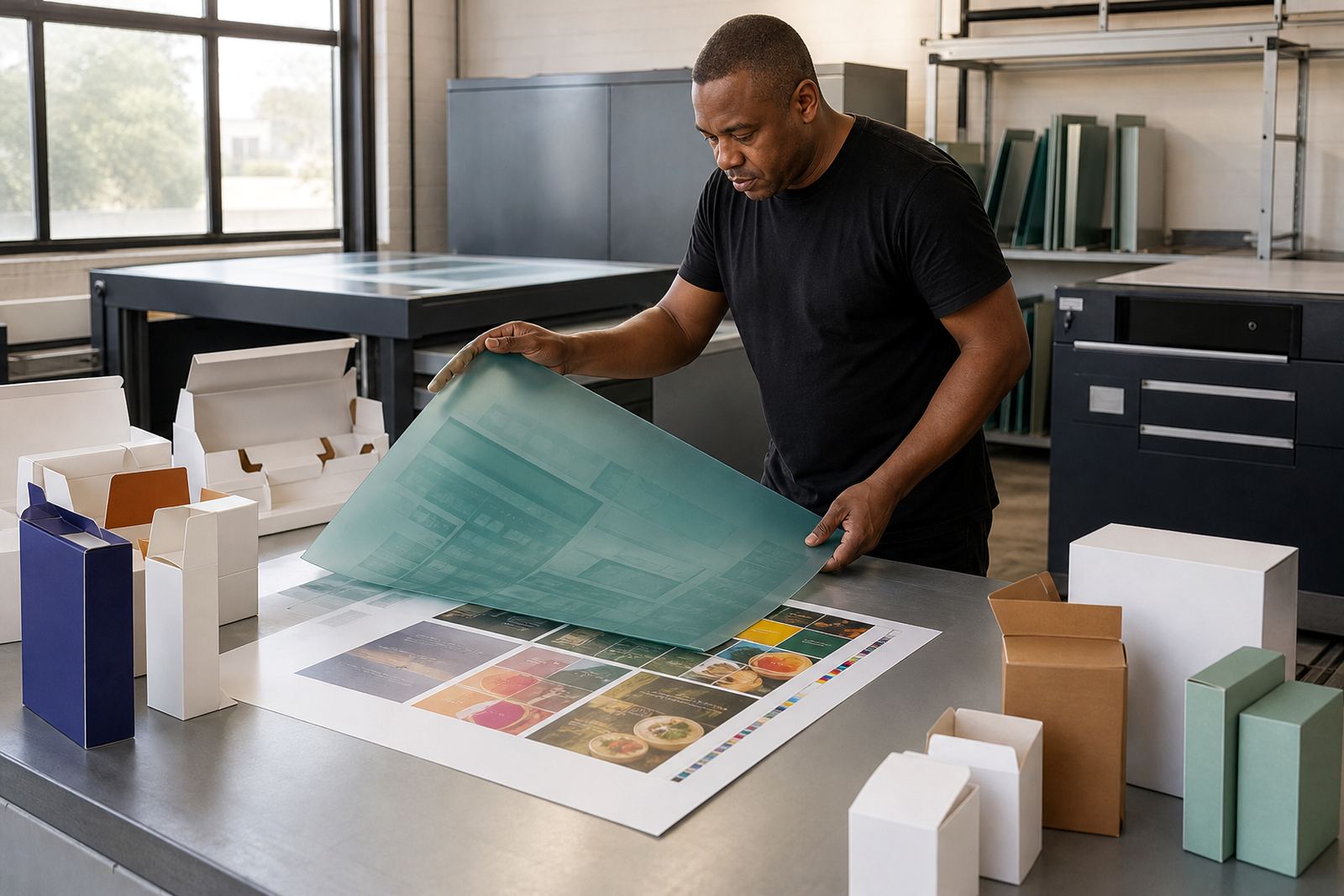
Planning the layout before the plate is made
Good planning saves time and avoids remake costs. For household labels, the first step is checking whether the layout suits the pack size and whether the information will still fit once the design is wrapped around a bottle, tub or pouch. A label that looks fine on screen can become cramped once bleed, curve and die line allowances are added. We often advise printers to confirm key details early, especially if a customer has changed pack dimensions or changed from a front and back label to a single wrap.
Artwork preflight is especially useful where there are several product variants in one range. The same base design may need different colours, scent names, hazard notes or barcodes. If the set is not organised properly, the job can drift into extra plates, inconsistent numbering and confusion on the press floor. With household products, it also helps to keep legal copy in one approved position across the range so the printer can manage repeat orders with less risk.
- Check pack dimensions before final artwork is signed off
- Keep warning panels and legal text in one fixed position
- Allow enough space for curves, seals and carry handles
- Confirm barcode quiet zones and small text legibility
Common mistakes on household label plates and artwork
Many household label problems start before the press even runs. Thin reverse text can fill in, small warning copy can become hard to read, and heavy solids can show banding if the file is not prepared properly. Another common issue is ignoring the way moisture, oil or condensation may affect the label surface. In coastal areas like Durban or Gqeberha, humidity can also affect storage and handling, so it helps to think about the substrate and adhesive setup as well as the artwork.
We also see jobs where a customer sends a last minute file change after plate work has started. That can lead to mismatched versions or a remake when the plate no longer matches the approved proof. If the job involves multiple scents, sizes or pack colours, it is worth doing a careful proof comparison before production. A small mistake on a household label can become expensive once a full roll or carton has been printed.
- Unreadable fine print or warning copy
- Missing bleed around trim lines
- Incorrect barcodes or product codes
- Version mix ups on multi product ranges
Budget ranges for household label plate work
Plate cost depends on the label size, number of colours, quantity of artworks and whether the job needs remake support or extra checking. For straightforward household label work, smaller plate sets may start from around R750 to R1 500 per plate set, while more detailed multi-colour jobs can move into the R2 000 to R4 500 range or higher depending on the spec. If the range has several variants, the total can change quickly with every artwork adjustment.
Printers in Johannesburg, Pretoria, the East Rand and West Rand often work to tight production windows, so it makes sense to plan plate budgets together with dispatch timing and repeat order needs. For clients in Cape Town, Durban and Gqeberha, courier delivery is arranged to suit the run schedule and the packing requirement. We also coordinate collections where needed from Midrand, so the job can move from approval to press without avoidable delays.
If you are unsure how much to allow, send the label size, number of colours and a PDF or artwork file through the enquiry form on our contact page. We can then advise on plate making, trimming, labelling and dispatch packing for the specific job.
How our Midrand team supports repeat household label runs
Household labels often come back in waves, especially when a product range grows or a new pack size is added. Our Midrand base supports this kind of work with file checking, imposition planning, screening support and remake support when a repeat job needs a correction. Sibusiso Mthembu leads the business, with Ayesha Naidoo handling production, Pieter van Wyk on prepress, Lerato Molefe on client services, Morne Jacobs on plate mounting and Zinhle Dlamini coordinating logistics.
That structure matters when a printer needs practical advice, not general talk. If the job is going to a label line in Pretoria or a packaging run in Durban, the plate set must be labelled correctly, packed properly and sent to the right place. Household label work is often repetitive but never identical, so having one contact point and a careful production chain helps keep the job moving.
We supply flexo photopolymer plates for printers across South Africa, with courier delivery to Johannesburg, Pretoria, Durban, Cape Town, Gqeberha and surrounding areas. For household labels, the aim is simple: sharp text, clean colour and plates that are ready for the pressroom.