
When industrial bags need clean, repeatable print
Industrial bag work is usually straightforward on paper, but it is unforgiving on press. The artwork must stay legible on kraft, woven, coated and laminated bag stocks, often with limited space and only a few colours. A small issue in the plate or layout can show up as weak text, uneven solids or a barcode that will not scan properly.
For this kind of work, printers usually need photopolymer plates that hold fine text, solid blocks and simple logos without losing edge sharpness. Bags used for stock feeds, chemicals, building products, grain, seed and retail carry different print demands, so the plate set must suit the substrate and the press setup. In Midrand and across Gauteng, many job files arrive with tight pack instructions, batch fields and handling notes that must be placed carefully from the start.
Typical press setups for bag work
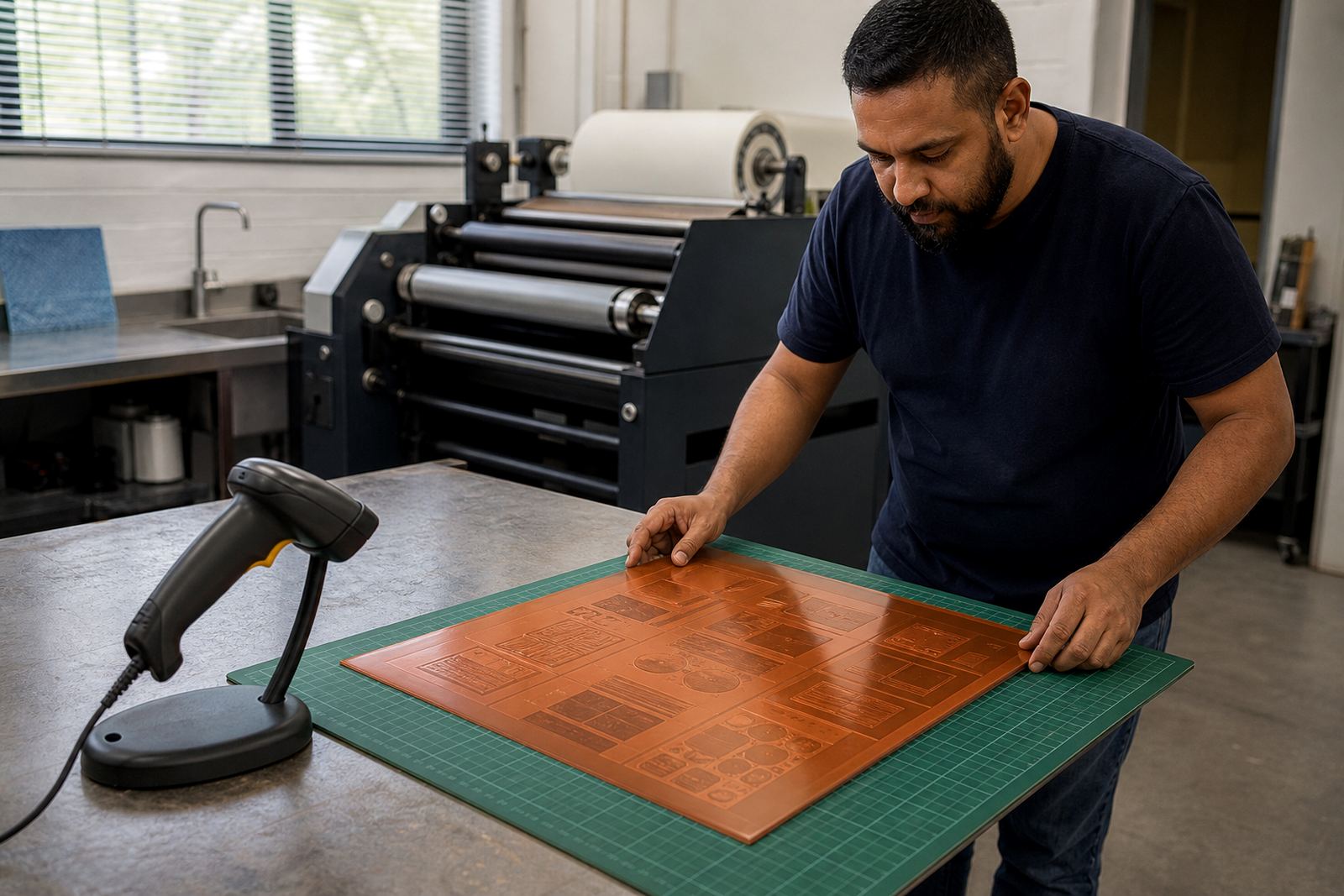
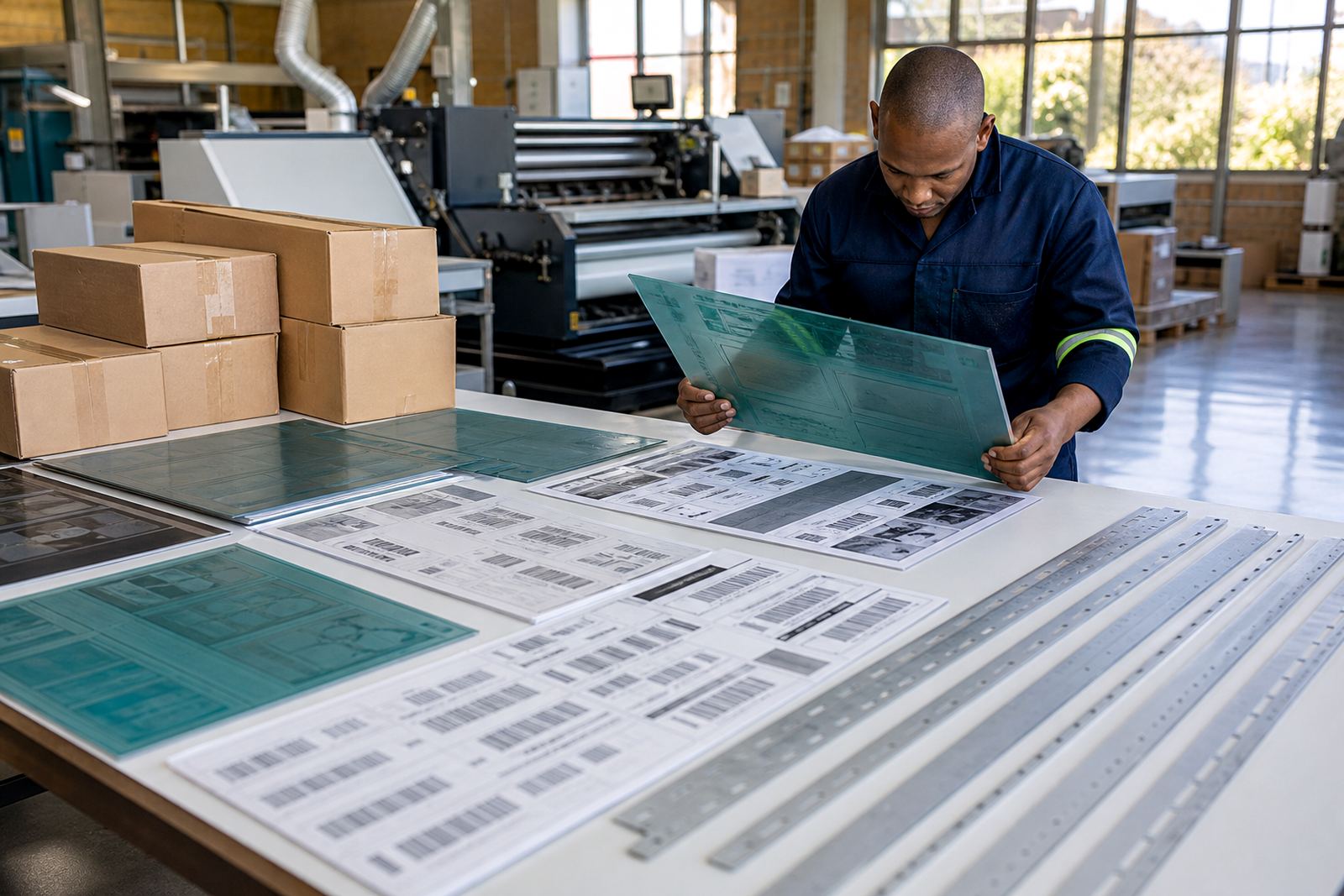
Most industrial bag printing jobs run on flexo equipment set up for repeat work and practical production speed. The exact machine may vary, but the plate needs to suit the cylinder size, repeat length and ink system. Good plate making starts with proper file checking, then moves into imposition planning so each colour sits in the right place before the plates are made.
- Single or limited colour bag branding
- Line text, batch codes and handling instructions
- Simple logos and product names
- Barcodes or traceability fields where needed
- Large format repeats for sacks, pouches and industrial wraps
For printers serving Johannesburg, Pretoria, Durban, Cape Town and Gqeberha, we also see jobs that need separate plate sets for different bag sizes or customer lines. That means the layout must be planned with changeovers in mind, not just the first run.
Layout and planning points that save trouble on press
Bag printing often looks simple, but it still needs careful planning before plate making. Artwork should be checked for line weight, trapped edges, reversed text and small details that may fill in on absorbent material. If the bag stock has a rough surface or the press is running through humidity near the coast, fine elements can soften quickly if the file is not prepared well.
We usually advise clients to keep the layout practical. Put the most important product name in the clearest position, keep batch areas easy to read and avoid crowding the print area with too much text. If the same design must work across several bag sizes, leave enough space for trim, fold and registration. That way the printer is not forced into adjustments on the pressroom floor.
- Confirm the exact finished bag size before plates are made
- Allow for trim, seam and fold areas
- Keep small text away from low contrast backgrounds
- Check barcode size and quiet zones before approval
- Use the right repeat for the press and cylinder arrangement
Common mistakes on industrial bag jobs
One of the biggest mistakes is sending artwork that has not been checked for the actual bag size. A design that looks fine on screen can sit too close to the edge once it is on a large sack. Another common issue is poor spacing around batch areas, which can make the print look cramped or hard to read.
We also see jobs where the proof was approved too quickly and the plate artwork still carries old copy, wrong product wording or mismatched repeats. If the job is for export, or for a local supplier working under municipal and industry requirements, that kind of error can lead to reprints and wasted material. It is worth checking every file element before plate production starts.
Common problem points include:
- Missing bleed or safe margins
- Text that is too small for the substrate
- Incorrect repeat length for the press
- Barcode placement too close to folds or seals
- Artwork changes not reflected in the final file
What plate-making costs usually cover
Budgeting for industrial bag printing is easier when the printer looks at the full job rather than only the plate count. Costs can vary with size, artwork complexity, the number of colours, trimming requirements and whether remake support is needed after a file change. For simple one or two colour work, the plate cost is usually more manageable than for jobs with several separations and detailed text.
As a working guide, many South African printers plan for entry level plate work from about R850 to R1,800 per colour for straightforward bag jobs, while more detailed or larger format plates can run from about R1,900 to R4,500 per colour depending on the setup. File checking, plate labelling, packing and dispatch can add to the job total, especially when the order needs split deliveries or collection coordination in different regions.
For bag printers in Midrand and surrounding areas, it often makes sense to group repeat work so the same job structure can be used again with only small artwork updates. That helps keep reorders practical and reduces avoidable changes.
Courier delivery and support across South Africa
Flexo Printer Plates is based in Midrand, Gauteng and works with label and packaging printers across South Africa. Courier delivery is arranged for Johannesburg, Pretoria, Durban, Cape Town and Gqeberha, with local delivery support in Midrand, East Rand and West Rand. For printers managing load-shedding schedules, late approvals or tight dispatch windows, good packing and clear labelling help keep the job moving.
Our service includes artwork preflight, file checking, imposition planning, screening support, proof comparison, plate trimming, plate labelling, remake support, dispatch packing, collection coordination and technical job advice. Clients reach us through the enquiry form on our contact page, which keeps the order trail tidy and helps the production team respond to the right file details first.
For industrial bag printing, the aim is simple: plates that match the job, fit the press and arrive ready for production. That is where good planning saves time and keeps the print run steady.