
When chemical labels need more than ordinary label work
Chemical labels often carry warning panels, product names, batch codes, supplier details and regulatory text on a very small format. If the layout is cramped or the contrast is weak, the label can become hard to read once it is printed and applied to a curved bottle, pail or drum. That is why the plate-making stage matters so much.
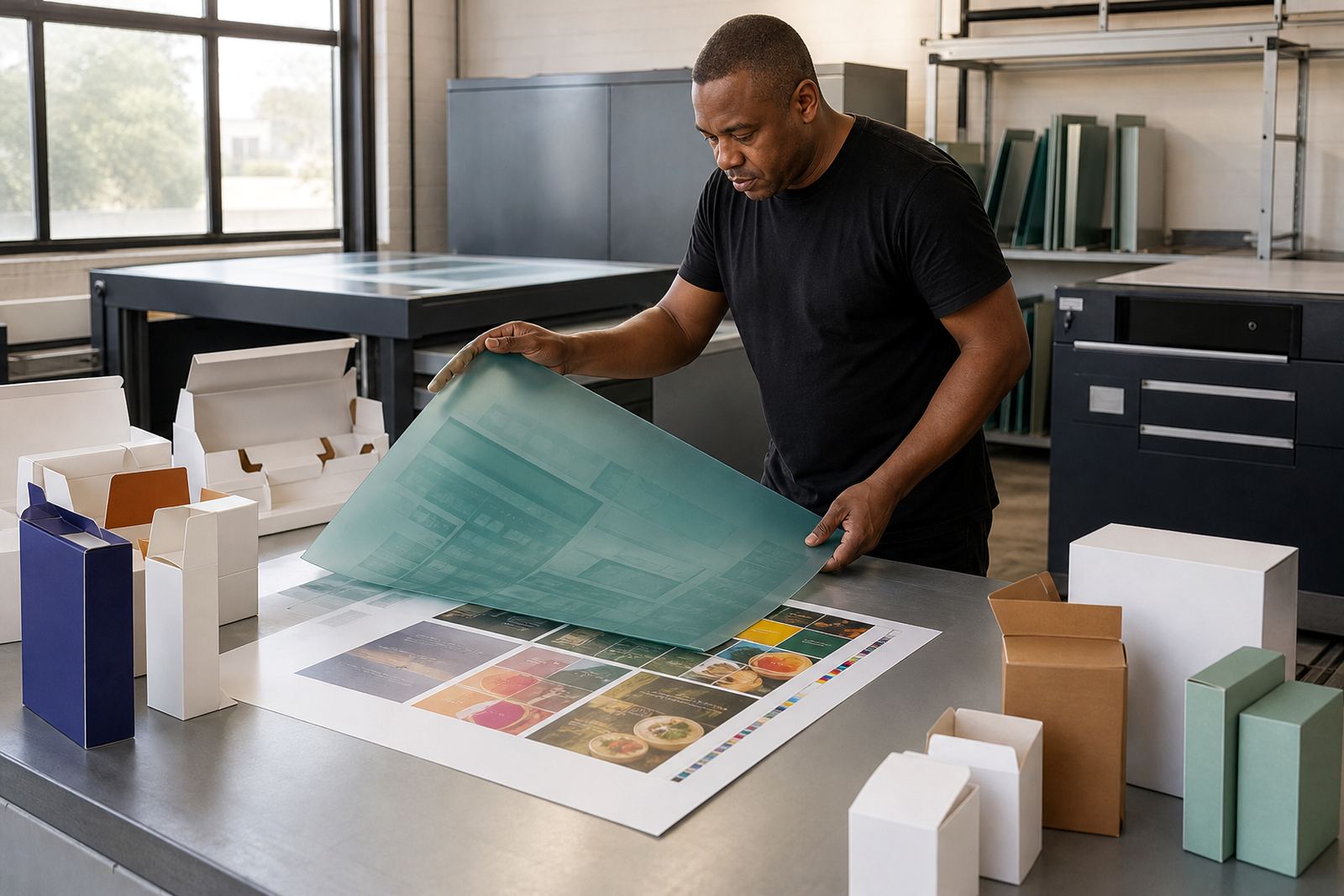
For this type of work, we look closely at fine type, line weights, solid areas and white knockout elements. Chemical labels also need repeat consistency across long runs, especially where a client uses the same artwork across different container sizes. In Midrand and across Gauteng, printers often need plates that hold detail well on short and medium runs, with good registration on multi-colour jobs.
Flexo Printer Plates makes photopolymer plates for label and packaging printers that handle household chemicals, industrial cleaners, agricultural products and related packaging. The goal is practical: keep the print legible, keep the layout stable and make it easier for the press team to run the job without unnecessary stops.
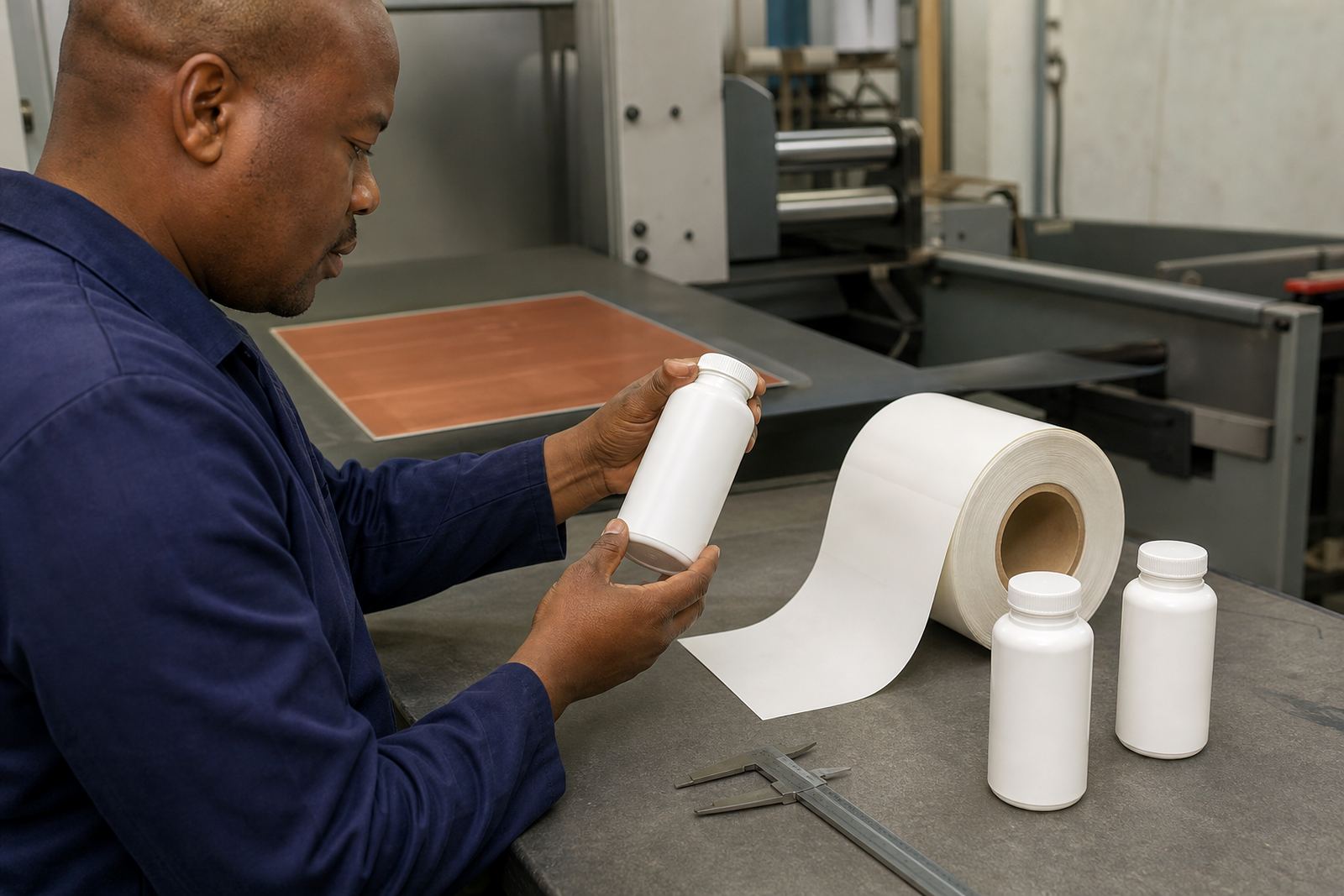
Typical equipment set for chemical label production
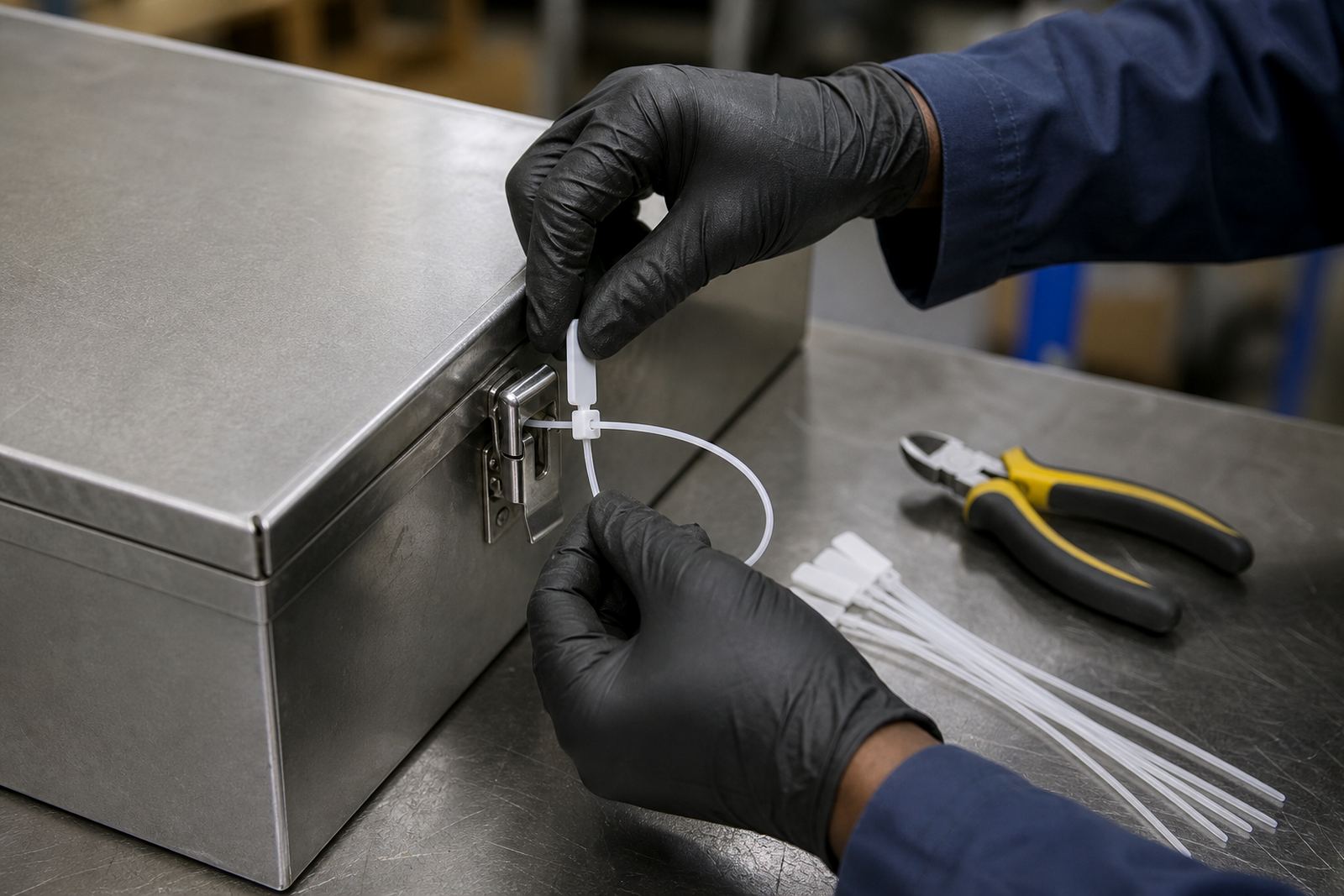
Chemical labels can run on narrow-web and mid-web flexo presses, depending on the pack size and run length. A typical job may include process colours, spot colours, opaque whites and varnish or coating areas. For some labels the printer also needs clear reserve areas for hazard diamonds, compliance text or tamper related information.
Our plate-making support covers the steps that help a printer prepare work before it reaches the press:
- Artwork preflight and file checking for missing fonts, low-resolution images and hidden elements
- Imposition planning for roll width, repeat length and waste reduction
- Screening support for smooth tints and cleaner solid areas
- Proof comparison against the supplied file or approved layout
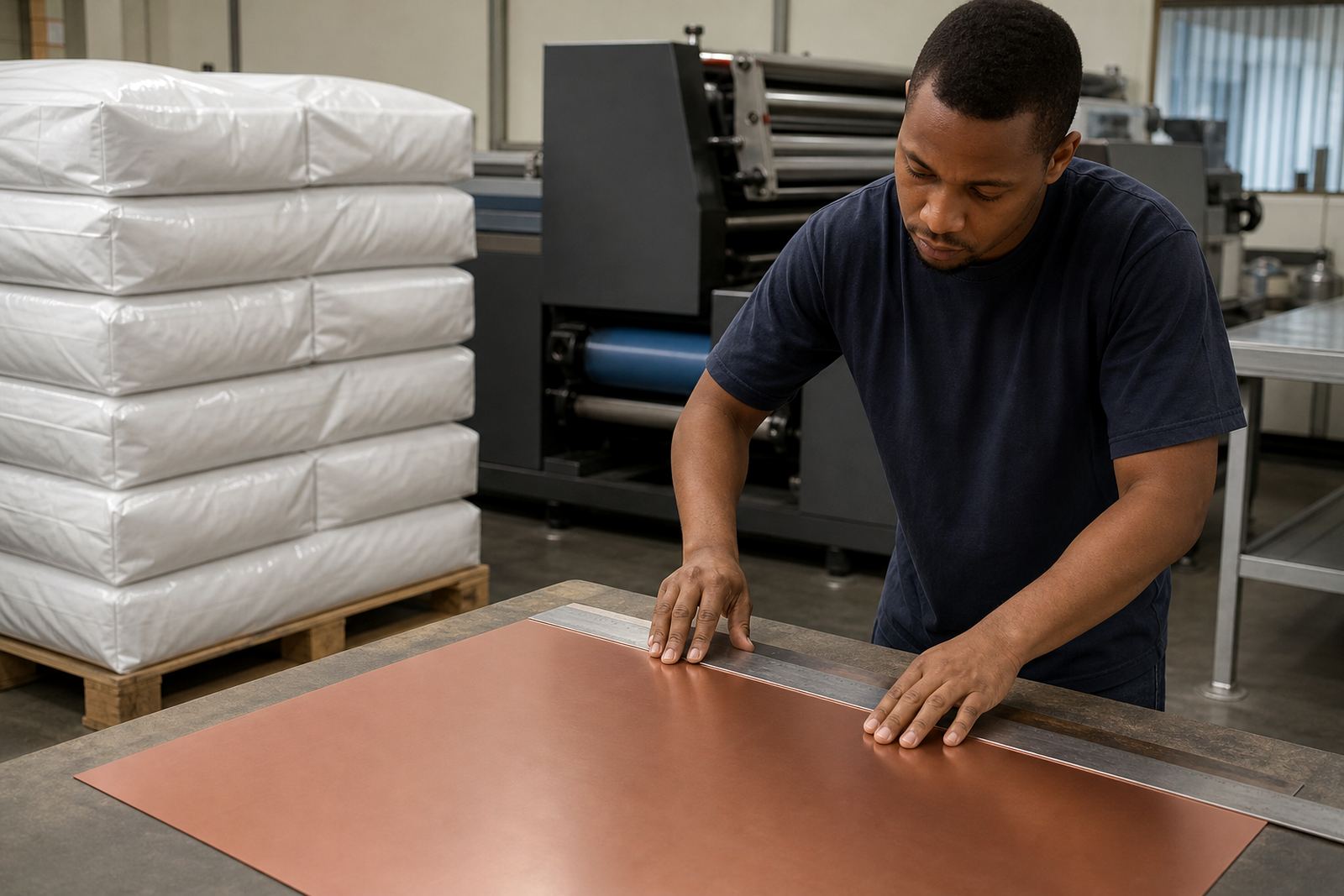
- Plate trimming and plate labelling for easier handling on press
When a label has a lot of fine wording, the smallest details can suffer if the file is not set up properly. That includes overprint errors, very thin rules and text that is too small for reliable reproduction. We check for those issues before plates are made, rather than leaving the press team to find them later.
Layout planning that helps hazard text stay readable
Chemical packaging leaves little room for guesswork. Before plate-making starts, the artwork should be planned with printability in mind. If the design is trying to fit too much information into too small a panel, the result can be hard to read and more likely to fail basic inspection at dispatch or on the shelf.
A few practical points help a lot:
- Keep warning panels clear and separate from decorative elements
- Use strong contrast between text and background colours
- Avoid very fine reversed text unless the printer has confirmed it will hold
- Leave enough space around batch, expiry and traceability information
- Plan for curved surfaces so text does not sit too close to label edges
We also advise on plate suitability when the label has large blocks of black, heavy reds or dense whites. These areas can behave differently on press and may need careful screening or adjustment. In practice, a cleaner layout saves time, reduces rework and gives the printer more control over final output.
Common mistakes that cause avoidable rework
We see a few recurring issues on chemical label jobs. One is artwork that was set up for viewing on screen rather than for print. Another is a file that looks fine in PDF form but contains hidden transparency, missing links or images that are too soft for the final label size. On a small pack, even a minor fault can become obvious once the job is on press.
Other common mistakes include:
- Text placed too close to trim or die cut lines
- Small reversed copy that breaks up on press
- Inconsistent overprint settings between colour channels
- Labels designed without enough allowance for cylinder or repeat changes
- Barcode or batch areas placed over busy backgrounds
Our technical job advice is aimed at preventing these problems early. If the printer is handling a difficult layout, we can assist with proof comparison and screening support before the plate set is finalised. That is usually simpler than trying to rescue a job after it has already been scheduled for print.
Budget ranges in Rand for chemical label plate work
Costs depend on the number of colours, the label size, the amount of detail and whether the job is a remake or a new setup. A straightforward one or two colour label with limited text may sit at a lower price point, while a multi-colour chemical label with fine wording, whites and tight registration will usually cost more because it needs more careful preparation.
As a practical guide, many small label jobs may start from about R450 to R1 200 for simple plate sets, while more detailed multi-colour work can sit in the R1 500 to R4 500 range or higher depending on size and complexity. If a remake is needed because the original file changed, the cost is often lower than starting from scratch, but it still depends on the amount of revision.
Printers in Johannesburg, Pretoria, Durban, Cape Town, Gqeberha and the East and West Rand often factor in courier delivery, job urgency and plate handling when planning budgets. We can also assist with dispatch packing and collection coordination so the plates are sent out in a way that suits production schedules.
Why printers across South Africa use a Midrand plate partner
From our Midrand base, we support label and packaging printers who need plates prepared with care and packed properly for delivery. Chemical label work often moves quickly once the artwork is approved, so the support process needs to be organised and clear. That matters just as much during load-shedding periods or when a plant is working around tight production windows.
Our team includes Sibusiso Mthembu, Ayesha Naidoo, Pieter van Wyk, Lerato Molefe, Morne Jacobs and Zinhle Dlamini, and each person handles a specific part of the workflow from prepress to logistics. Founded in 2007, we have built our service around practical communication and repeatable handling, not unnecessary extras. If your chemical label job needs careful plate trimming, labelling, remakes or courier dispatch, we work through the details so the printer receives what they need in usable order.
Clients reach us through the enquiry form on our contact page, and we handle each job with the same focus whether it is for a short local run or a couriered order going to another province.