Logistics labels need fast reading and repeatable print
Logistics labels do one job very quickly: they tell people what a carton is, where it must go, and how it should move through the warehouse. That means the print cannot be fussy. Barcodes, route codes, item names, batch details and warning marks must sit in the right place every time, even when the label runs in long production batches. For that kind of work, the plate has to hold fine detail and keep a steady image across the run.
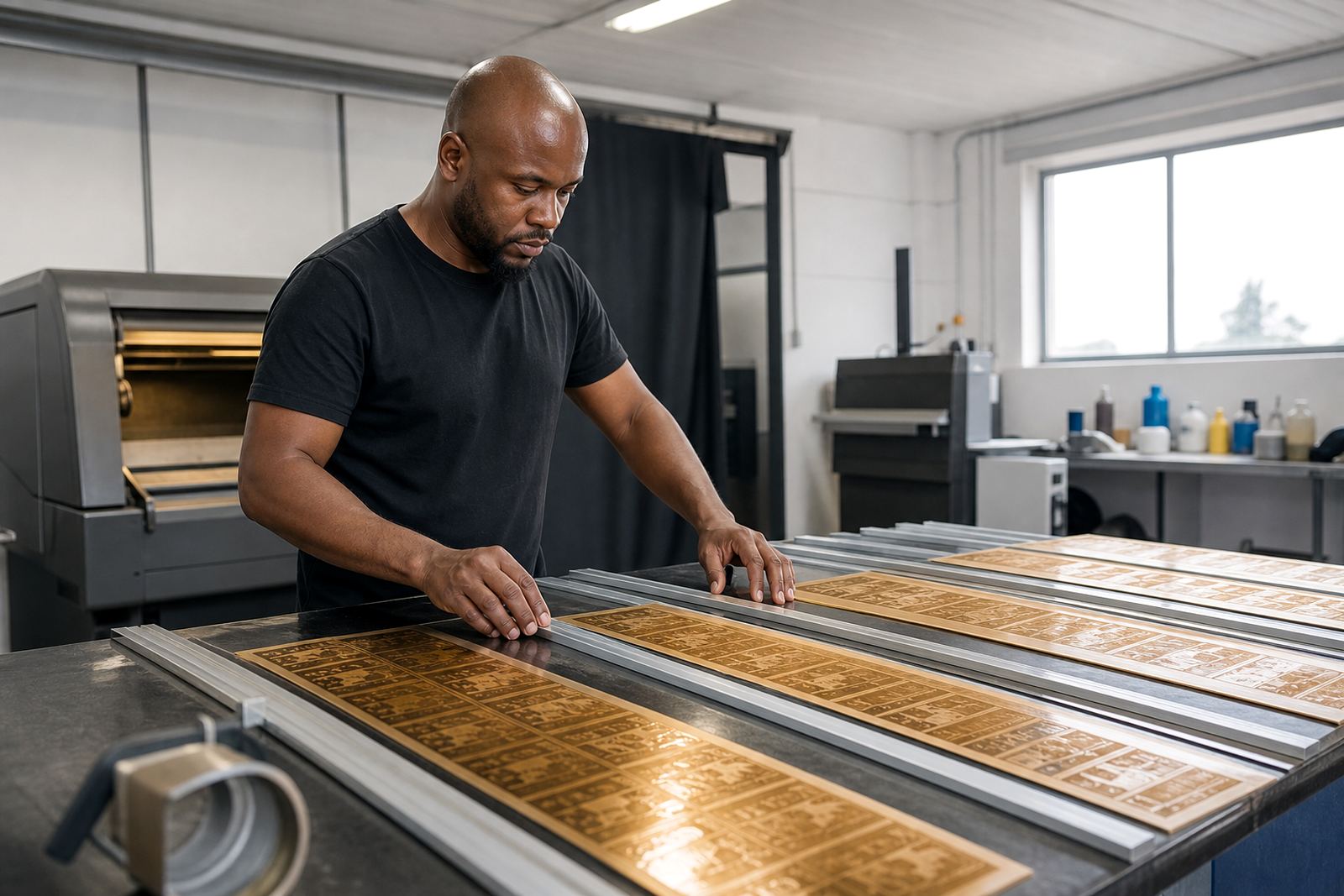
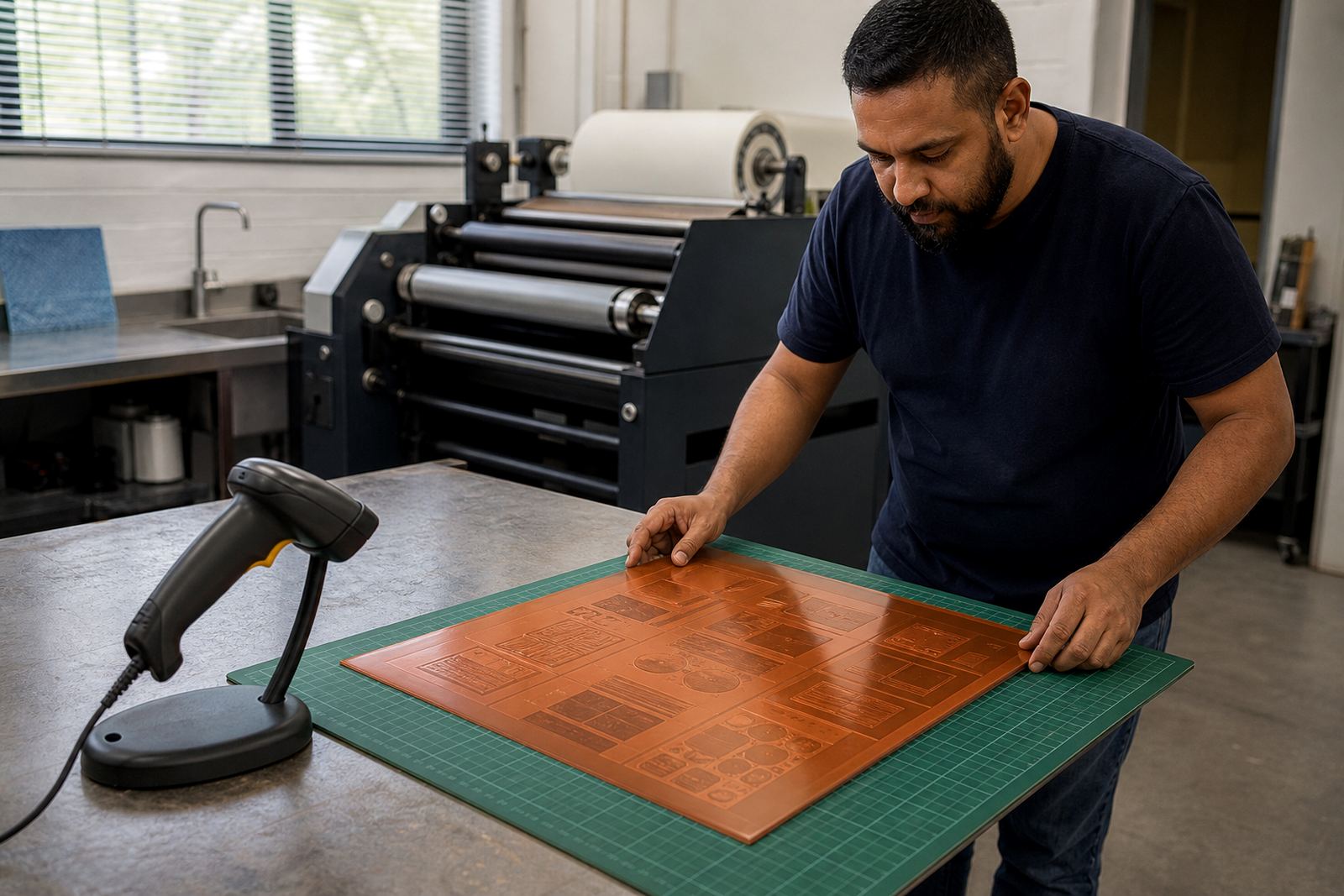
Flexo Printer Plates works with label and packaging printers in Midrand, Gauteng and across South Africa, making flexo photopolymer plates for practical distribution labels. We understand that logistics work often needs plain layouts, but plain does not mean easy. Small text, thin rules and barcode zones need proper spacing. If a label is for a warehouse, courier hub or regional distribution centre, the layout must suit the press, the substrate and the way the label will be applied later.
Since 2007, our team has supported printers who need plates that reproduce cleanly and handle the day to day pressure of fast-moving label work. Sibusiso Mthembu leads the business, with Ayesha Naidoo, Pieter van Wyk, Lerato Molefe, Morne Jacobs and Zinhle Dlamini each handling their part of the process from prepress through to dispatch.
Typical equipment and label formats in distribution work
Logistics label jobs usually run on narrow web flexo equipment with repeatable artwork and a fixed panel structure. Some printers run simple one-colour labels for internal stock movement, while others need multiple panels for delivery details, handling instructions and scannable data. The plate set has to suit that setup. Good plate-making helps keep sharp edges on codes and text, and it also supports neat overprints where the label carries more than one language or message.
Common formats include cartons labels, pallet labels, shelf labels, shipping stickers and product movement labels. In Gauteng especially, many printers handle labels for warehouses, food distribution, building materials and general FMCG stock moving through Johannesburg, Pretoria and the East Rand. Coastal work in Durban, Cape Town and Gqeberha may also need careful storage and packing because humidity can affect handling before the labels ever reach the press.
- Single and multi-panel logistics labels
- Barcode and QR code areas with clear quiet zones
- Variable text blocks for batches, dates and routes
- Warning symbols and handling marks
- Sequential numbering for stock control
Layout planning that saves time on press
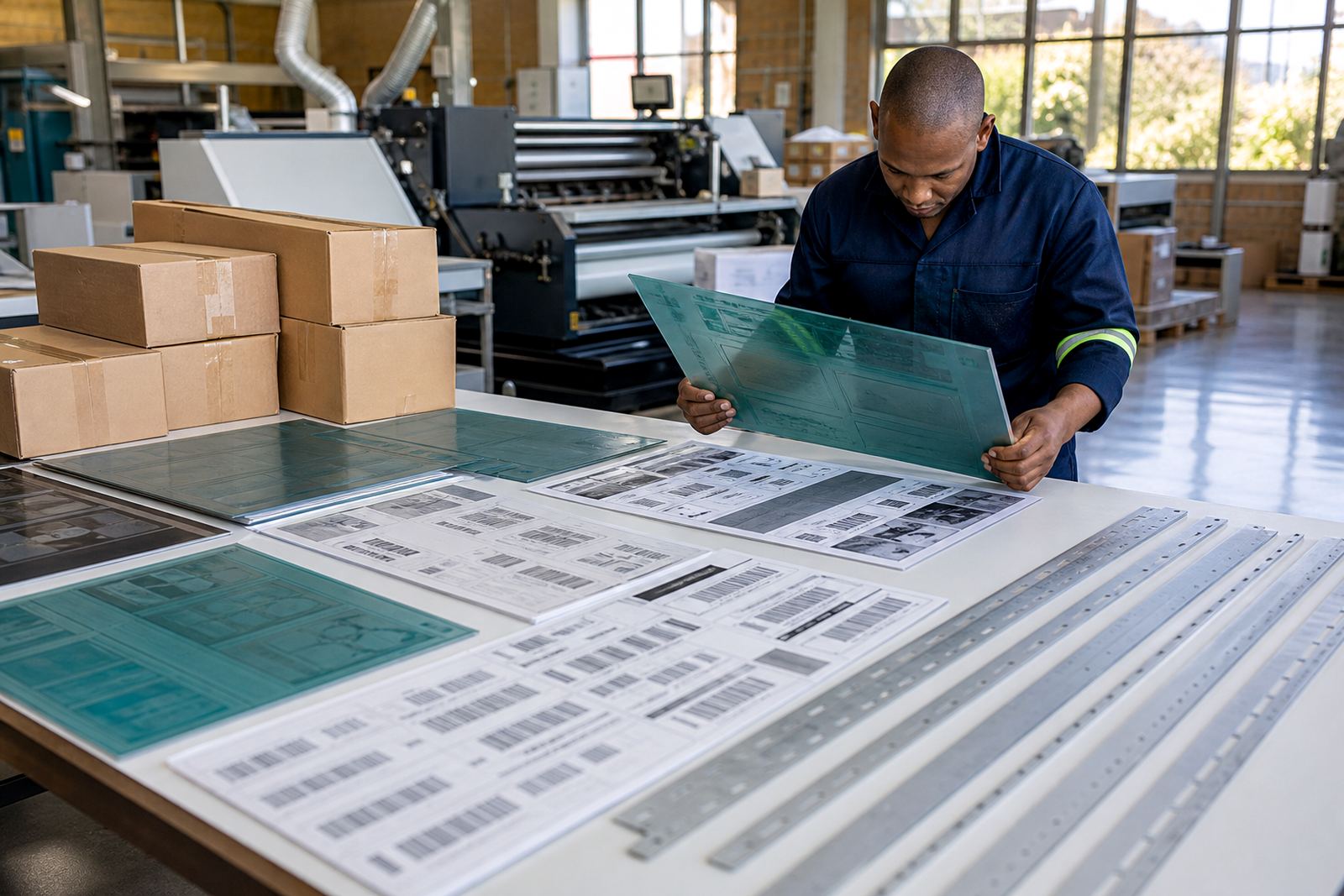
A well planned logistics label starts long before plate-making. The artwork should leave enough room for codes, margins and scanner friendly spacing. If a barcode is crowded by a border or squeezed too close to printed text, the label may look acceptable on screen but fail in the warehouse. We often advise printers to keep clean contrast, avoid unnecessary decoration and use a layout that can be read quickly under busy conditions.
Artwork preflight and file checking are important because logistics jobs often arrive with changing addresses, route codes or item descriptions. It helps to check line weights, reversal text, overprint settings and the placement of fine details before plates are made. If the printer plans to reuse the same label shell for different sites or depots, it is worth building a stable base layout that can be updated without disturbing the scan area. A little planning at the start can avoid repeat plates later, and fewer reworks mean less waste.
- Keep barcode and QR code zones clear of nearby text
- Use enough margin around edges for trimming and application
- Separate fixed information from variable fields where possible
- Allow for the press, ink choice and label stock before final approval
- Confirm spelling on place names, route notes and handling text
Common mistakes on logistics label jobs
One of the most common mistakes is treating a logistics label like a general marketing label. That often leads to decorative elements, tight spacing or low contrast that looks neat but does not scan well. Another problem is sending files with the wrong version of a route table or address block, especially when several depots are involved. A label used in a warehouse in Midrand may need different wording from one used for a distribution point in Durban or Cape Town.
We also see jobs where the trimming allowance is too tight, so the finished label cuts into text or leaves the adhesive edge uneven. Plate trimming and labellng notes matter here. If the printer uses labels on fast applicators, the plate image must be consistent from edge to edge. Small shifts can affect the way the label sits on a carton or pallet wrap, which is why proof comparison is worth doing before the job goes live.
For printers managing multiple clients, it also helps to label plates properly and keep remake support notes on file. That makes future repeat work easier, especially when the same logistics label returns with a minor change to a batch code or depot name. Clear job notes reduce confusion and keep the workflow moving.
Budget ranges for logistics label plate work
Plate budgets depend on the size of the label, the number of colours, the amount of detail and whether the job needs remakes or special mounting. A simple logistics label plate can cost less than a more detailed multi-panel version, but the total still depends on the file quality and the amount of checking required. Printers should also allow for packing, collection coordination and courier delivery when the job needs to move between sites.
As a practical guide, smaller logistics label plate jobs may sit in the lower hundreds of Rand, while more involved plate sets for larger runs can move into the higher hundreds or above that depending on complexity. If a job needs artwork preflight, screening support, imposition planning or plate labelling, those steps should be considered in the budget from the start. That way the printer can quote accurately and avoid last-minute changes that cost more later.
At our Midrand base, we handle dispatch packing carefully so plates travel well by courier across South Africa, including Johannesburg, Pretoria, Durban, Cape Town and Gqeberha. For clients in the East Rand and West Rand, collection coordination can also help when timing is tight and the press schedule is already set.
How to brief a plate maker for logistics labels
The best brief is clear and practical. Send the final artwork, note the substrate, list the press width if it matters, and explain where the label will be used. If the job is for a cold store, a dusty yard or a coastal warehouse, mention that too. Those conditions can affect handling and storage before printing. The more complete the brief, the easier it is to match the plate to the job.
For logistics labels, it helps to specify whether the job is for cartons, pallets or internal stock movement. Tell us if the label must match an existing layout or if it is a fresh setup. If there are multiple versions for different branches or depots, send them together so they can be checked as one family of files. That can save time on imposition planning and proof comparison.
- Send final artwork in the correct version
- State the intended use: carton, pallet or warehouse stock
- Confirm any variable fields, codes or multilingual text
- Include size, repeat and colour details where available
- Let us know if courier delivery or collection is needed