Sachet Work Needs Tight Registration From the Start
Sachet packs often carry nutrition text, flavour names, batch codes and barcodes in a small footprint. Once the repeat is set, there is not much room to move, so the plate stage must be planned around the final web width, cutter layout and press setup.
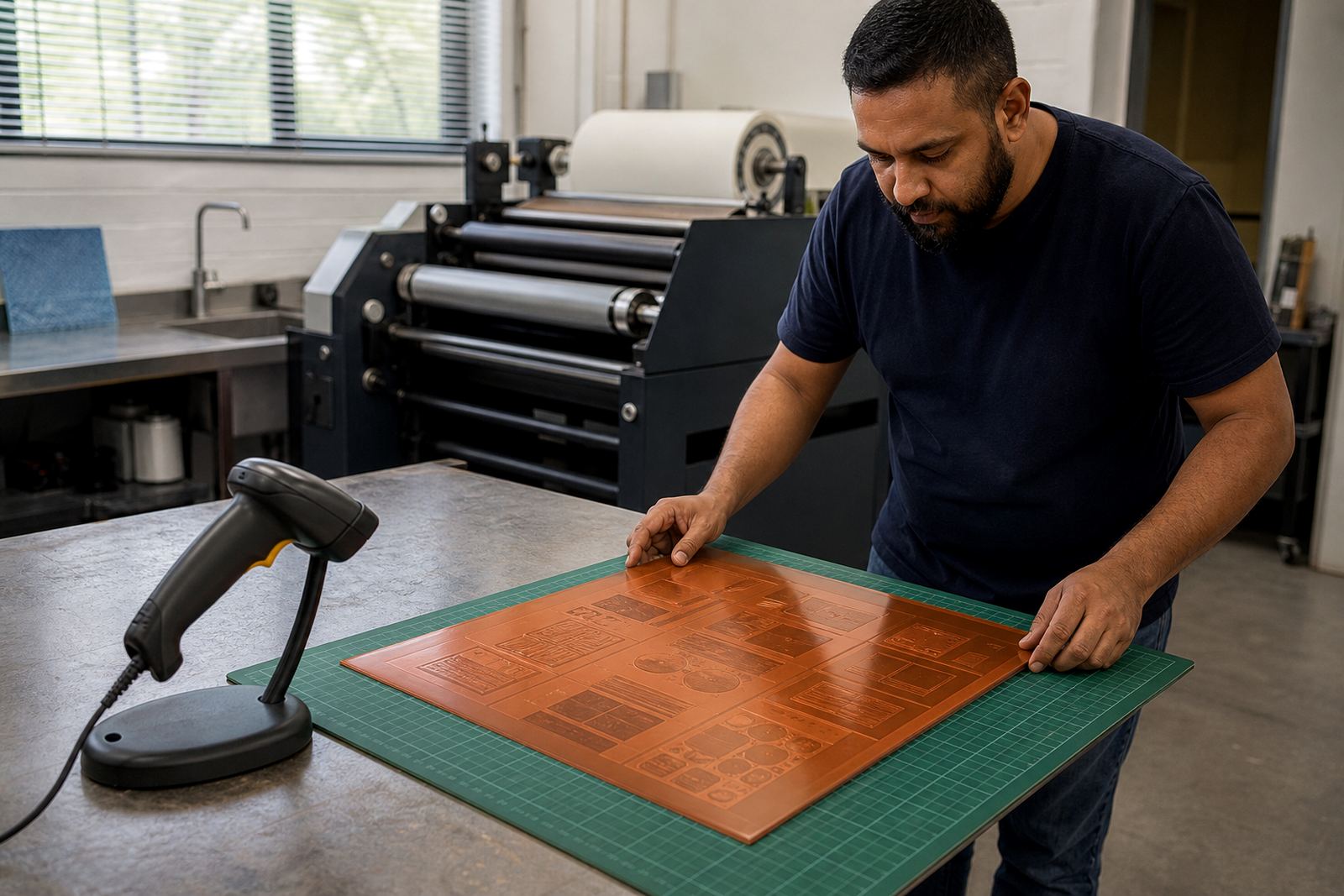
For printers handling sugar sachets, seasoning packs, condiment sticks or single-serve powders, the most useful plate work is not only clean reproduction, but also a layout that keeps every repeat consistent. That reduces make-ready waste and helps the operator get onto colour quicker.
- Check artwork scale before output.
- Confirm repeat length and knife position.
- Keep fine text and reverse type readable at press size.
- Mark any area where foil, white ink or solid panels will need extra care.
Typical Press Setups for Sachet Printing
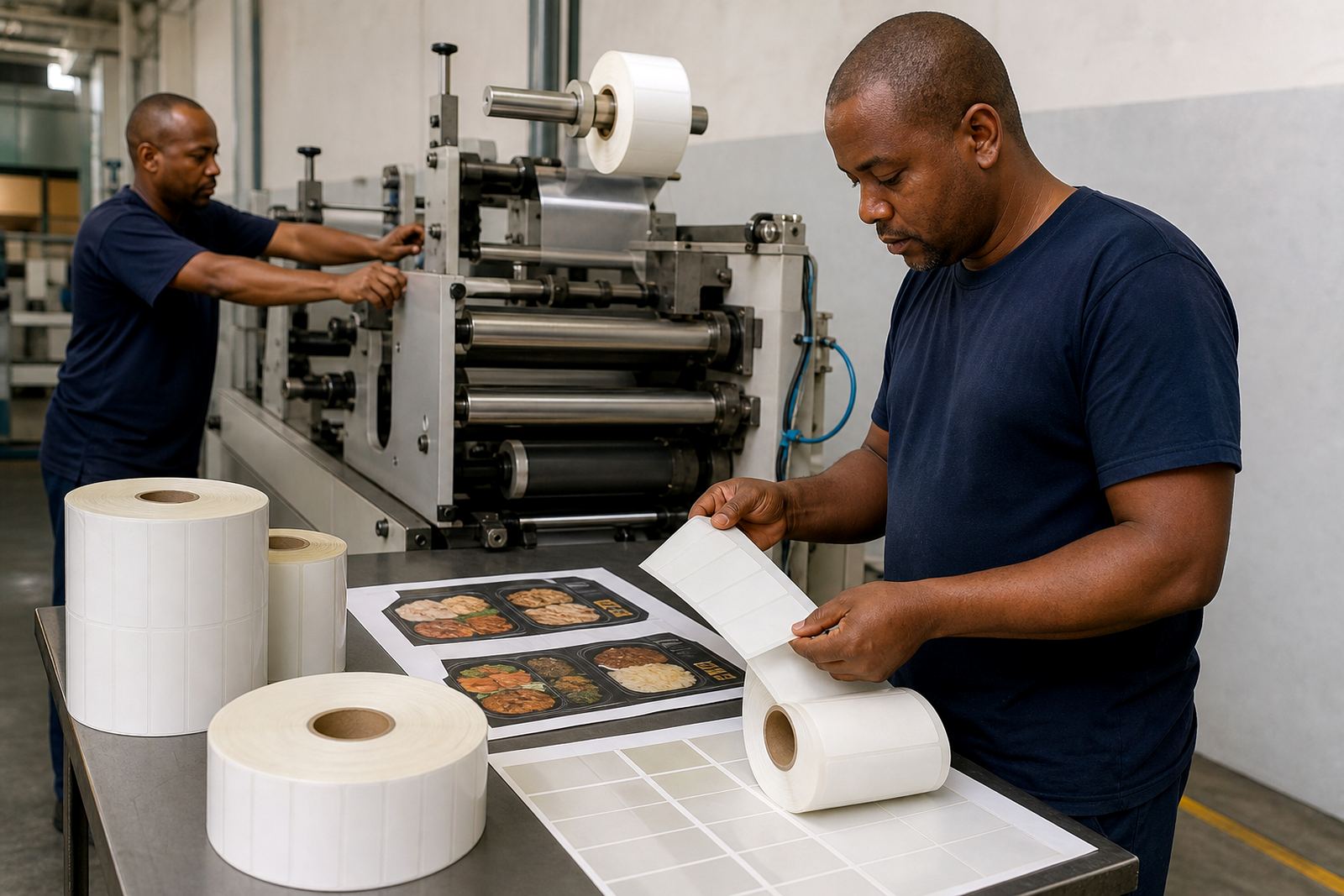
Most sachet jobs go through narrow web flexo equipment with one or more colour stations, rewind and slitting on the same line or nearby finishing. Some printers run short production batches, while others need steady repeat work for store packs and food service lines. Either way, the plates need to suit the press condition and the substrate being used.
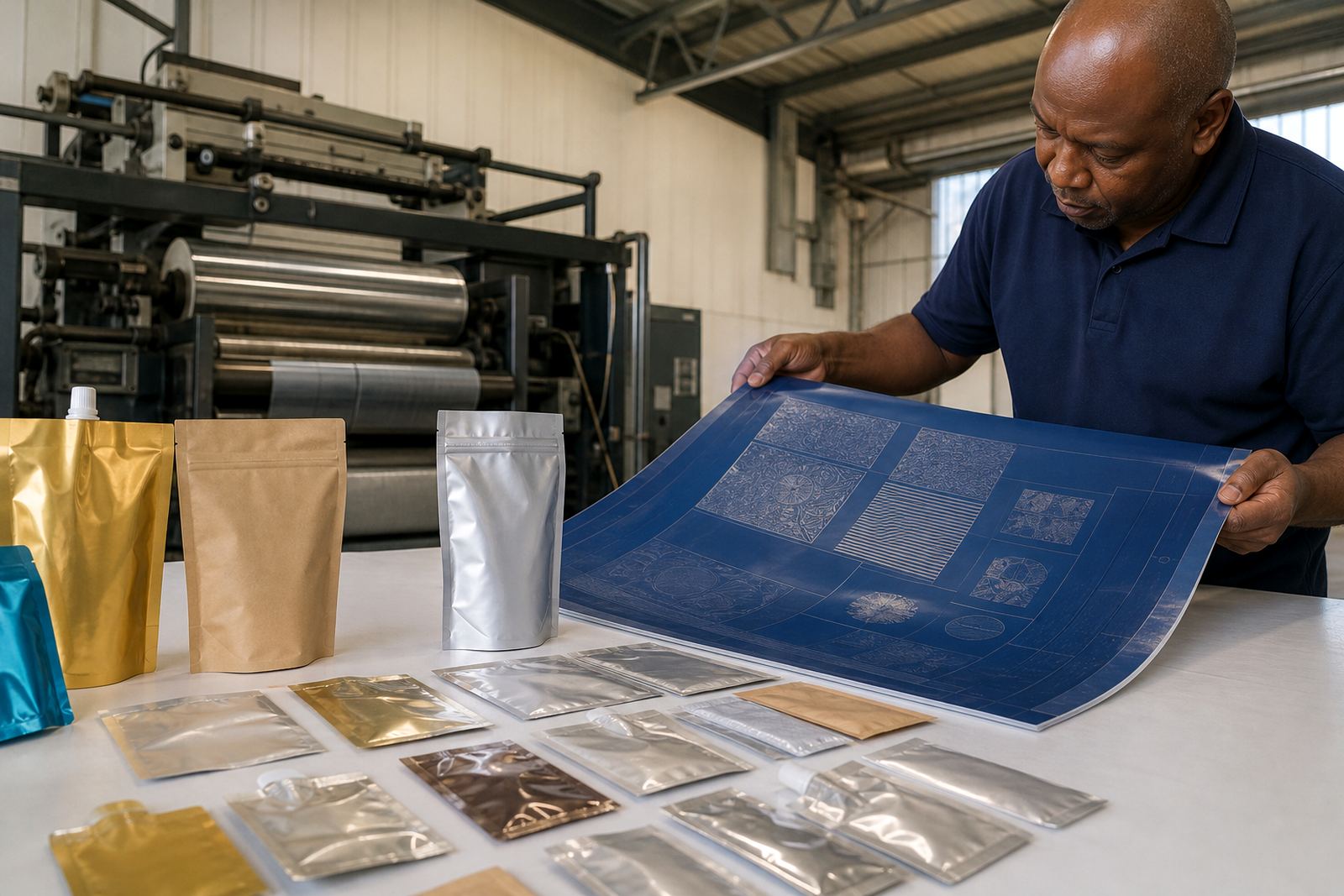
We work with jobs that may include paper laminate, film structures and coated stock. If the press is running in a hot plant or in coastal humidity, the artwork and plate handling still need to be checked carefully so the final image stays stable. On a busy schedule, that small bit of preparation saves a lot of stoppage time.
- Narrow web flexo presses
- Multi-colour print stations
- Inline slitting and rewinding
- Heat seal or pack conversion lines
- Cartons or outer sleeves matched to sachet packs
Artwork and Prepress Advice for Small Pack Copy
Small pack copy asks for discipline in prepress. Text that looks fine on screen can fill in on press if the line weight is too light, the screen choice is too fine, or the contrast is poor. Before plates are made, we check image placement, type size, overprint settings and any spot colour area that may need support from the printer.
In sachet work, proof comparison matters because even a small change in wording or line placement can affect compliance and readability. If the file carries multiple language versions, the layout should allow enough breathing room without making the pack look cluttered.
- Keep critical text away from seal areas.
- Avoid very thin borders around the pack edge.
- Use clear barcodes with adequate quiet zones.
- Confirm if the sachet will run flat or be folded after print.
Common Mistakes That Cost Time and Money
The most common problems on sachet work are easy to miss until the first pull. A plate may be correct on the file but wrong for the press if the repeat, trap or panel spacing has not been matched properly. In some cases the issue only shows up when the cutter is set and the wrong text lands too close to the seal.
Another problem is trying to print too much information in too little space. When the pack needs legal copy, flavour detail, promo wording and code marks, the layout must be planned early. Otherwise the printer ends up reworking plates, which adds cost and slows dispatch.
- Wrong repeat length for the final pack size
- Text too close to heat seal or cut line
- Poor linework in small icons or symbols
- Barcode placed where distortion is likely
- Missing plate labels during press make-ready
What Budget to Expect for Sachet Plate Jobs
Budget depends on pack size, number of colours, artwork complexity and how many plates are needed for the job. A simple sachet with a small colour count will sit at the lower end, while a detailed pack with fine text, multiple repeats or special layout control will move higher. As a working guide, many sachet plate jobs fall from about R850 to R3,500 for shorter, simpler sets, with more involved work ranging from around R3,500 to R9,500 or more depending on specification.
If the file needs artwork preflight, imposition planning, screening support or remake support, those services can be quoted alongside the plate work so the printer knows the full picture before approval. That helps planning for both small seasonal runs and repeat production.
For Midrand, Johannesburg, Pretoria, Durban, Cape Town, Gqeberha, East Rand and West Rand customers, courier delivery is arranged across South Africa. Collection coordination is also available where timing or local logistics make that the better option.
How Our Team Supports Sachet Printers
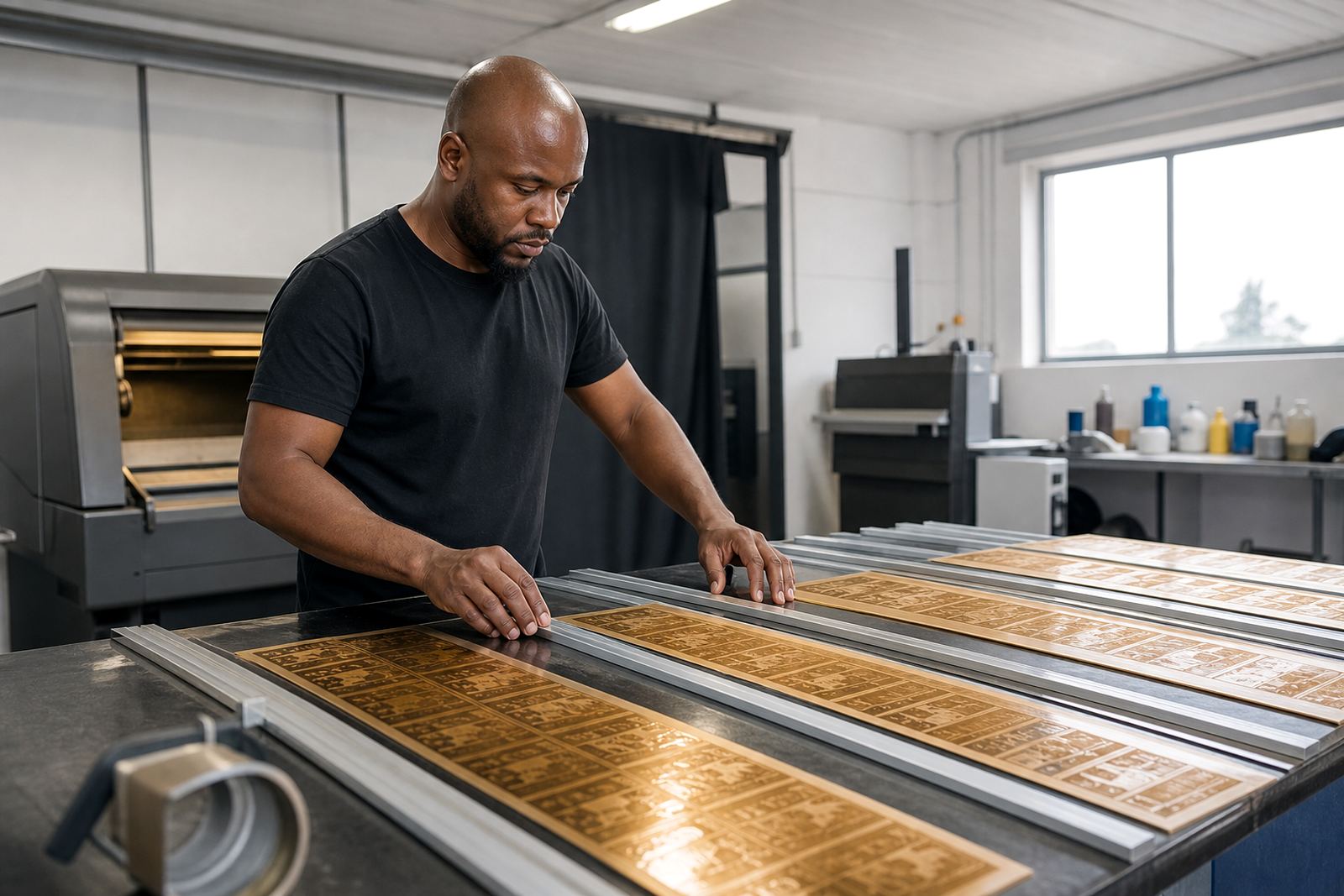
Flexo Printer Plates is based in Midrand, Gauteng and has worked with label and packaging printers since 2007. The team is led by Sibusiso Mthembu, with Ayesha Naidoo handling production, Pieter van Wyk on prepress, Lerato Molefe in client services, Morne Jacobs on plate mounting and Zinhle Dlamini coordinating logistics. That structure helps keep the process practical from file check through to dispatch packing.
Printers usually contact us through the enquiry form on the contact page when they want plate-making, technical job advice or help with a sachet layout that is giving trouble. We can also assist with plate trimming, plate labelling and proof comparison where the job needs a careful final check before press.
- Artwork preflight and file checking
- Imposition planning and screening support
- Plate trimming and labelling
- Dispatch packing and collection coordination
- Courier delivery across South Africa