

Flexible Packaging
Home / Applications / Flexible Packaging

Applications

Flexible Packaging

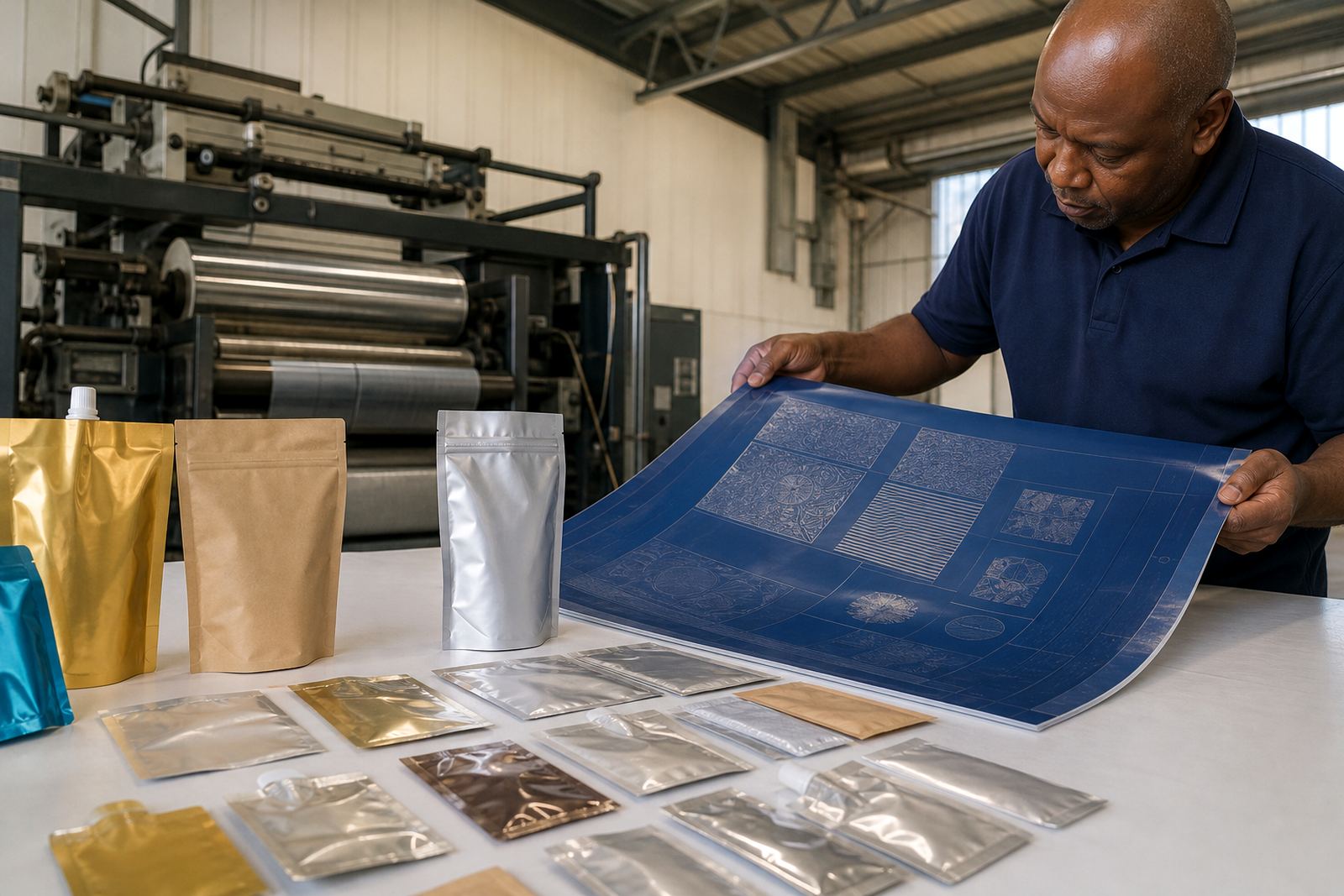
Flexible packaging jobs call for plates that hold detail on broad graphics, repeat cleanly and print well on the chosen substrate. From Midrand, we support label and packaging printers across South Africa with photopolymer plate-making, file checking and practical job advice.

Flexible Packaging Work Needs Plates That Match the Job

Flexible packaging can include sachets, pouches, wrappers, sleeves and other print forms that need dependable detail across repeat lengths. The plate has to carry text, fine lines, solids and reverses without breaking down on press, especially where the substrate is thin, stretch prone or sensitive to heat.

We work with printers who need flexo photopolymer plates for short runs, repeat packaging work and multi design jobs. A clean plate starts with the file, but it also depends on the way the artwork is checked, trapped, imposed and mounted. If any one of those steps is off, the pressroom feels it fast.

  • Broad graphics that need even ink transfer
  • Repeat lengths that must register accurately
  • Substrates such as film, paper, board and laminates
  • Jobs that need more than one plate set for a single product range

Typical Equipment Set for Packaging Printers

Packaging printers usually run a mix of prepress and pressroom equipment, and the plate-making side has to fit into that workflow. Some customers work from digital files with repeat layouts already set. Others need help with image placement, step-and-repeat planning or checking whether the artwork suits the print width and cylinder repeat. That is where technical job advice saves time.

For flexible packaging, the usual setup includes a plate-ready file, mounting tape or sleeves, proof references, and a clear label system for each colour and station. If the job has varnish, white, metallic or multiple spot colours, the plate set must be identified carefully before dispatch. A small mix-up at this stage can waste a full shift on press and the cost adds up quickly.

  • Prepress files with correct repeats and station order
  • Printed or digital proofs for comparison
  • Mounting gear matched to the press configuration
  • Clear plate labelling for each colour and side

Planning Advice Before the Plates Go to Production

Good planning starts with the substrate and ends with how the job will run on press. Film behaves differently to paper, and packaging stock can react to pressure, heat and ink laydown in ways that affect the finished look. If the artwork has fine type, reverse text or high coverage solids, we check whether the layout needs adjustment before plate-making starts.

It also helps to confirm the repeat length, cylinder size and any special handling notes upfront. On packaging work, a late change to trim or artwork position can throw out the whole set. We see this often when the client has a main pack and then a variety of sizes to follow. Keeping the naming clear from the start avoids confusion in the dispatch bay and on the machine floor.

In many cases, it is worth comparing the proof against the final file before plates are made. That comparison helps catch missing bleed, weak knockouts or type that is too small to hold. On tight schedules, a quick preflight check is often the difference between a smooth handover and a costly remake.

Common Mistakes on Flexible Packaging Jobs

The most common problems are not always printing problems, they often begin in the file. A job may look fine on screen, then fail once it is imposed for the cylinder or mounted for press. That is why we focus on artwork checking, screening support and plate labelling before release.

Typical mistakes include setting the wrong repeat, leaving low resolution images in place, forgetting to account for substrate stretch, or sending colour elements that are too close together. Small detail can close up on press and a thin outline may disappear. If the pack includes fine reversed text or a barcode, that needs extra attention before production starts.

  • Incorrect repeat or station positioning
  • Artwork that has no allowance for stretch or movement
  • Thin type, weak lines or poor contrast
  • Unclear file naming that causes plate mix-ups
  • Late artwork changes after the plates have been approved

Budget Ranges for Packaging Plate Work

Pricing depends on plate size, number of colours, amount of artwork checking needed and whether the job needs trimming, mounting or remake support. A small single-colour packaging plate set will sit at a very different level to a multi-colour release with several repeats and colour stations. We keep the quoting practical so printers can plan the job before they commit to press time.

For flexible packaging in South Africa, a basic plate order may start from around R850 for simple work, while more involved multi-colour packaging sets can move into the several thousand Rand range depending on size and complexity. If the job needs urgent dispatch, extra handling or repeated remake work, that will affect the final figure. It is better to price the full picture early rather than chase additions after the file is already in process.

Couriers move work from Midrand to Johannesburg, Pretoria, Durban, Cape Town and Gqeberha, and we also coordinate collections for East Rand and West Rand printers. That helps when a pressroom is dealing with load-shedding, shift changes or a packed production week and needs plates on site without delay.

What Our Midrand Team Handles on Flexible Packaging Jobs

From our Midrand base, the team handles plate making alongside the practical support that packaging printers need around it. That includes checking files, planning imposition, comparing proofs, trimming plates, labelling them clearly and packing them for dispatch. When required, we also help with remake support and collection coordination so the job keeps moving.

Sibusiso Mthembu leads the operation as Managing Director, with Ayesha Naidoo overseeing production and Pieter van Wyk handling prepress checks. Lerato Molefe manages client services, Morne Jacobs handles mounting work and Zinhle Dlamini coordinates logistics. For printers working near the coast, careful packing matters because humidity can affect storage and handling, while inland teams often need dependable dispatch timing around municipal load limits and power interruptions.

When Flexible Packaging Needs a Second Set of Eyes

There are jobs where a second check is worth far more than the plate cost. If a pack is going into wide retail distribution, has multiple SKUs or carries regulatory text, the file should be checked before production begins. That is especially true where the artwork will be used again on future repeats and needs to match exactly from run to run.

Clients often come to us when they want a careful, plain spoken view on whether the job is press-ready. We look at the file, the repeat, the plate plan and the way the job will be packed for delivery. It is a practical step, but it saves a lot of grief later on press.

What our Flexo Plate customers say

Verified Google reviews

Questions we get asked

What kinds of flexible packaging jobs do you make plates for?

We support plate work for pouches, sachets, wrappers, sleeves and similar packaging jobs where repeat accuracy, clean detail and correct colour station order matter.

Do you help with files before plate-making starts?

Yes. We can assist with artwork preflight, file checking, imposition planning, screening support and proof comparison before the plates are produced.

Can you courier plates outside Gauteng?

Yes. We courier across South Africa, including Johannesburg, Pretoria, Durban, Cape Town and Gqeberha, with coordination for nearby areas such as East Rand and West Rand.

Planning something? Send the team a message.

Contact form