
Packing plates for the realities of South African transport
Flexo plates do not only need to be made accurately, they also need to get to the printer in a condition that still supports clean mounting and print consistency. Our dispatch packing service is built around that point. We pack plates for road courier movement from Midrand to Johannesburg, Pretoria, Durban, Cape Town, Gqeberha and other centres, taking account of stacking, vibration, heat and the way parcels are handled in depots and on delivery vehicles.
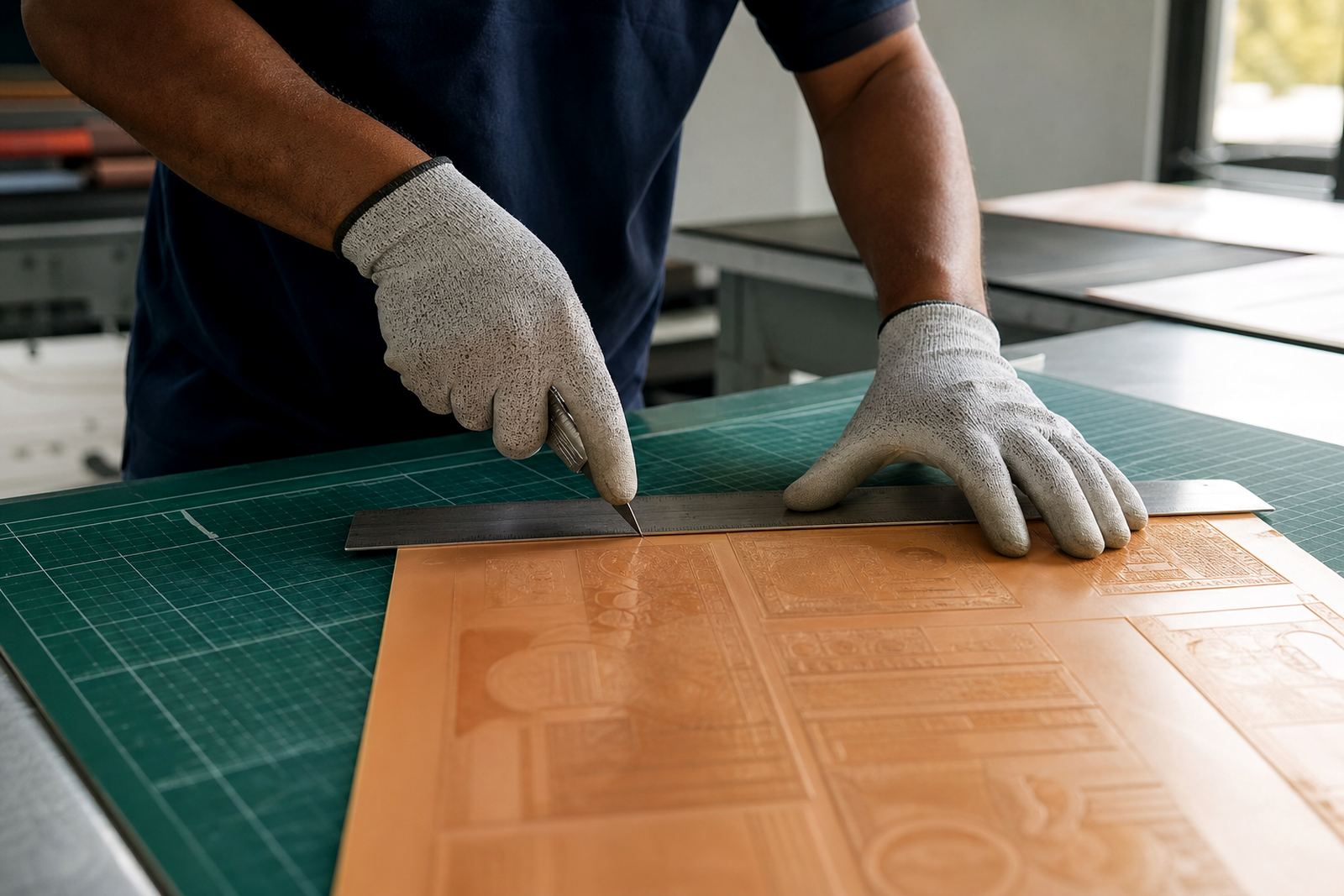
The focus is simple: keep the plate flat, protect the image area, and make it easy for the receiving team to identify what is inside. That matters for small label runs as much as repeat packaging jobs. In many cases the final few millimetres of handling can affect the usefulness of a plate, so we treat the packing stage as part of the production process, not an afterthought.
What is included in dispatch packing
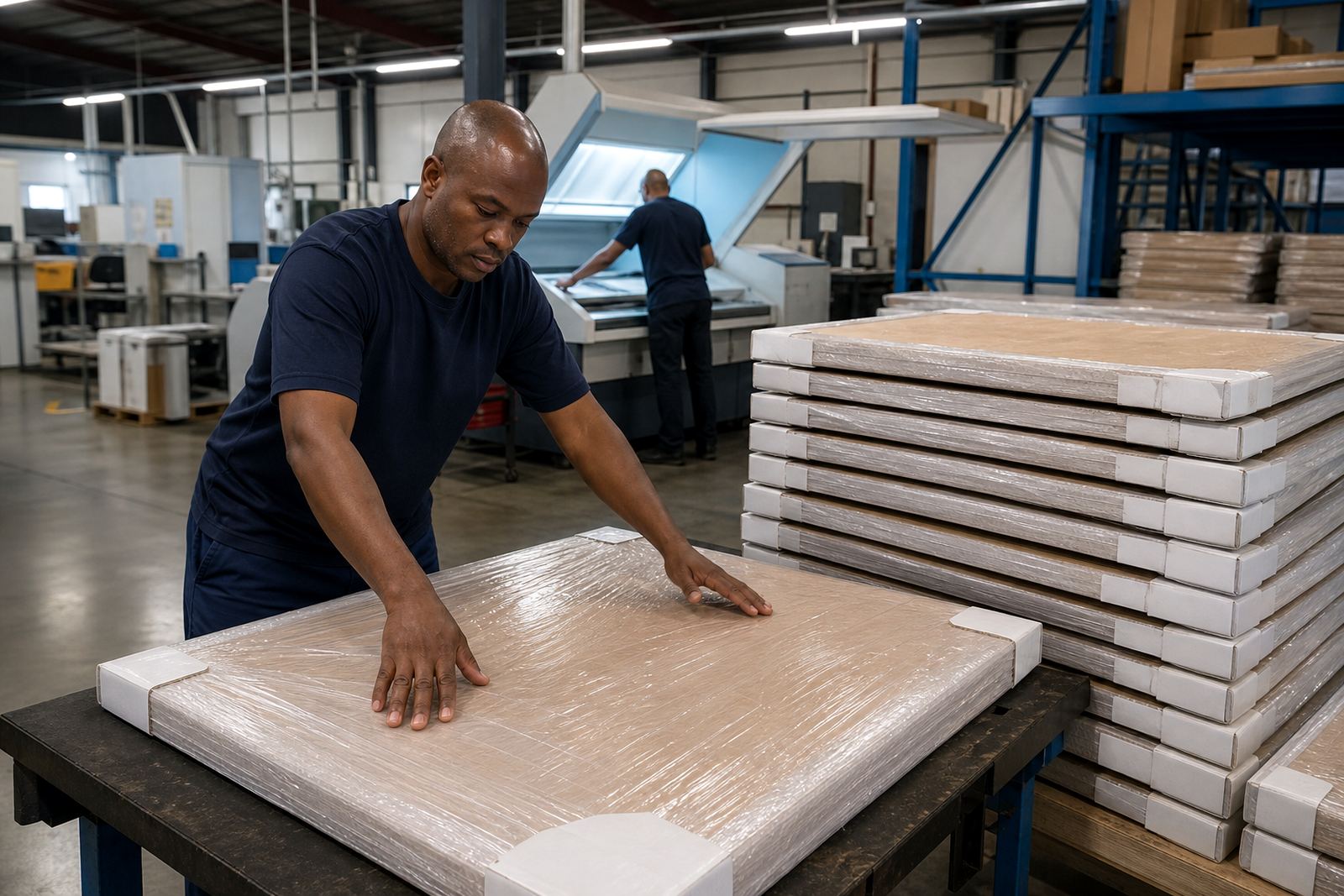
Each packing job is put together to suit the plate size, quantity and route. We do not use a one-size-fits-all method. A short local collection in Midrand may need a different pack from a multi-box courier shipment going to Durban or Cape Town. The aim is to reduce flex, surface contact and movement inside the carton.
- Flat wrap and interleaf protection for the plate surface
- Corner and edge support where required
- Clear job labelling for quick identification on receipt
- Grouping by order, revision or press line
- Dispatch packing for courier, collection or scheduled delivery
- Optional plate separation for multiple jobs in one consignment
Where the job calls for it, we also prepare the parcel in a way that helps the printer sort plates quickly on arrival. That can save time during press make-ready, especially when several repeats or versions are moving at once.
How the packing process works from job release to handover
The process starts once the plates are ready for dispatch. We confirm the job details, check quantities and match the pack to the destination and collection method. If there are separate sets for different presses or sites, those are split and labelled before packing begins.
After that, the plates are arranged flat, separated where needed, and packed to limit movement. We keep the outer pack practical for handling in a warehouse or courier environment. That means no loose space that allows the load to shift, and no unnecessary bulk that makes stacking awkward. Once packed, the order is marked for collection coordination or courier release.
- Job confirmation and packing instructions
- Plate count check and set separation
- Flat packing with surface protection
- Label application and dispatch note matching
- Handover for collection or courier movement
For urgent or same day local movement in Gauteng, we can prepare packs for collection from our Midrand base with the same practical approach used for longer courier routes.
Packing standards for labels and packaging work
Label and packaging printers often work with repeat sizes, multiple artwork versions and plates that need to arrive ready for mounting. Our packing method takes that into account. For smaller plates, the main risk is scuffing and curl. For larger plates, the risk is flex and pressure marks. We pack to suit the actual dimensions of the job, not just the number of plates.
Typical handling considerations include plate thickness, cut size, surface finish and whether the order includes one-off samples or repeat production sets. In coastal routes such as Durban and Gqeberha, we also think about humidity and how long the pack may sit in a vehicle or depot before final delivery. If the route is going into a busy industrial area or a multi-tenant site, we make sure the labels are easy to read and the parcel is simple to sign for.
- Suitable for small labels, cartons, sleeves and folding carton work
- Flat protection for single plates and repeated sets
- Clear mark-up for version control and press room sorting
- Courier-ready outer packing for local and national movement
Turnaround and pricing approach
Turnaround depends on the size of the order, the packing method required and whether the plates are being released with other production steps such as trimming, labelling or collection coordination. Simple dispatch packs are handled as part of the normal workflow. Larger consignments or jobs with multiple destinations take a bit more preparation.
Pricing is based on the packing effort, materials used and dispatch requirements for the specific order. We keep it practical and item based, so clients are not paying for unnecessary extras. A local collection pack for a single order will not be priced the same as a multi-box courier shipment going to several branches. If the job needs extra separation, stronger outer packaging or special marking, that is included in the quote before release.
For many customers, the real value is not only the packing itself but the time saved when the order arrives organised and ready to move into production. That is especially useful where press schedules are tight or the receiving team works across multiple sites.
Maintenance intervals and recheck timing
Dispatch packing is not a maintenance item in the same way as plates on press, but the condition of packed goods should still be checked at regular intervals. If plates are being stored before collection, we recommend a quick inspection before release to make sure the outer pack is still flat, dry and correctly labelled. This is especially useful during summer heat, on long haul routes, or where goods may wait in a dispatch area overnight.
If plates are being held for a later courier booking, recheck the pack before handover. For repeat jobs, it is wise to review the packing method from time to time so it still suits the plate format and the way the printer receives goods. Small changes in carton size, route or handling can mean a better pack is needed. We also advise clients to keep a simple record of what was packed, when it was released and who received it.
- Check before collection if the pack has been stored
- Reinspect after any delay or route change
- Review packing method on repeat jobs or new formats
- Confirm labels before dispatch to avoid sorting delays
Good packing is part of good plate care, and it helps the job stay organised from Midrand to the final press room.
Working with our Midrand team
Our dispatch packing is handled by a team that understands the daily rhythm of flexo production. Sibusiso Mthembu oversees the operation as Managing Director, with Ayesha Naidoo managing production flow and Zinhle Dlamini coordinating dispatch movement. That means the packing step sits inside a working production environment, not a generic storage setup.
Clients in Johannesburg, Pretoria, the East Rand, West Rand, Durban, Cape Town and Gqeberha use the service when they need plates prepared for handover without guesswork. Whether the order is going to a label printer, a packaging plant or a smaller trade customer, the process is kept practical and easy to follow. If a job needs a specific packing note, a split dispatch or collection coordination, we handle it as part of the release.
For enquiries, clients use the form on our contact page and we respond with the packing and dispatch details needed for the order.
Key facts
| Service area | Midrand base with courier delivery across South Africa |
|---|---|
| Typical use | Flexo photopolymer plates for label and packaging printers |
| Packing focus | Flat protection, clear labelling and practical handling |
| Order types | Single sets, repeat jobs, split consignments and multi-box releases |
| Dispatch methods | Courier movement, collection coordination and local handover |
| Materials handled | Prepared photopolymer plates in common flexo production sizes |