
Press-ready plates made for label and packaging work
Our plate making service is set up for printers who need consistent flexo plates for labels, sleeves, cartons, sachets and other packaging formats. We work with artwork supplied by clients, then prepare photopolymer plates with the right image detail, relief depth and finishing for the job at hand. The focus is on clean reproduction, repeatability and plates that hold up through production runs without unnecessary waste.
Because label and packaging work can vary from short runs to ongoing repeat work, we tailor the process to each job. Some clients need fine text, small barcodes and halftones that must hold steady on press. Others need larger solids, reverse text or multiple-up layouts. We handle those requirements with practical plate-making methods and careful prepress checks. Sibusiso Mthembu leads the business from our Midrand base, with support from a team that manages prepress, mounting, client communication and dispatch.
What is included in the plate-making service
Our service covers the key steps needed to move from approved artwork to finished plates ready for use on press. We do not treat plate-making as a single output only. We look at the file, the print intent, plate size and mounting needs so the end result suits the pressroom and the substrate. This helps reduce avoidable reworks and keeps production moving.
- Artwork preflight and file checking
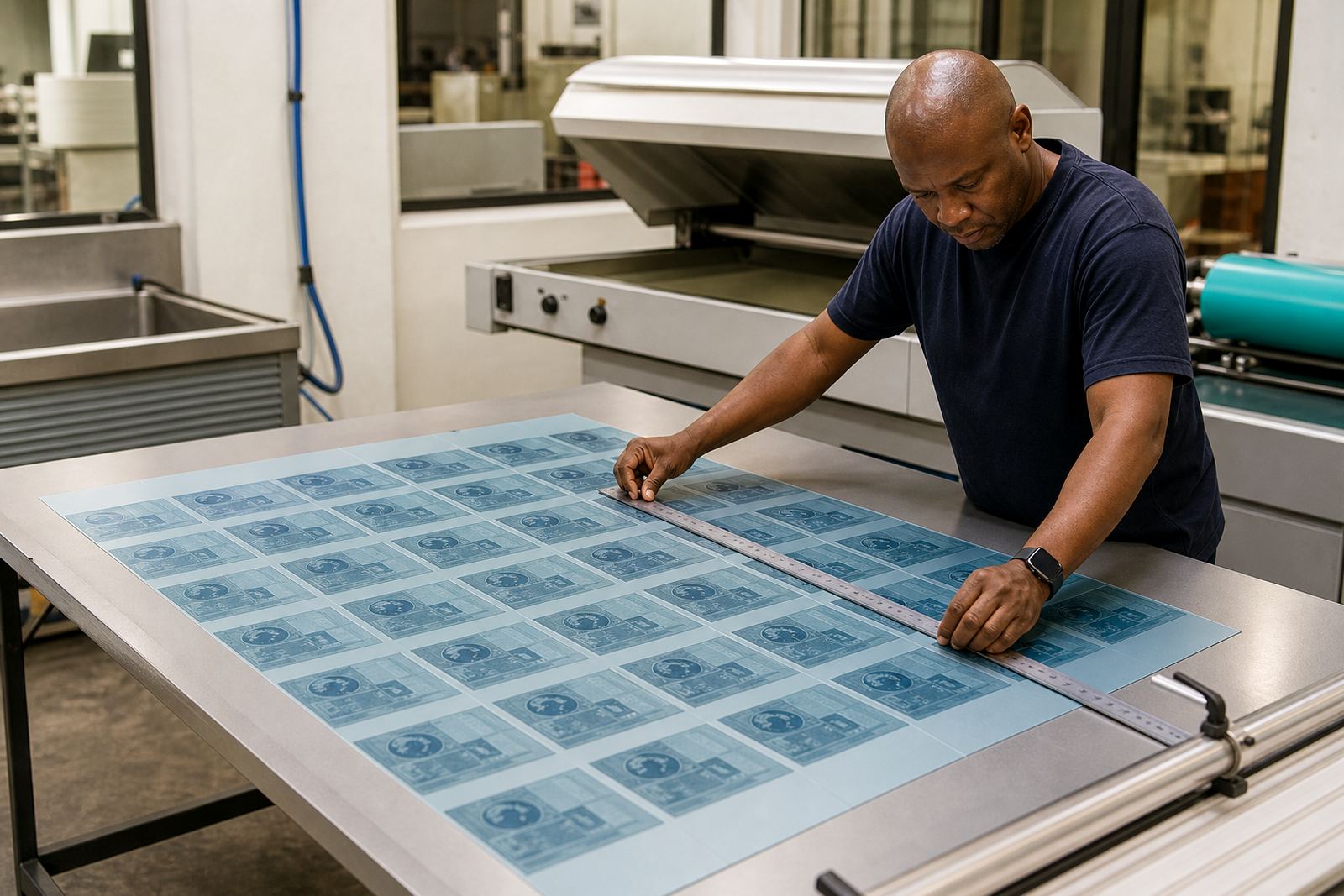
- Imposition planning for efficient plate use
- Screening support for detail and solids
- Proof comparison before plate output
- Plate trimming and plate labelling
- Remake support where a file or plate needs correction
- Dispatch packing and collection coordination
For printers working under load-shedding pressure or tight production windows, proper preparation matters. A clean file and clear production note can save a lot of back-and-forth later. We also assist where a job needs a practical technical discussion before it goes to plate.
How the plate-making process works
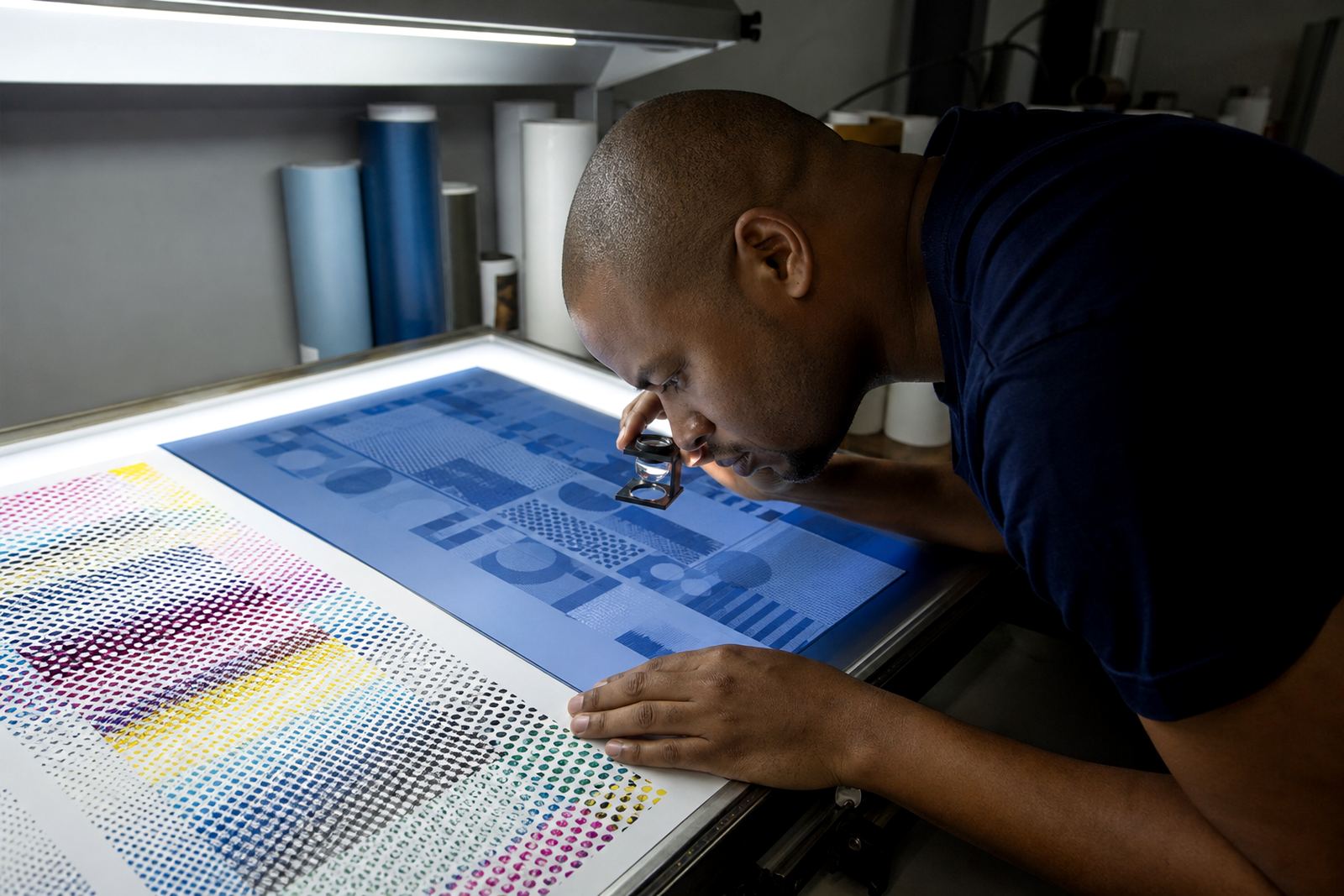
The process begins when your job is sent through the enquiry form on our contact page. From there, we check the files for basic print readiness, including artwork setup, image placement, line weights, type size and any issues that may affect exposure or mounting. If we spot a concern, we flag it early so the correction can be made before output. That saves time and avoids unnecessary remake work.
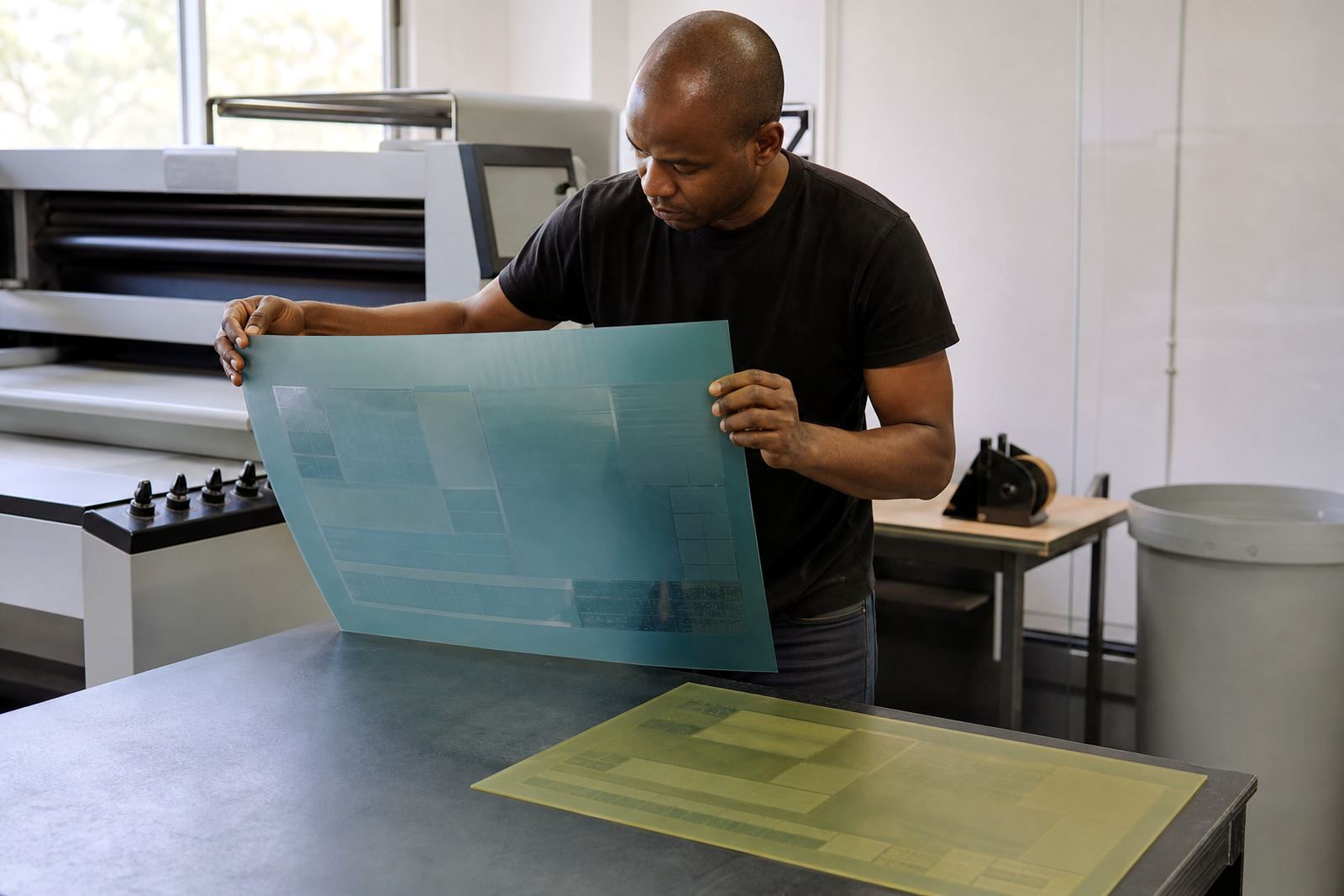
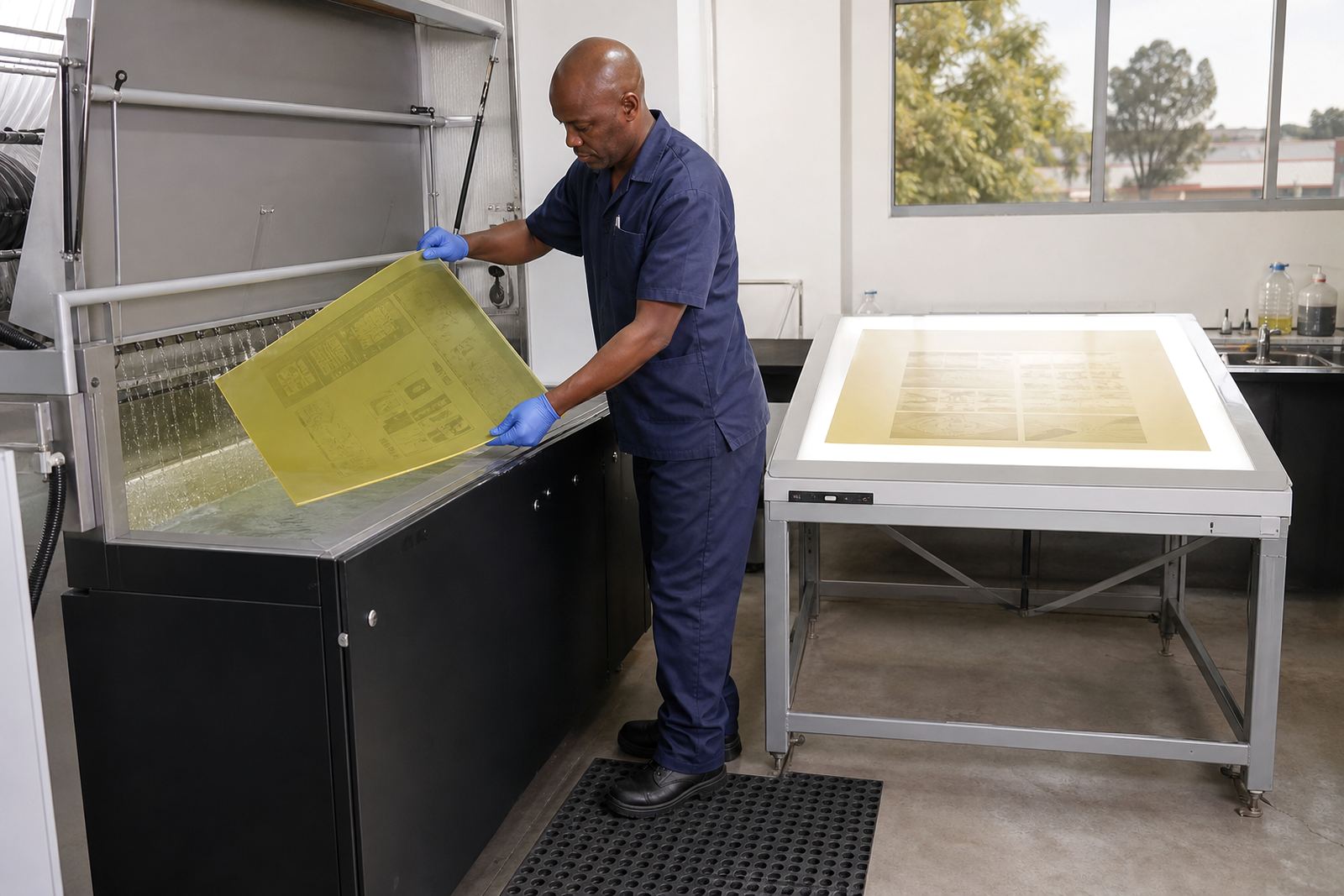
Once the file is approved for production, we prepare the plate layout and move through imaging, exposure, washout, drying and finishing. Plate mounting and trimming are handled with care, especially on repeat work where registration and fit matter. Morne Jacobs handles mounting support, while Pieter van Wyk checks the prepress side and Ayesha Naidoo oversees production. Zinhle Dlamini manages collection and courier dispatch so completed jobs are packed properly and sent where needed.
On the shop floor, the aim is accurate plate fit and consistent detail. That is important for labels with fine text and packaging jobs with solid areas that must print evenly. The process is not rushed for the sake of it, because a plate that looks right on screen can still fail on press if the setup is poor. A bit of care upfront usually prevents a bigger headache later.
Turnaround, dispatch and repeat jobs
Turnaround depends on the size of the job, the number of plates, the amount of file correction needed and whether mounting or remake support is required. Small jobs can often move quickly once files are in order, while larger packaging sets need more checking and plate planning. We do not promise a one-size-fits-all turnaround because production requirements differ from job to job.
Our Midrand base is well placed for courier delivery across Johannesburg, Pretoria, Durban, Cape Town and Gqeberha, as well as the East Rand and West Rand. We also support collection coordination for clients who prefer to arrange pick-up. Every packed job is checked before dispatch so the plates arrive sorted, labelled and ready for the pressroom. That matters when a printer is trying to keep a line moving and does not want to be sorting through loose parts on arrival.
- Midrand collection and local dispatch support
- Courier delivery to major South African centres
- Clear plate labelling for easy identification
- Packing suited to transport and handling
Pricing based on plate size, complexity and volume
Our pricing approach is based on the practical details of the job. Plate size, image area, number of plates, amount of prepress work, mounting requirements and any remake support all affect the final cost. A simple repeat label job will usually price differently from a multi-part packaging set with screening needs and detailed imposition planning. That is normal, because the work is not the same.
We quote from the information supplied and may ask for more detail if the artwork or job specs are incomplete. If the job needs proof comparison, extra checking or a rework after file correction, we quote that into the job so there are no surprises. For printers managing monthly repeat work, the same job can be prepared more efficiently once the setup is established. Pricing stays practical and aligned to the actual production steps involved, rather than being drawn from a generic rate card that does not suit real press work.
Where possible, we help clients compare options before production starts. Sometimes a small change to layout or plate size can cut material waste. In other cases, the best answer is simply to keep the job as it is and print with the right plate structure. That advice is part of the service.
Maintenance intervals and when plates should be checked
Flexo plates are working tools, so they should be reviewed at sensible intervals rather than left until a problem shows on press. The right check frequency depends on how often a plate is used, how it is stored and what materials it prints on. Coastal humidity, heat and general handling can all affect plate condition, especially if plates are moved between sites or stored without proper protection.
As a practical rule, plates should be inspected before repeat use, after transport, and whenever the printed result changes in a way that cannot be explained by ink or substrate alone. Look for distortion, damaged edges, contamination, mounting issues and any loss of detail. If a plate is being reused often, it is worth checking the fit and surface condition before each production run. Small problems are easier to deal with early than after the press has started.
- Inspect before repeat use
- Check after courier delivery or collection
- Review storage conditions in humid or hot environments
- Replace or remake if image detail or fit is compromised
Good maintenance keeps the plate library usable for longer and supports steadier print quality across the year. It also helps when production is interrupted by load-shedding or a schedule change, because the plates are ready when the press is ready.
Key facts
| Service area | Midrand, Gauteng with courier delivery across South Africa |
|---|---|
| Plate type | Flexo photopolymer plates for label and packaging printing |
| Typical use | Labels, cartons, sleeves, sachets and related packaging work |
| File support | Artwork preflight, file checking and proof comparison |
| Plate finish | Trimming, labelling, mounting support and dispatch packing |
| Ordering method | Enquiry form on the contact page |