
Screened Image Support For Mixed Print Conditions
Screening support is the part of plate making where tonal behaviour is checked before the plate goes out for production. In flexo work, a screened area can behave differently depending on the artwork, line screen, anilox choice, plate relief and the board or film being printed. That is why we look at the job as a whole, not just the image file.
For label and packaging printers, this service is often used on work that has fine tints, skin tones, gradients, reverse type, vignettes or image areas that must hold detail without filling in. We can help with screened image areas on solvent, water-based and UV flexo jobs, including short-run label work and repeat packaging orders.
- Image areas with light tints, fades and smooth tonal steps
- Fine detail that must print cleanly on narrow web or carton work
- Screen settings suited to the substrate and press setup
- Advice on where tonal loss or dot gain may affect the final result
What Our Screening Support Covers
We review the elements that influence how the screened part of the plate will print. This includes checking the artwork file for screen values, trap, tonal range and image placement, then relating that to the physical plate and the press conditions it is likely to face. The goal is practical control, not guesswork.
Support can be used during a new job, when a repeat order needs matching, or when a customer wants better consistency across multiple SKUs. If the job has already been set up, we can still assist by checking the plate data and flagging areas that may need adjustment before dispatch.
- File checking for screened areas and tone builds
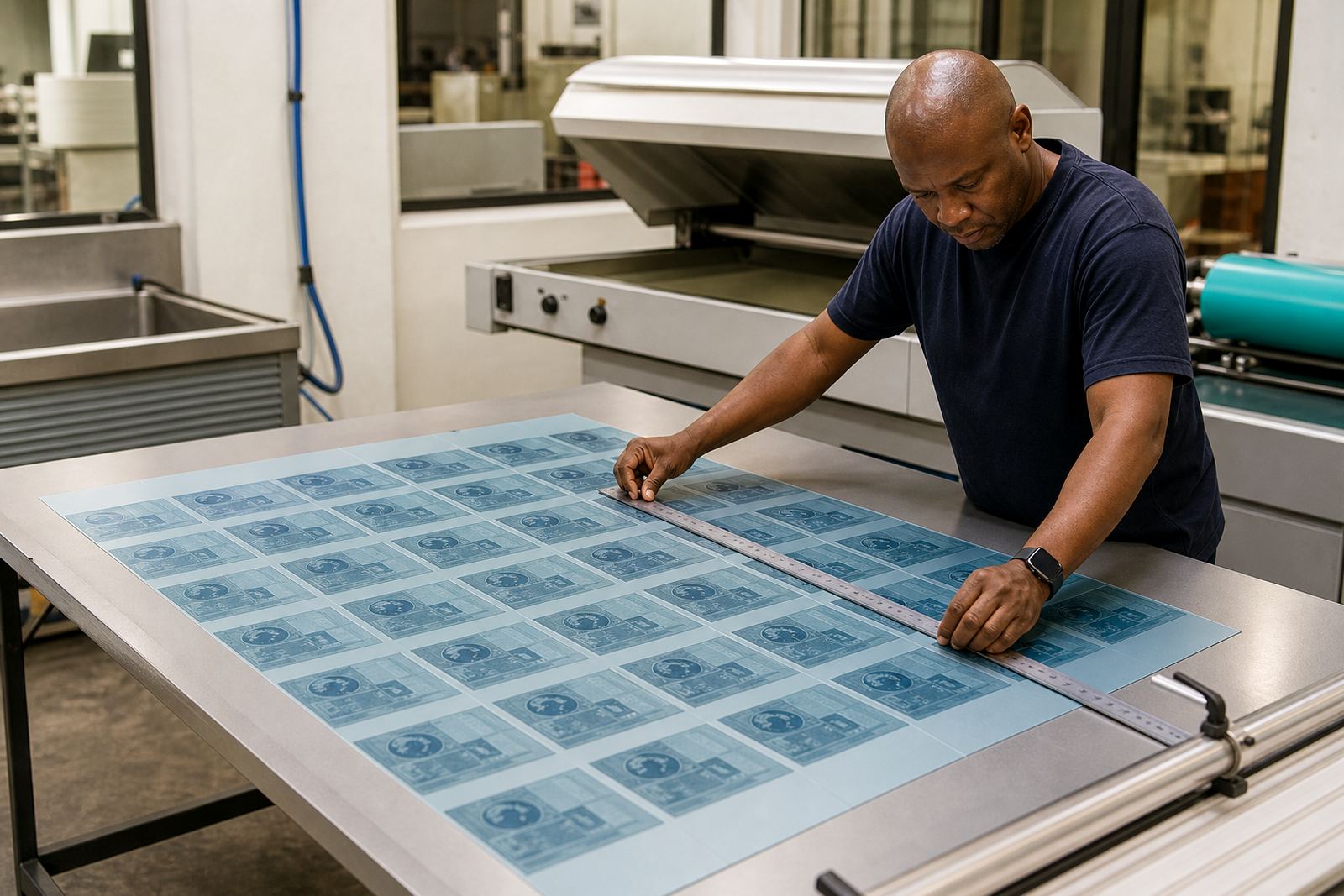
- Imposition planning where screen placement matters on the sheet or web
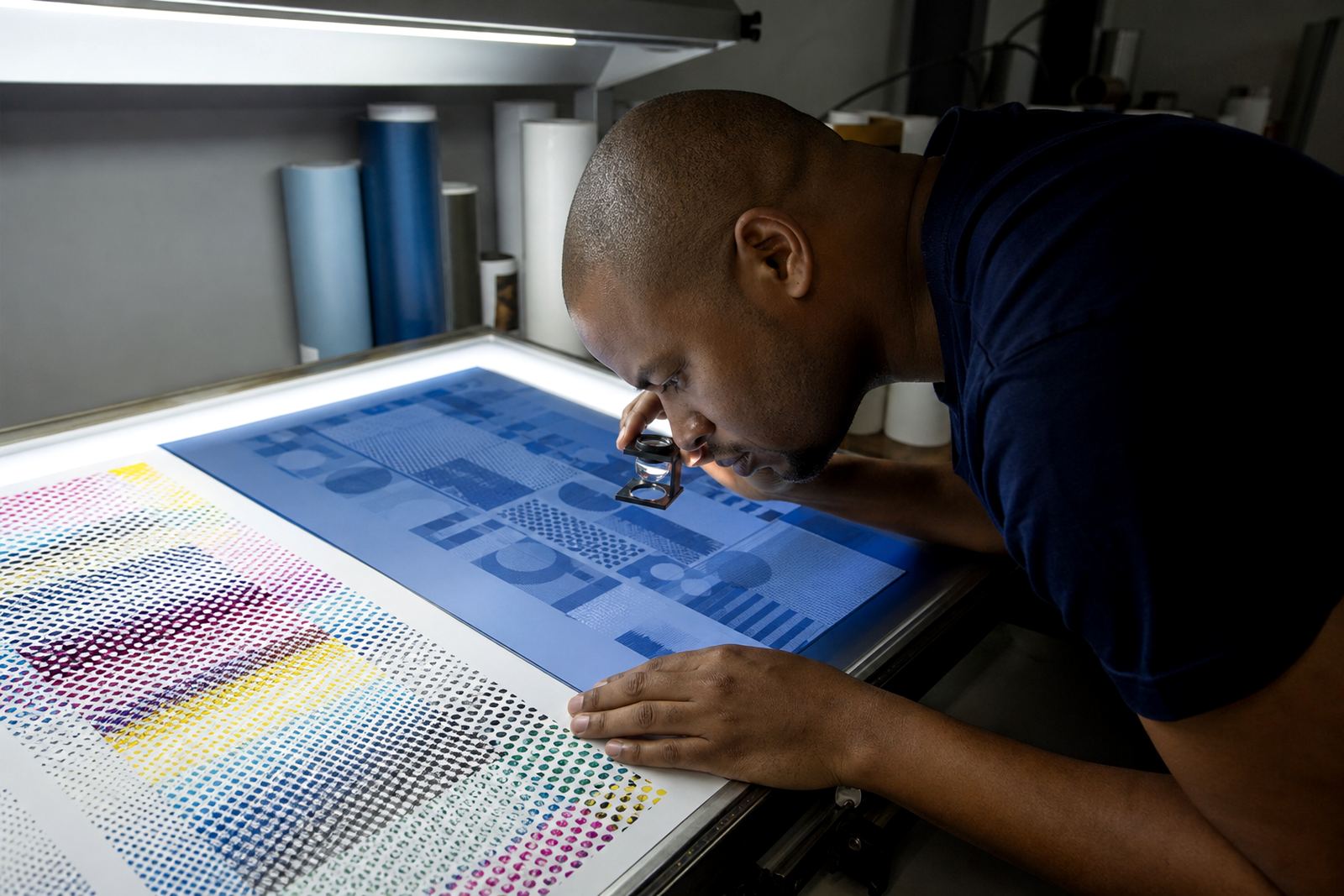
- Proof comparison against the intended print outcome
- Technical advice on plate relief, relief depth and tonal hold
How We Handle Screening Support From File To Plate
We start by looking at the artwork and the job brief. If the screen sits inside a small label, a carton panel or a repeat image, the usable area and the plate dimensions must be handled carefully. From there we review the tonal structure, check whether the job calls for a tighter or softer screen, and confirm any special handling needed around solids and fine highlights.
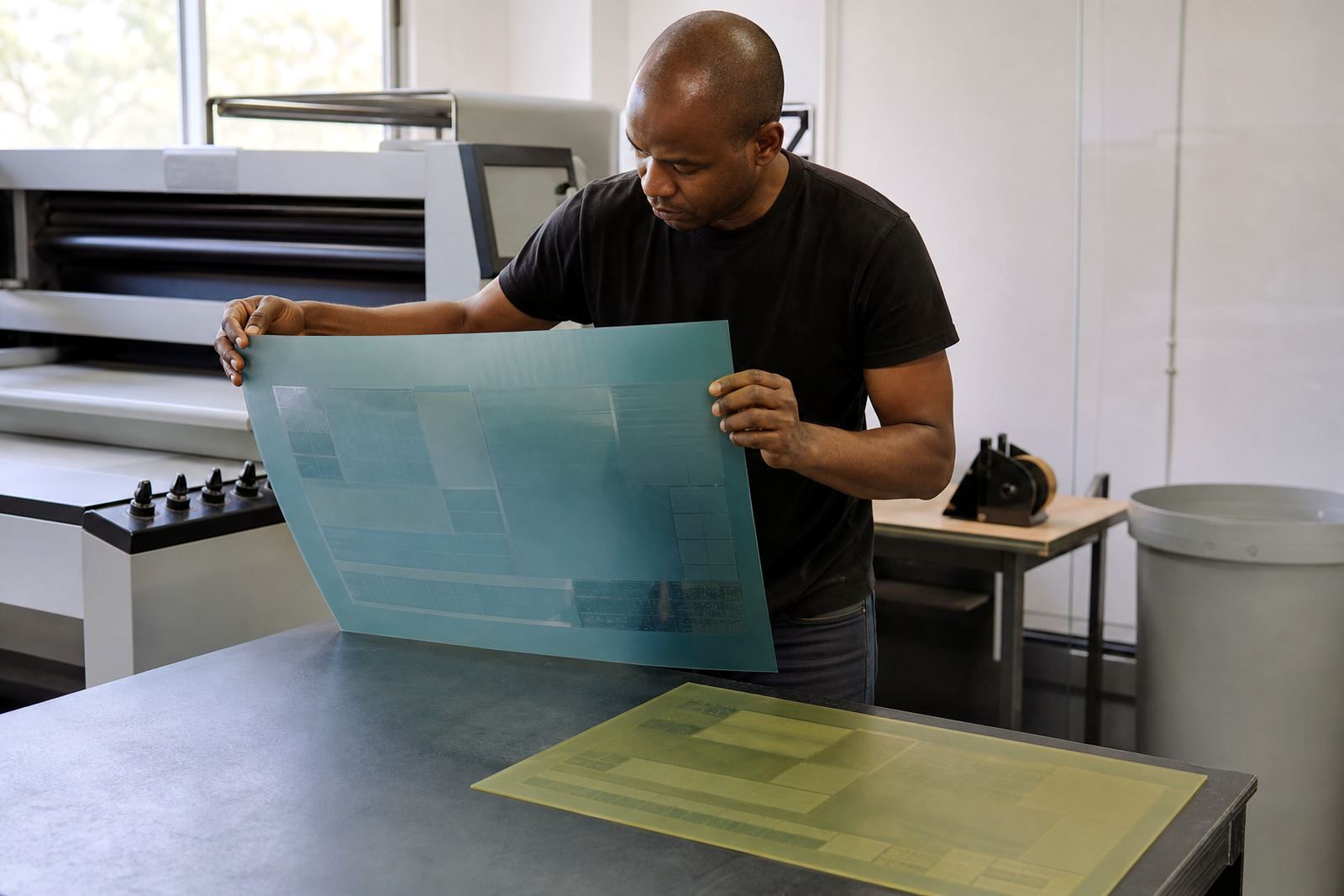
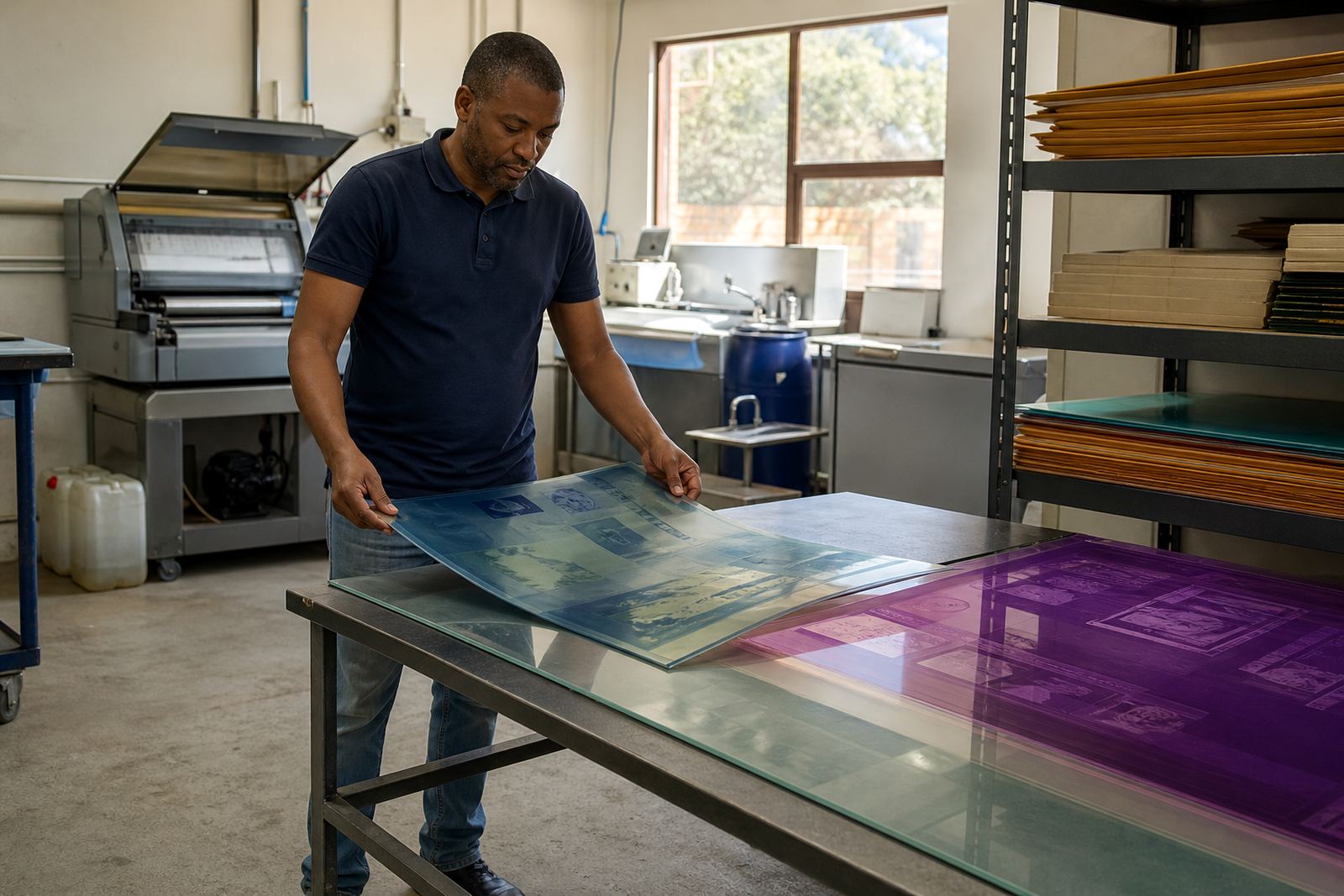
Once the screen plan is agreed, production can proceed with the photopolymer plate-making steps. That may include plate imaging, washout, drying, finishing, trimming and labelling. If there are areas that need attention for a later repeat, we note them so the next run can be matched more easily. Minor packing slips can happen in a busy shop, so every job is checked before dispatch, which helps keep the plate set in order.
- Review of artwork, substrate and press details
- Screening advice before imaging
- Plate production and finishing
- Final check, labelling and courier or collection coordination
Useful Specs For Screened Flexo Work
Screening support is normally guided by the job’s print intent and the pressroom setup. Different printers prefer different tonal ranges, and some artwork needs a tighter control of highlights or a heavier hand on dark areas. We work with the plate requirements that suit the job rather than forcing one setting across everything.
Typical screening considerations can include line screen selection, tonal range, highlight retention, reverse type stability and image detail on narrow or wide web work. If a job is going onto packaging board that may move with moisture, or labels that need to hold through handling and transport, those factors are part of the recommendation. In Gauteng and coastal areas alike, storage conditions matter too, especially where heat and humidity can affect handling before press.
- Suitable for label and packaging print jobs
- Screen handling for fine tints, gradients and image detail
- Advice for UV, solvent and water-based flexo workflows
- Consideration for storage, humidity and plate handling before press
Turnaround, Collections And Courier Dispatch
Turnaround depends on the job size, the complexity of the screening area and whether files are ready for production. A simple screened repeat with clear instructions can move faster than a job that needs extra proof comparison or artwork correction. We keep the process practical and communicate what is needed before plates are made.
Based in Midrand, we arrange collection and courier delivery across South Africa, including Johannesburg, Pretoria, Durban, Cape Town and Gqeberha. Local delivery around the East Rand and West Rand can also be arranged. If a job is urgent, it helps to send clean artwork and job notes upfront so the screening review can begin without delay.
- Midrand collection for nearby printers
- Courier dispatch across South Africa
- Delivery support for repeat and one-off jobs
- Job notes reviewed before plate production starts
Pricing Approach And Repeat Job Maintenance
Pricing is based on the amount of screening work involved, the size of the plate set, the number of files to review and any extra handling needed for proof comparison or remake support. We keep quoting tied to the actual production task, so a small label job and a multi-up packaging job are not treated the same. You can request a quotation through the enquiry form on our contact page.
For repeat work, maintenance usually means checking whether the screen data still matches the current press conditions and whether the artwork has changed since the last run. It is worth reviewing screened jobs whenever substrate, press setup or finishing changes, or after enough time has passed for a revised proof. For many print rooms, that review can be the difference between a clean repeat and a job that needs rework.
- Quoted according to plate count and screening complexity
- Extra work priced for file checking or proof comparison
- Repeat jobs reviewed against current press conditions
- Maintenance checks recommended when artwork or substrate changes
Key facts
| Service area | Midrand, Gauteng with courier delivery to Johannesburg, Pretoria, Durban, Cape Town and Gqeberha |
|---|---|
| Primary use | Flexo photopolymer plate-making support for label and packaging printers |
| Screening focus | Tonal control, highlights, shadows, gradients and fine image detail |
| File inputs | Print-ready artwork, job notes and any prior proof or repeat reference |
| Typical outputs | Screening advice, plate-ready guidance and finished photopolymer plates |
| Business base | Founded 2007, managed from Midrand by Sibusiso Mthembu |