
Why imposition planning matters before plate-making
Good imposition planning saves time on press and helps the job run with fewer surprises. When plate layouts are set correctly at the start, the printer can make better use of the web width, reduce waste on long runs and keep registration more manageable across the repeat. That matters for label work, carton jobs and other packaging where every millimetre counts.
For flexo printers, the layout must match the practical side of the job as much as the artwork. We look at repeat length, cylinder or sleeve format, the number of across, reverse or read direction, and the press setup the printer is working with. If the job is being run in Gauteng, KZN, the Western Cape or the Eastern Cape, the same careful planning applies because the plates still have to fit the machine and the job spec exactly.
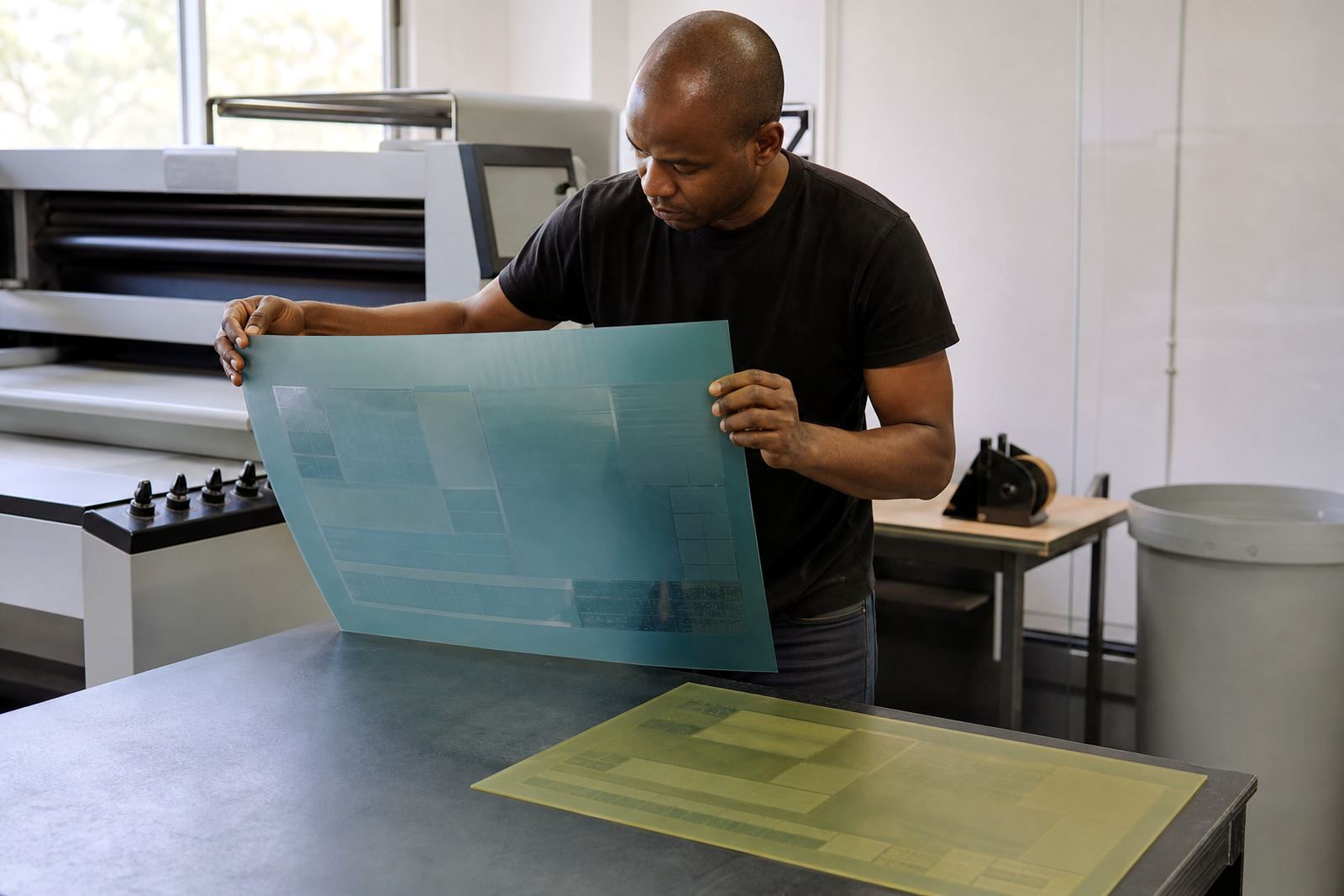
We also consider how the plates will be mounted, trimmed and labelled. That keeps the set easier to identify in the print room, especially where multiple SKUs are packed for dispatch. For busy printers, clear imposition planning helps reduce mix ups and makes later reorders easier to handle.
What our imposition planning service includes
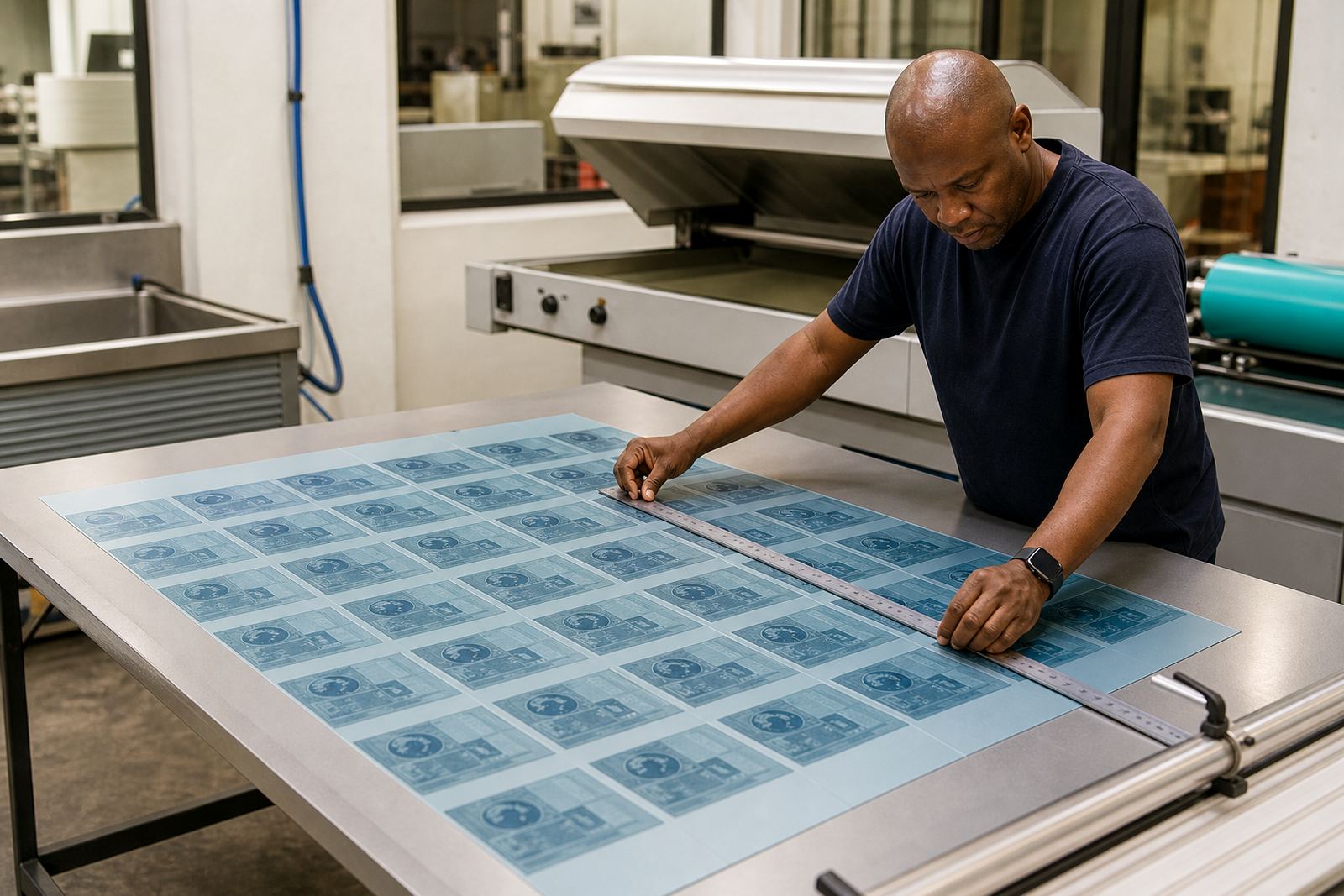
Our service is built around practical job setup for flexo photopolymer plate-making. We check the supplied artwork and job details, then arrange the layout to suit the repeat, web width and press method. The aim is to keep the plate set efficient, readable and ready for production without unnecessary rework.
- Repeat and layout assessment for label and packaging jobs
- Web width planning to suit the press and substrate
- Across count planning for single or multiple-up work
- Plate set identification and plate labelling support
- Trimming and mounting allowance checks
- File and layout checks before plates move to production
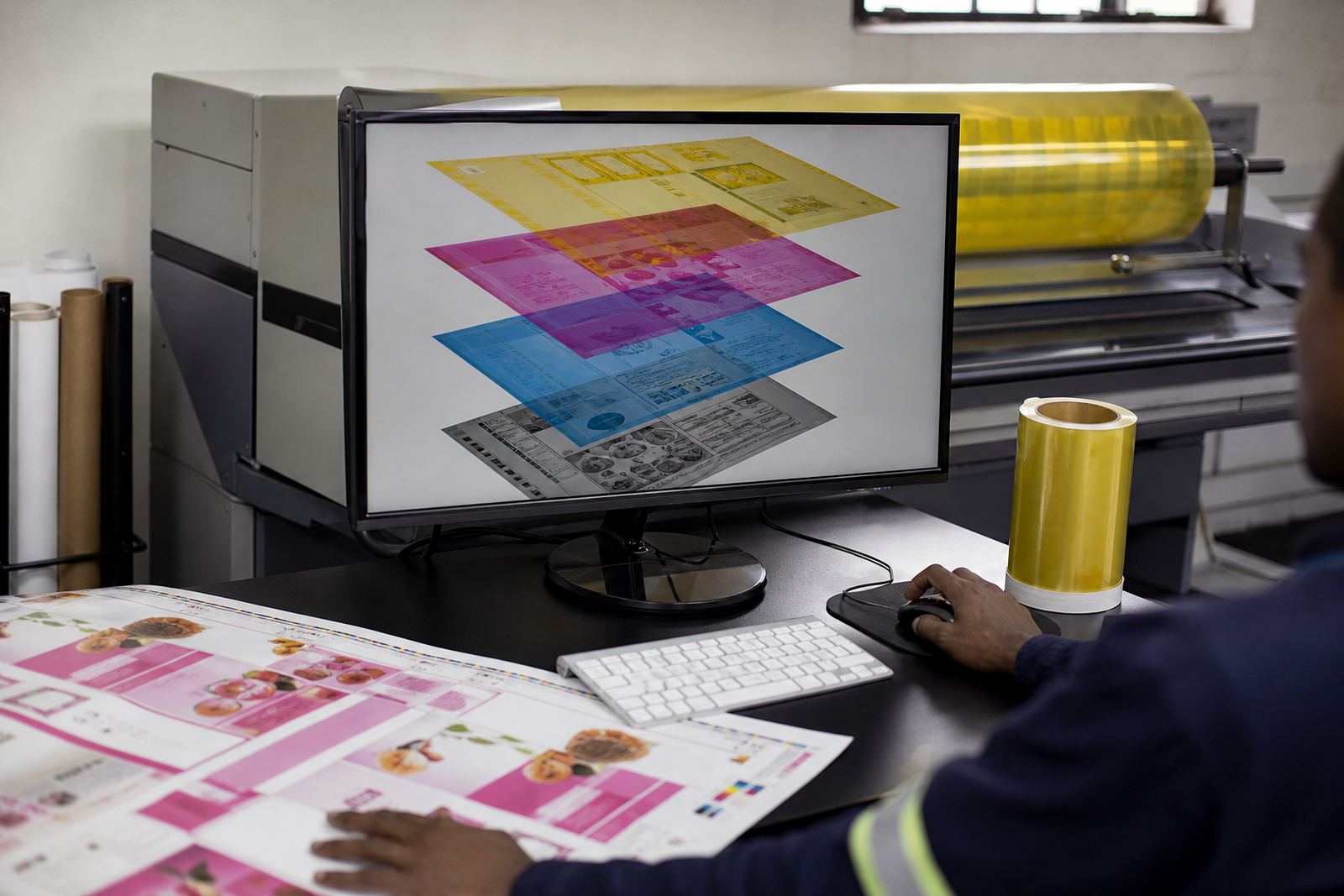
Where needed, we also assist with screening support and proof comparison so the layout and print expectation stay aligned. If a job needs remaking later, the original imposition notes help speed up the next run and reduce the chance of layout changes being missed.
How the planning process works
Every job starts with the information that affects layout. We review the artwork files, the final trim size, repeat length, cylinder or sleeve details, and any notes from the printer about press direction or finishing. If there are multiple versions in one run, we group them in a way that makes handling more practical for production and dispatch.
Our team then checks whether the layout can be improved for the available web width and the physical format of the plate set. In some cases that means adjusting the arrangement to reduce waste, in others it means keeping the layout simple so mounting and press make-ready are easier. Ayesha Naidoo oversees production flow, while Pieter van Wyk handles the prepress checks that support accurate imposition.
- Step 1: Receive files and job instructions through the enquiry form
- Step 2: Check repeat, web width, artwork flow and press requirements
- Step 3: Plan the plate arrangement and confirm practical allowances
- Step 4: Prepare the plate set for making, trimming and labelling
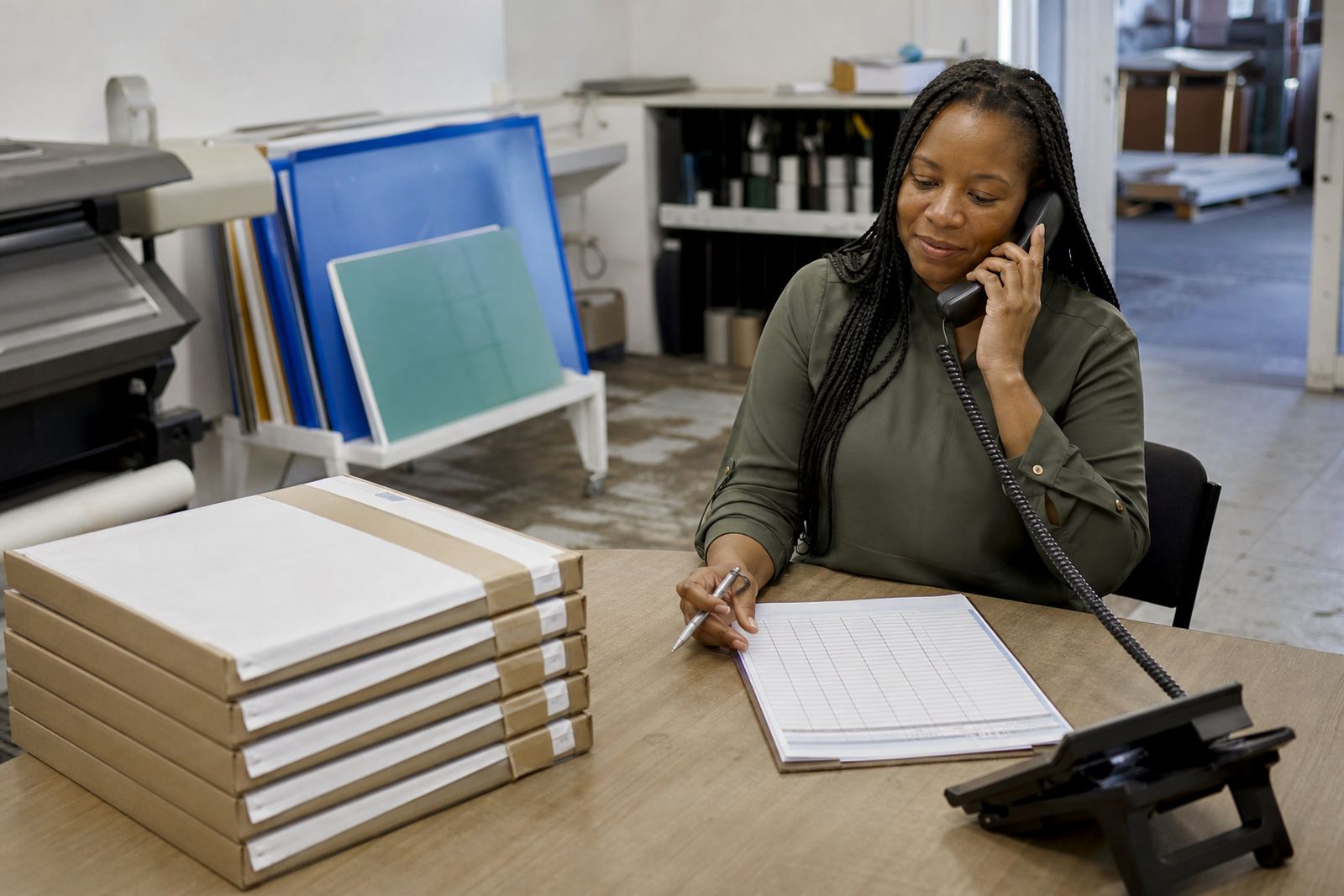
- Step 5: Coordinate packing, collection or courier dispatch
We keep communication direct and specific because small layout changes can affect the full run. Lerato Molefe handles client services, so job queries and updates stay organised from first contact through to dispatch.
Typical job requirements and plate specs
Imposition planning is not one-size-fits-all. A narrow label job for a small printer in Pretoria may need a very different layout to a wider packaging job heading to Durban or Cape Town. The press width, repeat and mounting method all affect how the plate set should be arranged.
For most work, we plan around the following practical points: repeat length, web width, plate thickness, trimming allowance, mount orientation and label sequence. If the job is for coastal areas like Gqeberha or Durban, we also keep storage and packing practical because humidity can affect handling if plates sit too long before use. In Gauteng, load-shedding schedules can also affect press planning, so it helps when plate sets are clearly labelled and ready to go when the machine is available.
- Repeat and web width alignment for efficient press use
- Clear plate sequence for easy mounting on press
- Allowance for trimming, spacing and handling margins
- Layout notes for single colour, multi-colour or mixed-SKU work
- Practical packing for local collection or courier delivery
When a printer gives full specifications up front, the layout can usually be planned more cleanly from the start. That means fewer changes later and a better fit between the plate set and the actual job on press.
Turnaround, pricing approach and reorders
Turnaround depends on the size of the job, the number of layouts involved and whether the files arrive ready for checking. Simple repeat jobs move faster than complex multi-SKU work, especially where several plate sets need to be grouped and dispatched to different branches or sites. We do not promise fixed turnaround times, because each job needs a proper check before it goes into production.
Pricing is based on the scope of the layout work, the number of plates involved and any extra checks needed before production. A straightforward layout is priced differently from a job that needs extra imposition planning, proof comparison or remake support. We keep the pricing approach practical and job-specific, so printers know what they are paying for and why.
For repeat orders, keeping the original imposition notes on file makes the next run easier to manage. That helps when a client needs the same layout again for a reprint, a seasonal line or a revised pack size. If the artwork changes, we recheck the layout before anything goes forward.
Dispatch, storage and maintenance intervals
Once the plates are ready, we handle dispatch packing and collection coordination from our Midrand base, with courier delivery across South Africa including Johannesburg, Pretoria, Durban, Cape Town and Gqeberha. Plates are packed to help protect edges and keep the set in order for the printer who receives them. Zinhle Dlamini manages logistics so the job moves cleanly from production to dispatch.
For printers that keep repeat work on file, maintenance intervals matter. It is worth reviewing older plate layouts when the press setup changes, when a new web width is introduced, or when the artwork has been updated. A plate set that worked well last season may need a fresh check if the line speed, substrate or finishing method has changed.
We also recommend checking labelled plate sets before storage and before every re-run. That helps avoid mixing old and new layouts, especially where several SKUs or versions are held for future use. Sibusiso Mthembu oversees the business side and makes sure the service stays practical for the printing trade, from first enquiry to final handover.
Key facts
| Service focus | Imposition planning for flexo photopolymer plate-making |
|---|---|
| Base | Midrand, Gauteng |
| Delivery areas | Johannesburg, Pretoria, Durban, Cape Town, Gqeberha, East Rand and West Rand |
| Job formats | Labels, cartons and packaging print work |
| Planning inputs | Repeat length, web width, artwork flow, mount orientation and trim allowances |
| Related support | Artwork preflight, file checking, proof comparison, plate trimming and dispatch packing |