Pickup Planning From Midrand That Fits Real Jobs
Collection coordination is the part of the job that keeps a plate order moving once it leaves production. From our Midrand base, we help customers and couriers arrange a sensible pickup slot, confirm what is being collected, and make sure the order is prepared in a format that is easy to load, trace and deliver.
This service is useful for printers who send their own transport, use a contracted courier, or split collections between different depots. We deal with the practical side of the handover so the plates are not left sitting in reception or loaded without the right paperwork. For busy production teams in Johannesburg, Pretoria and the East Rand, that saves time and cuts down on avoidable back-and-forth.
Collection coordination also helps when orders are urgent, partial, or scheduled around machine availability. If a press line is waiting on a remake set, or a label run is timed for the afternoon shift, the collection needs to match the job plan. We keep the pickup notes clear and the order ready in the right sequence.
What We Prepare Before Handover
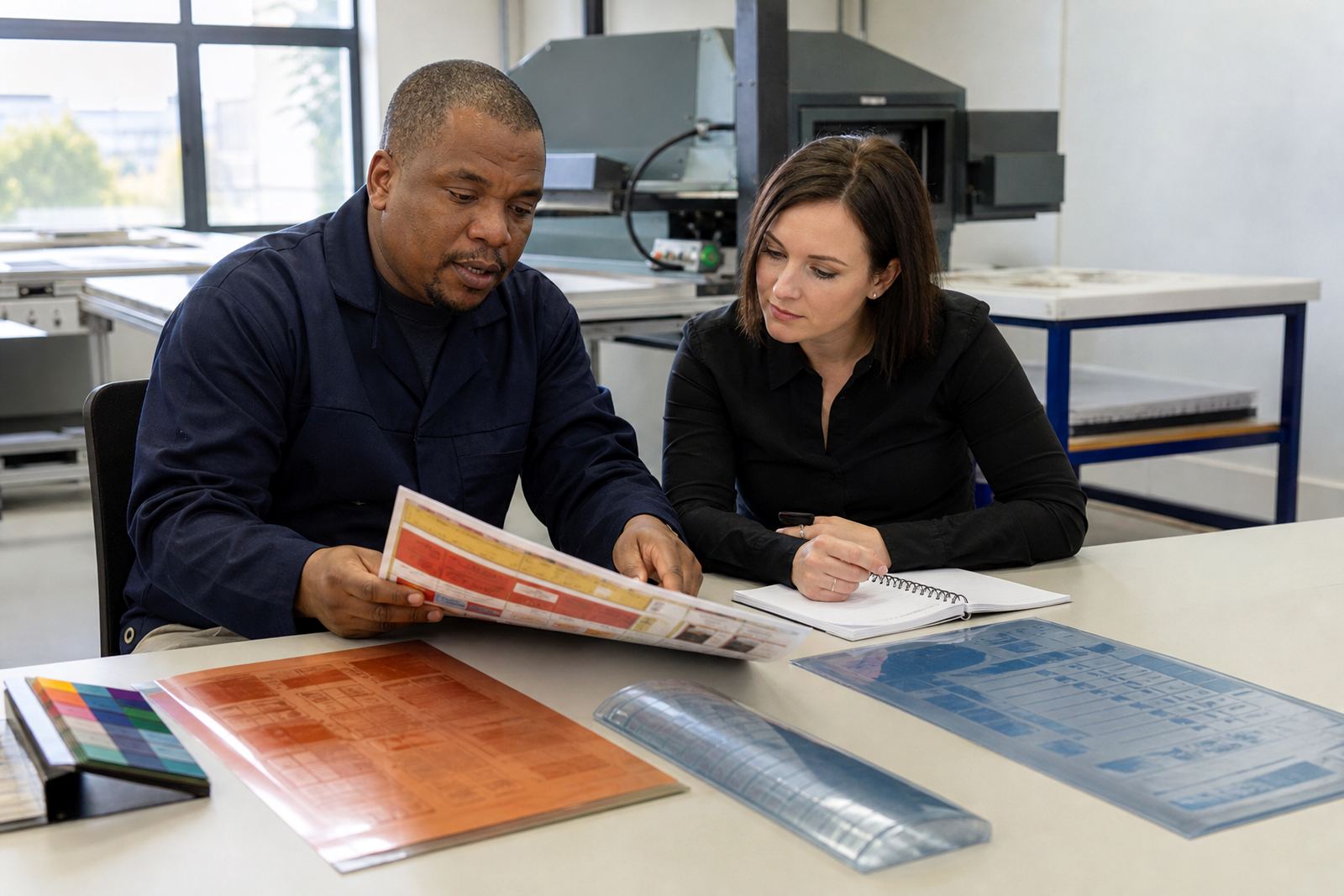
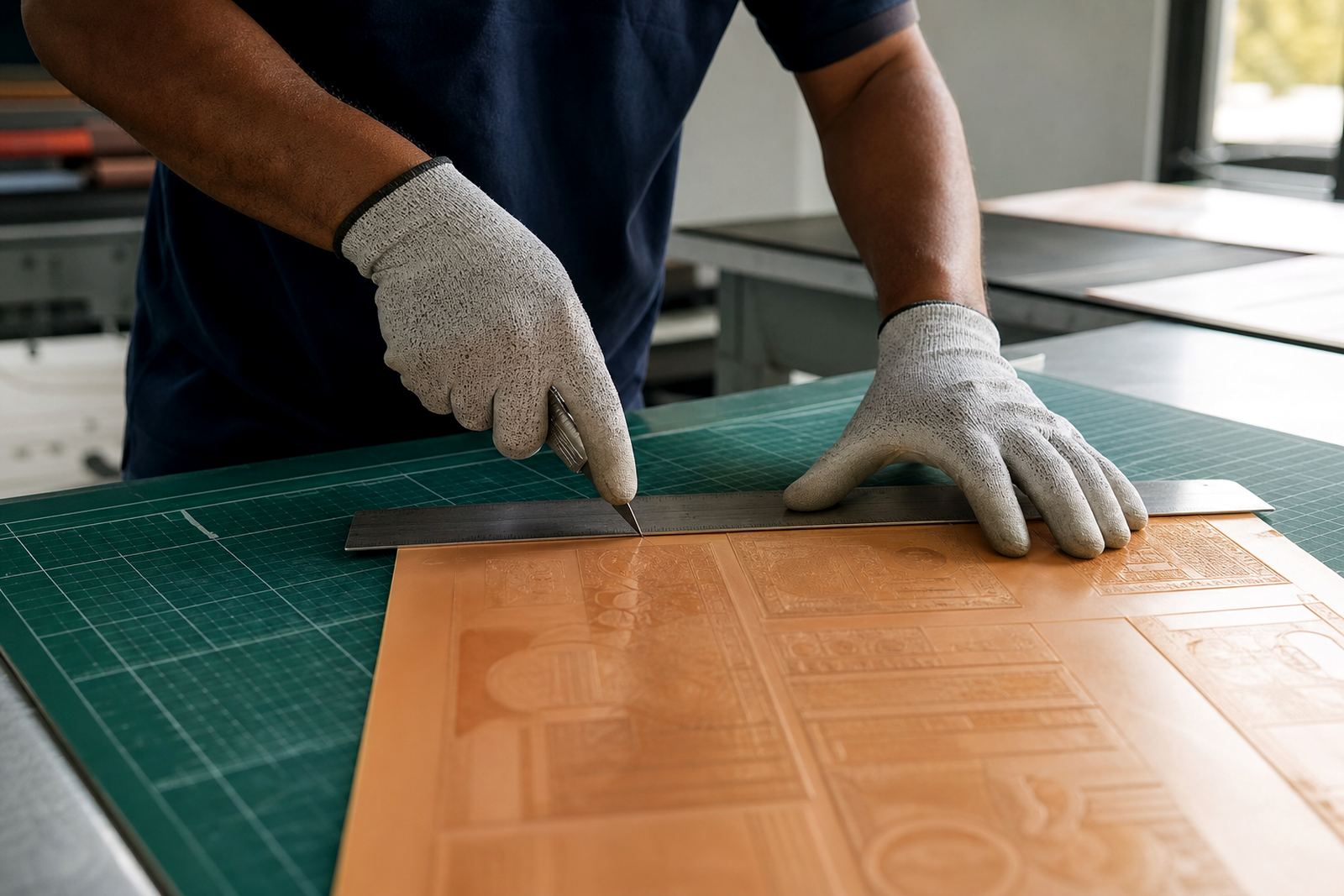
Before collection, we check the order details against the job ticket and prepare the plates for safe dispatch. That includes plate count, size, label references and any special handling notes such as mounted sets, trimmed pieces or separate cartons for different presses. If a client has a courier collecting on their behalf, we make sure the pickup information is simple enough for the driver to follow.
- Plate sets packed by job number or client reference
- Cartons or sleeves labelled for easy identification
- Pickup notes matched to the collection time agreed
- Separate handling for rush jobs or split deliveries
- Courier handover ready for signature or reference capture
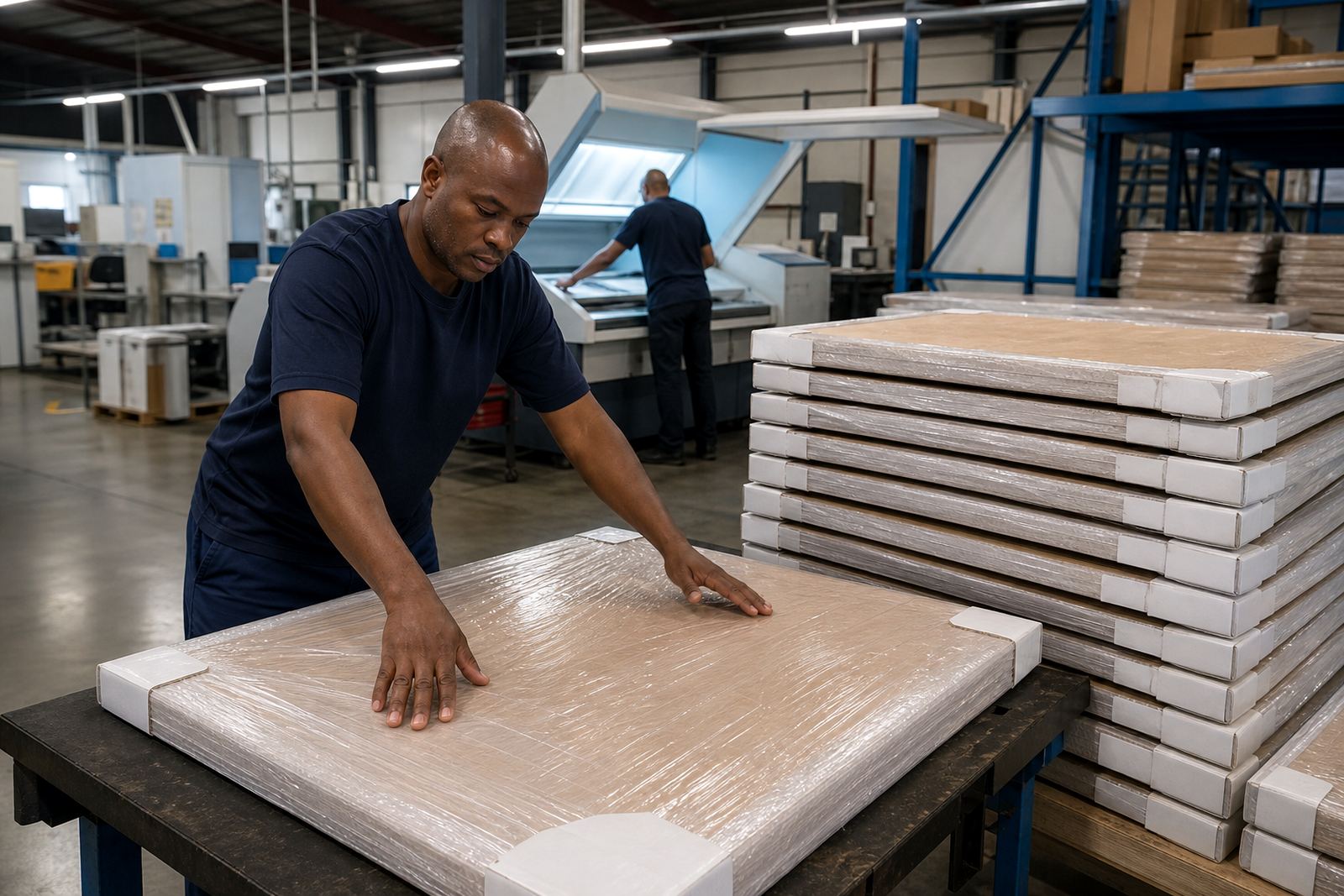
Where needed, we can also coordinate plate collection with dispatch packing so the order is protected for transport. In wet weather or coastal humidity, that means keeping packs closed and dry before handover. In Gauteng heat or during load-shedding related schedule changes, the collection plan is still kept practical and clear.
How The Collection Process Works
The process is straightforward. First, the customer confirms the job reference and the preferred pickup arrangement through the enquiry form on our contact page. Next, we check the collection window against production completion and prepare the order for release. Once the plates are ready, we confirm the pickup details with the customer or courier so there is no confusion at the gate.
If a driver arrives early, we will let them know whether the job is ready or still in final checking. If a collection needs to be held back for a plate recheck, we will flag that before the courier wastes a trip. This is especially useful for customers running multiple presses, where one late carton can hold up an entire run.
- Step 1: Enquiry and pickup request submitted
- Step 2: Job reference, quantity and destination confirmed
- Step 3: Plates packed, labelled and staged for handover
- Step 4: Courier or client collection time confirmed
- Step 5: Handover completed and order released
Turnaround And Timing For Local And National Collections
Collection timing depends on when the plates leave production, how many sets are involved, and whether the handover is for a local driver or a long-distance courier. For Midrand, Johannesburg, Pretoria and the East Rand, collections are usually planned around the same working day or the next available slot, depending on the job queue. For Durban, Cape Town and Gqeberha, we coordinate with the courier service so the parcel is ready for a clean handoff and reduced delay.
We do not promise a fixed turnaround on every order because plate work can change with artwork checks, remake requirements or packing volume. What we do is keep the collection side organised so there is no avoidable waiting once the plates are complete. If a client needs a same-day pickup for a time-sensitive label job, we will assess whether the order can be staged in time and let them know clearly.
Our base in Midrand makes it practical to service industrial areas, warehousing routes and courier depots across Gauteng. It also helps when customers need one contact point for the release of several jobs going to different branches or factories.
Pricing Approach For Collection Coordination
Collection coordination is priced according to the handling involved, not as a one-size-fits-all add-on. Simple pickups with a single carton and clear reference are handled differently to split collections, re-labelling, multi-job staging or courier instructions that need extra checking. That keeps the pricing fair for smaller printers while still covering the time needed for careful dispatch.
Where a client uses their own driver, there is usually less coordination needed than when multiple cartons must be split between routes or collected under different references. If a job includes plate mounting, trimming or remake support, we will factor the handover requirements into the collection arrangement so the plates go out in the right order. All pricing is discussed upfront through the enquiry process, with no surprise add-ons at pickup.
For repeat customers, the benefit is consistency. The same pickup format can be used job after job, which reduces admin and helps the accounts team, the production manager and the courier all work from the same details.
Packing Standards And Maintenance Intervals For Collection Readiness
Collection coordination is easier when the plates are packed and labelled to a consistent standard. We recommend checking storage and dispatch readiness regularly, especially for clients who collect in batches or hold plates for repeated runs. Plates should be kept flat, dry and away from direct sun, dust and crushing pressure. In coastal areas, moisture control matters even more, while inland heat can affect how long packs should wait before dispatch.
For printers that collect often, a simple maintenance interval helps. Review the job reference format, label placement and courier handover notes every few weeks, or whenever a new route, new driver or new production schedule is introduced. That keeps the process tidy and reduces the chance of a misread carton or a missing set.
- Keep plates flat and protected until the driver arrives
- Check labels against the job ticket before release
- Review collection notes whenever a route changes
- Allow extra time for large, multi-carton pickups
- Use the same reference format for repeat orders
Key facts
| Base location | Midrand, Gauteng |
|---|---|
| Collection area | Midrand, Johannesburg, Pretoria, East Rand and West Rand |
| National delivery support | Courier coordination to Durban, Cape Town and Gqeberha |
| Typical handover format | Job reference, carton label and pickup notes |
| Order types | Single sets, repeat runs, split collections and remake jobs |
| Primary contact method | Enquiry form on our contact page |