
What the Cape Town label brief asked for
The client was a food packaging printer in Cape Town working on labels for glass jars. The jar shape meant the image area had to read well across a curved surface, with enough strength in the type and brand marks to stay clear after application and handling. The brief was simple in one sense and very specific in another: keep the design crisp, preserve fine detail, and make sure the label would look clean on shelf from a normal retail viewing distance.
The artwork carried product details, ingredient text, barcodes and a front face that needed to stand out. Because jar labels often show both branding and mandatory information on a compact panel, we paid attention to line weight, small text, and how the screened areas would hold on press. The printer also needed the job to run smoothly with minimal waste, so the plate layout had to suit their press setup and finishing method.
- Job type: food packaging labels for jars
- Location: Cape Town, with plates supplied from Midrand
- Use: curved glass jar application
- Focus: shelf appearance, legibility and press stability
Artwork checks before plate-making started
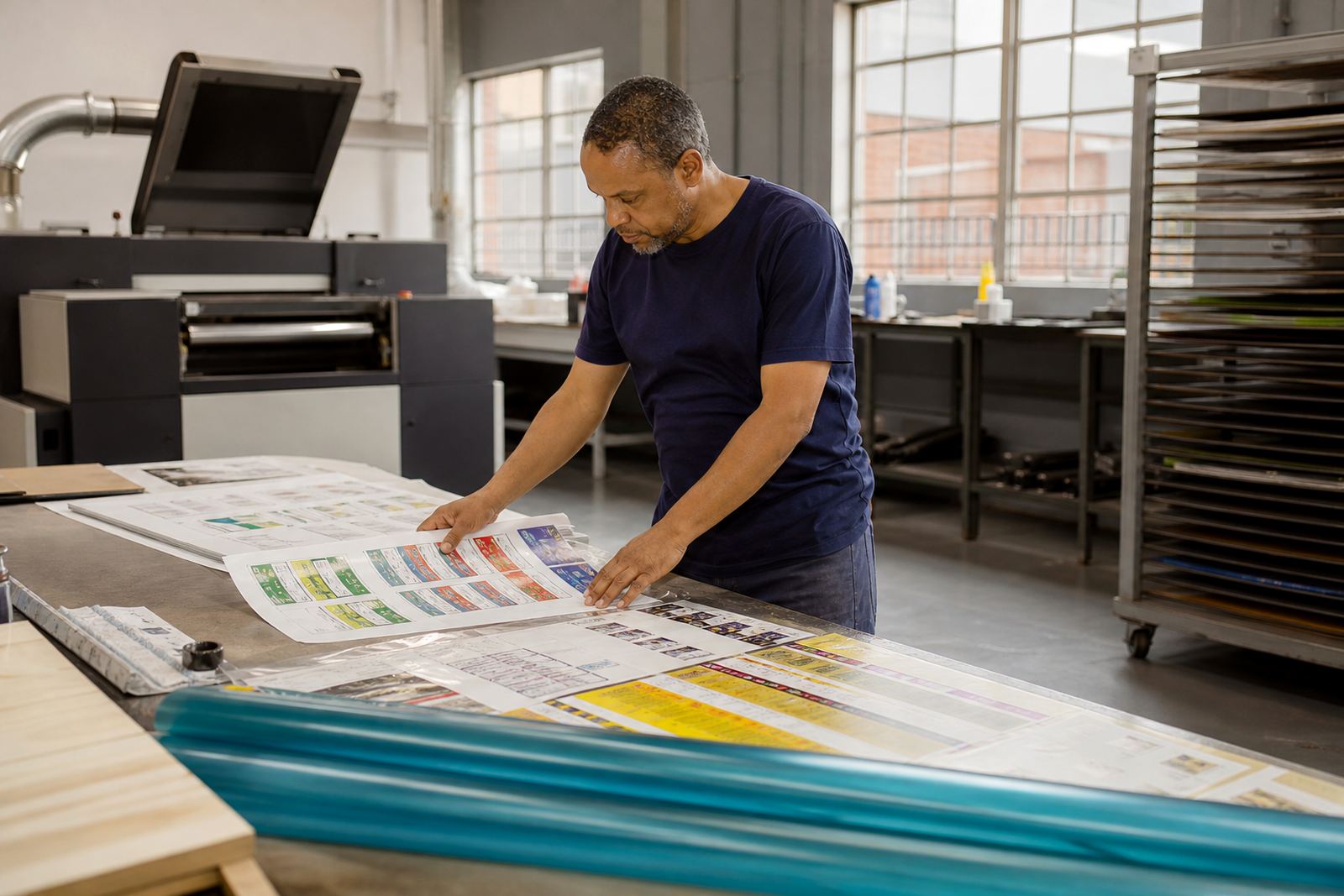
Before plate-making, we carried out artwork preflight and file checking on the supplied layouts. That meant checking image resolution, line thickness, bleed allowance, text safety, trapping where needed and whether the label repeated cleanly across the sheet. We also reviewed the die line and the relationship between the main panel, curved wrap area and the glue margin so nothing important landed too close to a cut or seam.
For jar labels, small errors show quickly. A thin rule can break up, a barcode can become hard to read, and fine reversed text can close in if the screen and plate settings are not handled properly. We flagged a few technical points back to the printer and adjusted the plate plan around them. The aim was not to change the design, but to make sure the print result matched the brief with less risk on press.
- File checking on supplied label artwork
- Imposition planning to suit the run size and sheet layout
- Advice on fine type, reversed text and barcode placement
- Screening support for solid colours and tonal areas
Flexo plate work for curved jar labels
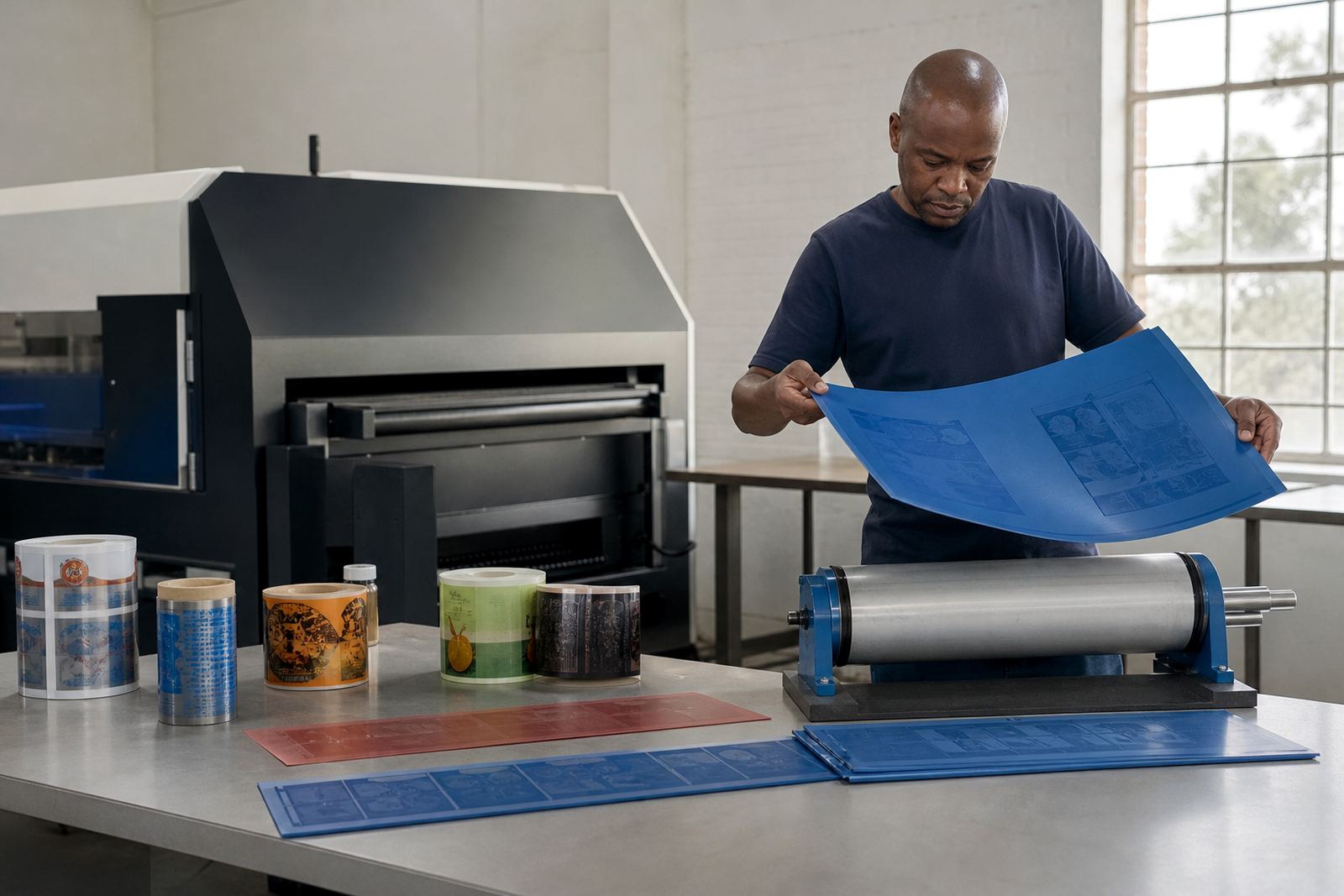
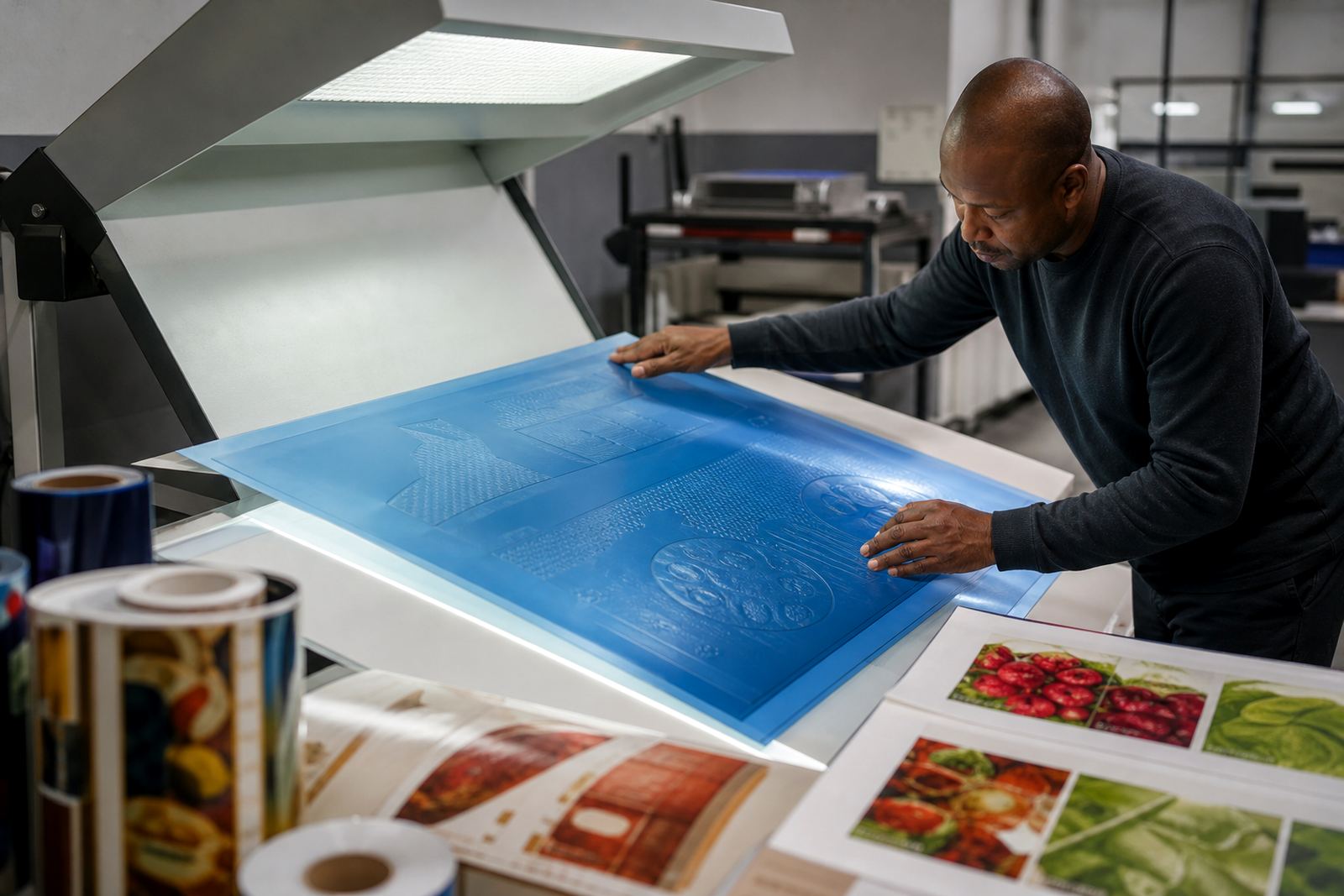
We made the flexo photopolymer plates for the label run with attention to detail that matters on packaging. The plate build needed to hold small copy clearly while still giving enough ink transfer on solid brand blocks. On jars, where the label wraps around a curved surface, the print must stay even and not look pinched at the ends. Plate trim and mounting positions were set with that in mind.
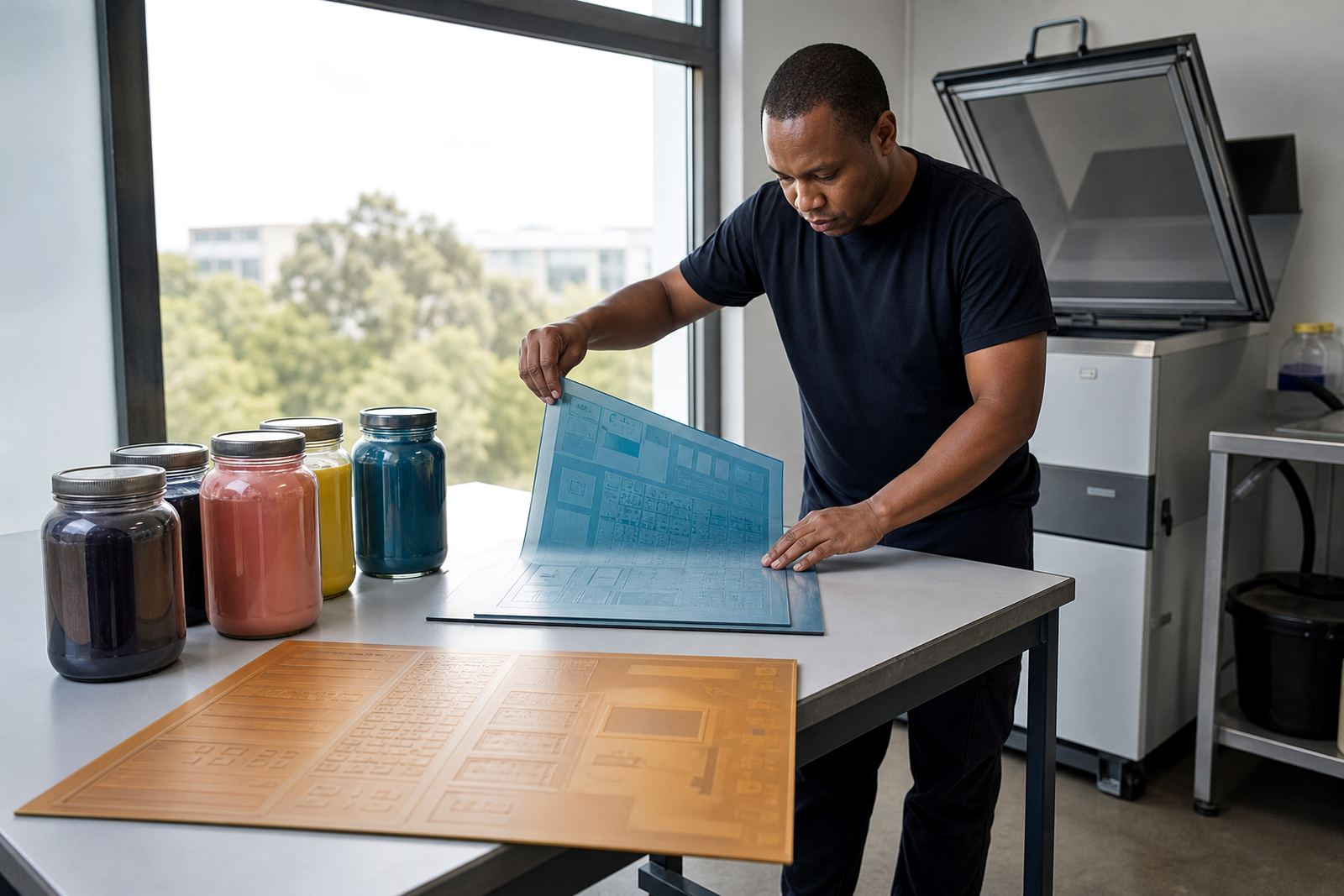
The job also needed practical handling. We supplied plate trimming, plate labelling and dispatch packing so the set could be identified quickly at the Cape Town end. That saves time in the press room and reduces mix-ups when a printer is handling multiple label versions in one shift. In this case the work included several repeat elements, so the set had to be organised in a way that made make-ready more straightforward for the production team.
- Plate making in flexo photopolymer for label printing
- Plate trimming to suit the press and mounting method
- Plate labelling for quick job identification
- Dispatch packing to keep plates clean and flat in transit
Timing from approval to courier dispatch
The project moved over a short production window of two weeks from final file review to plate dispatch. The first part of that time was spent on checks, layout confirmation and plate planning. Once the artwork was signed off for production, we completed the plates, inspected the set, and prepared it for courier delivery to Cape Town. Courier coordination matters on jobs like this, especially when the printer has a press slot booked and needs everything arriving in the right order.
Midrand gave us a good base for national deliveries, and this job went out as part of our regular cross-country service. For printers in the Western Cape, that means they can work with a Gauteng plate supplier without waiting around for handover. We kept communication direct through the enquiry channel, confirmed the details needed for dispatch, and arranged collection at a time that suited the production schedule.
- Project duration: 2 weeks
- Production flow: preflight, plate making, inspection, packing
- Delivery: couriered to Cape Town
- Coordination: handled through enquiry and collection planning
Why the finished labels worked on shelf
The final result was a label set that printed with clear type, stable colour blocks and good readability on the jar surface. The client needed the labels to look neat on shelf and to carry product information without crowding. By keeping the plate work tight and the file checks thorough, the print outcome held the detail needed for a premium food pack without overcomplicating the run.
The printer reported that the job behaved well in production and that the label faces appeared balanced once applied to the jars. That is important with food packaging, because the consumer sees the front face first and any weakness in detail shows straight away. The curved container shape did not cause visual distortion at a glance, which is exactly what the brief called for. It also helped that the label copy remained easy to read under store lighting and on slightly reflective glass.
- Sharper small text on the finished label
- Better shelf presence on curved jars
- Cleaner handling for the press team
- Less risk of confusion during mounting and dispatch
What we would repeat on the next jar label job
If we did this kind of job again for a Cape Town packaging printer, we would follow the same basic process: check the file thoroughly, confirm the die line and wrap area, set the plate layout for the press, and keep dispatch organised. For jar labels, the same discipline usually gives the best result. There is no shortcut around careful preflight when the print has to look neat on a curved bottle or jar and still carry legal text clearly.
We would also keep the same practical approach to remakes and technical job advice. If a new version needed a revised barcode, a different panel size or a small artwork change, it would be best handled before the plate stage rather than after press start. That saves time, paper and ink. For label printers in South Africa, especially where schedules are tight and load-shedding or transport delays can interfere with production, a well prepared plate order makes the whole run easier to manage.
- Confirm artwork early
- Check the wrap and seam positions carefully
- Keep the plate set clearly labelled
- Use a courier plan that suits the press booking
Key facts
| Project type | Cape Town jar labels for food packaging |
|---|---|
| Client type | Label printer serving a food pack customer in Cape Town |
| Plate material | Flexo photopolymer plates |
| Artwork checks | Preflight, file checking, imposition planning, proof comparison |
| Supply from | Midrand, Gauteng |
| Delivery areas | Cape Town and other South African centres by courier |