
Food Label Work in Midrand that Needed Cleaner Type
This project came from a food producer in Midrand handling repeat label runs for packaged stock sent into retail and trade channels. The brief was simple to state and harder to keep consistent on press: ingredient panels had to stay clear, small text needed better definition, and the solid blocks on the label had to print with more even coverage from run to run.
The client was working with recurring artwork updates, so every plate set had to be checked with care before output. A food label has no room for soft edges, weak reverses or uneven density because the pack has to carry product information neatly and stay readable after handling, stacking and cold storage. In this case the printer needed plates that could support fine detail on text and cleaner solids on brand panels, while still being practical for repeat use.
The Brief, Material Constraints and Press Conditions
The main challenge was the mix of small copy and heavy graphic areas on the same label. The ingredient panel sat close to the barcode and regulatory text, so spacing had to be checked carefully. There was also a need to keep the plate build stable for repeated production, since the job would be reordered rather than printed once and forgotten.
- Project type: flexo photopolymer plate-making for food labels
- Location: Midrand, Gauteng
- Artwork issues: small type, solid brand areas, panel spacing and repeat consistency
- Production need: plates suitable for recurring label work with careful prepress checks
- Delivery method: collection coordination and courier dispatch across South Africa
Because label work can be affected by press speed, substrate choice and environmental conditions, the plate file needed practical checking before production. Midrand production sites also deal with load-shedding planning, so we kept the job path clear and the handover information tidy. That way the printer could schedule the run without unnecessary stoppages or last minute corrections.
What We Supplied and How the Job Was Handled
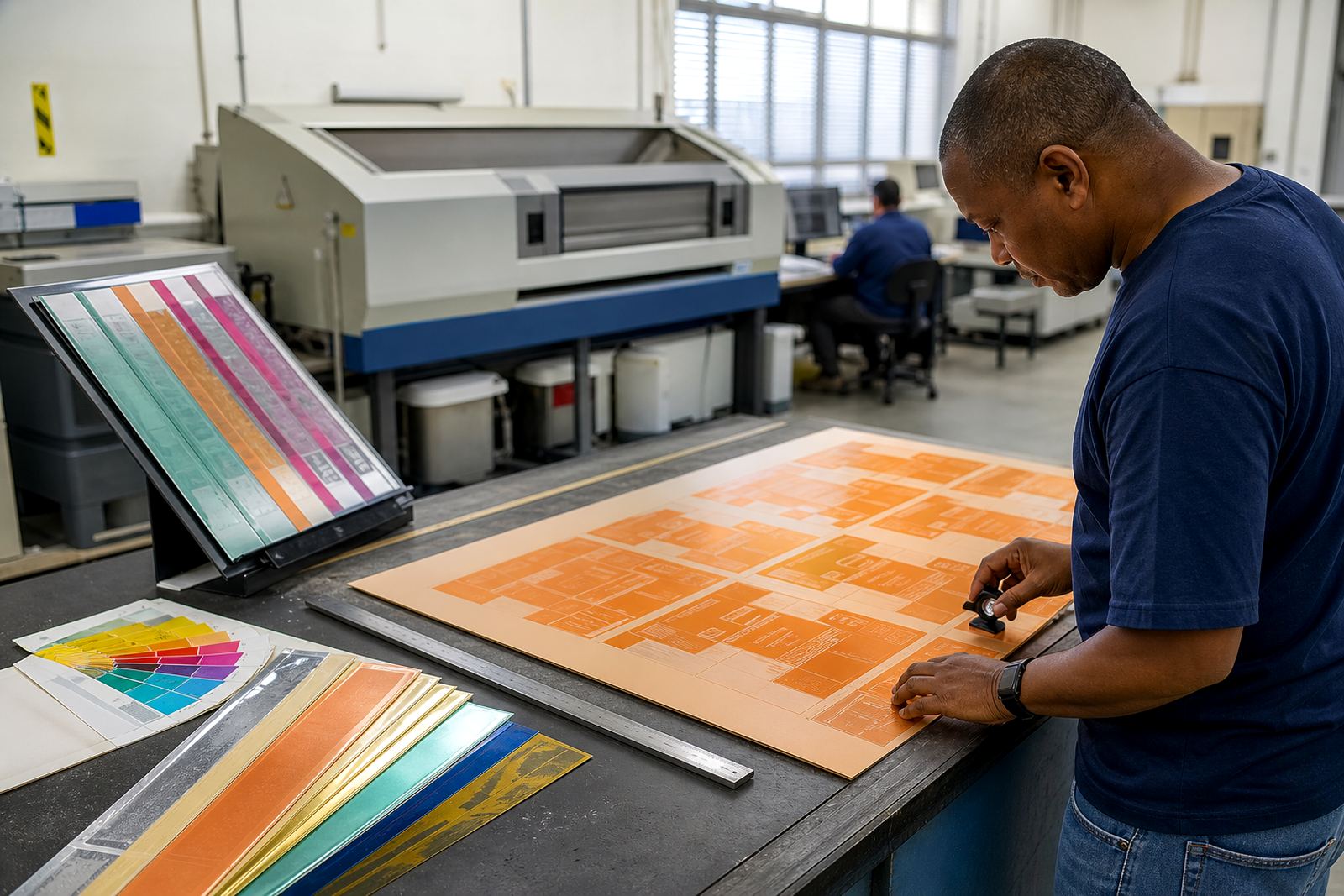
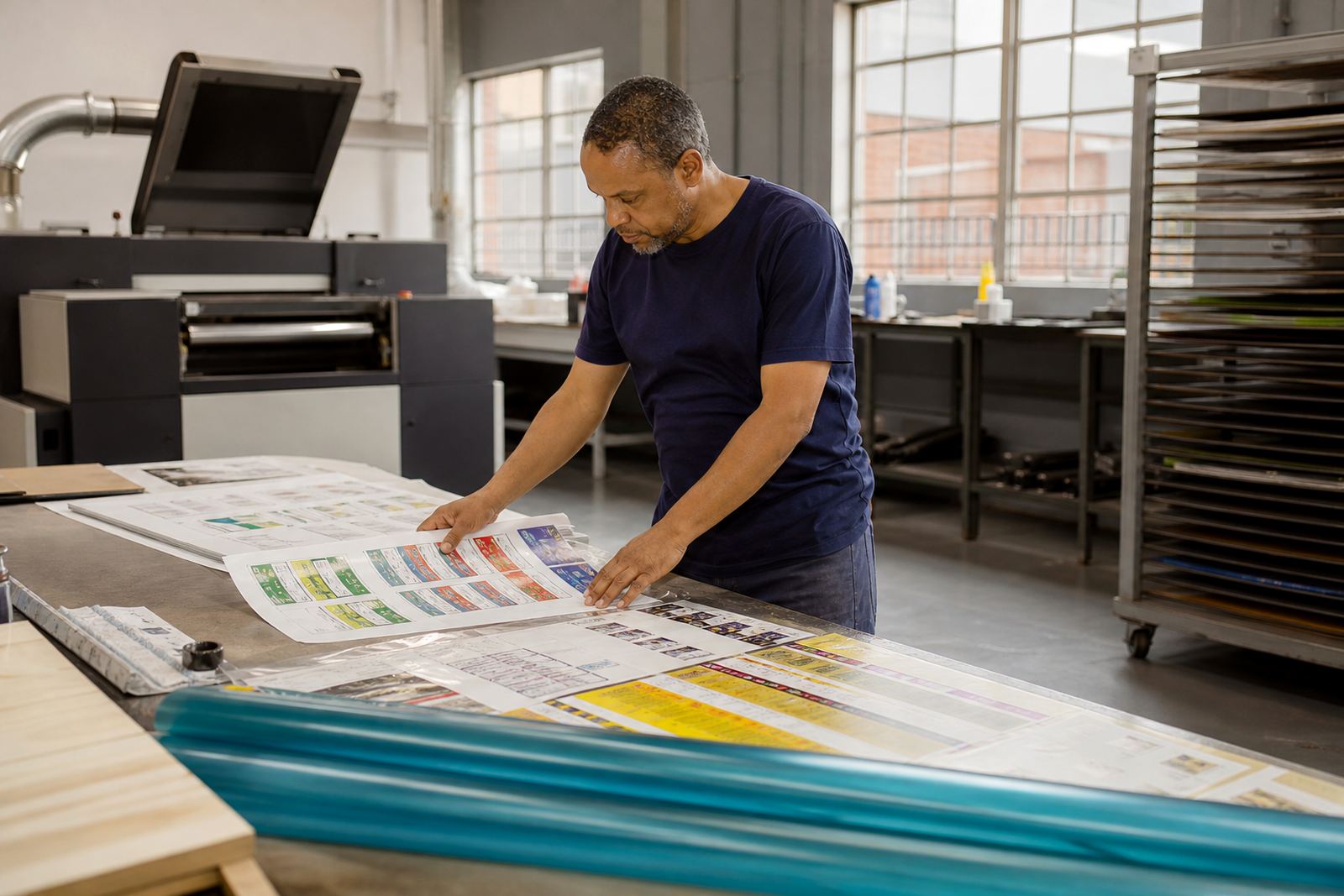
We handled the plate-making process from artwork preflight through to dispatch packing. The file was checked for line weight, reverse text, overprint behaviour and image placement. Where needed, we flagged areas that could cause trouble on press and recommended adjustments before output. That saved time and cut down the chance of remake work after the first trial run.
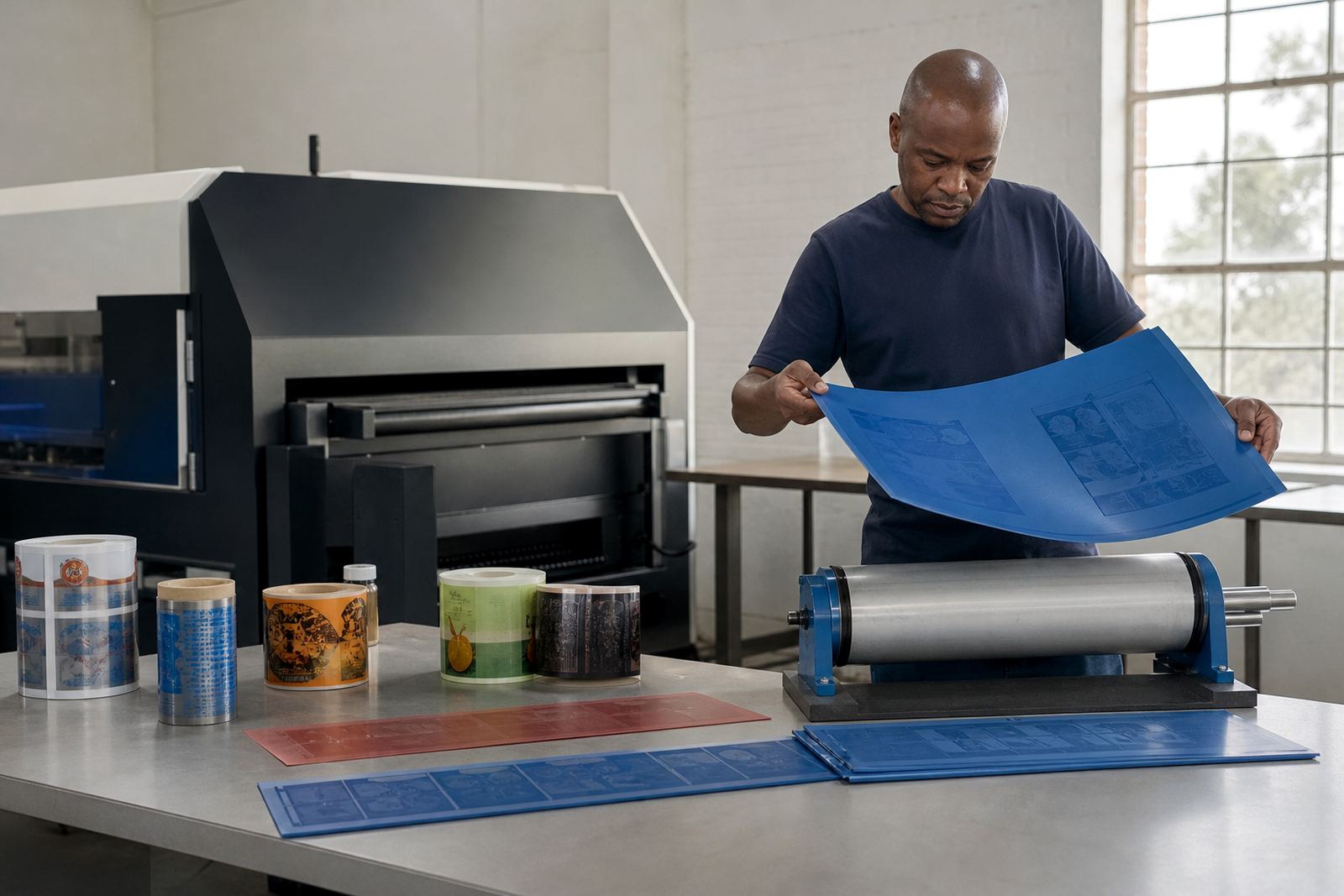
Our production team prepared the plates for label use with attention to edge sharpness, solids and mounting readiness. The job also included plate trimming and plate labelling so the printer could identify each set quickly on the bench. For this kind of work, neat labelling matters as much as the plate itself, especially when more than one version may be moving through the plant at the same time.
- Artwork preflight and file checking before output
- Imposition planning for efficient plate layout
- Screening support for cleaner tonal and solid reproduction
- Plate trimming, plate labelling and dispatch packing
- Collection coordination for local handover in Midrand
Timeline and Coordination Over Three Weeks
The job moved through a three week working window from initial file receipt to final dispatch. The first stage was review and feedback, where we checked the artwork and sent back practical notes. After sign-off, the plates were prepared and packed for collection and courier movement. The final stage was coordination with the printer so the plates reached the right place in time for the production slot.
This kind of scheduling is important for food label work because printers often need repeat runs to land with other packaging jobs. If a plate is late, the whole line can be pushed back. We kept the process straightforward and communicated through the enquiry channel and contact page so the client had one clear point of contact. That made it easier to confirm changes, collection timing and the final delivery plan.
Print Results on the Label Run
Once on press, the printer reported cleaner ingredient panels and stronger solids across the repeat run. Small text held better shape and the main brand areas printed with more even coverage. The plate set also gave better consistency between one production run and the next, which is what the client wanted for a label programme that would be used again.
The result was not about making the artwork louder, but about making it print properly. Food labels must look neat under close inspection, especially when the pack carries nutritional or ingredient information. In this case, the improved plate build supported the pressman with less correction on machine and a cleaner finish on the reel. The client also had a better base for future repeat orders, which helps keep the production schedule steadier over time.
- Clearer ingredient panel copy
- Stronger solids on brand blocks
- Better repeat consistency across reorders
- Less on-press correction needed at make-ready
What We Would Repeat on the Next Batch
If we were handling the same Midrand food label work again, we would follow the same process: check the file early, confirm spacing around compliance text, and make sure the plate set is marked clearly for repeat handling. For food packaging this sort of discipline saves time and keeps the print room from guessing where each plate belongs.
We would also keep the dispatch and collection steps tight, especially for printers serving Johannesburg, Pretoria and wider Gauteng where delivery timing can be affected by traffic and municipal access rules. For clients in Durban, Cape Town and Gqeberha, courier packing needs to be solid because plates can be handled more than once before they reach the machine. The same applies to coastal humidity, where careful packing helps protect the job in transit.
For repeat label work, the main things are still the same: clean files, tidy plate labels, proper packing, and steady communication through the enquiry form. That is what keeps the job practical for the printer and reliable for the client.
Key facts
| Project | Midrand food label flexo photopolymer plate-making |
|---|---|
| Client type | Food producer in Midrand, Gauteng |
| Main requirement | Clear ingredient panels and stronger solids for repeat label production |
| Timeline | 3 weeks from file review to dispatch |
| Service scope | Artwork preflight, file checking, imposition planning, screening support, plate trimming, plate labelling, dispatch packing |
| Delivery coverage | Midrand, Johannesburg, Pretoria, Durban, Cape Town and Gqeberha via courier |