
Pharmaceutical Label Work Needs Clean Reading Space
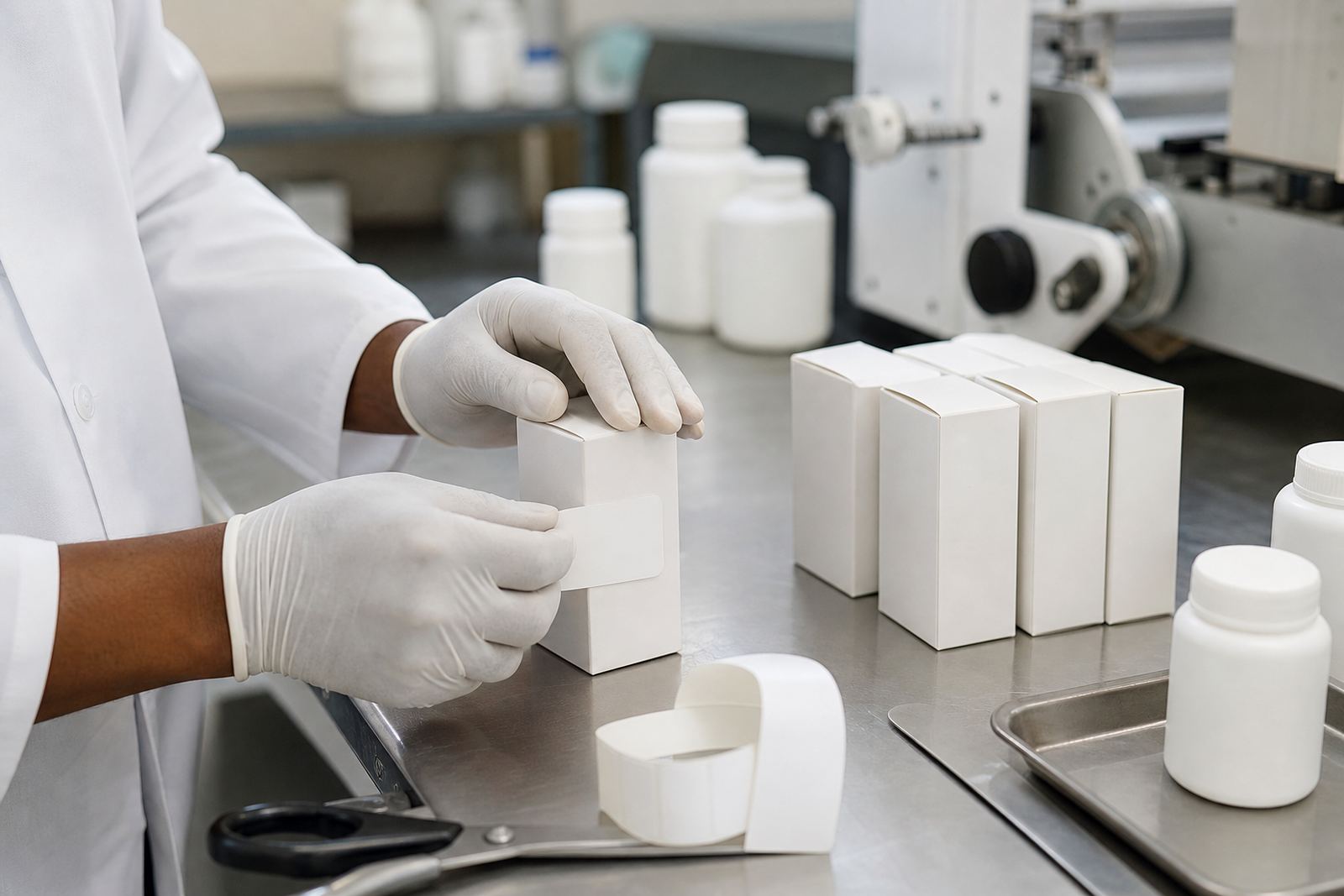
Pharma labels are not forgiving. You are often packing a lot into a small area, and every line has to read clearly on press. That includes product names, batch fields, expiry boxes, warnings, storage notes, dosage instructions and barcodes. If the layout is tight, the plate has to carry fine detail without filling in or losing edge clarity.
At Flexo Printer Plates, we work with label and packaging printers who need plate making for jobs where text structure matters as much as ink coverage. A label for a tablet carton, syrup bottle or secondary pack can include many small panels and rules, so the artwork must be checked carefully before plates are made. One missing line or a poor trap can cause delays on the machine, and on pharma work that is not something you want to sort out mid-run.
Founded in 2007 and based in Midrand, Gauteng, we support printers in Johannesburg, Pretoria, Durban, Cape Town and Gqeberha, plus the East Rand and West Rand. Courier delivery helps when a job needs plates moving quickly between prepress, print and dispatch. In summer humidity or during load-shedding, handling and packing matter just as much as file prep.
Typical Equipment Set For Pharma Label Production
Pharma label jobs are usually produced on narrow web flexo lines, with UV or LED curing depending on the press setup. The plate room has to suit that equipment, because the plate thickness, relief depth and mounting requirements all affect how small text and line work prints. A clean prepress workflow helps reduce surprises once the plate is on press.
Common equipment and materials in this type of work include:
- Digital artwork files prepared for label and carton applications
- Computer workstation for file checking and imposition planning
- Screening and tone support for fine type and small reverse text
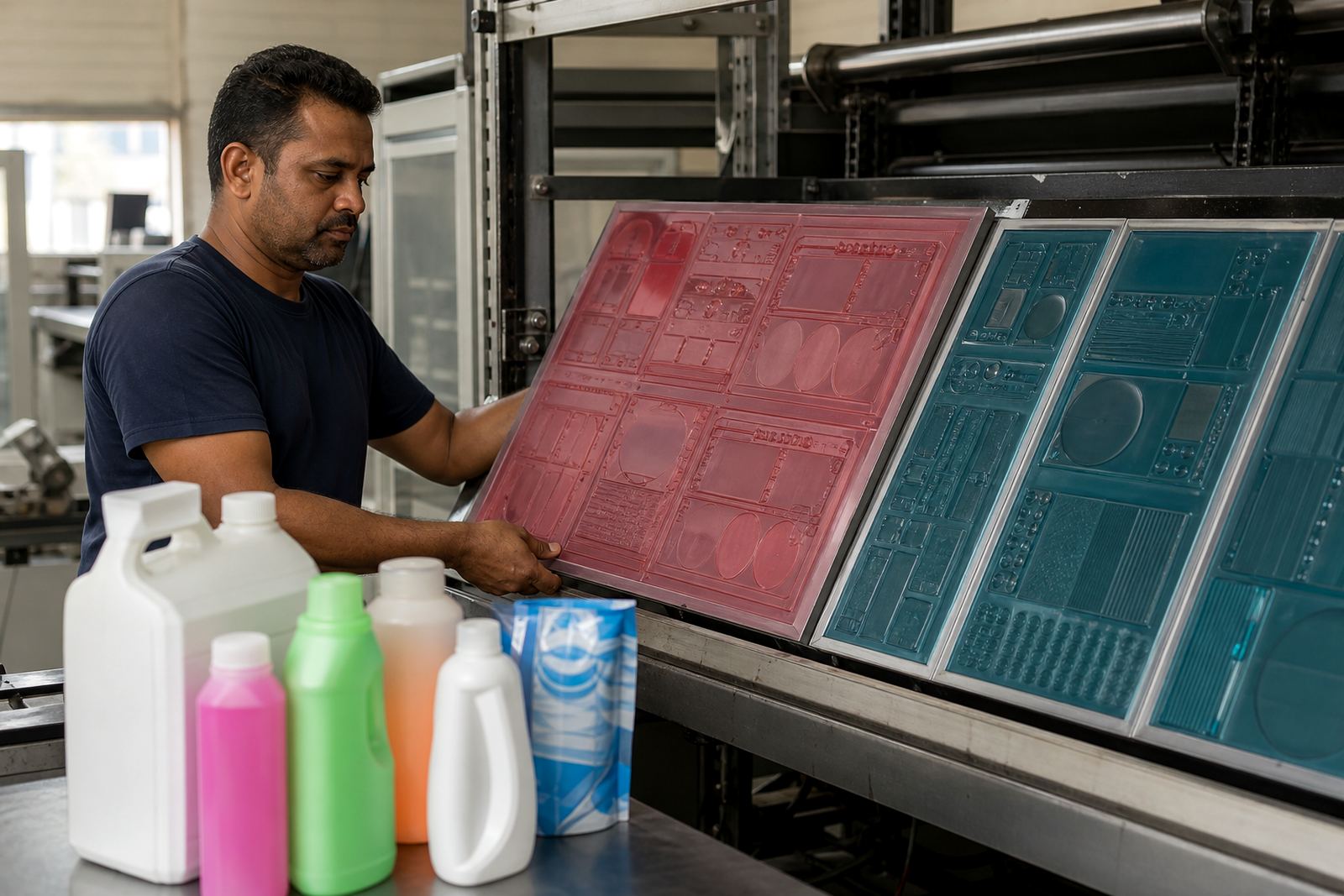
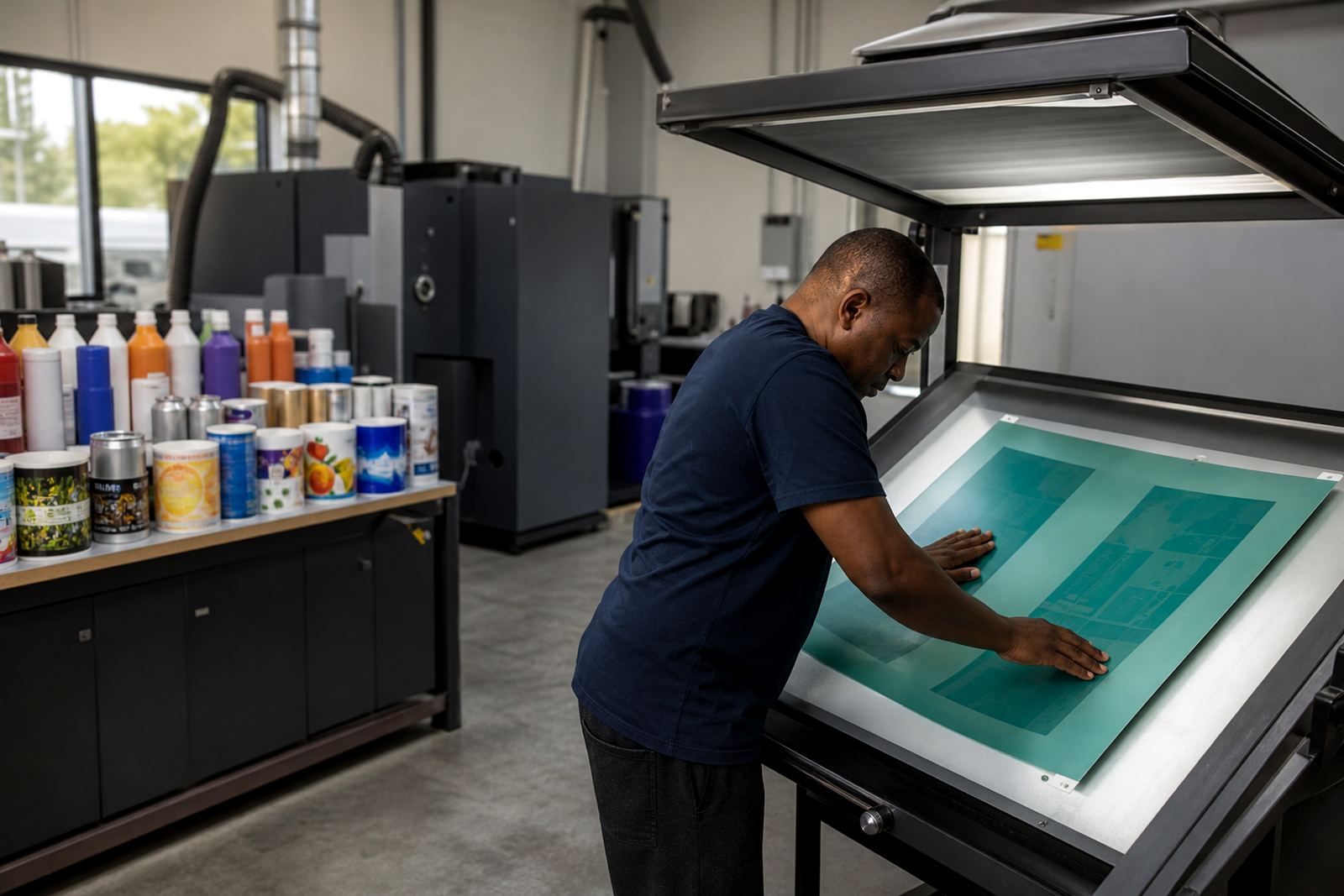
- Photopolymer plate processing equipment
- Plate cutting and trimming tools
- Plate mounting tables and sleeves or cylinders
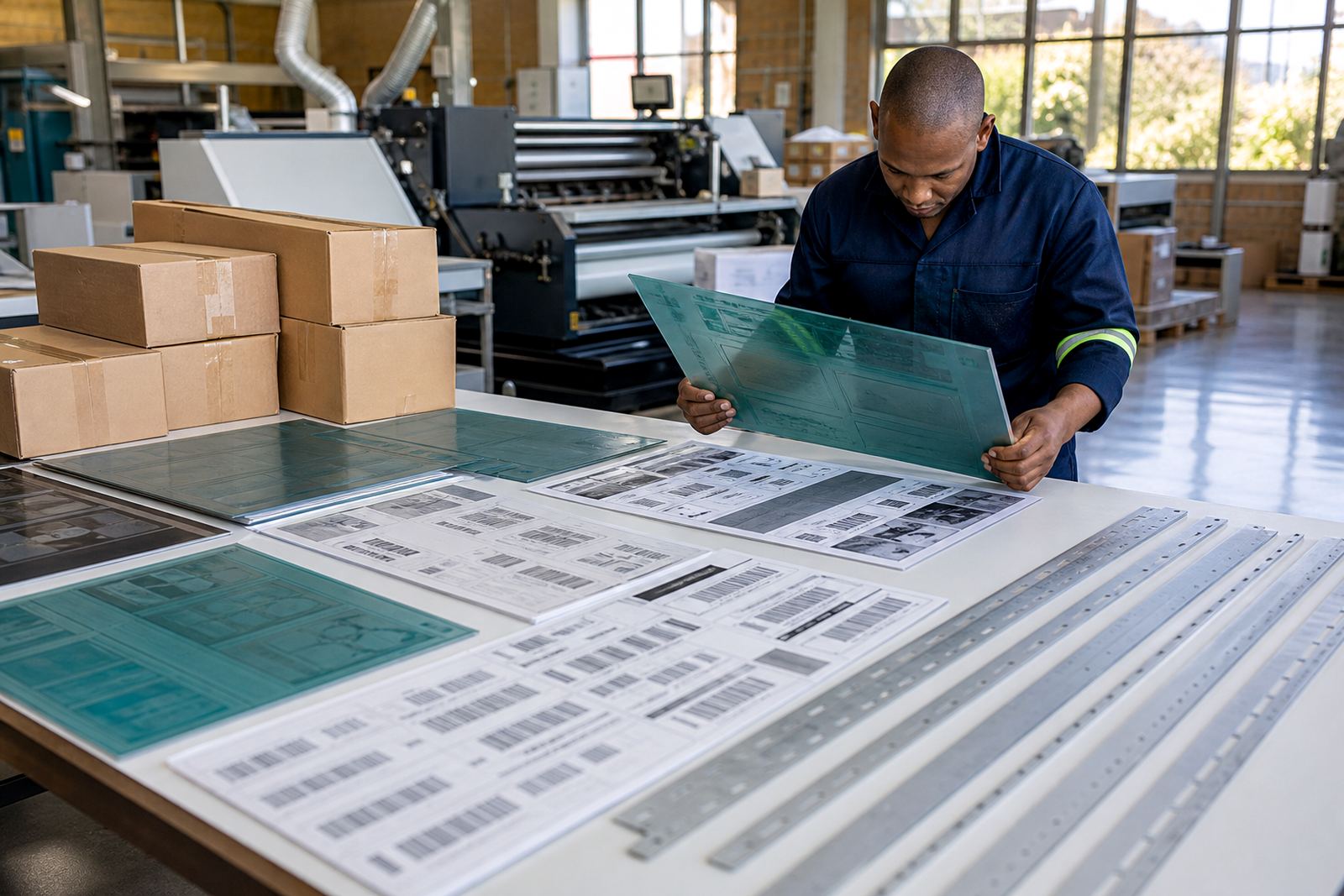
- Proof sheets or printed samples for comparison
For pharma labels, the small details matter. Reversed type, narrow rules and tiny data boxes can close up if the plate is not prepared correctly. If the label carries multiple languages or serialised content, the file has to be separated and checked line by line. A good plate room will look at the full job, not just the plate shape.
Layout And Prepress Advice For Dense Information Panels
When a pharmaceutical label has a crowded layout, the best advice is to plan the information hierarchy before plate production starts. The most important reading points should be the easiest to find. Keep body text separate from legal copy, and make sure warning blocks, dosage notes and variable data areas are not squeezed into corners that will be hard to read after print gain.
We often advise printers to leave enough breathing room around small text and barcodes. Thin rules can disappear if the plate or substrate is not matched properly, especially on glossy films or coated stock. Clear knockout spaces and sensible trapping can prevent text from clashing with background colours. It is also worth checking where folds, seal areas or bottle curves may affect readability.
- Set small type with enough contrast against the background
- Allow margin space around warning text and regulatory notes
- Check barcode placement against the print direction and web movement
- Keep variable data blocks separate from fixed content
- Confirm overprint settings before plates are made
For printers in Gauteng and coastal centres alike, substrate choice also matters. Heat and humidity can affect certain materials, so the plate and mounting plan should suit the pressroom conditions. A clean layout now saves a lot of adjustment later, and usually a lot of swearing too.
Common Mistakes On Pharma Plate Jobs
The most common problem is assuming the artwork is ready because it looks fine on screen. On a pharmaceutical label, tiny differences in spacing or line weight can make the difference between a neat result and a plate that prints too heavy. Poorly checked files often show up as missing punctuation, uneven borders, barcodes that need rework, or text that is too small to hold on press.
Another mistake is skipping proof comparison. If the supplied file, proof and final layout do not match, the plate room is left guessing. That creates avoidable delays. We also see jobs where plate sizes are not matched to the press set-up, which can lead to poor mounting or waste during make-ready. If a label form changes between versions, it should be flagged before production, not after the first press trial.
Pharma clients often need careful remake support as well, especially when there is a last minute regulatory edit. If the change is only one line, that still has to be checked against the full layout and the existing plate set. The right approach is steady and exact, not rushed and hopeful. Hope doesnt mount a plate properly.
Budget Ranges For Pharma Label Plate Making
Costs for flexo photopolymer plate making on pharma labels depend on plate size, number of colours, file complexity, screening needs and whether remakes are involved. A simple small label plate set will cost less than a job with fine reverse text, multiple versions or detailed imposition work. Delivery location can also affect the final price if the job needs same-day collection coordination or special packing.
As a practical guide, smaller label plate jobs may start from about R1 200 to R2 500 for a basic set, while more detailed pharma label work can move into the R3 000 to R6 500 range or higher depending on size and specification. Large multi-version jobs, repeat remakes or urgent handling can add to that. These are working ranges only, and the final figure depends on the file set, plate count and finishing requirements.
- Basic single-version label plates: lower end of the range
- Fine text, barcodes or multiple colour separations: mid range
- Remakes, additional trimming or special packing: extra cost
- Collection and courier dispatch: quoted according to destination and timing
For printers in Johannesburg, Pretoria, Durban, Cape Town and Gqeberha, courier delivery helps keep production moving without losing control of the job. Midrand is a practical base for this work because it sits close to major transport routes and gives access to both Gauteng and out of province deliveries.
What Our Team Checks Before Plates Leave Midrand
Our work on pharma labels is handled by a small team that keeps the process direct. Sibusiso Mthembu manages the business, Ayesha Naidoo oversees production, Pieter van Wyk handles prepress checking, Lerato Molefe keeps client communication moving, Morne Jacobs manages plate mounting and Zinhle Dlamini coordinates dispatch. That mix matters when a job needs both technical accuracy and tidy logistics.
Before plates are trimmed, labelled and packed, we check the file structure, layout fit, screen requirements and any notes that came through with the job. If there is a mismatch between the artwork and the expected press set-up, it gets flagged early. That saves time for the printer and reduces the chance of a job returning for correction. We also pack plates carefully so they travel well to West Rand, East Rand and longer courier routes.
Clients usually reach us through the enquiry form on our contact page. From there we can work through the job details, advise on plate preparation and organise collection or dispatch. For pharma label work, a clear file and a calm process usually beats a rushed one every time.