
Start with the print job details
Begin with the basics before you send artwork or plate instructions. A plate supplier needs to know what is being printed, what press it will run on and how the final pack will be used. A label for a cold-chain food line, for example, may need different plate choices and screening from a carton that sits on a shelf in dry warehouse conditions.
Include the item name, substrate type, whether the job is for labels, pouches, cartons or wraparound packaging, and the ink system if that is known. If the job is going to a printer in Midrand, Johannesburg or Pretoria, it also helps to say whether the plates will travel by courier or be collected for local handover.
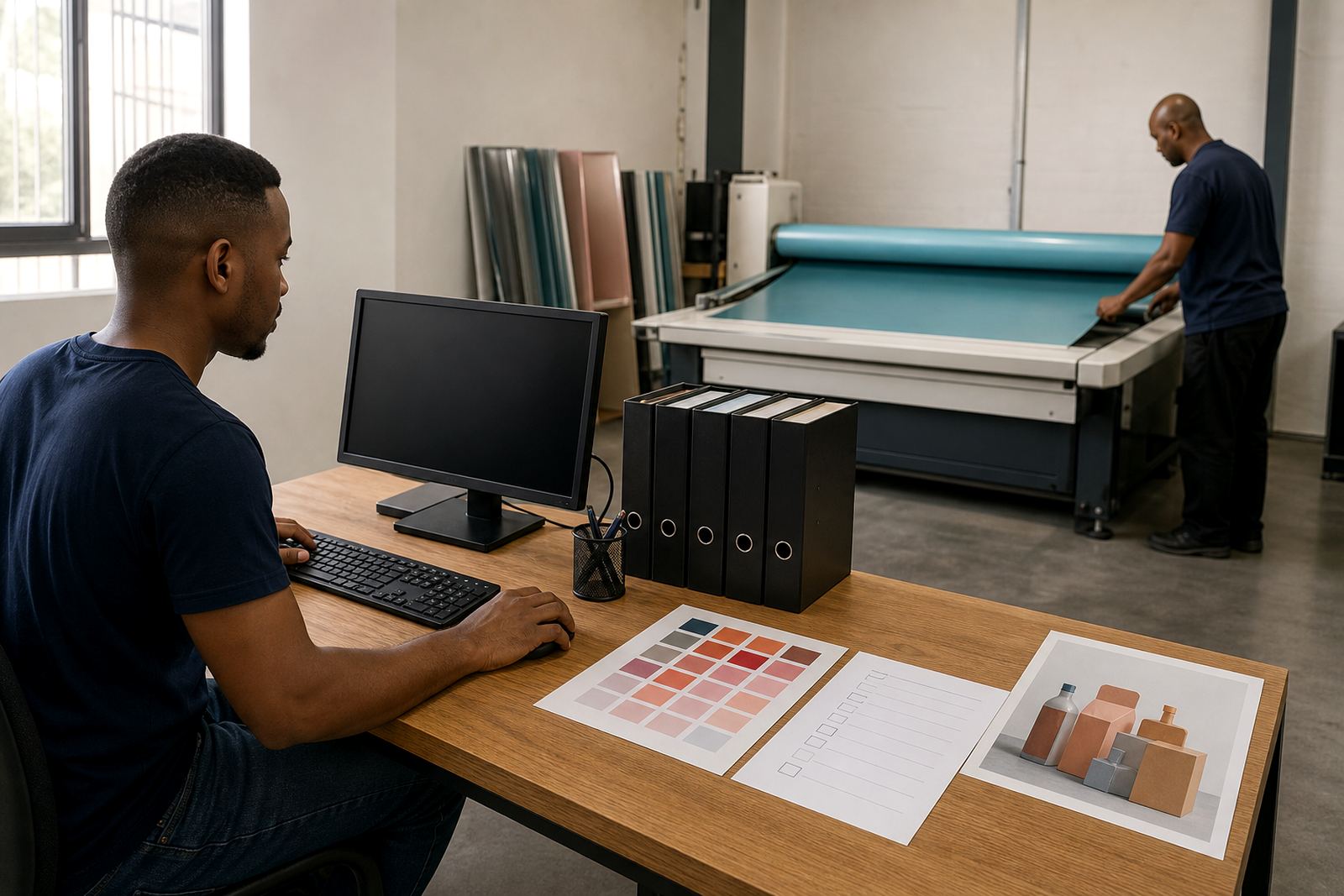
Give the supplier the artwork and version control
The cleanest plate work starts with the correct artwork file and a clear version history. If there are multiple pack sizes, language versions or barcode changes, note every variation. That avoids mixing up the 250 ml, 500 ml and 1 litre versions, which can happen more easily than most people expect.
- Send the latest approved artwork only
- Mark the version number, revision date and any last changes
- Identify what has changed, such as copy, colour, dieline or legal text
- Confirm whether the file is final for print or still subject to amendments
If there are open items, state them clearly. A small note like "pricing panel still pending" is better than a long chain of messages that leaves the job half-briefed. Missing notes on white underprint or reverse text can cause avoidable delay as well.
Set out the print size, repeat and mounting details
Flexo plates are made to fit a specific print repeat and mounting setup, so the supplier needs exact numbers. Include repeat length, width, number of colours, plate count per colour and any special mounting requirements. If the label uses a narrow web and tight repeats, accuracy matters even more because a small error can throw the whole setup off.
Where possible, add the finished trim size, bleed, cut marks and any notes about seam placement. If the press operator prefers a certain mounting style or tape allowance, say so at the start. This is where technical job advice saves time, especially on jobs with fine type or solid blocks that need careful handling.
- Repeat length and web width
- Number of colours and special inks
- Plate thickness or mounting foam requirements
- Direction of print and seam position
- Any trapping, knockouts or reverse areas
Explain the screening and proofing expectations
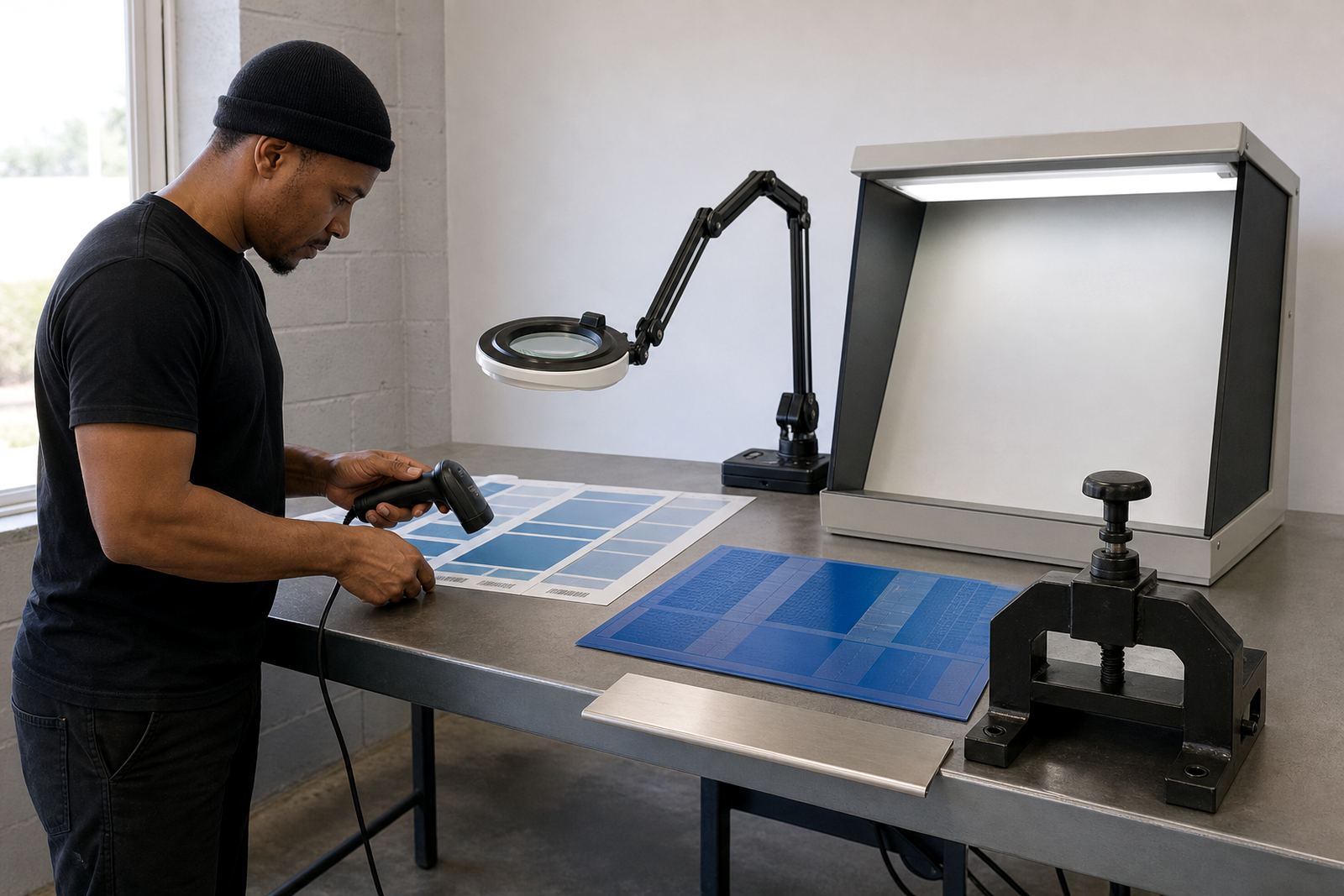
Good flexo work depends on print intent being clear before plates are made. Tell the supplier whether the job needs smooth vignettes, strong solids, fine linework or small reversed text. If there is a brand colour that must stay consistent across batches, note that too. Where proof comparison is required, say which proof is the reference and which elements must be checked first.
For packaging work, it is useful to mention how the job will be viewed in real use. A label on a bottle may be read at arm’s length, while a carton panel could be handled under indoor lighting in a warehouse or shop. That changes what matters most, from small copy legibility to colour balance on larger blocks. If there is a previous job to match, include a sample or previous plate reference if available.
List handling, packing and delivery instructions
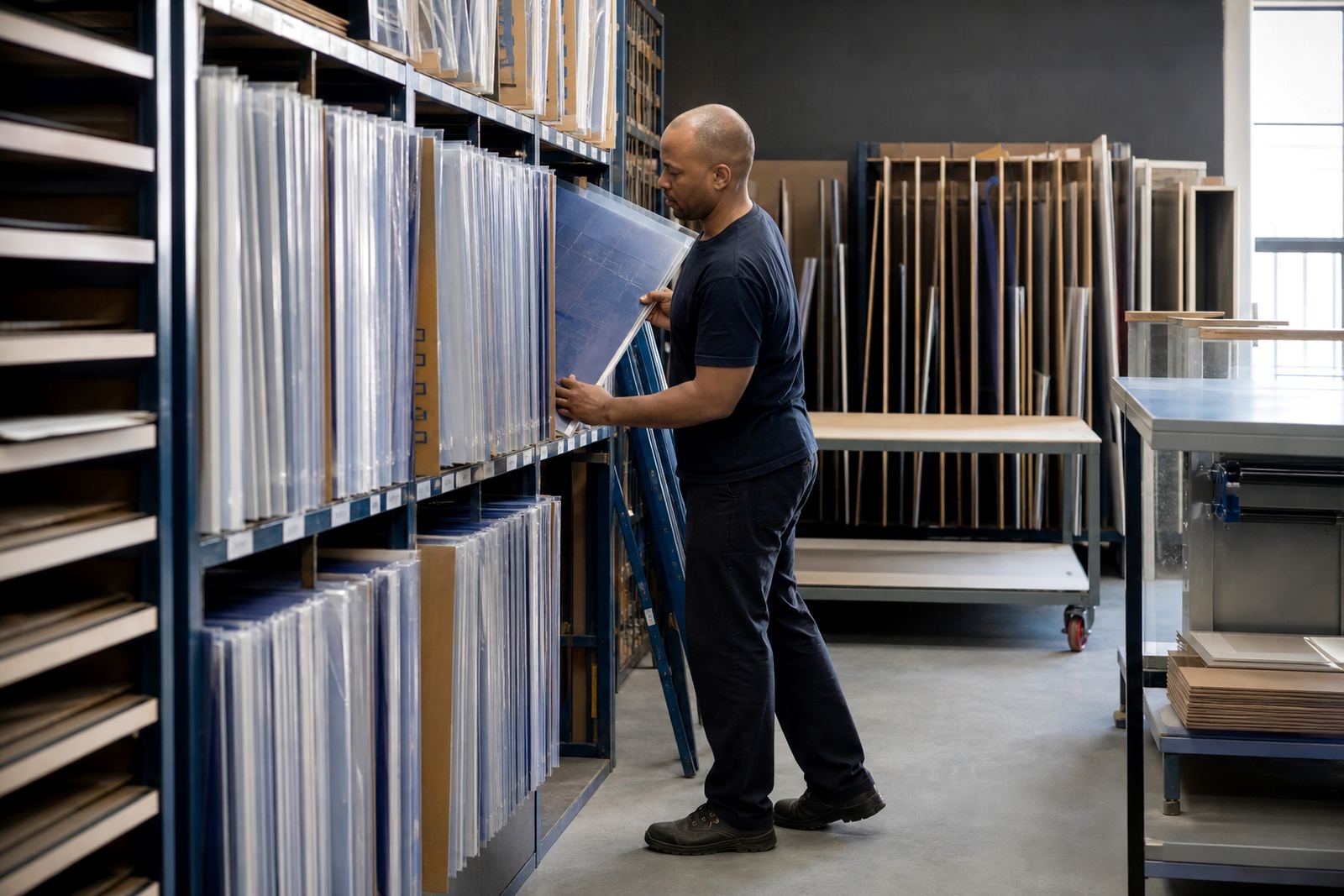
Plates are sensitive to dents, dust and poor stacking. When the job is ready for dispatch, specify how the plates should be packed, labelled and separated by version. If a client site has strict receiving rules, mention them early. This is especially useful for deliveries into Johannesburg, Durban, Cape Town and Gqeberha where site access, loading bay times and security checks can vary a lot.
Also say whether the job is urgent, split across more than one box, or needs to stay grouped by colour and press side. If the plates will be sent to a printer on the East Rand or West Rand, mention the delivery point and contact person for collection coordination.
- Full delivery address and receiving hours
- Contact person for dispatch or collection
- Job reference to show on the parcel
- Colour grouping or press sequence
- Any site access notes, gates or security steps
Share remake, change and repeat-job notes
Repeat jobs are easier when the supplier knows what was changed last time and what must stay the same. If a plate is being remade because of damage, wear or artwork revision, say so clearly. That helps the production team decide whether the job needs full remake support, partial adjustment or simple reissue of the existing set.
For ongoing label and packaging work, keep one short history for each item: original job date, approved version, repeat date and any problems found on press. A small note about a weak fine line, an image shift or a colour that printed too dark can save time on the next run. It also helps when different people in the print room handle the same account over time, which is common in busy shops.
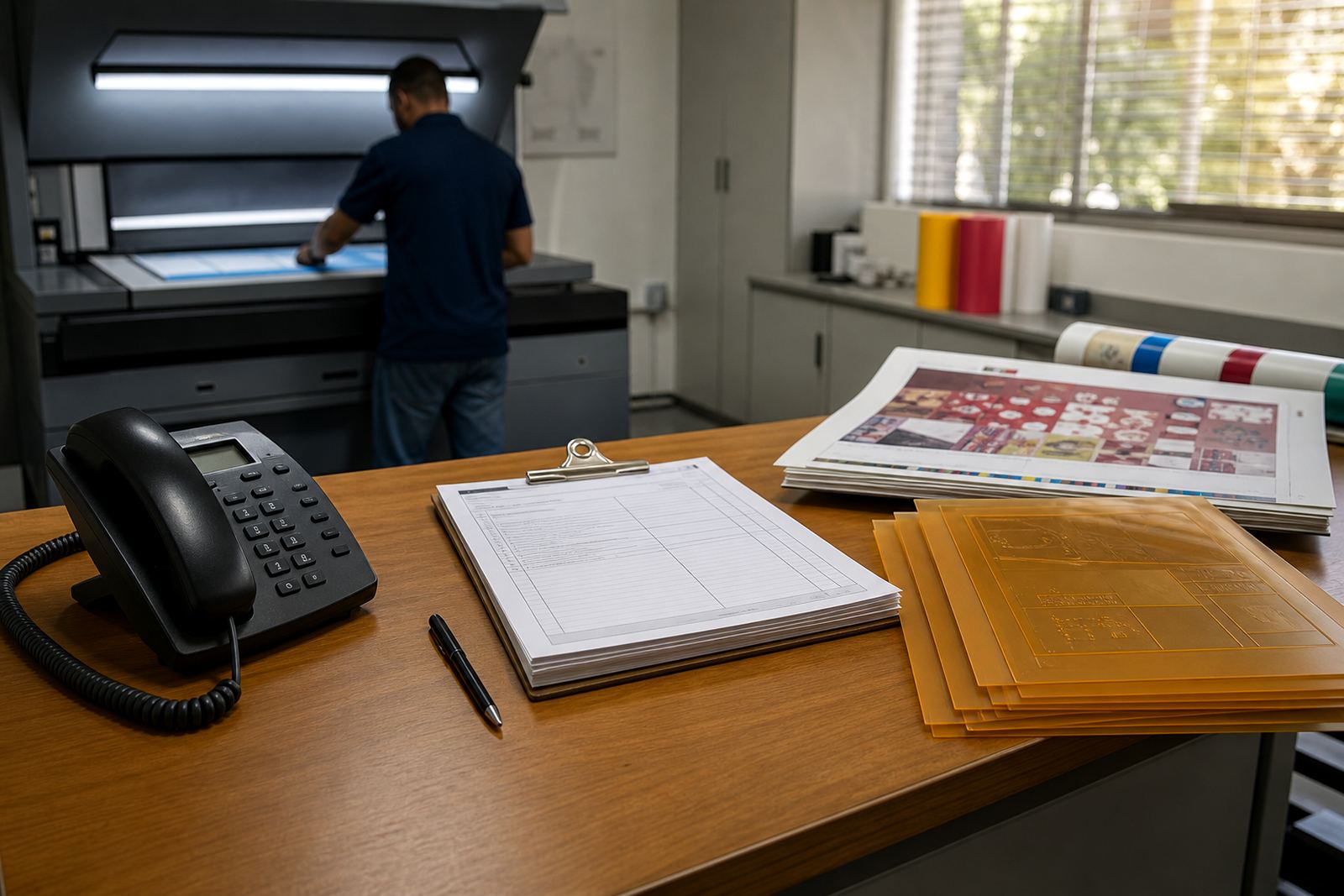
Use a simple briefing checklist before you send the job
A short checklist keeps the brief practical and easy to read. It also reduces back-and-forth when the plate supplier starts artwork checking and imposition planning. Before you submit, make sure the job file tells the full story from start to finish.
- Job name and product description
- Artwork version and approval status
- Substrate, repeat and print size
- Number of colours and special print notes
- Proofing reference or sample to match
- Packing, collection or courier instructions
- Repeat-job or remake notes if relevant
If anything is unclear, ask for technical job advice before the plates go to production. A few minutes spent on the brief is usually better than redoing a set later. That is true for small label runs and for bigger packaging jobs alike.