Start With A Clean And Dry Plate
Before any plate goes into storage, make sure it is free of ink, dust and adhesive residue. Use the correct cleaning method for the plate type and handle it with clean hands or gloves so you do not leave marks on the image surface. If the plate has been washed, allow it to dry fully before packing. Any trapped moisture can lead to surface issues, especially in humid coastal conditions or in closed storerooms where air flow is poor.
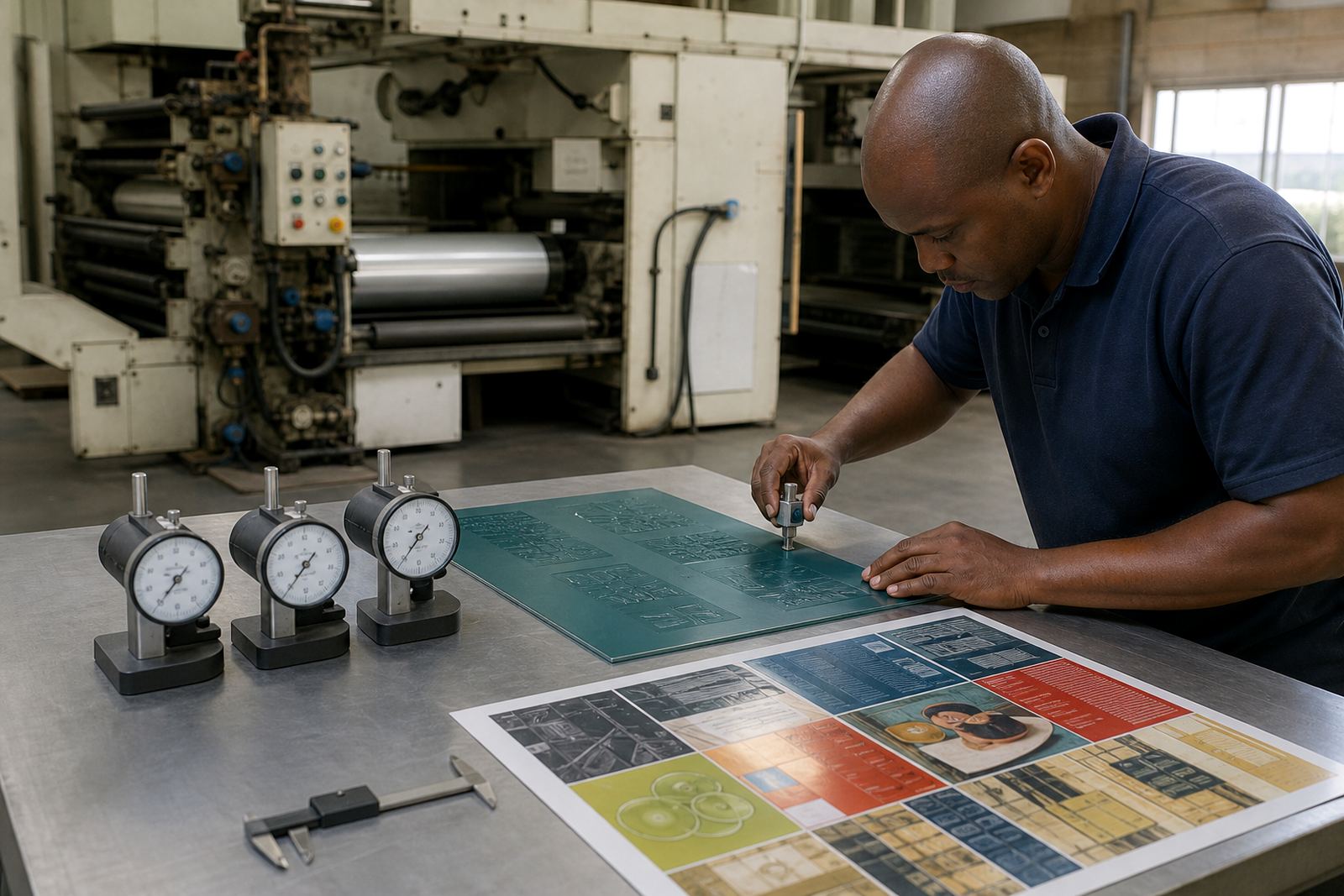
Check the plate edges as well. A bent corner or a nick can cause trouble next time the job is mounted. If a plate needs repair or remake support, separate it from the finished set so it does not get packed by mistake.
Label Every Plate So The Job Is Easy To Trace
Clear plate identification is one of the best habits a printer can build. Each plate should show the job name, artwork version, colour, station and date it was made. For longer runs, add a repeat count or any other note that helps the press team match the plate to the correct form. If you store many similar labels or packaging jobs, use a consistent naming system across every bundle.
- Job or order reference
- Colour and station number
- Plate thickness or type
- Date made and remake date if needed
- Any notes on screening or special handling
Use a label that stays attached in storage and does not peel off when the carton is moved. A faded or falling label can waste time during a busy reprint, and that is avoidable.
Choose Flat Packing Materials That Protect The Image
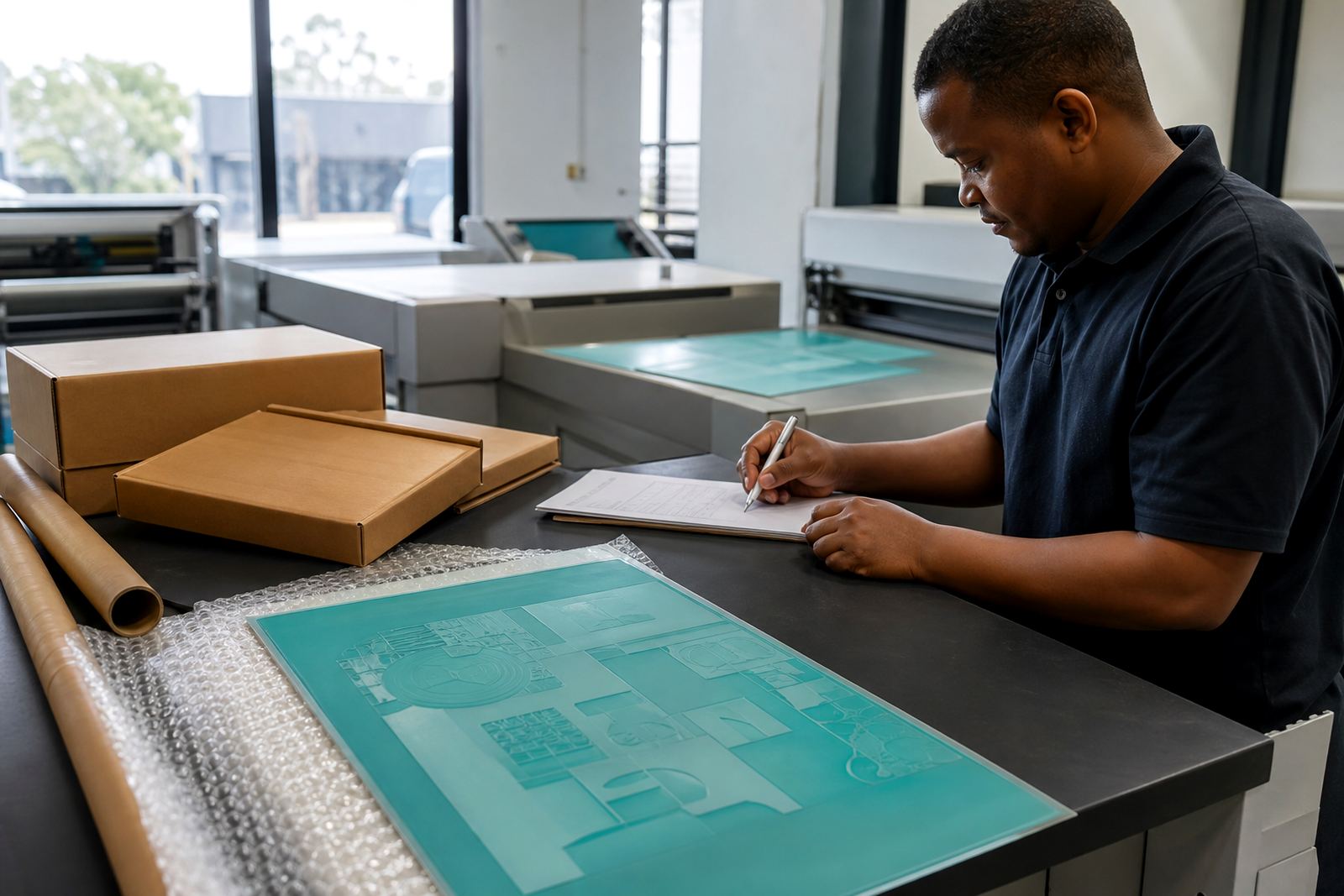
Photopolymer plates should be stored flat and protected from pressure. Use clean interleaving sheets, sleeves or cartons that match the plate size. Do not fold plates or stack heavy items on top of them. If the plates are being couriered to another site in Johannesburg, Pretoria, Durban, Cape Town or Gqeberha, secure them so they do not slide around in transit.
For smaller jobs, keep one plate set per envelope or carton where possible. For larger packaging work, pack in logical sets by colour or form. This makes collection coordination much easier, especially when a printer needs one part of a job rechecked and the rest remains in storage.
Store Plates In A Stable Room Away From Heat And Sun
Storage conditions matter. Keep plates away from direct sunlight, heaters, solvents and areas where temperatures rise and fall sharply. A store room near a loading bay or machine room is often not the best place if the door is open most of the day. Stable conditions help the plate keep its shape and reduce the chance of warping.
If your site faces load shedding, avoid leaving plates near backup generators or equipment that gives off heat. It is also worth keeping them clear of floors that may get damp after rain, which can happen in Midrand and other low-lying areas after a storm. A dry shelf or racking system is better than a stack on the floor, even for short term storage.
Use A Job Checklist Before The Carton Is Sealed
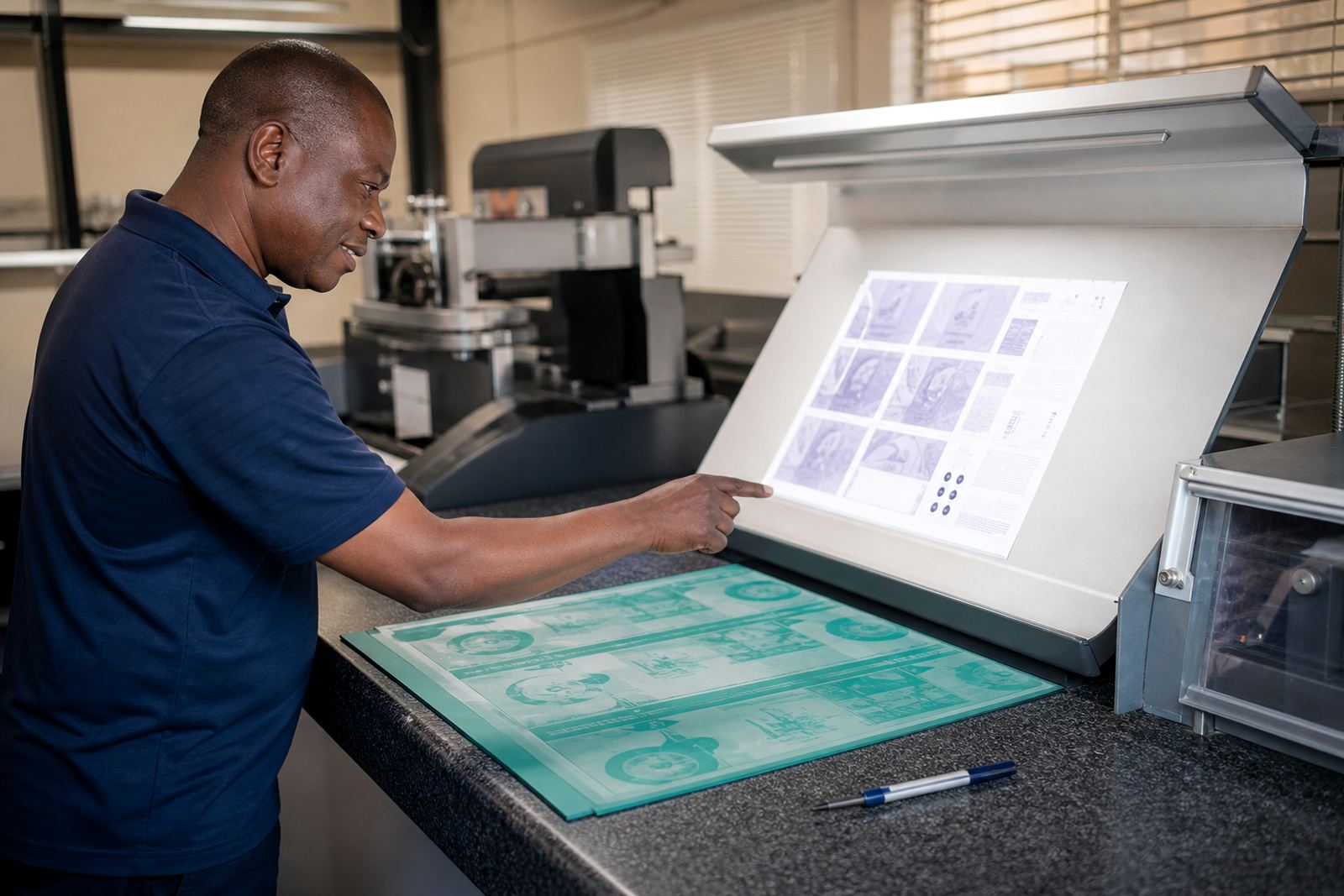
A short packing checklist helps prevent mistakes. It is best to confirm the plate count, artwork version, labels and destination before the carton is closed. If proof comparison was done on the job, keep the approved proof note with the set so the next print run can be checked quickly. One missed plate can delay the press and create avoidable rework.
- Plate count confirmed
- Correct job reference on every plate
- Surface clean and dry
- Protective sheets inserted where needed
- Carton sealed and marked clearly
Many printers also keep a simple log for stored plates, which helps when jobs are repeated months later. A written record is better than trying to remember where a plate was put.
Keep Remake And Reprint Sets Separate
Not every plate in storage should be treated the same. If a plate has been remade, trimmed again, or adjusted after file checking, mark it clearly so the team does not mix it with the older set. Keep rejected plates apart from approved plates and dispose of them according to your own waste procedures. This is especially important when different versions of the same artwork have been used over time.
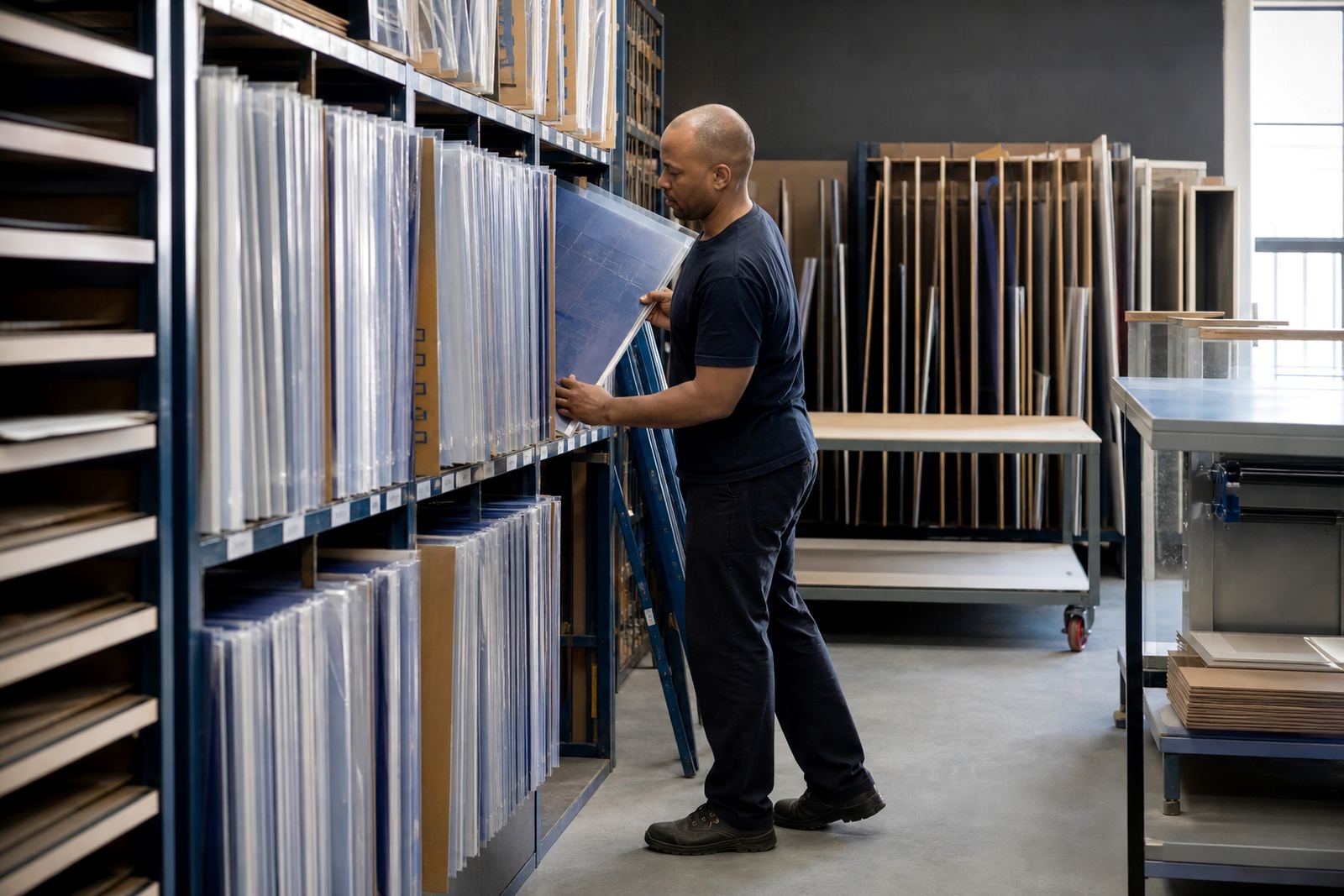
For printers in busy packaging and label environments, a simple shelf layout can save a lot of time. Keep current plates in one area, archived plates in another, and items waiting for collection in a separate space. That way the right plate is found fast, and the wrong one does not end up on the press.
A Practical Storage Routine For The End Of The Shift
At the end of each shift, it helps to follow the same routine. Wipe down the plate handling area, check that finished plates are packed, and confirm that nothing has been left near the press. If the job is complete and ready for long term storage, add the carton to the correct section of your plate store and update the job record. A few extra minutes now can prevent a costly mix up later.
For printers who need plate advice, collection coordination or dispatch packing across South Africa, a steady process matters as much as the plate itself. Good storage keeps the work usable when the repeat order comes in, and it makes life easier for the prepress and press teams alike.