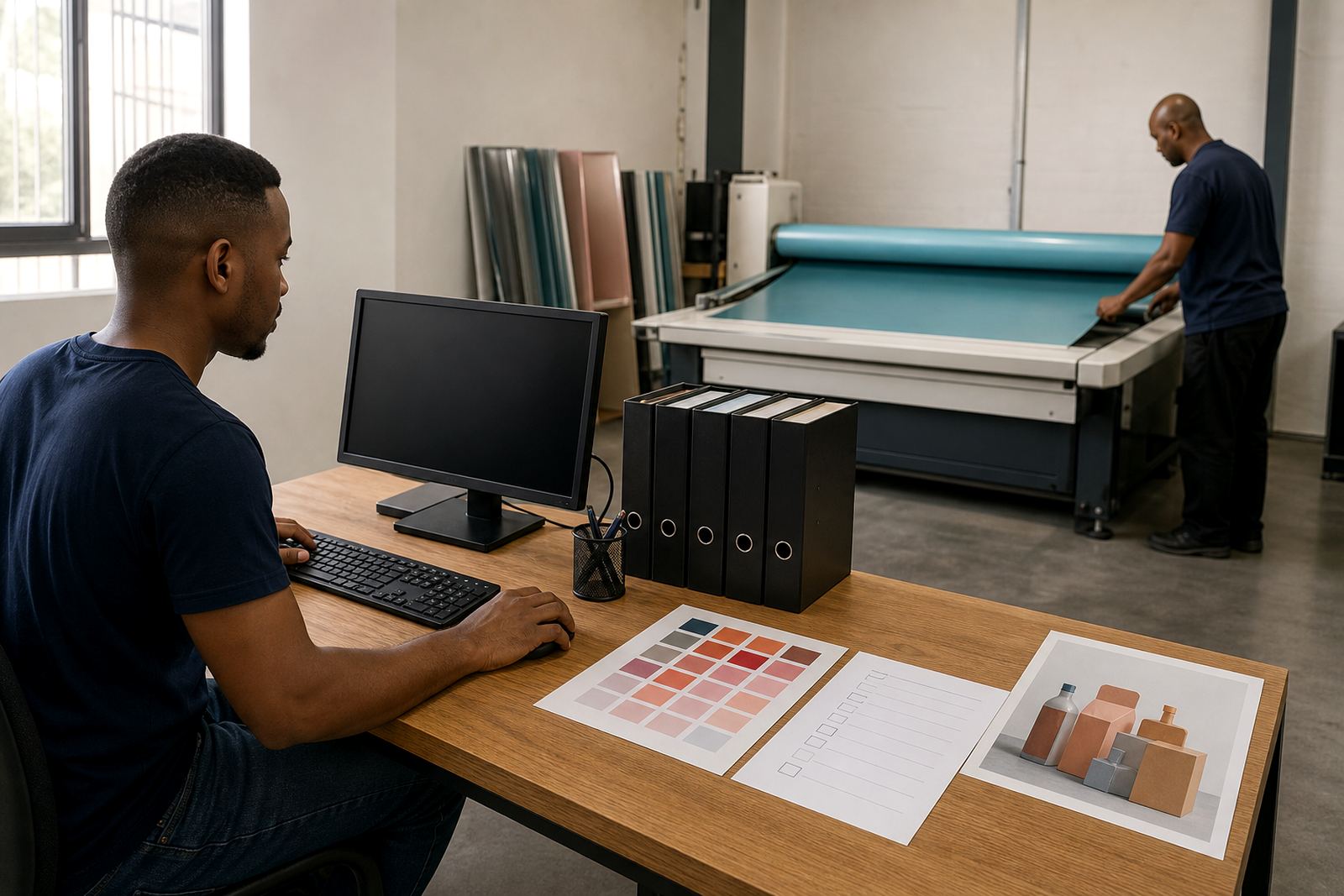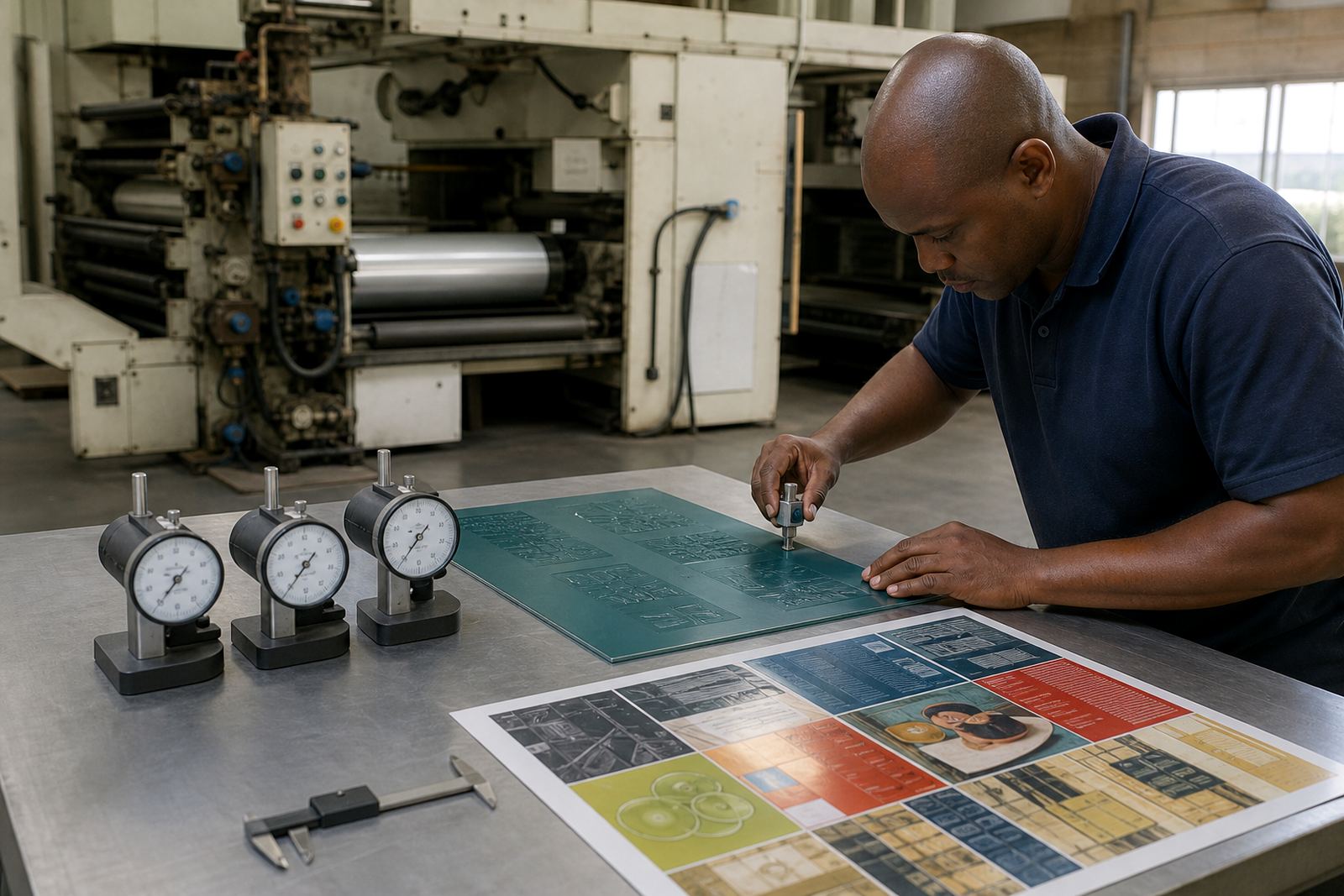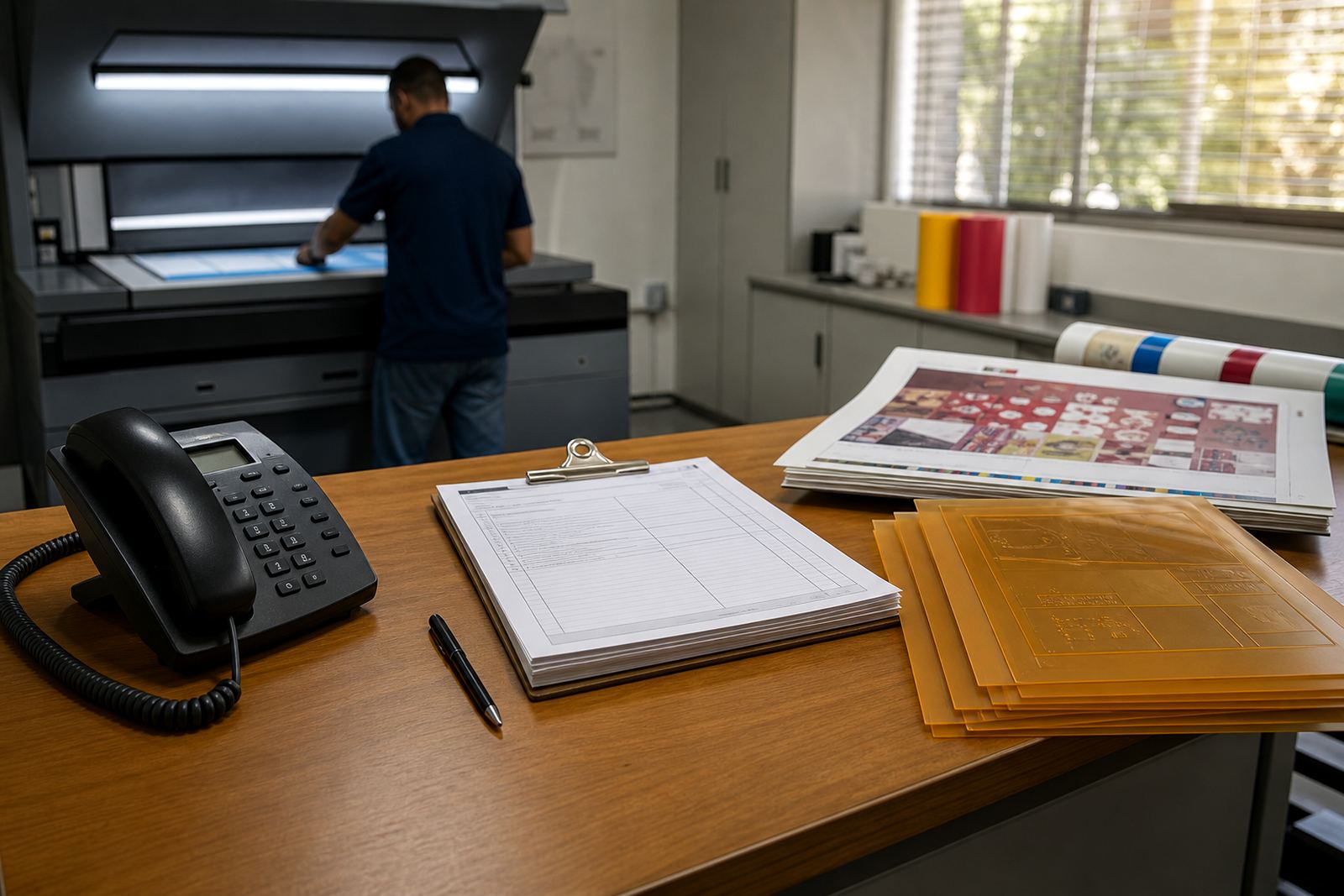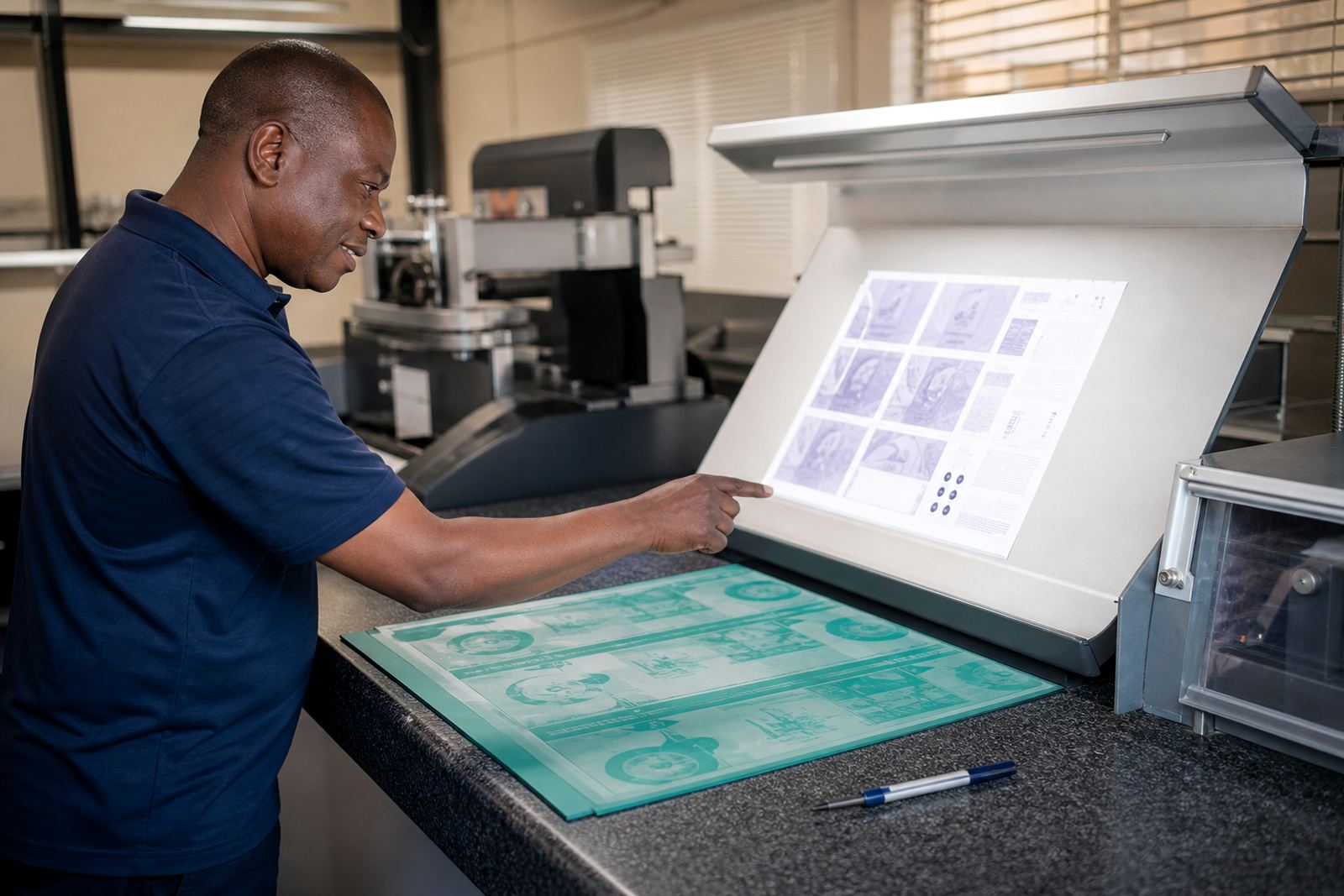
Why a proof check matters before plate-making
Once a file moves into plate-making, small errors can become expensive to correct. A misspelt ingredient line, the wrong barcode size, a shifted crease line or a colour note that was missed can all affect print quality and packing schedules. Reviewing the proof first gives your team a clear chance to confirm what will actually be engraved into the printing workflow.
For label and packaging printers in Midrand, Johannesburg, Pretoria and beyond, this step matters even more when jobs are being couriered across South Africa. A clean proof review reduces rework, keeps press time moving, and gives everyone a single reference for what was approved. It is a practical check, not a formality.
Start with the artwork details, not just the picture
When looking at a proof, check the details line by line rather than only scanning the full design. Many production problems hide in the small items. Size notes, repeat lengths, finishing marks and special instructions all need attention before plates are prepared. If anything looks unclear, raise it immediately and ask for the point to be shown again on the proof.
- Product name, pack size and variant
- Barcode position and quiet zone
- Small text, warnings and legal copy
- Colour names and spot colour notes
- Crease, cut and registration marks
- Repeat direction and panel order
If you handle multiple SKUs, compare each version carefully. It is easy for one line of text to carry over from an earlier version, especially when the design changes often.
Check whether the file is ready for plate work
Before plate-making starts, the file should be checked for practical production issues. This is where artwork may look fine on screen but still cause trouble on press. Fine reversed type, low-resolution images, overprints and missing fonts can all affect the final plate and print result. A proper review spots these matters early, before they become production delays.
Pay close attention to images that may have been stretched, thin rules that may drop out, and any areas where colours overlap in a way that could create unwanted results. If the job uses screening support or special image handling, that should be noted clearly on the proof. The more complete the notes, the easier it is to prepare plates that match the intended print result.
Use a simple proof checklist at your side
A short checklist keeps the review focused and helps different people check the same items in the same way. It also works well when a sales person, designer and production team all need to sign off on the same job. Even a quick second review can catch a detail that the first person missed.
- Match the proof to the correct job number
- Confirm sizes, repeats and panel count
- Read every line of text, including fine print
- Check spelling, punctuation and spacing
- Confirm colour callouts and the correct version
- Review any special notes for mounting or trimming
- Make sure the approved version is the one being sent to plates
In busy weeks, this simple routine saves more time than it takes. It is especially useful for remakes, reorders and urgent packaging work where the press schedule is already tight.
Confirm the job against the press and finishing plan
A proof should not be checked in isolation. It needs to make sense against how the job will actually run on press and through finishing. If the plate layout, imposition planning or trim allowance does not suit the press setup, the proof may still look correct while the job fails in production. That is why the proof review should include the practical side of the work as well.
Ask whether the layout will suit the cylinder, whether the repeat is correct, and whether any cut or fold line needs to be shown differently. For packaging jobs, confirm that the artwork leaves enough room for seals, flaps and machine handling. A little extra checking here can prevent wasted material and rushed corrections later.
Know when to ask for technical advice
Not every issue on a proof is a straightforward yes or no. Some jobs need technical advice before approval, especially when there are tight tolerances, small type, fine reversals or unusual substrate behaviour. Coastal humidity, storage conditions and long courier routes can also affect how a job is packed and handled, so the review should consider more than just the artwork itself.
If anything on the proof seems unclear, do not guess. Ask for the point to be explained and make sure the approved version reflects the decision. When a job is being prepared for collection or courier delivery to Durban, Cape Town, Gqeberha or the East Rand, clear approval notes help the team pack and label the plates correctly the first time. That kind of clarity supports better production and fewer hold ups.
- Is the proof showing the latest artwork version?
- Are any notes still open or waiting for approval?
- Does the proof match the intended press and substrate?
- Are plate labels, packing notes and delivery details correct?