Start With the Finished Label Size and Repeat
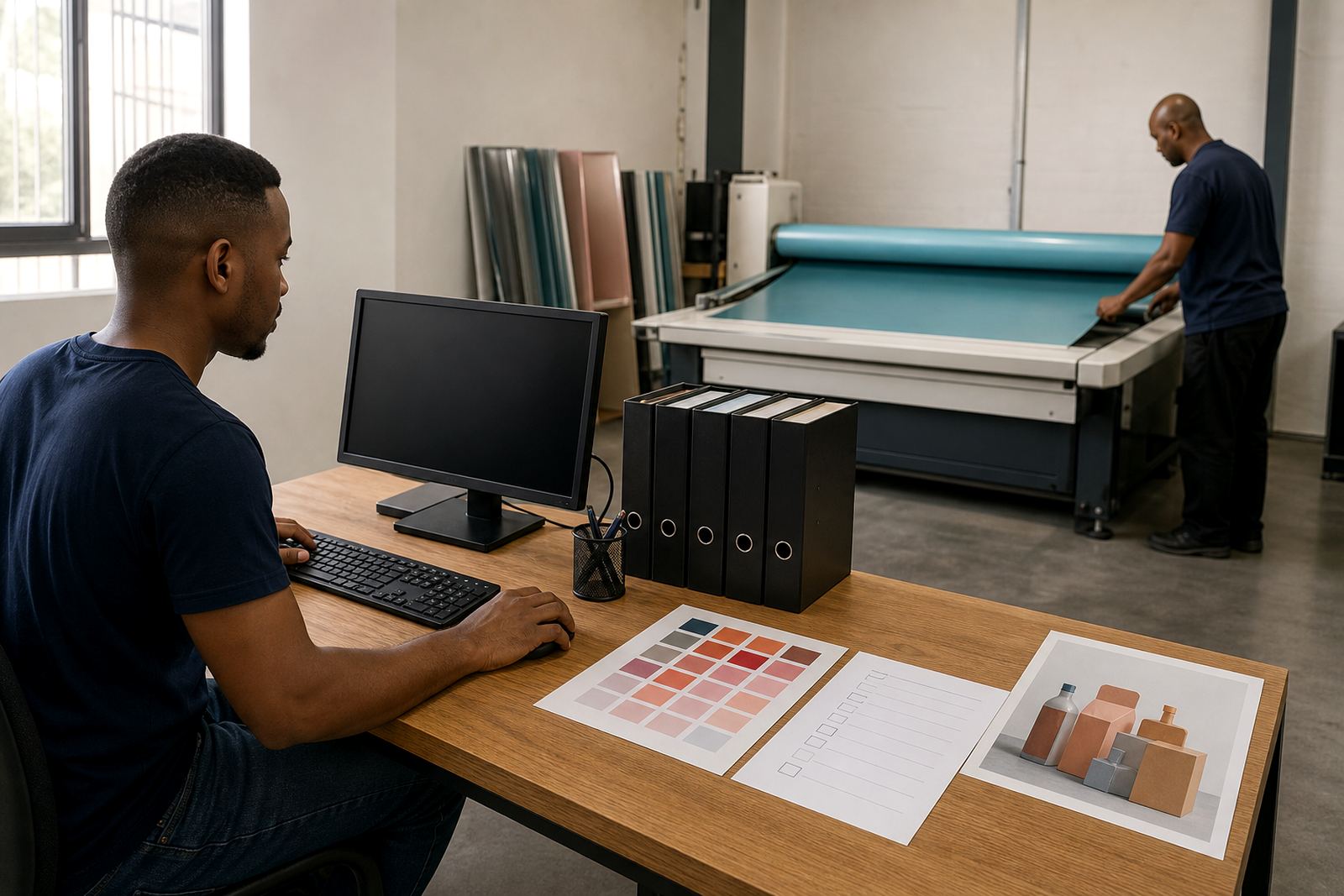
Begin with the finished label size, then work backwards from there. The repeat is the distance from one repeat of the artwork to the next on the plate, and it has to suit the press cylinder or printing unit set-up. If the repeat is wrong, the print may not register properly or the cut line can drift over the run.
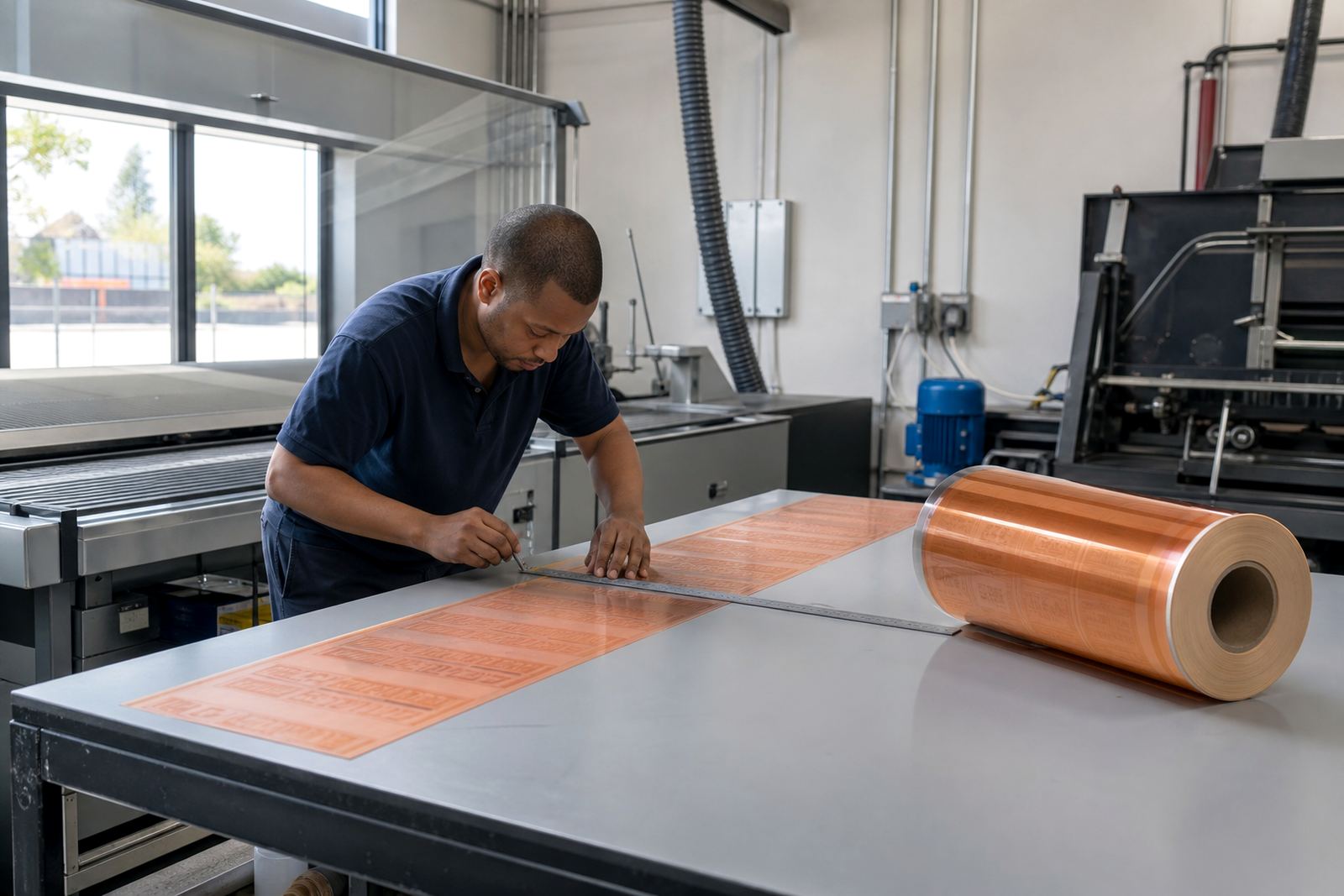
Measure the finished label in millimetres and confirm whether the artwork repeats in the machine direction, across the web, or both. For longer labels or sleeves, make sure the repeat allows the design to sit fully on the plate with enough room for trimming, gaps and mounting. A few millimetres can make a big differnce on press.
Check How Much Space the Artwork Needs
Once the repeat is known, look at the layout space needed for the artwork, gutters and any side marks. The plate should allow enough room so that text, solids and fine detail are not squeezed too close to the edge. This matters even more on smaller labels where there is not much spare space.
- Confirm the label width and height in mm.
- Allow for cutting gaps, gutters and registration marks.
- Keep small text away from the edge of the repeat.
- Leave room for any security text, codes or variable panels.
- Check that borders do not sit too close to the trim line.
If a design is tight, it may need to be re-positioned within the repeat so the plate image sits cleanly and prints consistently. That is often easier than trying to force a layout that is too cramped.
Match the Repeat to the Press and Substrate
Different presses and substrates place different demands on the plate. A paper label may behave differently from a synthetic film on a warm press or in humid coastal conditions. On clear or glossy stock, any misalignment is easier to see, so the repeat and layout need to be set with care.
For Johannesburg, Pretoria and the East Rand, dry winter air can affect how sheets and rolls sit before printing. In Durban, Cape Town and Gqeberha, humidity can change handling and storage behaviour. Keep stock flat, sealed and handled consistently so the repeat set-up you approve is the repeat you actually print.
Use a Simple Preflight Checklist Before Ordering
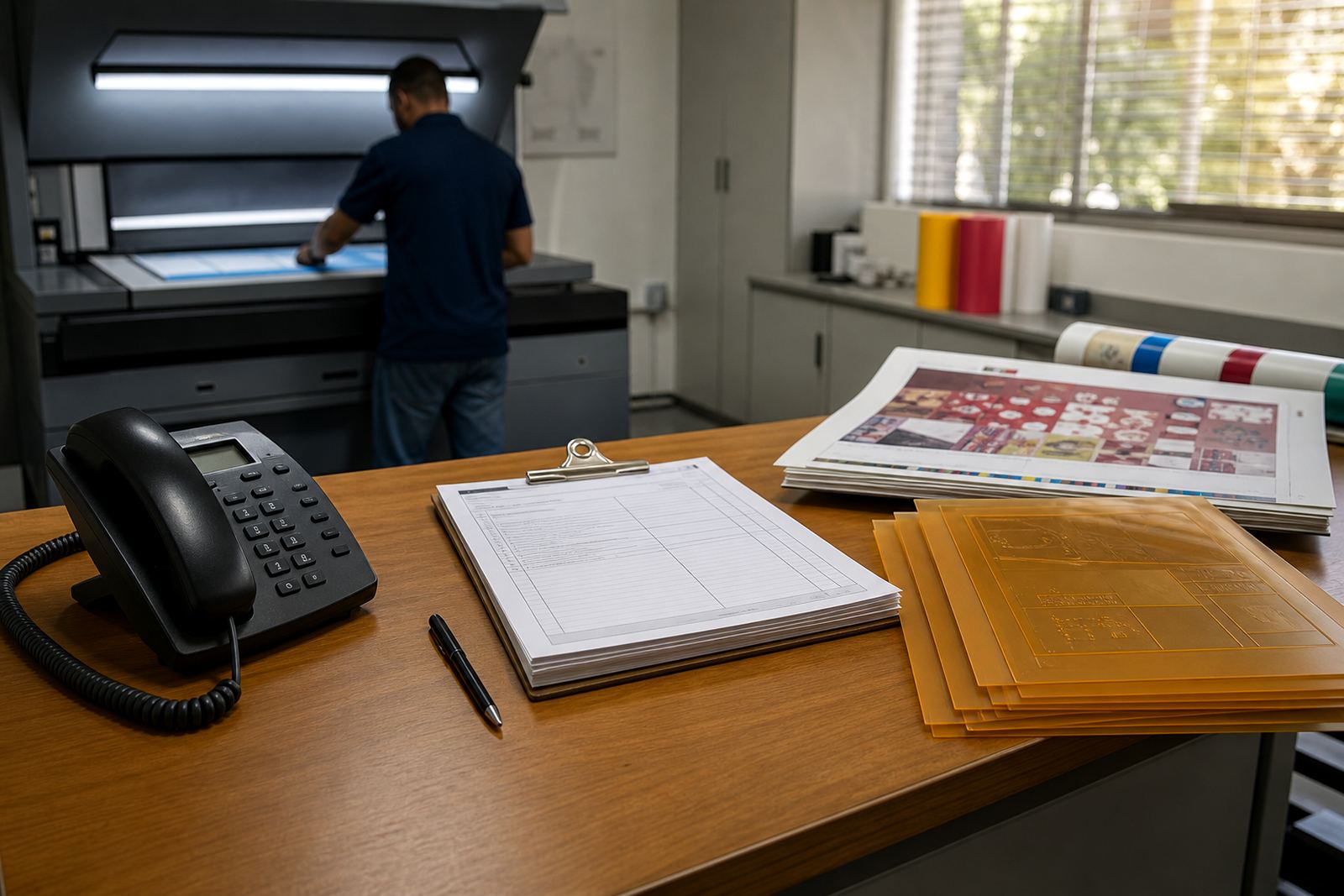
A quick preflight before plate-making saves time and reduces back-and-forth. It also helps the prepress team spot issues before they become a remake. Good preflight is not only about artwork quality, it is about whether the file and layout are suitable for plate output.
- Check spelling, punctuation and any legal copy.
- Confirm the repeat length and label count per repeat.
- Make sure images are sharp and linework is clean.
- Review colours, tints and solid areas for print strength.
- Check that dielines, varnish areas and white areas are correctly marked.
- Confirm plate quantity, size and any special trimming needs.
If there is any uncertainty, send the file for checking before approving production. A short review now is easier than correcting a plate after the job has already been mounted and set up.
Plan for Mounting, Trimming and Plate Labelling
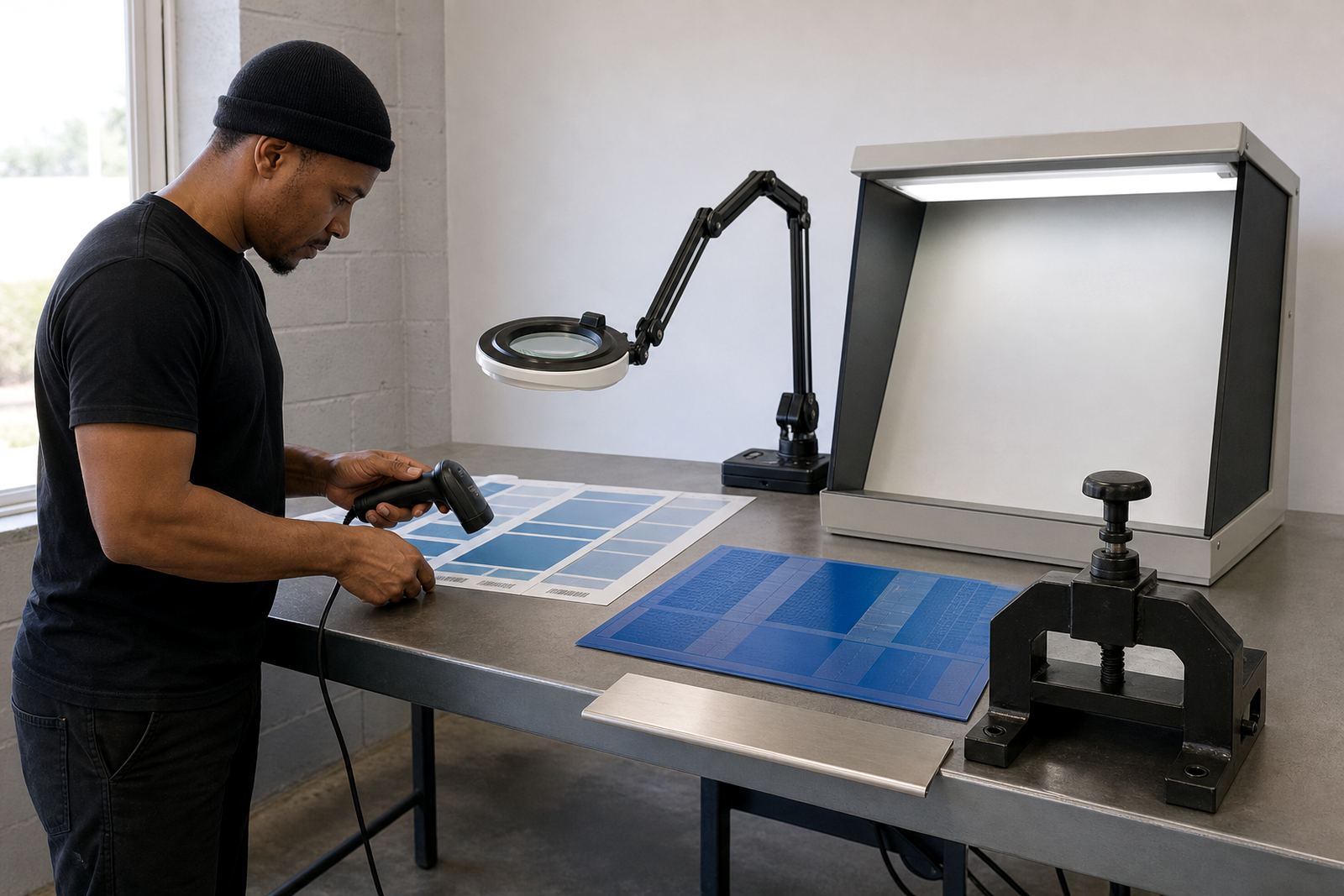
Plate size is only part of the job. The plate also needs to be trimmed neatly, labelled clearly and prepared for mounting without confusion on press. When a job has several repeats or multiple colours, clear labelling helps the crew keep each plate in the right position.
Ask for trim allowances to be confirmed early, especially where the job has narrow margins or side-by-side repeats. If the plate is too close to the edge, mounting can become awkward and the image may not sit square. A tidy label on each plate pack also helps when the job returns for a remake or future run.
Think Ahead if the Job May Run Again
Label jobs often come back in batches, and it helps to keep the repeat information on file. When the repeat, artwork version and mount position are recorded properly, the next run can be prepared with less delay and fewer questions. That is useful for seasonal packaging, short label runs and repeating product lines.
Keep a note of any changes made during approval, including the final repeat length, artwork version and mounting direction. If the job changes later, even slightly, the repeat should be reviewed again. Small changes in text, barcode space or artwork width can alter how the plate fits the press.
For courier delivery across South Africa, from Midrand into Johannesburg, Pretoria, Durban, Cape Town, Gqeberha, the East Rand and West Rand, clear repeat details help keep dispatch accurate and reduce handling problems. If collection is preferred, it also helps us prepare the plates in the right order for handover.
What to Send With Your Enquiry
When you submit an enquiry through the contact page, include the details that affect repeat planning. The more complete the brief, the easier it is to check the plate layout and advise on the best approach before production starts.
- Finished label size in mm.
- Repeat length, if known.
- Artwork file and version reference.
- Number of colours or print stations.
- Substrate type, such as paper or film.
- Any special trimming, mounting or remake notes.
Flexo Printer Plates is based in Midrand, Gauteng, and the team works with label and packaging printers on practical plate-making, artwork preflight, file checking, imposition planning and related production support. The aim is simple: get the repeat right before the plate is made, so the press setup goes smoother and the finished labels print as expected.