
What A Flexo Photopolymer Plate Actually Does
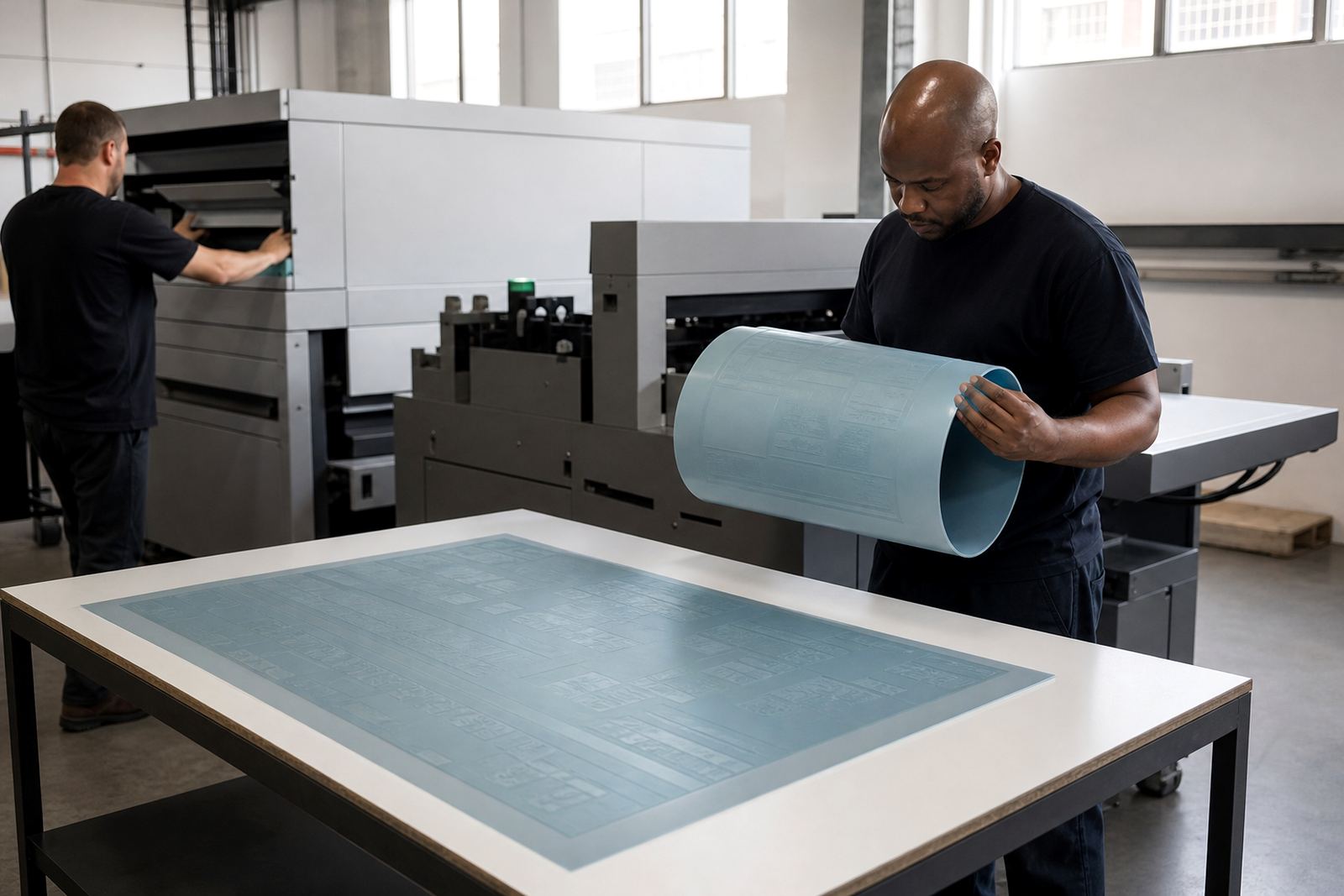
A flexo plate is a raised printing surface made from photopolymer material. The raised areas hold the image of the artwork, then transfer ink onto paper, film, board or other packaging stock during the print run. For label and packaging printers, the plate must hold fine text, solid blocks, tints and small details without breaking down too quickly.
The plate is not just a copy of the artwork. It has to be prepared with the right image depth, screening support and layout for the press it will run on. If the plate is not made carefully, you can get soft type, uneven solids, dirty edges or poor repeat accuracy. That is why plate-making is usually handled alongside prepress checks and file control.
At our Midrand base, we prepare flexo photopolymer plates for printers across Gauteng and further afield, including Johannesburg, Pretoria, Durban, Cape Town and Gqeberha. The goal is straightforward: make a plate that matches the job, the substrate and the press conditions as closely as possible.
Why Print Buyers Notice The Plate Before They Notice The Press
Many print buyers only think about the press when something goes wrong, but the plate often sits behind the final result. If a label carries tiny legal text, a barcode, a brand colour block or a neat finishing line, the plate has to reproduce it accurately. On packaging work, that matters even more because folds, varnish areas and repeat positions all need to line up.
A good plate supports consistent print from the first sheet to the last. It also helps printers manage day to day issues such as substrate variation, humidity near the coast, and shifting conditions during load-shedding or stop-start production. When the plate is made and packed properly, there is less waste on press and less time spent correcting avoidable faults.
- Cleaner small type and fine rules
- Better repeat accuracy on long runs
- More stable ink transfer on the chosen stock
- Less chance of rework after make-ready
How We Approach Plate-Making In A Working Print Shop
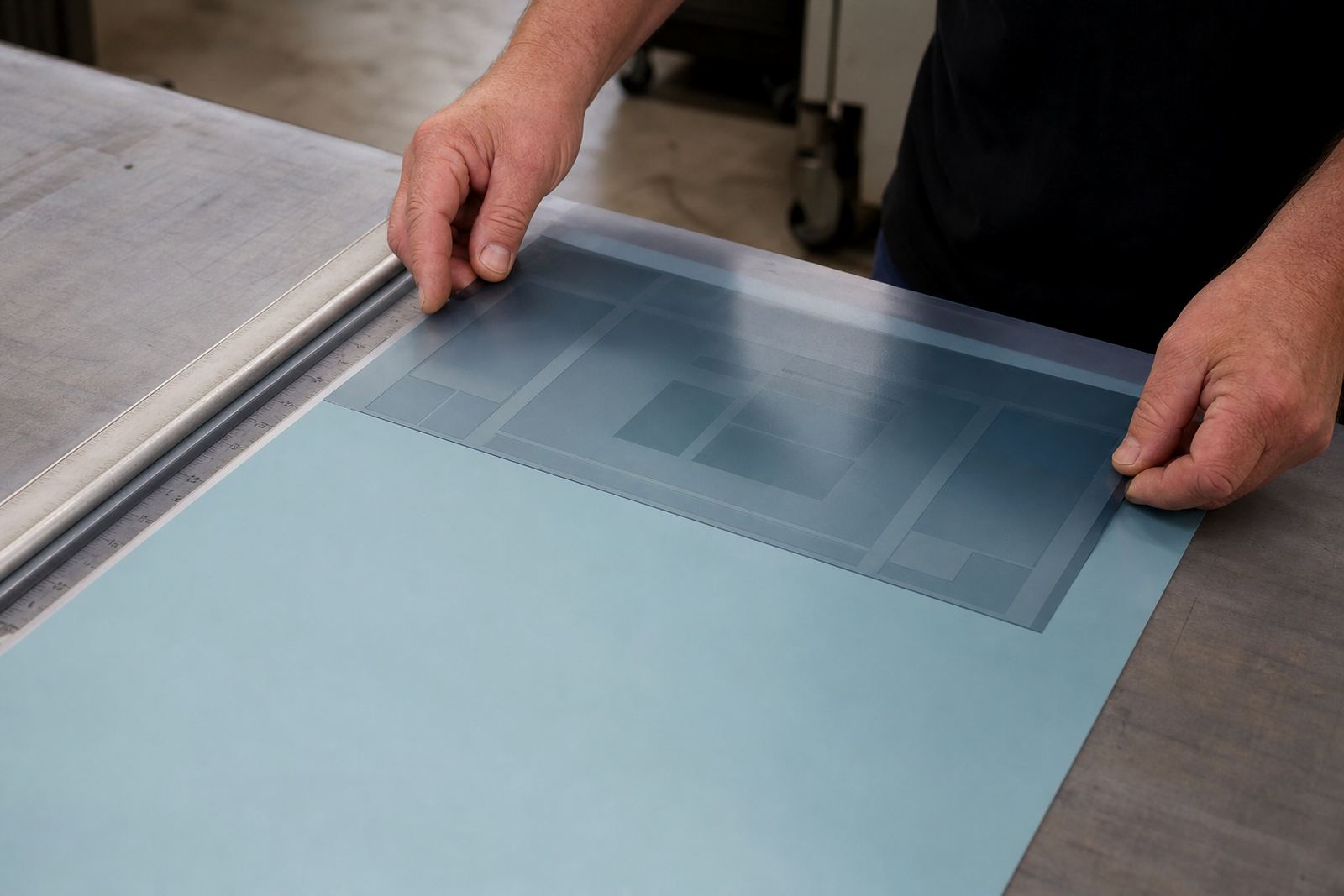
Plate-making starts before the plate is processed. Artwork needs checking for size, bleed, image placement and any tricky details that may not survive if they are too light or too close together. File checking and imposition planning help place the artwork correctly on the sheet or plate layout, which saves time later in production.
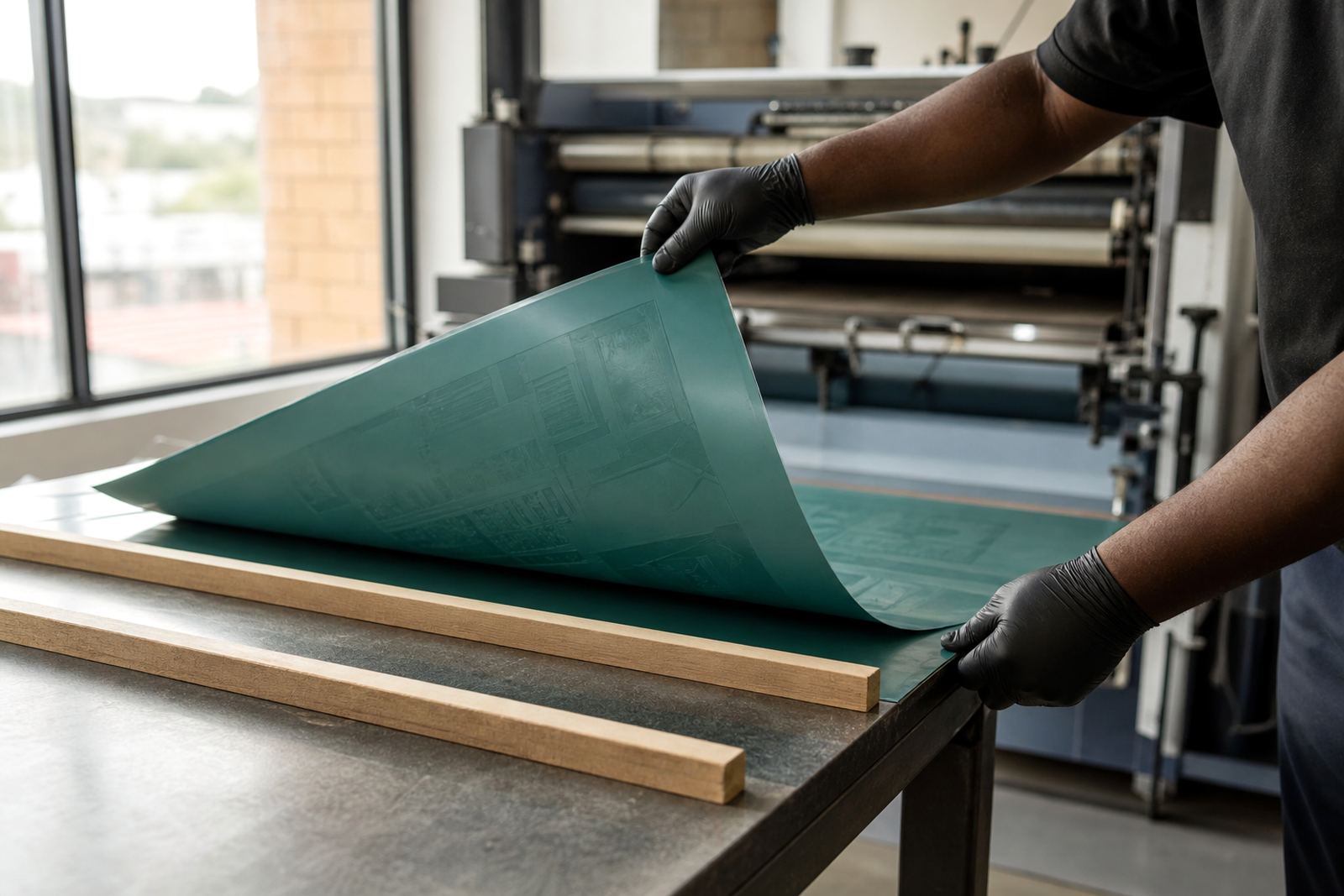
Once the job is approved for plate output, the plate is made to suit the print requirement. After that, trimming, labelling and dispatch packing become part of the same service, not an afterthought. If the job needs collection coordination, that can be arranged too, especially for busy printers working to a tight production schedule in Midrand, the East Rand or the West Rand.
Typical support services include:
- Artwork preflight and file checking
- Imposition planning for efficient press setup
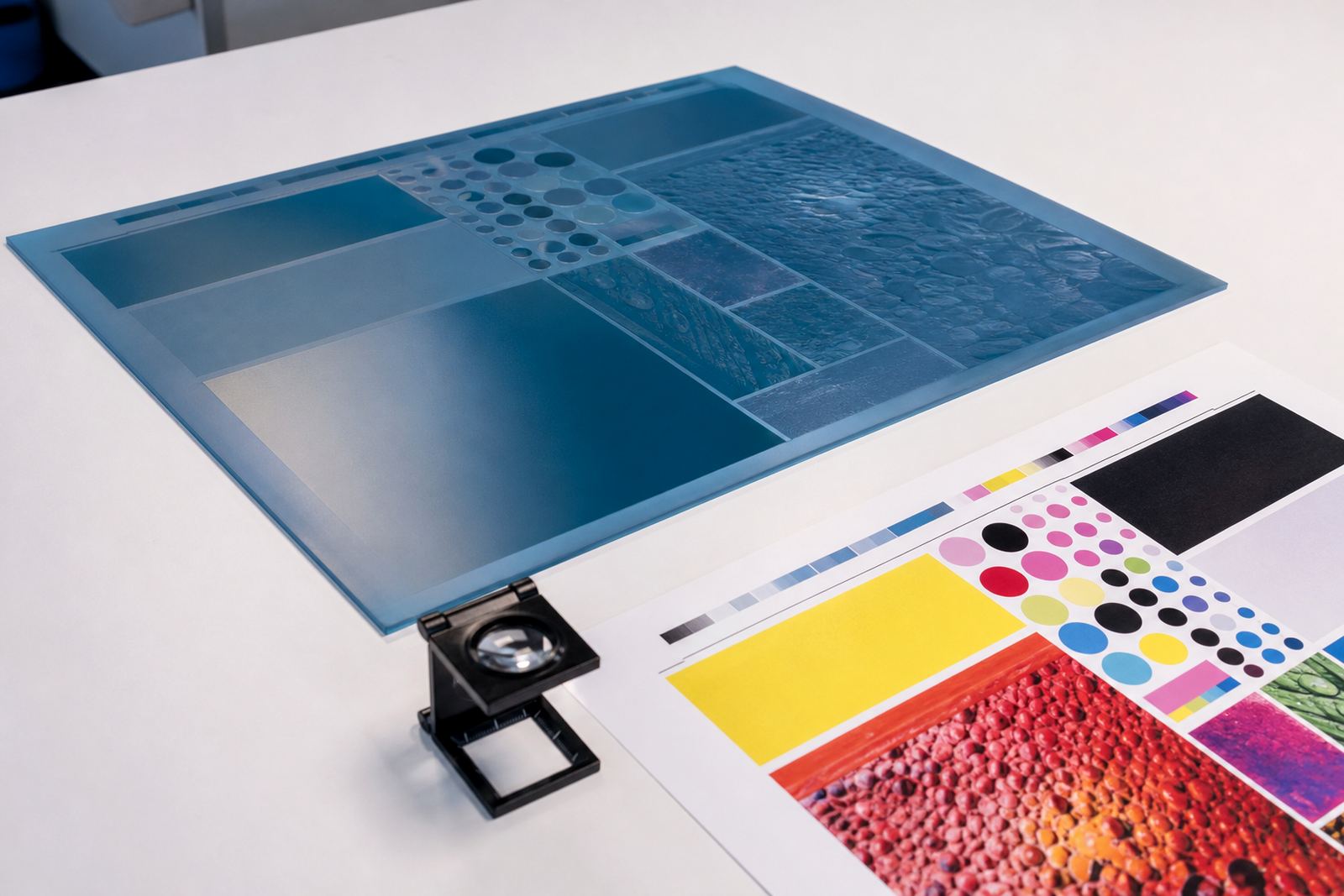
- Screening support and proof comparison
- Plate trimming and plate labelling
- Remake support when a file has changed
- Technical job advice before production starts
Where Flexo Plates Are Used In Labels And Packaging
Flexo plates are used across a wide range of jobs, from everyday product labels to cartons, sleeves and flexible packaging. The same principle applies across these formats, but the detail requirements change. A label for a condiment bottle may need crisp small text and strong colour, while a carton panel may need cleaner solids and better image balance across folds and glue areas.
In South African printing, this work often needs to move quickly between different towns and supply chains. A printer in Pretoria may need plates for a Durban order, while a label converter in Cape Town may need replacement plates after an artwork update. Courier delivery across South Africa helps keep those jobs moving without a lot of back and forth.
For example, a Midrand-based label printer handling a seasonal range for a supermarket supplier may need a remake after a legal panel changes. If the file is checked properly, the remake can be done to the updated layout, packed securely and sent out for dispatch without delaying the next press booking.
What To Check Before You Approve A Plate Job
Before approval, it helps to look at the artwork with the plate in mind. A small change in font size or line weight can make a big difference once the job is printed. Printers and print buyers should check the file, the proof and the intended substrate together, rather than treating them as separate steps.
It is also worth confirming whether the job needs special screening support or proof comparison. These checks can pick up issues early, especially where the design contains fine reversals, gradients or repeated elements. If a plate is labelled clearly and packed properly, it is easier to manage on the receiving side, which matters when jobs are moving between production, storage and dispatch.
- Confirm the final artwork version before plate output
- Check size, repeat and position against the proof
- Make sure text is readable at final print size
- Ask about remake support if the artwork changes
- Arrange collection or courier details before dispatch
A Practical View From Midrand To The Rest Of South Africa
Flexo plate work is most useful when it fits the way printers actually operate. In Gauteng, that often means balancing fast turnarounds, transport planning and press availability. In coastal areas like Durban, printers may also need to think about storage conditions and humidity. Inland, especially around Johannesburg and Pretoria, job flow can be affected by traffic, loadshedding and the timing of collections.
That is why a practical plate supplier does more than process plates. The team needs to keep track of the job, answer technical questions, and help make sure the plate arrives ready to use. At Flexo Printer Plates, the work is handled by Sibusiso Mthembu, Ayesha Naidoo, Pieter van Wyk, Lerato Molefe, Morne Jacobs and Zinhle Dlamini, each covering a part of the process from prepress to logistics.
Our service area includes Midrand, Johannesburg, Pretoria, Durban, Cape Town, Gqeberha, East Rand and West Rand. Clients reach us through the enquiry form on our contact page, and we use that channel to manage the job details, delivery instructions and collection coordination from start to finish.