
Why plate sheet handling matters from the start
Photopolymer plate-making is only part of the job. Once the plate sheets are made, the way they are handled affects mounting, register, ink transfer and how long the plates will last on press. A sheet with a clean image can still cause trouble if it is bent, scratched or marked during moving and packing.
In a busy label or packaging plant, plate sheets may pass through prepress, trimming, labelling, mounting and dispatch in one shift. Each handover is a point where dust, finger marks or pressure damage can creep in. That is why a simple handling routine is worth the effort.
At our Midrand base, we see this often with urgent jobs going to Johannesburg, Pretoria or the East Rand. The plate sheet may leave in good condition, then arrive with a corner crease because it was placed under something heavy in transit. Small damage like that can show up as poor plate seating or an uneven edge on press.
Keep the work area clean, dry and flat
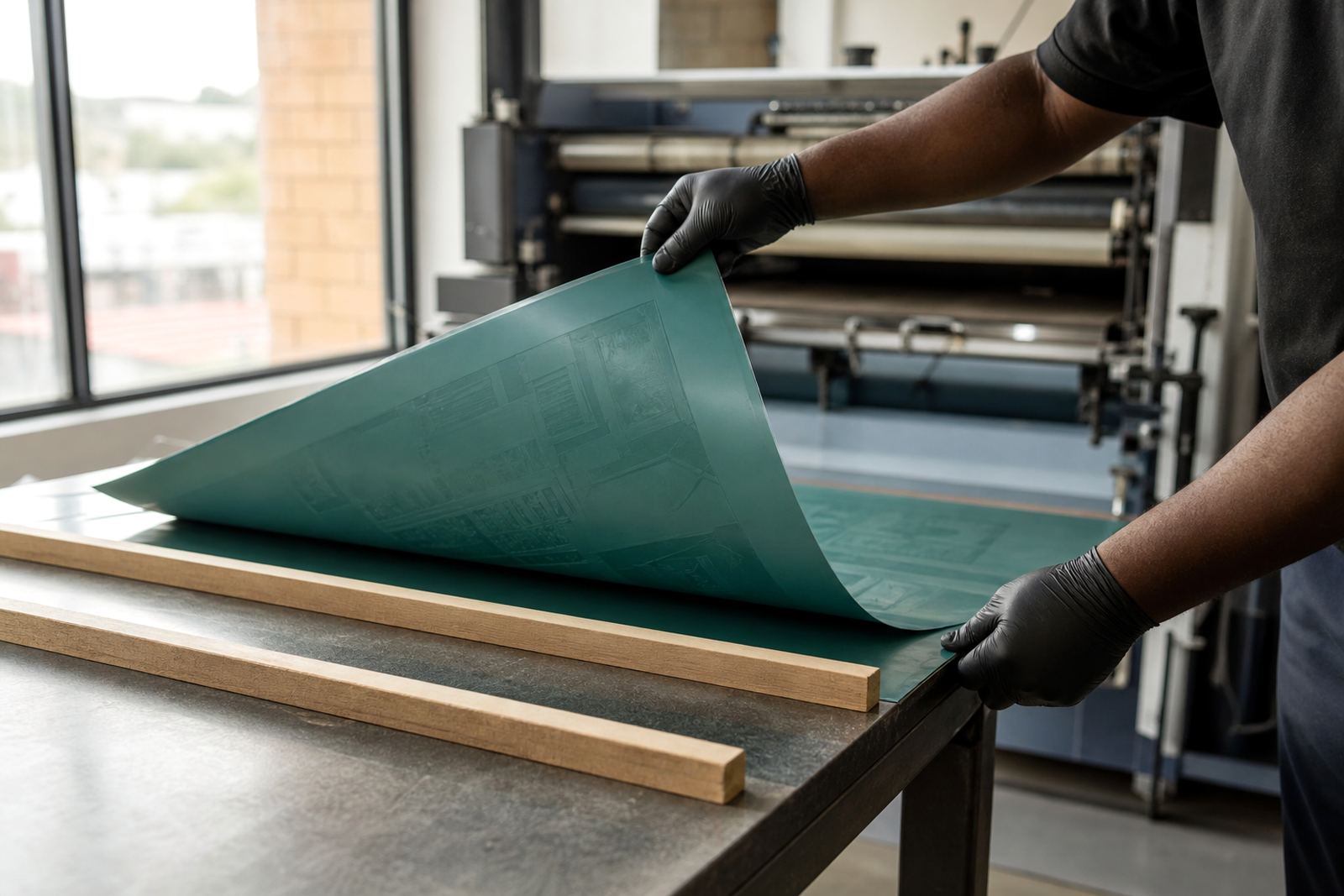
Plate sheets should be stored and handled on a clean, flat surface. Dust and loose trim offcuts can stick to the back of the sheet, then transfer into the packing or mounting stage. In Gauteng, where dry conditions and static can be a problem, a careful wipe and controlled stacking help more than people think.
Humidity matters too. Coastal deliveries to Durban, Cape Town or Gqeberha may face damp air, so packing needs to protect against moisture, not only physical movement. A plate sheet left open near a loading bay can pick up dust or curl slightly before it is even loaded into a courier bag.
- Use a flat staging area for sorting and checking plate sheets
- Keep trimming scraps, tape and offcuts away from finished plates
- Do not place heavy items on top of prepared sheets
- Keep plates away from open doors, direct sun and water spills
Handle by the edges and avoid pressure on the image
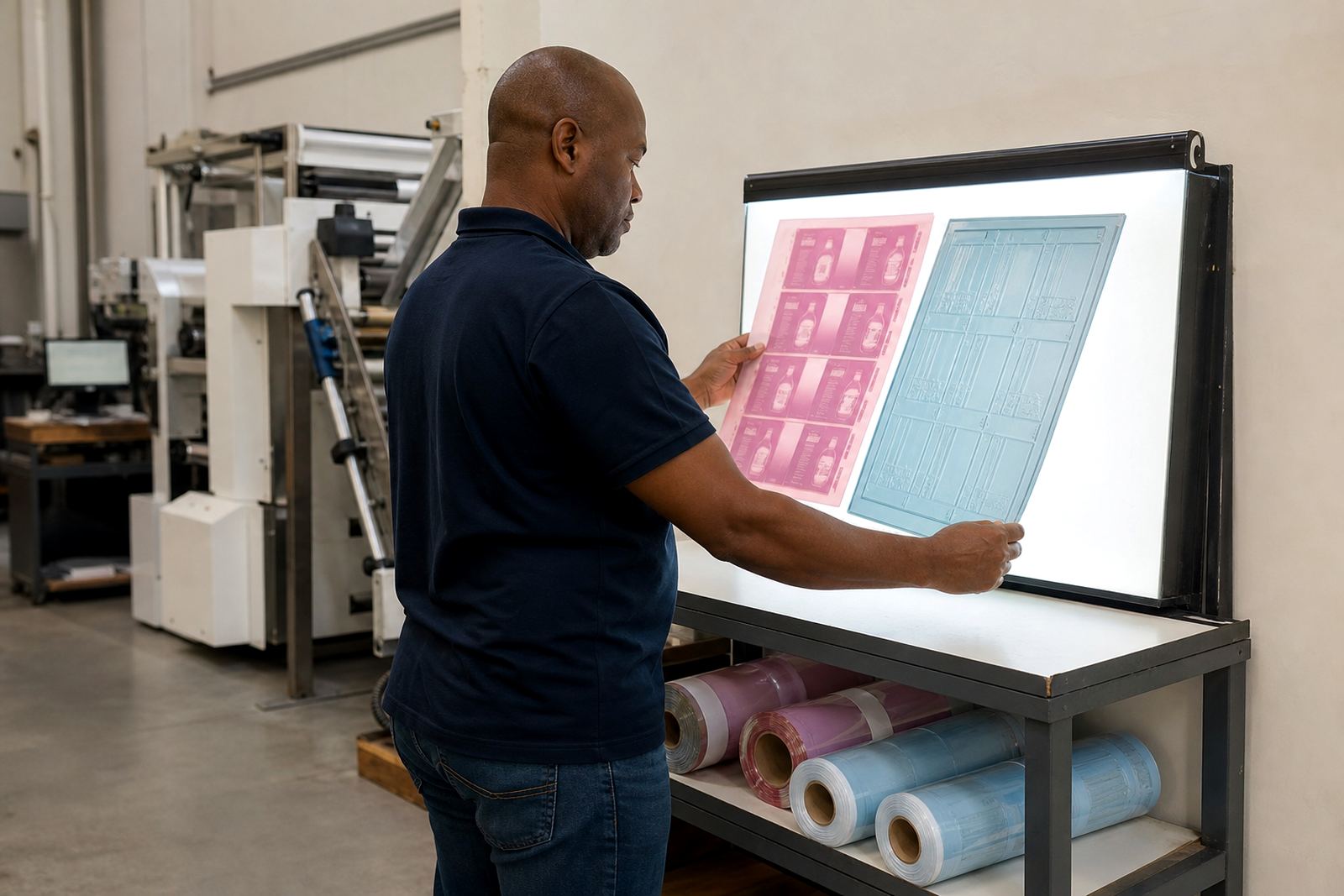
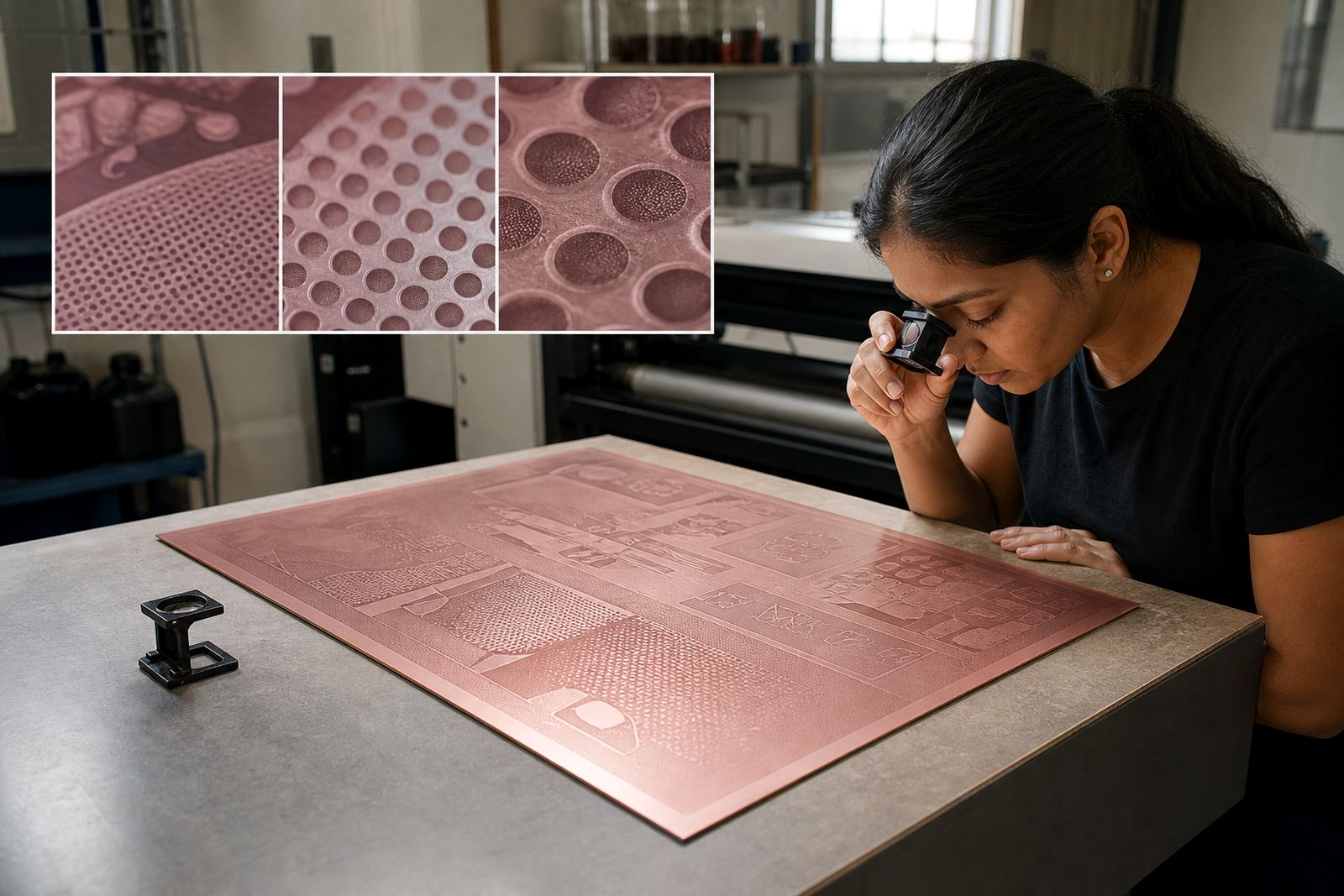
The printed image area is the most sensitive part of the sheet. Even light pressure across the wrong area can leave a mark that will only become obvious when the plate is on press. For that reason, staff should lift plate sheets by the edges and support them with both hands where possible.
Gloves can help, but only if they are clean and used properly. Dirty gloves are worse than bare hands. When moving multiple sheets, do not slide one over another unless the surface is protected and the job spec allows it. A dragged sheet can scuff, especially on thicker work where the edges are harder and less forgiving.
We also advise that mounting staff check sheet orientation before the job leaves production. Reversing a sheet or setting it down on the wrong side can create avoidable wear, and it wastes time during plate mounting. It is a simple step, but it saves rework later.
Sort, label and separate jobs before dispatch
Mixed jobs are where mistakes happen. When several plate sets are leaving at once, proper labelling is essential. Each bundle should be marked clearly so the receiving team can match the right plates to the right print job without opening and rechecking every pack.
Plate labelling is not just for admin. It helps the press crew, the warehouse team and the courier all handle the sheets in the correct sequence. If a bundle is split, the labels must still make sense when the sheets are separated by size or by press line. This matters for label printers in places like Pretoria, West Rand and Durban where multiple SKUs may be running on the same day.
- Separate each job before packing starts
- Mark the job name, sheet size and quantity clearly
- Keep remake pieces apart from the main set
- Place small sheets inside a protective folder if needed
Pack for courier movement across South Africa
Courier handling is different from hand delivery. A plate sheet packed for collection in Midrand may travel through several vehicles, sorting points and loading bays before it reaches Cape Town or Gqeberha. That means the pack must protect against bending, edge crushing and movement inside the carton.
Flat packs work best when the sheets are kept snug but not forced. If there is too much space, the sheets can shift and rub against each other. If the pack is too tight, corners may curl or crack. The right balance depends on the sheet size, the quantity and the route. A delivery to Johannesburg is not the same as a cross-country delivery and should not be packed the same way.
Our logistics team checks dispatch packing carefully before collection. That includes sealing, label placement and making sure the bundle can stand up to normal courier movement without the plates sliding around. It sounds basic, but a good pack reduces damaged deliveries and saves time at receiving.
Check before release, then again at receiving
Every plate sheet should be checked before it leaves production and again when it reaches the printer. The first check catches production errors, while the second catches transit damage. If both sides do their part, the job starts with fewer surprises.
A quick visual check should cover surface marks, edge condition, correct trimming and whether the label matches the job card. If there is a problem, it is better to catch it before the plates are mounted. This is especially useful on time-sensitive work where press downtime is expensive and everyone is trying to keep the line moving.
We also recommend logging remake support clearly. If a plate set needs to be replaced, the reason should be recorded with the pack so that the next set is handled more carefully. That kind of note can prevent repeat issues on the same job.
A Midrand example from a busy label run
One practical example is a label printer in Gauteng running short batches for a food packer and a household goods line on the same day. The first set was packed tightly, but the second set was loose in the carton and shifted during a same-day courier collection. By the time it reached the press room, two corners had lifted and one sheet had a light scuff near the image area.
The fix was not complicated. The team changed the packing order, separated the sets, added clearer labelling and kept a simple receiving check at the end. The next delivery arrived clean, and the mounting stage moved faster. That is usually how plate handling improves in real life, not through big changes but through a few steady habits.
At our Midrand base, Sibusiso Mthembu and the team work across plate making, artwork preflight, file checking, imposition planning and dispatch packing so each job moves through production in a controlled way. For printers in Johannesburg, Pretoria, Durban, Cape Town, Gqeberha, the East Rand and the West Rand, that local coordination helps keep plate sheets in better shape from start to finish.