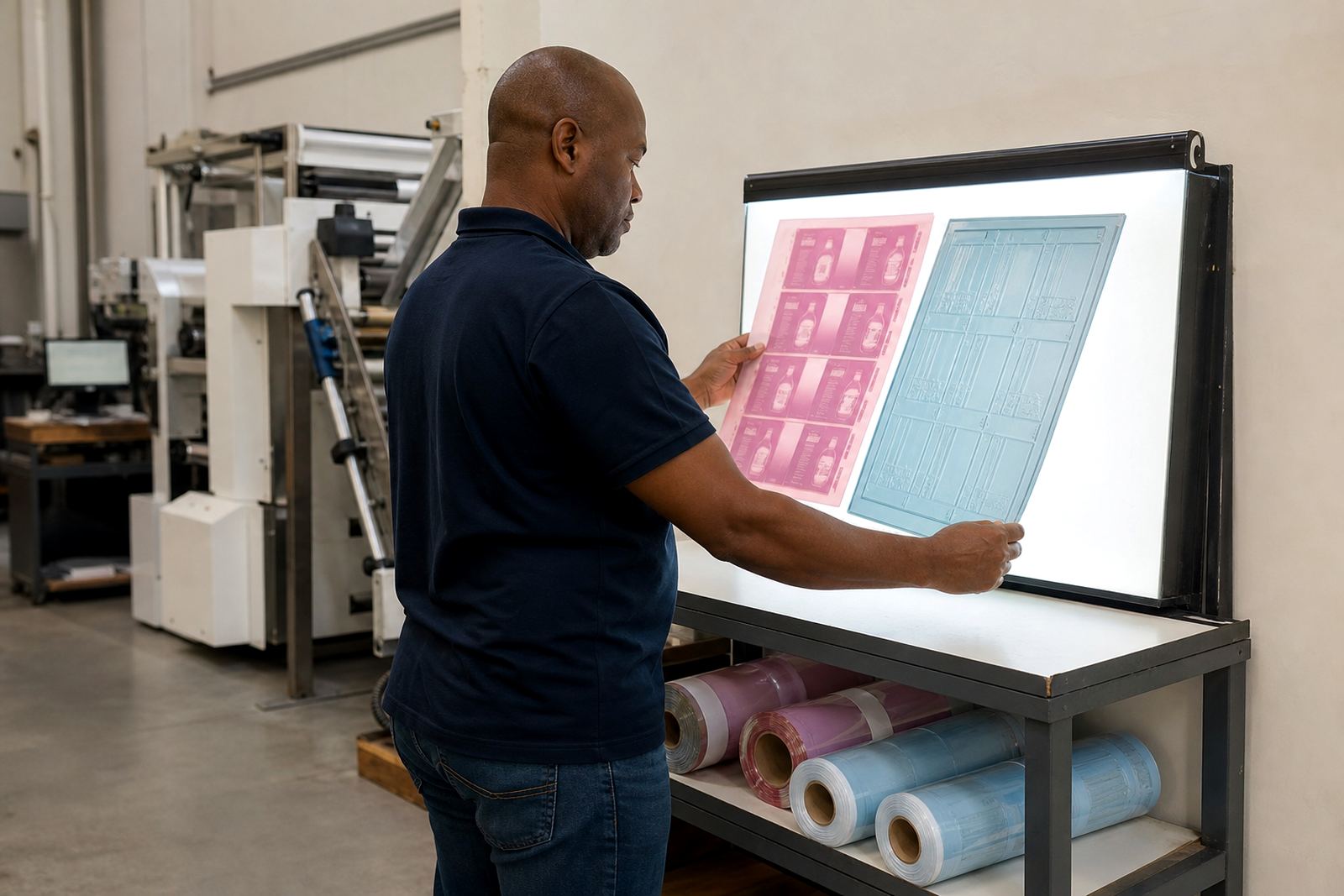
Why a proof still matters before plate making
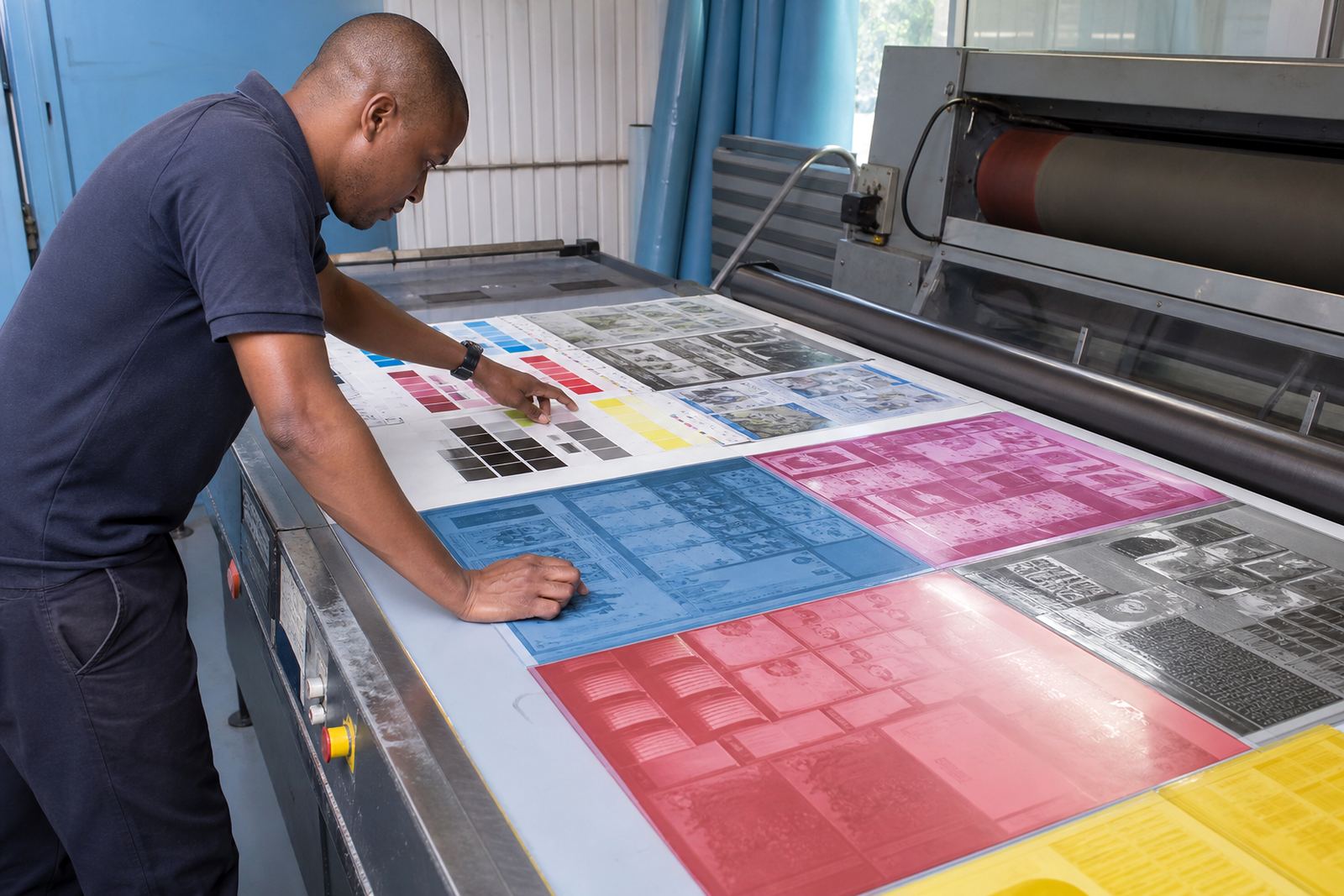
In flexo work, a proof is the last clear chance to check the job before the plate goes into production. It lets the printer, designer, and client compare artwork details against the intended print outcome without waiting for a press sheet or a full run to expose a problem.
That review is especially useful when the job has fine text, small reverse-out copy, barcodes, varnish areas, or tight registration. Once a photopolymer plate is made, any error in the file tends to become a physical job on the press, and fixing it then costs more time and material.
- Check spelling, product names and legal text
- Confirm colours, knockouts and trapping
- Review image quality and small type legibility
- Confirm trim, repeat and position on the sheet or cylinder
What a proof can show that a screen file may miss
A file can look fine on a monitor and still behave badly in production. Screen brightness, zoom level and software settings can hide problems that become obvious only when the artwork is checked properly for plate-making. Proof review helps catch those issues before the file is locked in.
At our Midrand base, we often see jobs where the layout looks complete but the artwork still needs adjustment for flexo production. That may include missing overprint settings, low-resolution images, thin rules that will break up, or solids that need screening support. A proof review makes those weak points visible in time to correct them.
- Font substitution and missing text outlines
- Incorrect barcode placement or quiet zone issues
- Uneven tints that may print patchy on press
- Artwork that does not match the approved size or repeat
The difference between proof approval and plate approval
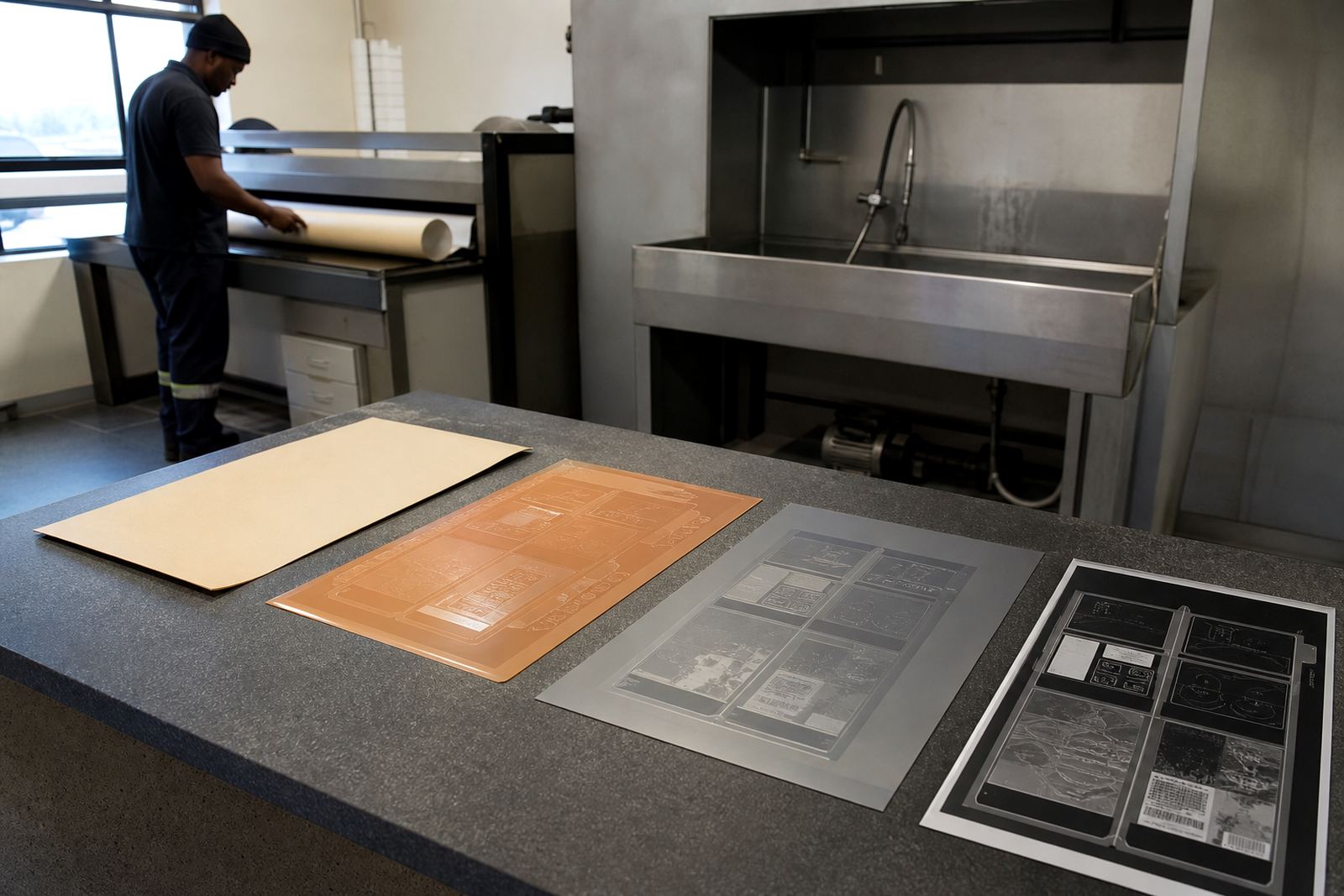
Proof approval means the artwork content has been checked and accepted for production. Plate approval means the corrected file, after prepress checks, is ready to be made into photopolymer plates. Those two steps should not be treated as the same thing.
Sometimes a proof is approved by a customer, but the prepress team still finds a technical issue during file checking. That can happen with imposition, image density, trapping or plate size. A proper workflow allows a second check before plate dispatch so the printer is not left with a job that looks right on paper but fails on press.
- Proof approval covers content and presentation
- Plate approval covers technical suitability for making plates
- Prepress checks link the two stages and reduce surprises
A Durban packaging example that saves a reprint
Consider a packaging printer in Durban working on a short label run for a food product. The artwork looks clean, but the proof shows that the ingredient panel is too close to the trim and one legal line sits in a very light tint. If that file goes straight to plate, the press operator may struggle to hold the text clearly on the finished label.
By reviewing the proof first, the printer can move the text slightly, strengthen the tint and confirm the barcode area before plate making starts. The job then leaves Midrand by courier with less risk of a remake, less waste on press and fewer back-and-forth calls during production. That kind of practical checking matters even more when the client is working to a tight delivery window and the press is already booked.
What to look for before you sign off
Not every issue is a design issue. Some are production issues, and that is where a careful proof review saves the most trouble. The best approach is to read the proof slowly, compare it against the brief, and ask whether the plate maker can reproduce every element clearly on the chosen substrate.
Here is a simple review list that helps before final dispatch:
- Confirm the spelling of all text, including small legal notes
- Check logo placement, borders and cut lines
- Review image sharpness and tonal detail
- Make sure the repeat, size and layout match the press setup
- Look at knockouts, reverses and overprints closely
- Ask whether the plate needs trimming, labelling or mounting notes
If a job is destined for a humid coastal area or a plant affected by load-shedding, those practical concerns matter too. File accuracy, good packing and clear labelling help the plates arrive ready for use, not needing another round of sorting on site.
How our prepress team supports printers nationwide
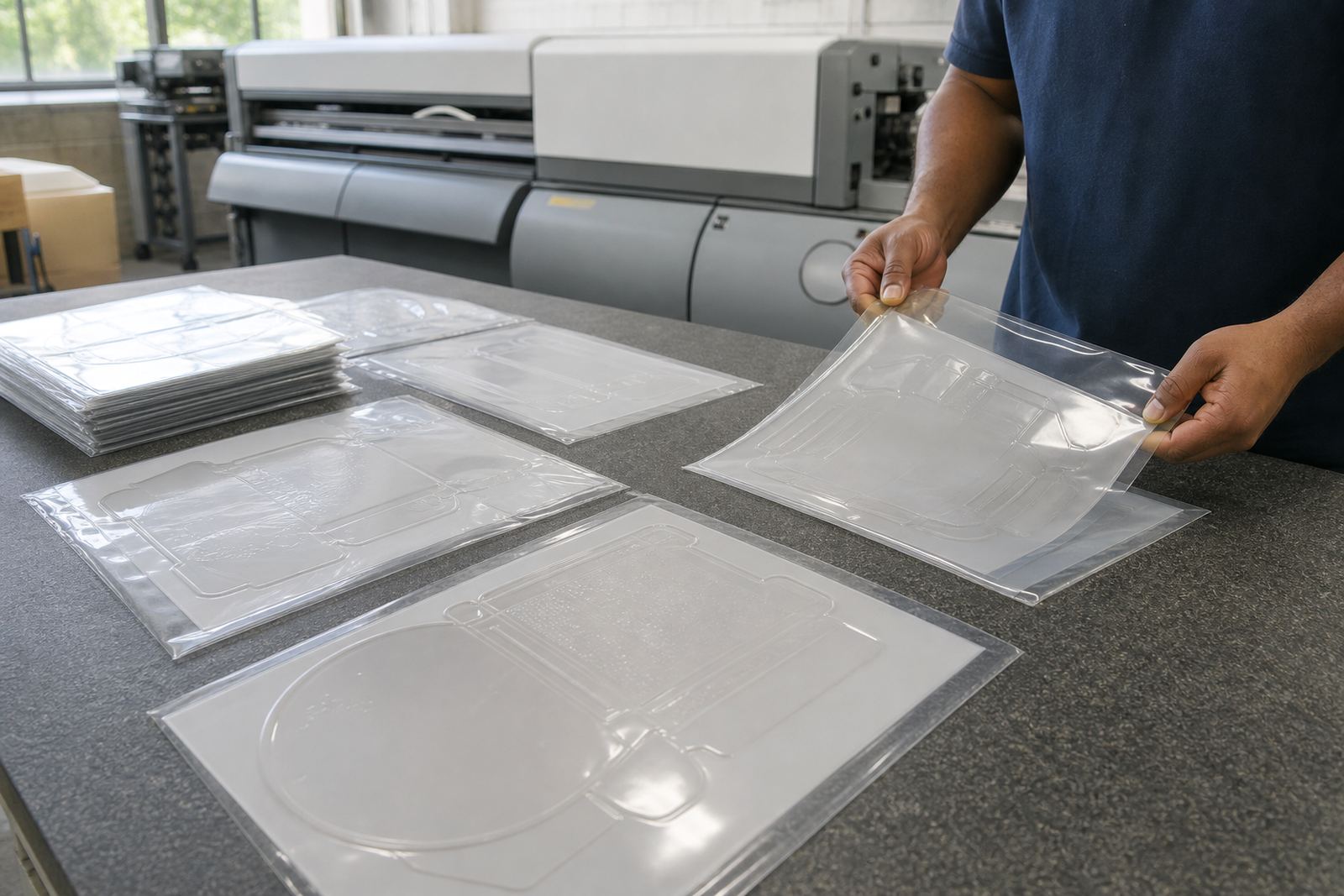
Flexo Printer Plates makes photopolymer plates for label and packaging printers from our Midrand, Gauteng base, with courier delivery across South Africa, including Johannesburg, Pretoria, Durban, Cape Town and Gqeberha. Our team handles artwork preflight, file checking, imposition planning, screening support, proof comparison, plate trimming, plate labelling, remake support, dispatch packing and collection coordination.
Sibusiso Mthembu leads the business as Managing Director, with Ayesha Naidoo overseeing production, Pieter van Wyk on prepress, Lerato Molefe in client services, Morne Jacobs handling plate mounting and Zinhle Dlamini managing logistics. That mix matters because a proof problem is rarely just a single person’s problem. It usually needs practical input from prepress, production and dispatch before the plates leave the premises.
Clients use the enquiry form on our contact page when they need technical job advice or want a second look before final plate dispatch. For printers handling narrow web labels, cartons or shorter packaging runs, that extra proof review can be the difference between a smooth press start and a day spent correcting a preventable error.