1. Start With a Clean File Before Anything Is Cut
Plate making starts long before the plate arrives at the press. The first job is to review the artwork file and check whether it is suitable for flexo printing. This is where issues like missing fonts, low-resolution images, thin lines, hidden objects and incorrect overprints are picked up. In label and packaging work, a small file error can show up clearly on press, so this stage is not something to rush.
For printers in Midrand, Johannesburg or Pretoria, preflight checks are especially useful when jobs move between different artwork sources. A supplier might send one version, a client another, and a designer a third. The plate room needs one approved file, with the right size, trapping and layout. If the job is going to print on film, paper or board, that detail also needs to be clear at the beginning.
- Check line weights and small text before output
- Confirm final size, bleed and trim marks
- Review colour separations and spot colour naming
- Make sure barcodes and fine reverses are readable
2. Imposition Planning Saves Time on Press and Plate
Once the file is clean, the next step is imposition planning. This means arranging the artwork on the plate in the most practical way for the print run, cylinder size and finishing method. For packaging and labels, the way items sit on the plate can affect waste, repeat accuracy and how efficiently the press runs.
Good imposition also helps when multiple artworks are being run together. A printer in Durban may want to combine short label jobs to reduce plate changes, while a packaging converter in Cape Town may need a layout that matches a specific die line and repeat. The aim is simple: place the artwork in a way that supports the press instead of fighting it.
At this stage, technical advice matters. If a job needs screening support or special handling for solids and fine highlights, the plate room can factor that in before the plate is made. That saves time later, when the machine is already running and the pressure is on.
- Match the artwork layout to the cylinder or sleeve setup
- Allow for repeat length and finish room
- Plan for multiple ups where practical
- Confirm the final orientation before output
3. Imaging Transfers the Approved Artwork to the Plate
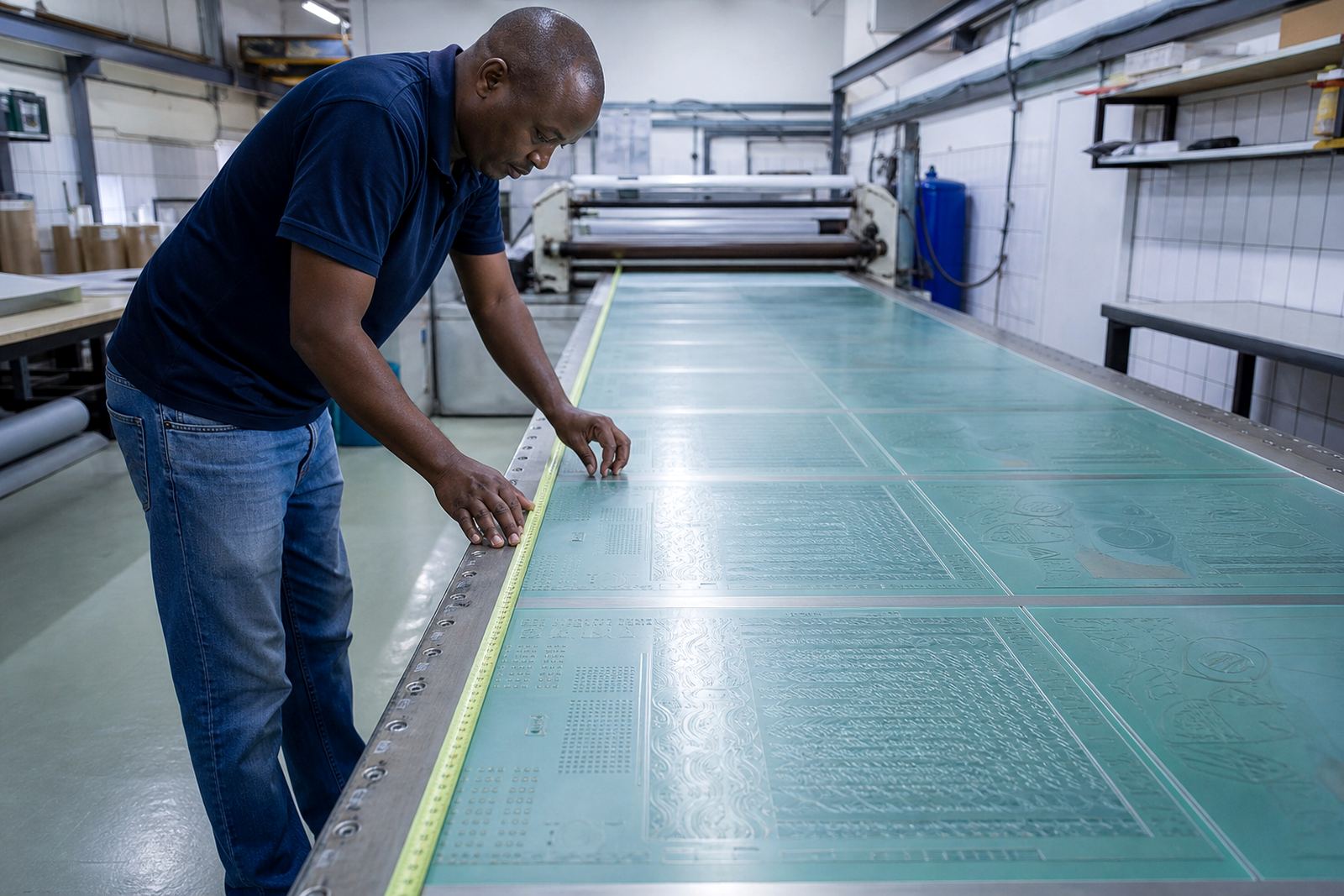
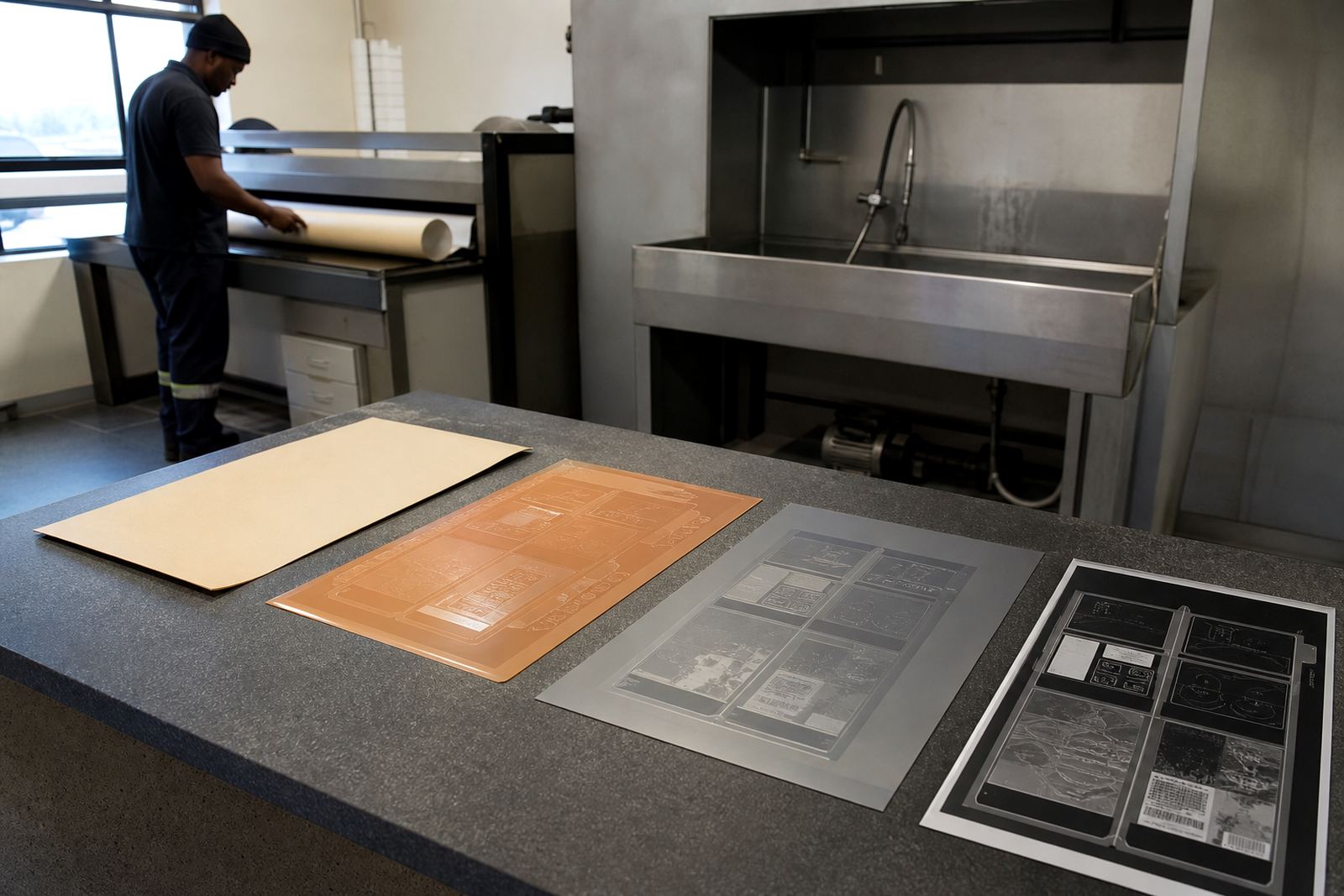
After planning, the approved layout is transferred onto the photopolymer plate. The plate material is exposed or imaged so the raised printing areas are formed accurately. This is the point where the detail in the artwork becomes physical, so the quality of the input file and the preparation work show up very quickly.
Flexo plate-making depends on precision. Fine text, small dot work and solid areas all need to reproduce properly, especially on label work where the customer often reads the pack at arm’s length. If the exposure is off, or the artwork was not prepared correctly, the plate can hold too much or too little detail. That can lead to poor print quality, uneven ink transfer or unnecessary adjustment on press.
In Gauteng, where many printers work under load-shedding schedules and tight production windows, reliable plate preparation is worth its weight. A plate that is right the first time helps keep the rest of the job moving, whether it is going to a printer in the East Rand or being couriered to Gqeberha.
4. Washout, Drying and Finishing Shape the Final Plate
Once the image is transferred, the plate goes through washout, drying and finishing. Washout removes the unexposed material and leaves the raised image behind. Drying stabilises the plate so it can hold its shape during printing. Finishing then polishes the surface and prepares it for mounting.
This is where durability starts to matter. A properly made photopolymer plate should handle repeated use and still give consistent reproduction. But the plate still needs the right treatment. If drying is too short or the plate is handled too early, it can cause sizing issues or distortion. Coastal humidity in places like Durban and Cape Town can make this stage especially important because moisture can affect storage and handling if the plates are not packed properly.
For printers working with packaging stock or longer runs, the finishing stage is not just housekeeping. It is part of the print result. A clean, well-finished plate mounts better, runs more steadily and is easier to label and store for repeat jobs later on.
- Washout removes unwanted material cleanly
- Drying helps the plate hold its dimensions
- Finishing improves surface quality for print
- Careful handling prevents damage before dispatch
5. Trimming, Labelling and Packing Help Prevent Shopfloor Confusion
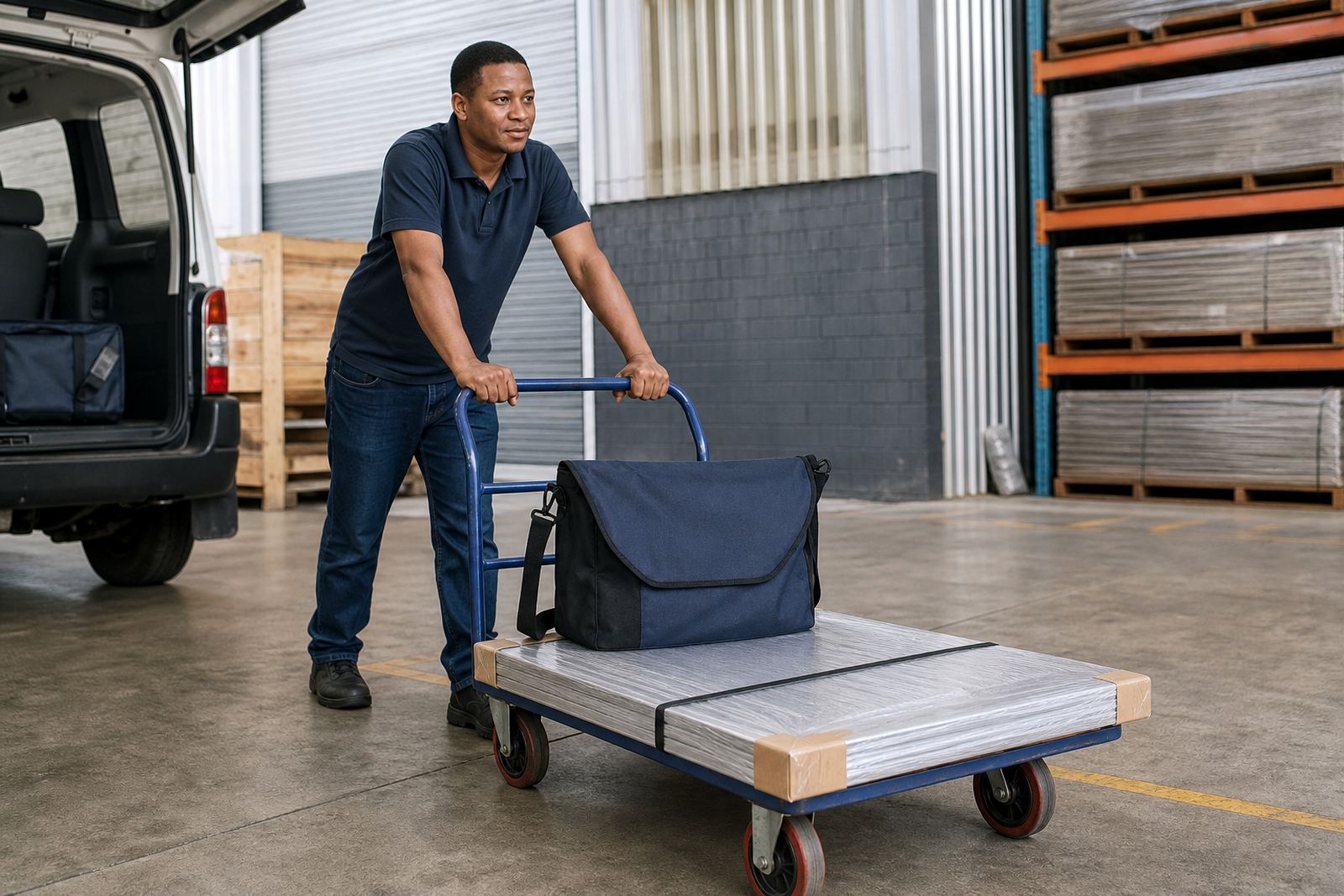
After the plate is finished, it still needs to be trimmed, labelled and packed correctly. This sounds basic, but it is one of the easiest places for avoidable mistakes to creep in. If a plate is cut slightly wrong, labelled unclearly or packed with the wrong job details, it can delay press setup and create unnecessary phone calls between the printer and the plate room.
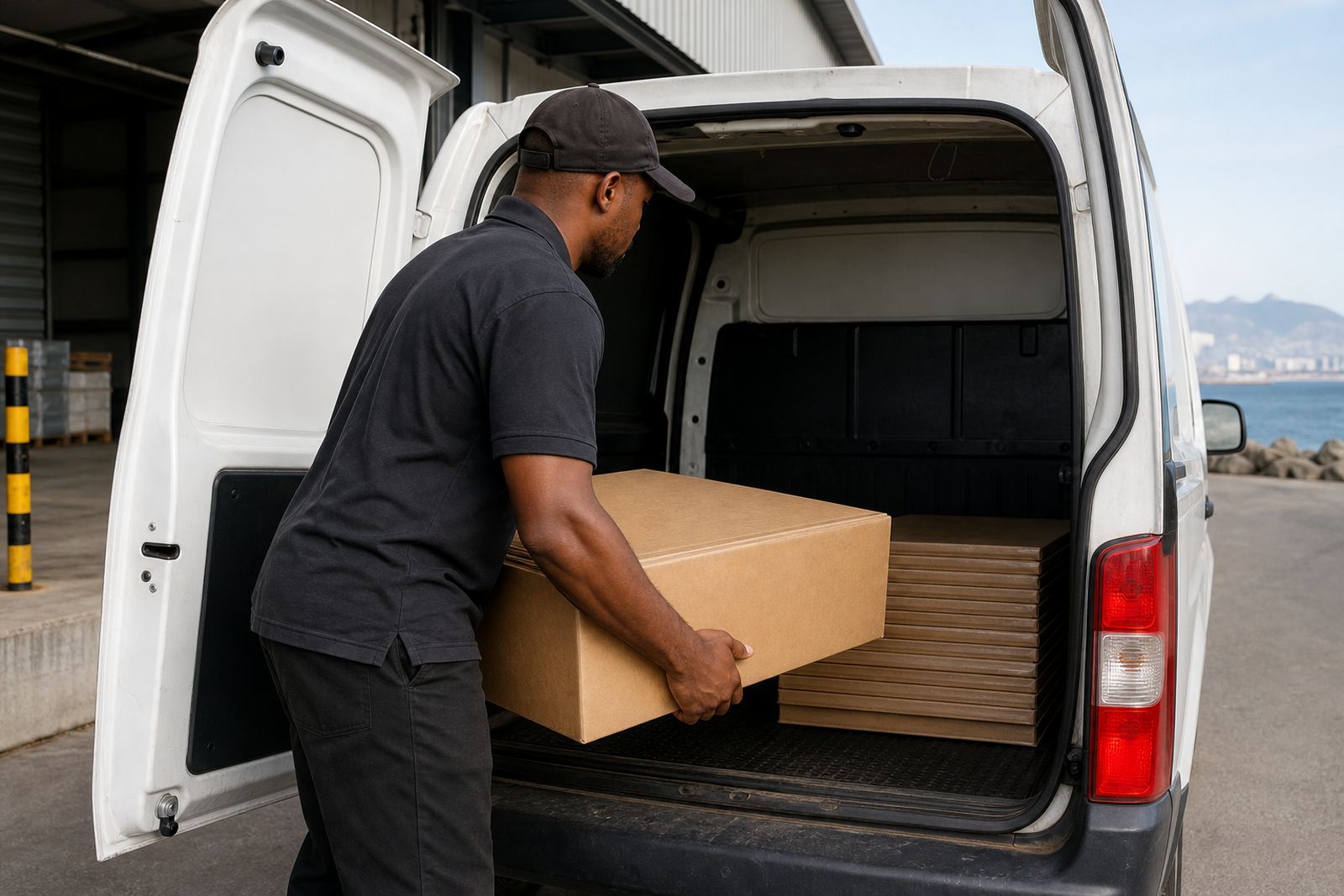
Good plate labelling should make the job easy to identify at a glance. It should tell the team what the plate is for, how it should be mounted and where it belongs in the production flow. Dispatch packing is also part of the service because plates need to arrive flat, protected and ready for use. This matters for courier delivery across South Africa, whether the destination is Johannesburg, Pretoria, Durban, Cape Town or Gqeberha.
Where a customer prefers to collect, collection coordination helps keep the handover simple. That is practical for smaller printers in Midrand or the West Rand who want to fit pickup into a busy day and get the plates straight onto the next job.
6. Remakes and Proof Comparison Keep the Next Run on Track
Even with careful preparation, there are times when a remake is needed. A file may change after approval, the client may adjust artwork after proofing, or the press result may show that a plate needs correction for the next run. Remake support is part of a proper plate-making service because printing schedules do not always move in a straight line.
Proof comparison is useful here. It gives the printer a way to compare what was approved against what is being made. If there is a difference in copy, position, colour breaks or line work, it is easier to catch it before the plate goes back into production. That saves money and avoids wasting material, which is important for label and packaging printers trying to control costs in a tough market.
For a local example, a printer in Midrand handling a short packaging order for a Gauteng customer may need a quick remake after a late artwork correction. If the job details are clear, the file is checked properly and the plate room is given accurate instructions, the corrected plate can move through the process without confusion. That is how the job stays practical, not messy.
- Keep a clear record of approved artwork versions
- Compare proofs before remaking a plate
- Tell the plate room about any press-side issues
- Store repeat jobs in a way that makes retrieval simple
7. The Best Plate Making Is the Kind That Prevents Problems
The main stages of flexo photopolymer plate-making are straightforward, but each one affects the final print. A clean file, sensible imposition, accurate imaging, careful finishing and proper packing all work together. When one stage is rushed, the press usually shows it. When each stage is handled with care, the printer gets better consistency and fewer surprises.
That is why many printers prefer to work with a plate room that can also advise on technical job setup. Questions about screening, file checking, plate trimming or dispatch packing are not side issues. They are part of making sure the plate does its job properly once it reaches the press.
For label and packaging printers across South Africa, a reliable plate-making process is less about theory and more about keeping production moving. Whether the job is going out in Gauteng or travelling by courier to another province, the same principle applies: get the plate right before it gets near the machine.