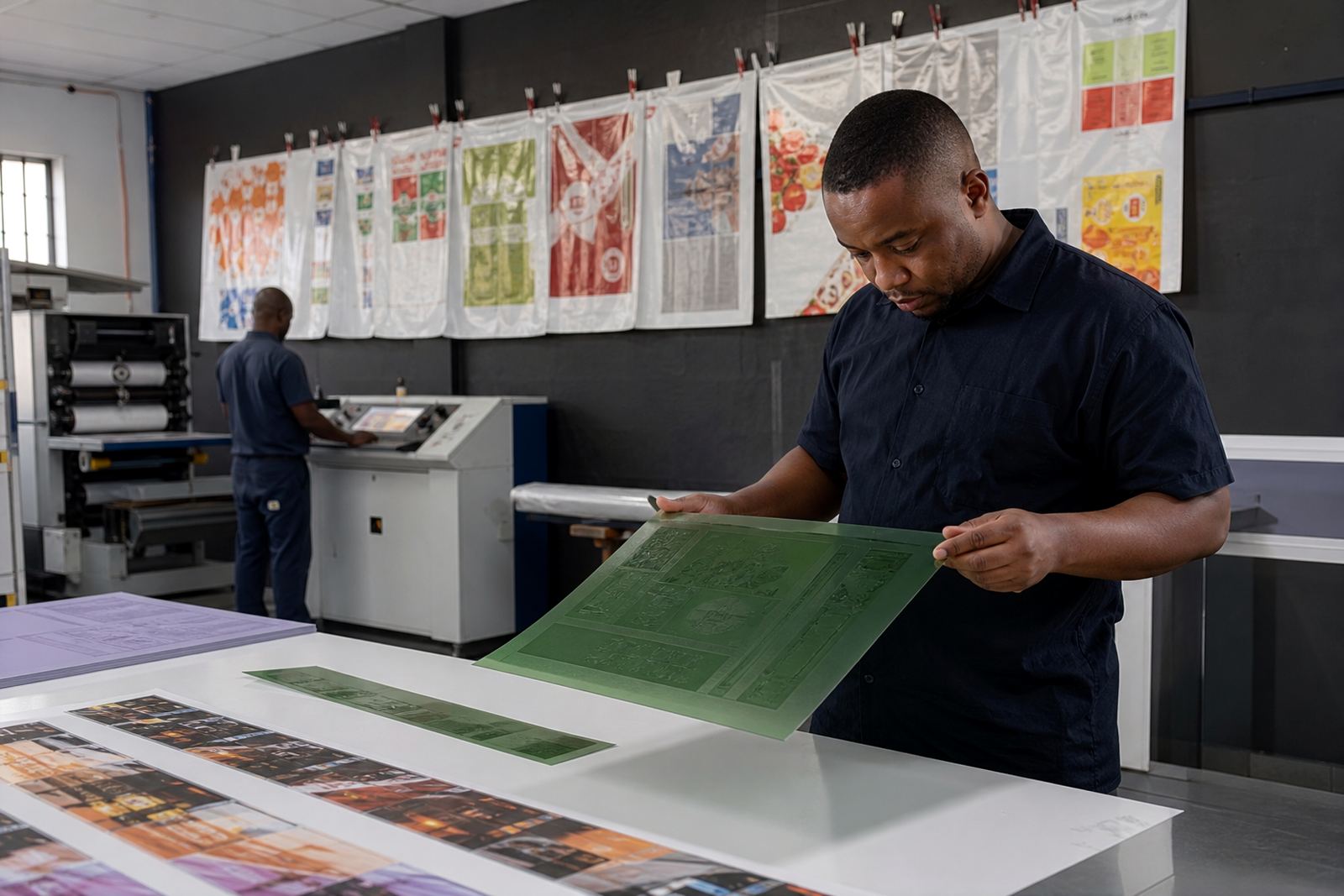
Bag Printing Plates Made For Clear Copy And Solid Ink Transfer
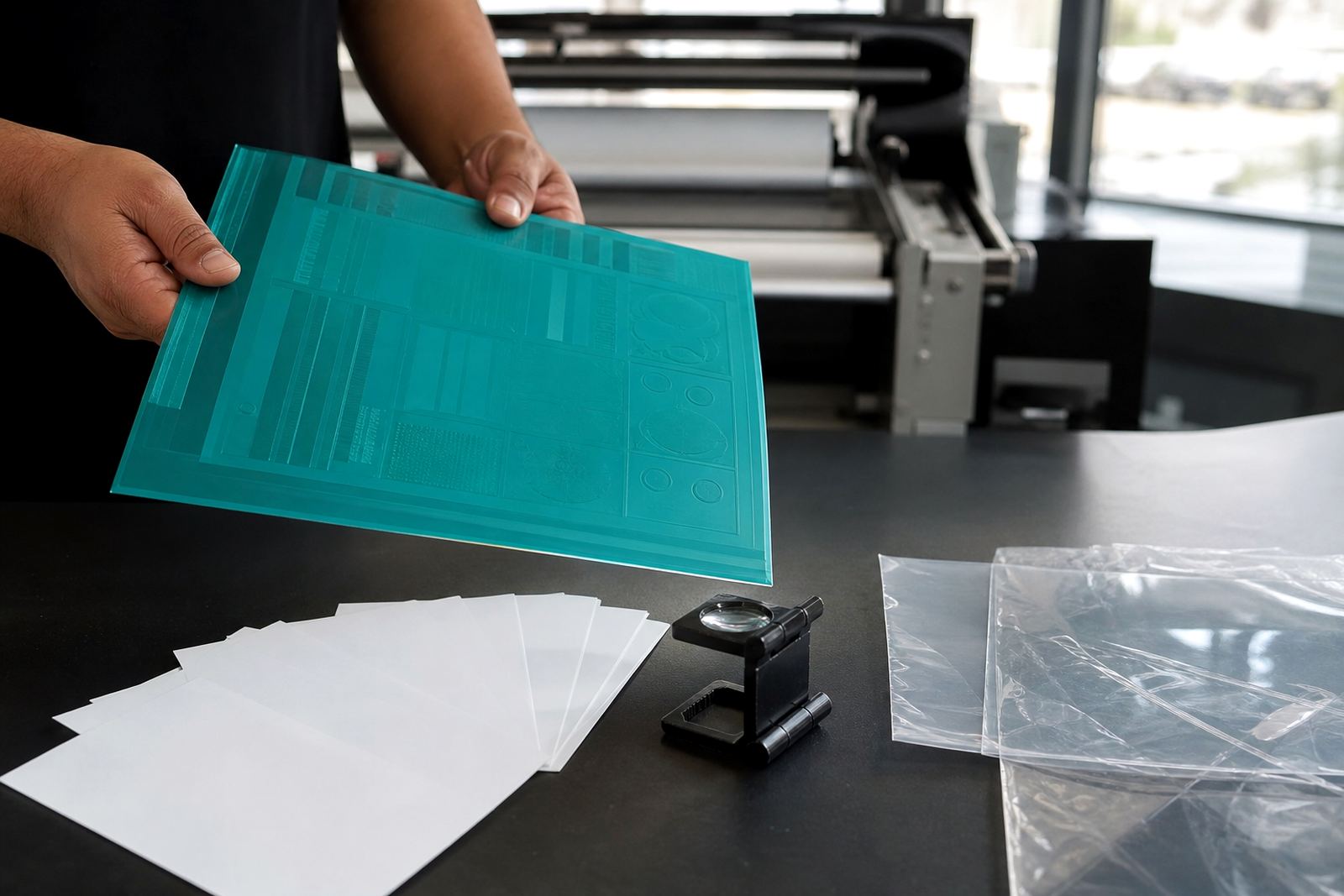
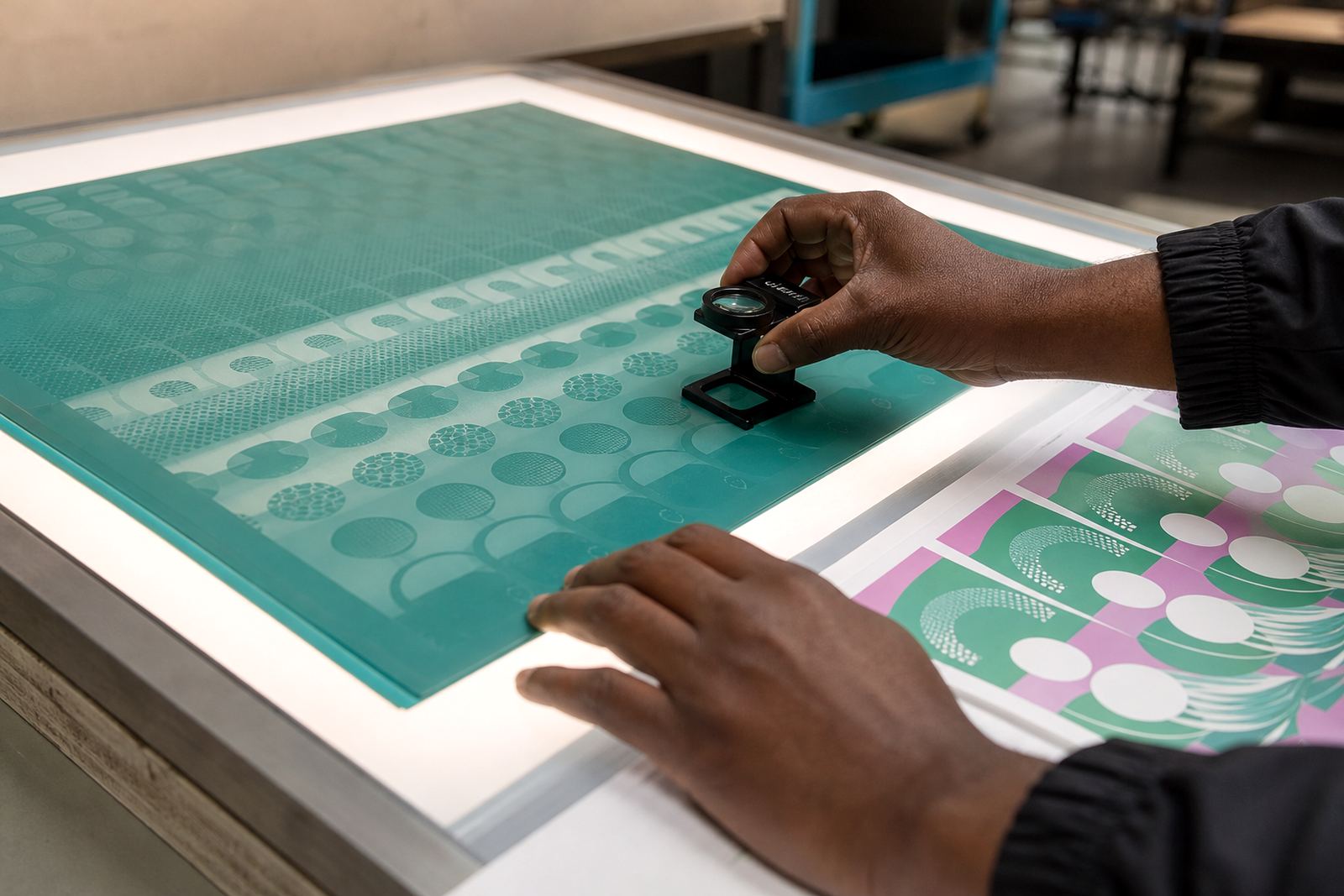
Bag print plates are used on flexo presses where brand names, ingredients, barcodes and handling notes must stay sharp on every impression. The work calls for a plate that carries fine text, holds small reverse areas and prints cleanly on paper, film, laminated stock and some coated substrates. Our photopolymer plate-making process is set up for that kind of production, with attention to artwork detail, image depth and consistent plate finish.
For bag applications, the plate has to cope with repeated contact, ink build-up and the small variations that come with different bag materials. A well prepared plate helps reduce filling in the highlights and keeps edges readable on logos, panel copy and regulatory information. That matters whether you are printing plain carrier bags, retail packaging or speciality bags for food and industrial use.
We work from Midrand, Gauteng and support printers in Johannesburg, Pretoria, Durban, Cape Town and Gqeberha through courier delivery. Collection coordination is also available for local jobs in Midrand and the wider East Rand and West Rand area.
Options, Sizes And Plate Build Choices
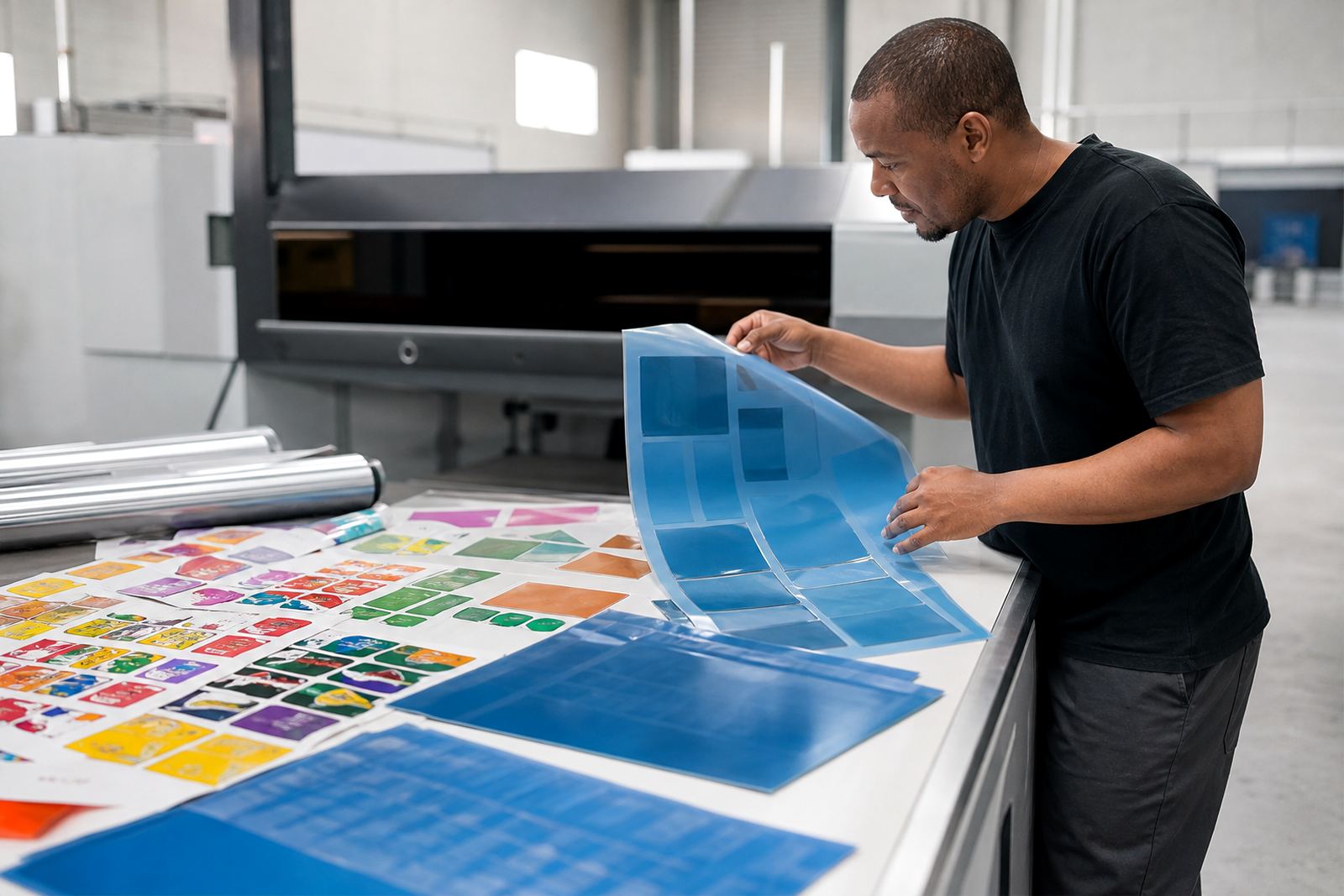
Bag print plates are supplied to suit the press, the repeat length and the artwork layout. We prepare single panels, stepped repeats and multi-up impositions where the job allows it. Plate thickness, relief depth and mounting style depend on the press setup, ink system and the substrate being printed.
Common options are listed below:
- Plate thickness matched to the press requirement and impression height
- Single image or repeated layout depending on bag size and repeat length
- Fine detail support for text, logos, lines and barcodes
- Flat or curved mounting preparation where required by the pressroom
- Trimmed edges and labelled sets for easier handling in production
In practice, bag work often needs a balance between detail and durability. Very fine artwork can be held, but the file must be prepared correctly and the plate height must suit the press. If the job includes large solids, solid patch areas or heavy coverage, we will check whether the artwork can benefit from screening support or a small adjustment in the linework before plate output.
Where Bag Print Plates Suit Best
These plates suit printers producing branded bags, promotional packaging, folded carry bags, inner bags and retail pack wraps. They are also used for jobs where the printed message must stay legible after handling, stacking and transport. That includes product information, batch coding areas, handling icons and short promotional copy.
Bag printing often runs under local conditions that affect print quality. In Gauteng, dust and static can interfere with feed and mounting. On the coast, humidity can influence storage and handling. For this reason we advise keeping plates flat, clean and away from heat sources and direct sun. If your pressroom is affected by load-shedding, it helps to plan plate handling and press setup around stable power windows so artwork checks and mounting work are not rushed.
- Retail and shopping bag branding
- Food and take-away bag printing
- Industrial and courier packaging
- Promotional packaging with short runs or repeat jobs
- Labels and printed inserts where the same artwork is reused
Prepress Checks Before Plate Output
Strong bag printing starts before the plate is made. We offer artwork preflight, file checking, imposition planning, screening support and proof comparison so the job arrives ready for production. This helps avoid missing fonts, thin lines that disappear, low-resolution images and overprints that do not separate properly.
When ordering bag print plates, it helps to send the final artwork in a print-ready format and include the following details:
- Final bag size and repeat length
- Substrate type, such as paper, film or laminated stock
- Press type and mounting method
- Ink system in use and whether the job needs strong solids or fine text
- Any proof or sample that the plate must match
- Quantity of plates, repeats or versions required
If you are not sure about line weights or image traps, we can look at the file and advise before production starts. That saves time and reduces the risk of remakes. It also makes it easier to set up artwork that will read clearly on the finished bag, especially where the print area is small and the copy has to do a lot of work.
Installation, Handling And Pressroom Needs
Photopolymer plates do not need gas or special site utilities. They are installed on the press using the normal mounting method for your equipment, whether that is tape mounting, direct mounting or another standard setup. The main requirement is a clean pressroom, a flat storage area and careful handling to avoid bending or contamination before the job runs.
For best results, keep the following in mind during installation and use:
- Handle plates by the edges and avoid touching the print surface
- Keep mounting surfaces clean and free from dust or adhesive residue
- Store plates flat in a cool, dry place
- Avoid direct sunlight and excess heat near drying areas
- Check registration on the first pull and confirm the ink lay before full production
Because bag jobs often move fast between design approval and press setup, labelling matters. Plate labelling and dispatch packing help keep sets in order, especially where there are multiple versions or language changes. For printers working across several branches or sites, clear labelling saves time when plates arrive by courier in Johannesburg, Pretoria, Durban, Cape Town or Gqeberha.
Care, Servicing And Reorder Checks
Bag print plates should be cleaned after use with suitable pressroom methods that do not damage the image surface. Keep solvents, sharp tools and rough cloths away from the relief areas. Once clean, return plates to flat storage so they do not curl or pick up dust before the next run.
Servicing a plate is usually about condition checks rather than mechanical repair. Look for edge damage, swelling, scoring, blocked detail and wear in solids or fine screens. If the artwork is still correct but the plate has started to lose definition, remake support may be the better option. We can also help compare the plate against the proof or previous job sample so the next set matches the intended result.
Before you reorder, check whether anything has changed on the press side or in the artwork. A small change in substrate, ink or repeat length can affect the plate spec. If a job has run before and you need the same result, send the old job reference and any notes from the pressroom. That makes it easier to match the plate build and avoid avoidable guesswork.
Key facts
| Product type | Flexo photopolymer plates for bag printing |
|---|---|
| Suitable applications | Retail bags, packaging bags, carry bags and printed inserts |
| Production base | Midrand, Gauteng |
| Delivery areas | Johannesburg, Pretoria, Durban, Cape Town, Gqeberha, East Rand, West Rand |
| Preparation services | Artwork preflight, file checking, imposition planning, screening support, proof comparison |
| Ordering method | Enquiry form on our contact page |