
What envelope plates do on press
Envelope printing has its own demands. Address windows, return blocks, logos, fine type and postal marks all need to print cleanly without filling in or breaking up. Envelope plates are made to carry those details in a format that suits flexo production, whether the run is for branded office envelopes, promotional mailers or printed stationery packs.
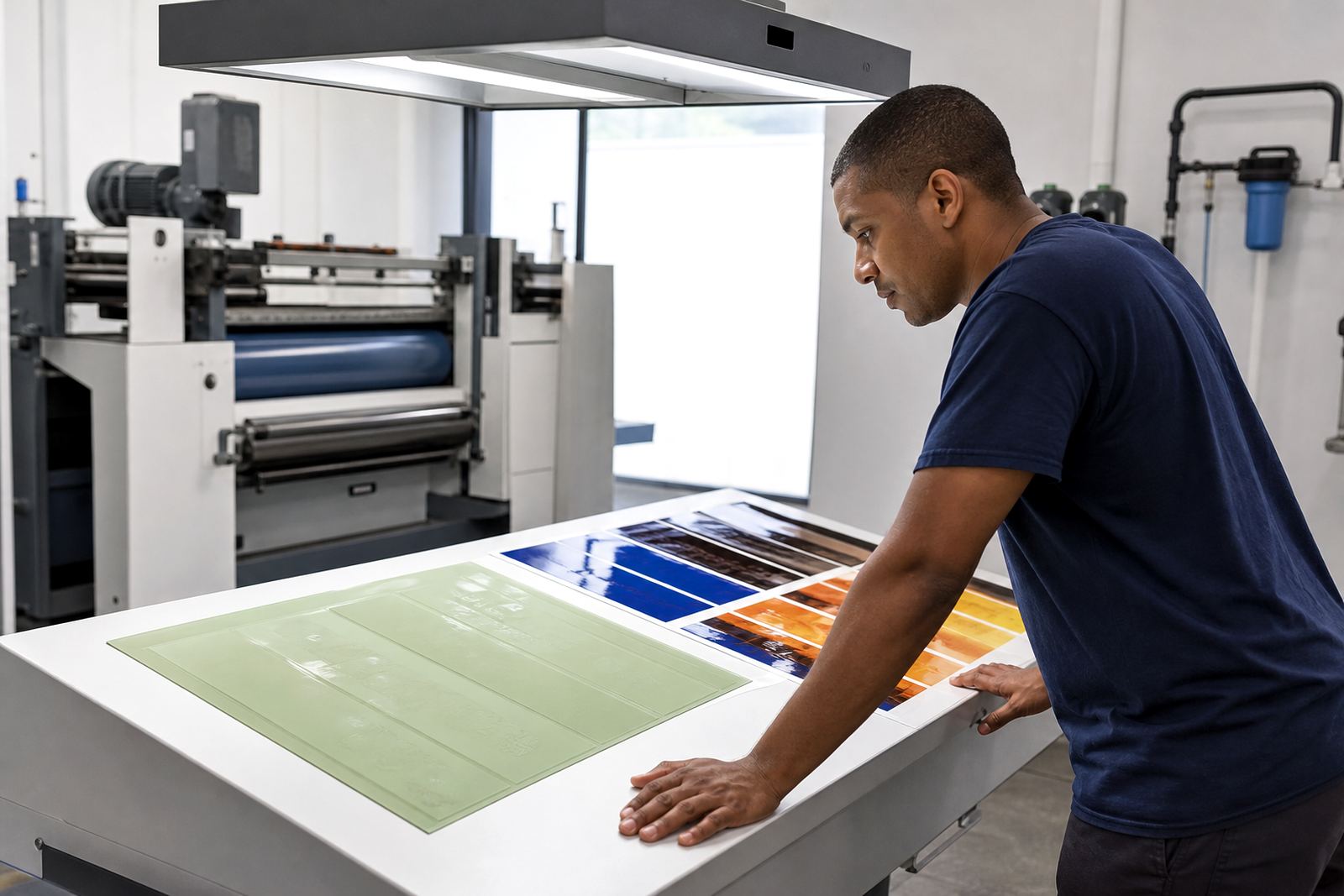
Our photopolymer plate-making process is set up for repeatable results on production work that needs dependable edge definition. The aim is simple: keep the image stable, hold small text well, and make sure the plate transfers evenly across the sheet. That matters when the artwork includes thin rules, small reverse text or multiple print areas on one layout.
For envelope work, detail control is often more important than heavy ink laydown. A plate that is too soft can spread fine lines, while a plate that is too hard can struggle to carry consistent coverage. We balance those factors according to the job spec and the press conditions you are working with.
Sizes, thicknesses and finishing options
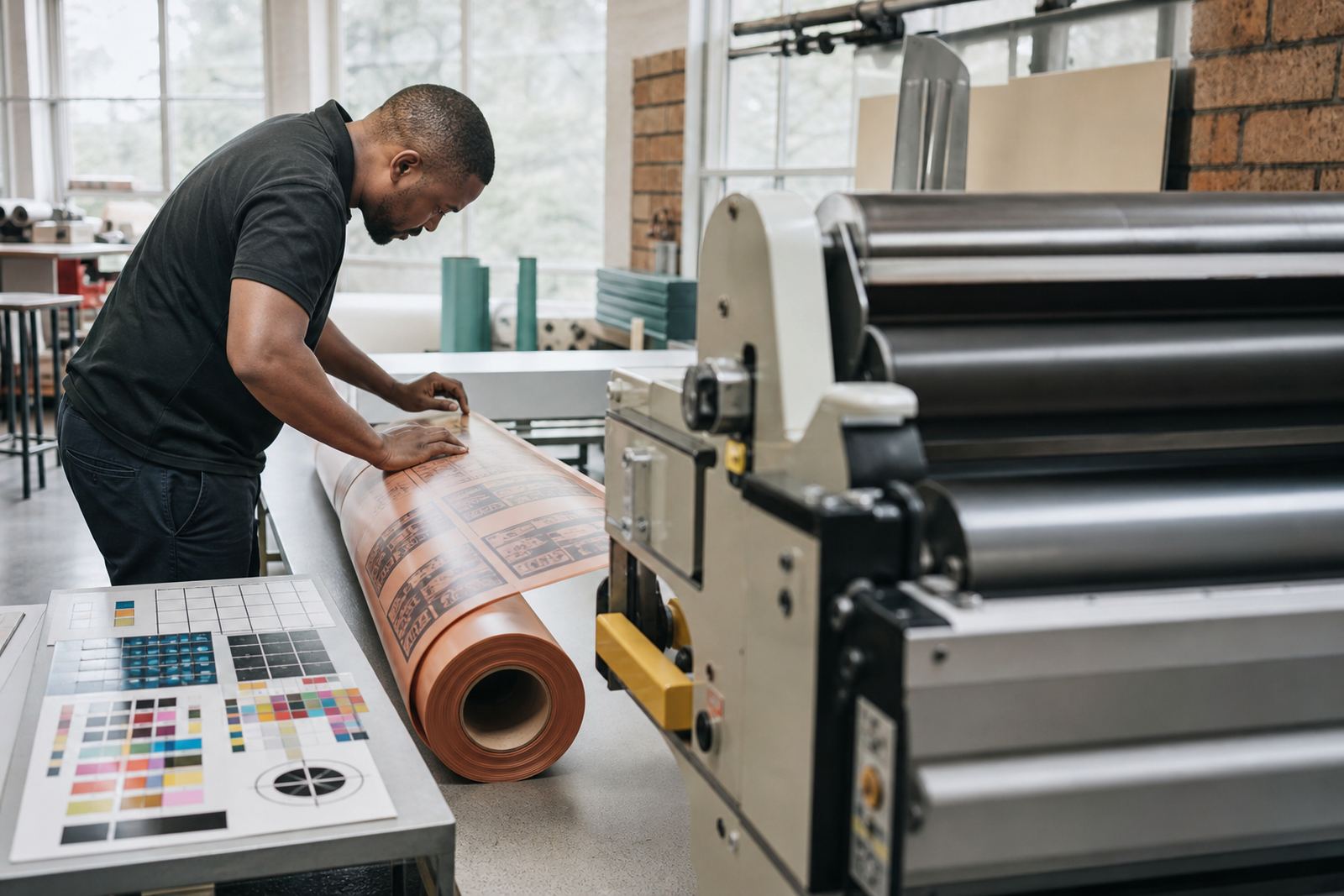
Envelope jobs can range from small office envelopes to larger mailing formats, so the plate size and layout need to match the print sheet and cylinder or sleeve setup. We work from supplied artwork and production details to prepare plate sizes that fit the job correctly, with attention to trim allowance, label orientation and any repeat layout needed for the press.
- Plate sizes matched to the finished envelope size and press repeat
- Common thickness options for different impression and substrate needs
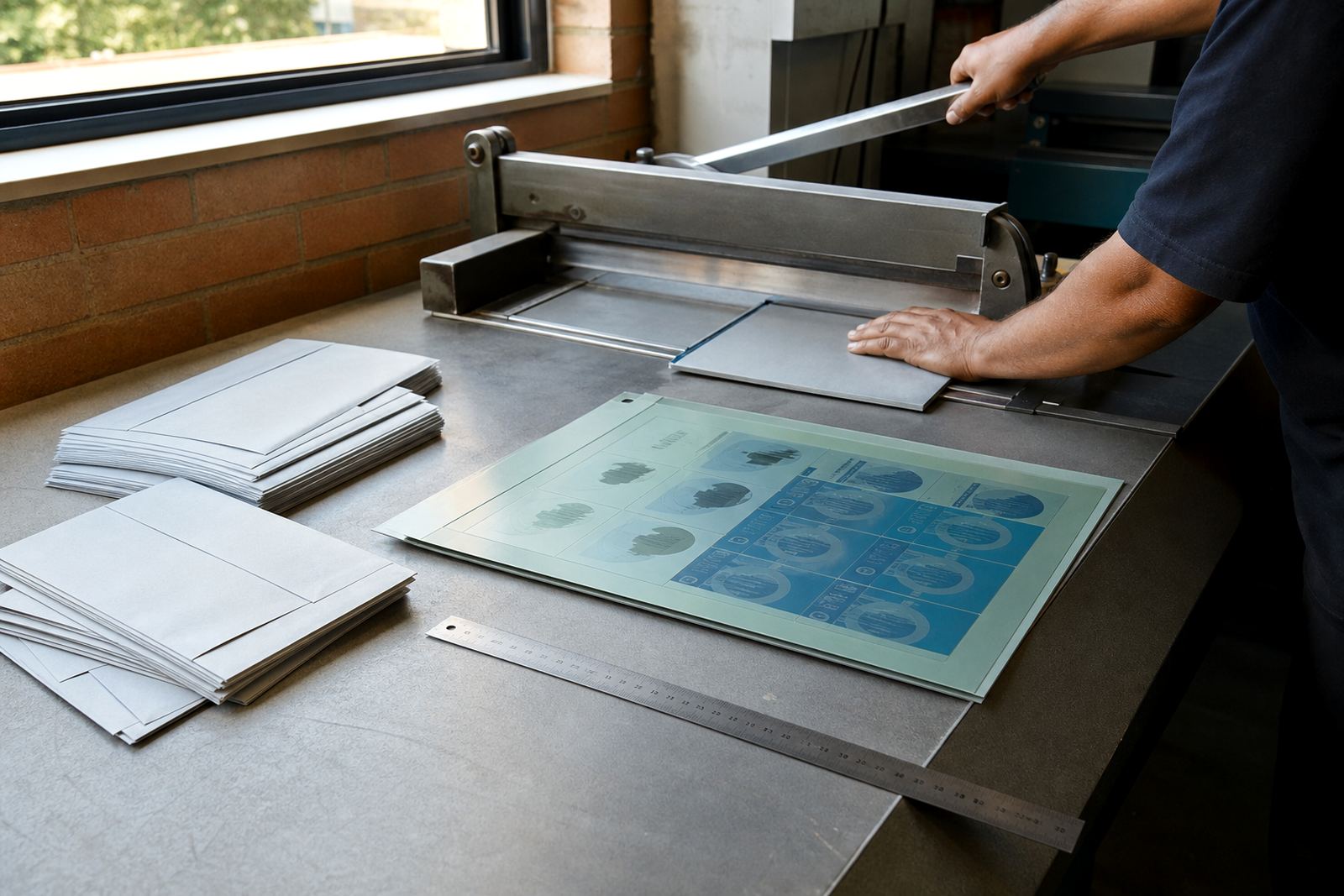
- Plate trimming for neat handling and accurate mounting
- Plate labelling for job identification and repeat orders
- Imposition planning where multiple images are laid out on one plate
Where the design includes several address versions, logo variants or position changes, we can help with file arrangement before output. That reduces confusion on press and helps the operator keep the correct version in the correct position. If the job is changing from one envelope size to another, it is worth checking the artwork scale carefully, as even a small difference can move the print area off target.
Best suited to envelope and mailer work
Envelope plates are suitable for printers who produce branded mailing envelopes, office correspondence packs, internal communication envelopes, and light packaging items that use similar sheet sizes. They are also a good fit where the printed area includes postal bars, reference blocks or fine line graphics that must stay legible after folding, gluing and packing.
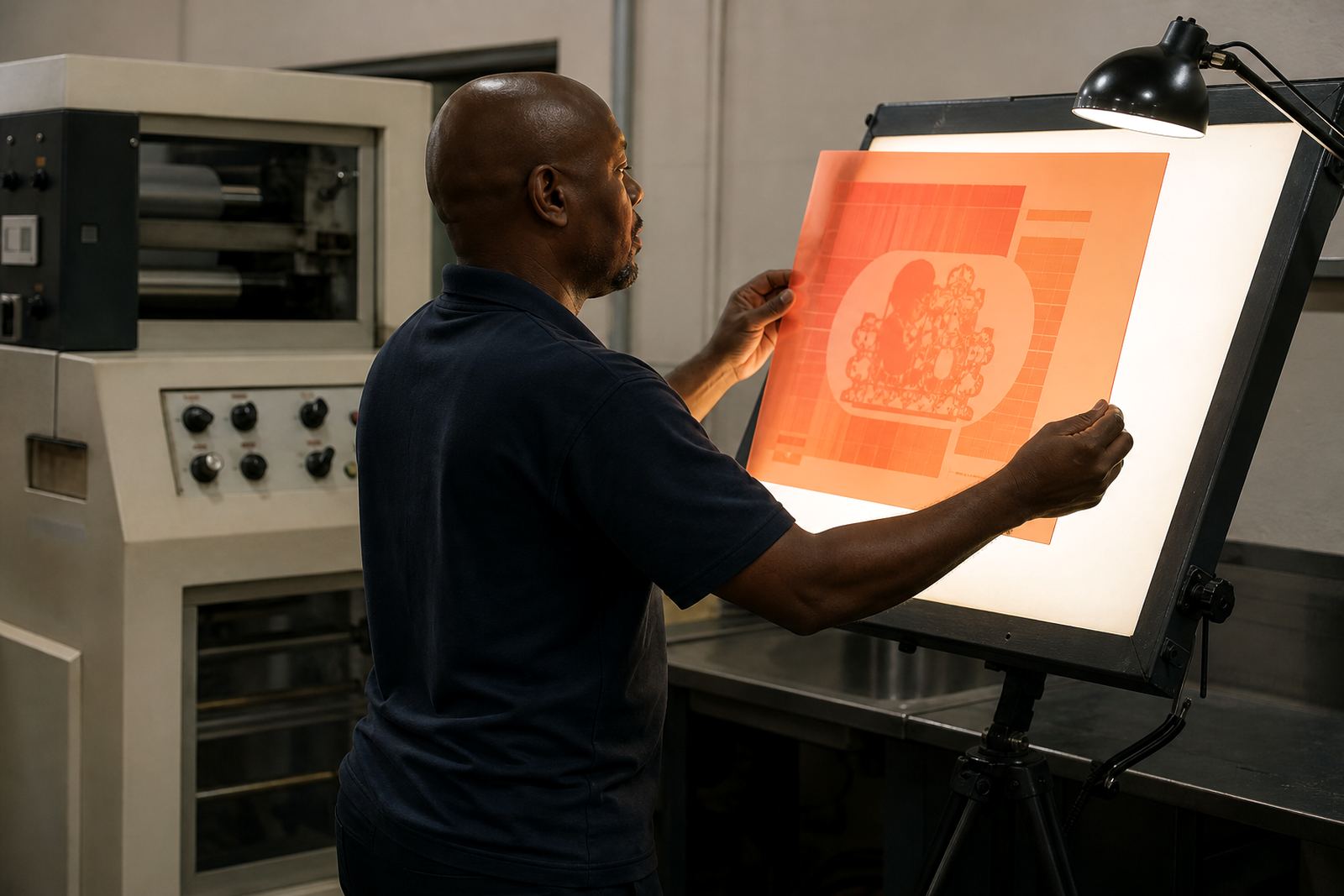
In practical terms, envelope work often comes with short production windows, mixed artwork and tight registration. That is why prepress checking is important. We review supplied files for line weight, image placement, spelling in artwork, and whether the layout is suitable for flexo output. If the artwork is not set correctly, the problem usually shows up first on small text or in the corner details, where it can be hardest to fix later.
- Office envelope printing
- Marketing mailers and branded stationery packs
- Mailer envelopes with logos or return addresses
- Short-run and repeat production work
- Multi-version address or reference layouts
Installation and production requirements
Photopolymer plates for envelope work are normally mounted on the press cylinder or sleeve system used by the printer. The installation method depends on the equipment in use and the job specification. Plates should be handled with care during mounting so the surface is not damaged, especially around fine detail and small open areas. Clean hands and clean mounting surfaces make a real difference to print consistency.
No gas supply is required for the plate itself. Power requirements sit with the processing, drying and handling equipment used in plate production and with the press line at your premises. If your site has load-shedding interruptions, it helps to plan job intake and dispatch around those windows so plate handling, checking and mounting are not rushed. In humid coastal areas, including Durban and Gqeberha, storage and packaging need a bit more care to avoid moisture affecting the plate surface or adhesive systems.
For printers in Midrand, Johannesburg, Pretoria, Durban, Cape Town and surrounding industrial areas, courier delivery is arranged across South Africa. If collection is preferred, coordination can be handled through the enquiry process so the job moves through dispatch in a controlled way.
Care, storage and servicing between jobs
Envelope plates should be stored flat, away from dust, direct sun and heavy pressure. Keep them in a dry area with stable temperature, and avoid stacking anything sharp on top of them. If plates are being reused, they must be cleaned properly before storage and checked again before the next run. A small mark on a fine rule can become a bigger issue on the next print.
Routine servicing is less about complex repairs and more about keeping the whole plate process tidy. That includes checking job labels, keeping mounting records in order, replacing damaged packing materials, and reviewing any recurring registration issues. If a plate is showing wear on the same area repeatedly, it may point to press setup, substrate movement or artwork positioning rather than the plate alone.
- Store plates flat and dry
- Keep away from heat, sunlight and damp walls
- Inspect for scratches, dust or edge damage before reuse
- Keep mounting notes with the job reference
- Report repeat print issues early so they can be traced
What to check when ordering envelope plates
Before ordering, check the finished envelope size, the artwork version, the print position and the press repeat. If there is a window cut-out, fold line or glue area, make sure the printed elements sit clear of those zones. It is also worth confirming whether the artwork is single colour, multiple colour or a single plate job with separate print positions. That affects both plate planning and prepress checking.
You should also confirm the substrate, the ink system, and whether the job is for a new run or a remake of an existing plate. Remake support is easier when previous job details are available. If there has been a change in paper supplier or envelope stock, tell us, because even small stock changes can influence pressure, dot shape and ink transfer.
For order handling, our team can assist with artwork preflight, file checking, screening support, proof comparison, plate trimming, plate labelling, dispatch packing and collection coordination. Sibusiso Mthembu, Ayesha Naidoo, Pieter van Wyk, Lerato Molefe, Morne Jacobs and Zinhle Dlamini work across production and logistics from the Midrand base, serving printers across Gauteng and nationwide. The focus is always on practical job control and clear communication, not guesswork.
Key facts
| Product type | Photopolymer flexo plates for envelope printing |
|---|---|
| Primary use | Address zones, logos, line detail and mailing marks |
| Typical supply | Plate-making to job size, with trimming and labelling available |
| Artwork support | Preflight, file checking, imposition planning and proof comparison |
| Dispatch | Courier delivery across South Africa from Midrand, Gauteng |
| Suitable for | Label and packaging printers handling envelope and mailer work |