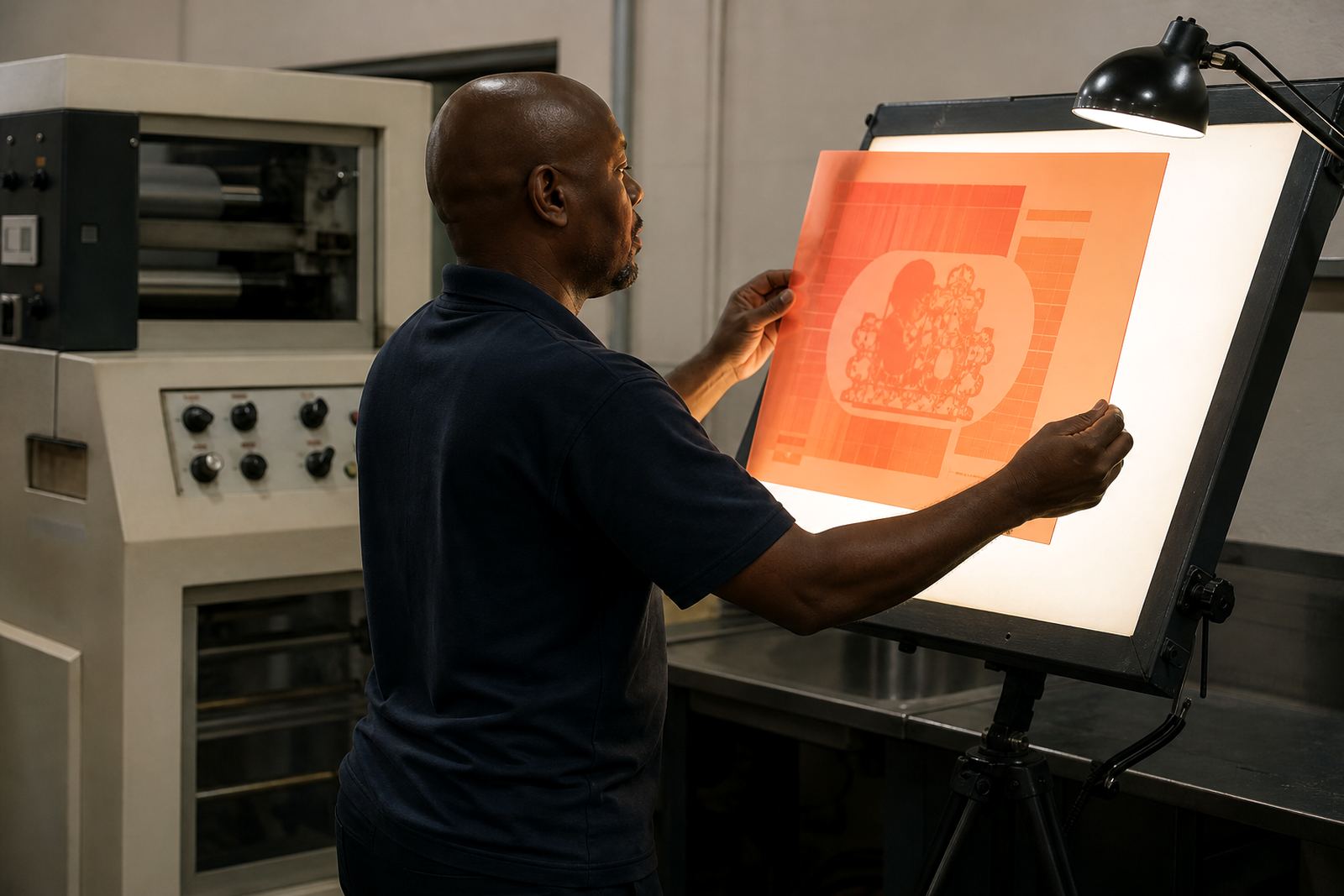
Reverse Print Plates For Correct Orientation
Reverse print plates are used where the printed image is viewed through film, laminate or clear material, or where the print sequence needs the image to land in reverse on the plate so it reads correctly in use. That means the artwork, reading direction and plate mounting all have to line up before plate making starts. If the plate is set up wrong, text can read backwards, barcodes can fail verification, and registration can drift on press.
We prepare flexo photopolymer plates for reverse image work on labels, sleeves and packaging applications where orientation matters. The job usually starts with file checking and artwork preflight, followed by imposition planning, screening support and proof comparison. This helps catch issues such as wrong page flow, incorrect die line position or a mismatch between the supplied proof and the final plate file. It saves time on press and reduces waste.
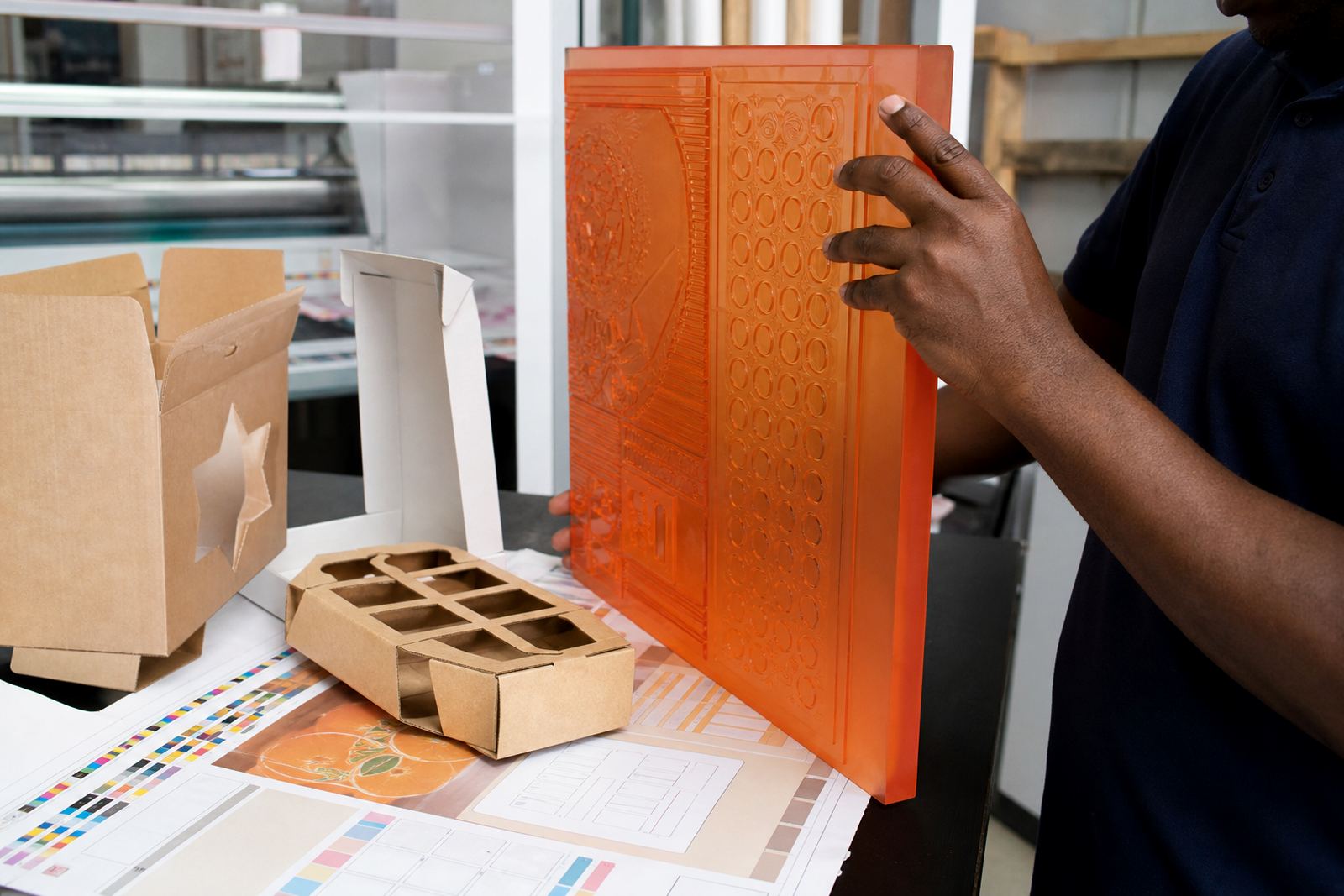
Typical reverse print work includes clear label applications, overprint jobs, inner pack graphics and packaging runs where the image is intended to read through the substrate. The plate face, relief depth and mounting position must be suited to the press and substrate. In Gauteng and along the coast, heat and humidity can affect handling, so plate storage and packing also matter more than people expect.
Plate Sizes, Thicknesses And Practical Options
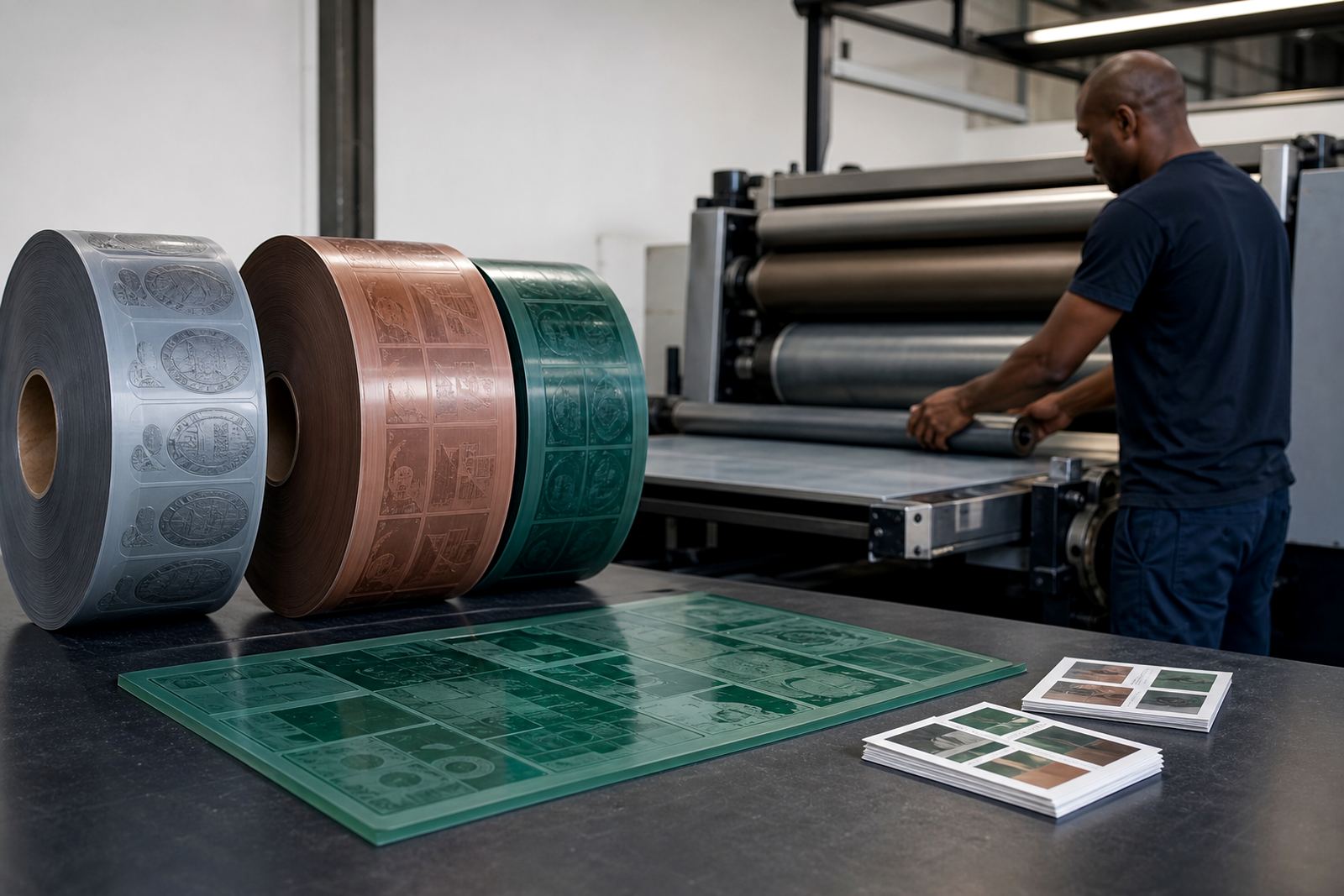
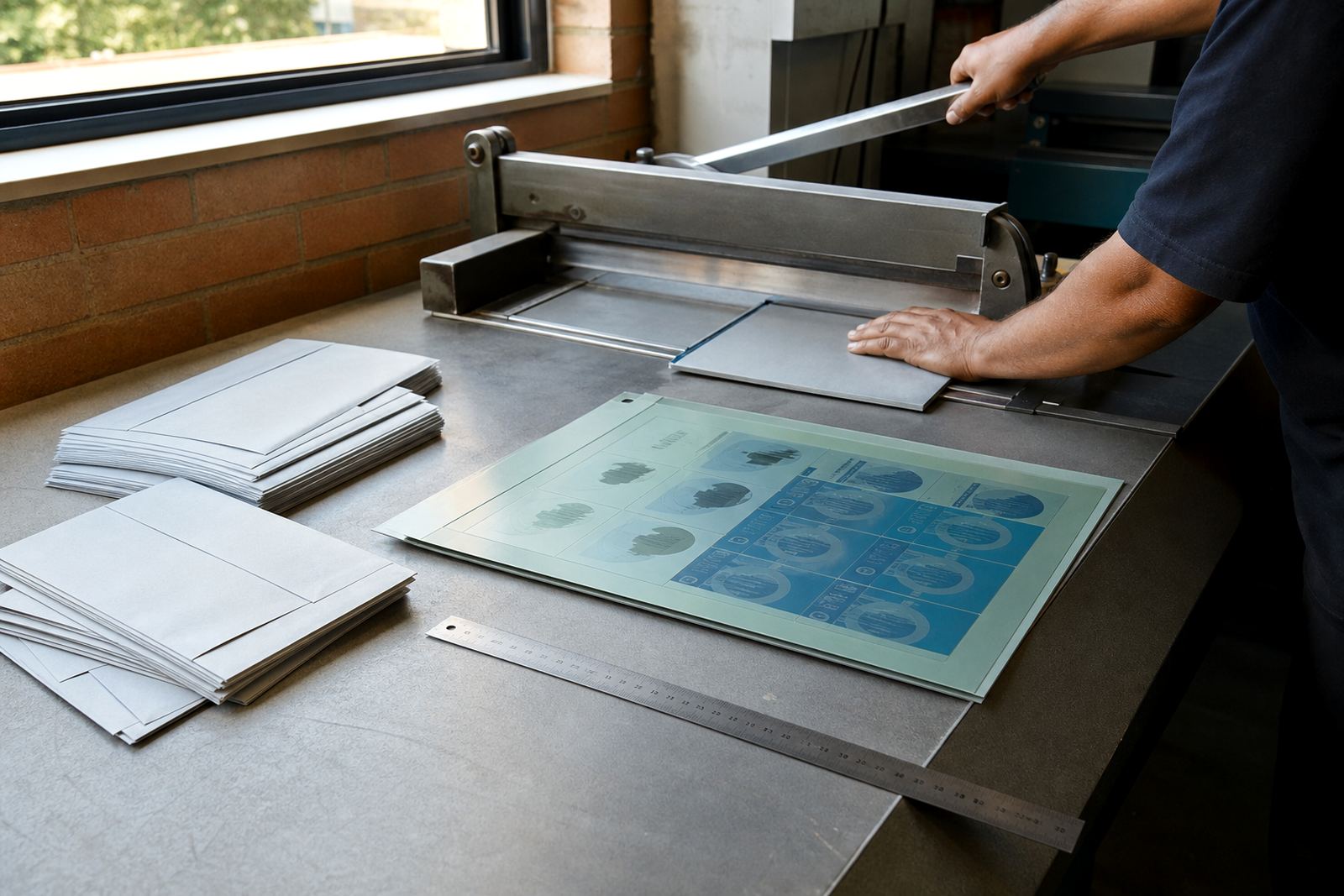
Reverse print plates are supplied in sizes that match the job and press cylinder or sleeve setup. We work from supplied artwork and press details to cut and finish the plate to the required format. Common options depend on the application, but the aim is always the same: clean image transfer, accurate orientation and a plate that mounts properly without extra trimming on your side.
Options can include plate thickness selection, fine screening support, plate labelling for quick identification, and plate trimming to suit the mounting method. Where multiple colours are involved, clear labelling is especially useful for faster make ready. For repeat work, keeping plate names and positions consistent helps your press team avoid mix-ups.
- Plate format to suit label and packaging presses
- Reverse orientation checked against supplied artwork
- Trimming to fit mounting and storage needs
- Labelling for colour, repeat and job identification
- Remake support for updated artwork or corrected files
For narrow web label printers, the finishing detail matters as much as the plate image itself. A plate that is technically correct but awkward to handle can still cost time on the machine. We therefore look at the full job path, from file checking through to dispatch packing.
Where Reverse Print Plates Work Best
Reverse print plates are commonly used for label and packaging printers handling clear labels, laminate-backed graphics, wraparounds, inner pouches and converted packaging where the final reading surface is not the same as the artwork side. They are also useful when the printed image needs to be viewed from behind a transparent material, or when a reverse build is needed for a specific converting step.
In practice, these plates suit printers who need a clean, readable finish on short and medium runs, with reliable detail in small text, fine lines and barcode areas. If your work includes product labels for food, household goods, personal care or industrial packs, reverse print setup can be part of the standard job flow. It helps when the same artwork is repeated across different substrates or when the finished pack has to keep its reading direction exact.
- Clear film and laminate label work
- Flexible packaging and overprint applications
- Printed sleeves and wraparound formats
- Small text, codes and fine line graphics
- Repeat jobs where orientation must stay consistent
From Midrand we courier across Johannesburg, Pretoria, Durban, Cape Town and Gqeberha, as well as East Rand and West Rand delivery areas. Collection coordination is also available for clients who prefer to arrange their own driver. We pack plates carefully for transit because dust, bending and corner damage can affect the finished job even before the plate reaches the pressroom.
Installation, Handling And Pressroom Requirements
Reverse print plates do not need special utilities on site, but they do need correct handling and a stable pressroom environment. No gas connection is required. Electrical power is only relevant to the printing equipment that will run the plate, not to the plate itself. What matters is clean storage, flat handling and proper mounting to the cylinder or sleeve.
Before installation, check that the backing tape, mounting surface and cylinder condition are suitable for the plate type. Dust, adhesive build-up and uneven mounting surfaces can cause bounce or poor register. On sites dealing with load shedding, it helps to keep plates stored away from direct heat, windows and high traffic areas where they may flex or pick up dirt. Coastal clients often ask about humidity too, and for good reason: moisture and temperature swings can change handling behaviour if plates are left unpacked for too long.
- Store flat and dry, away from direct sunlight
- Handle with clean hands or gloves to avoid marking
- Keep plate labels visible for quick job identification
- Mount on a clean, even surface with the right tape
- Allow time for plates to settle to room temperature before use
If you are unsure how a reverse print job should be set up, technical job advice is part of the service. We can look at the supplied file, the print side and the intended reading direction before the plate is made. That is especially useful where a job has changed from a previous run or the artwork has been updated by a client with a new layout.
Care, Storage And When To Ask For A Remake
Flexo photopolymer plates last longer when they are kept clean, flat and protected from scratches. After use, remove adhesive residue carefully and return the plate to its labelled sleeve or flat storage position. Avoid folding, rolling or leaving plates under weight. If a plate will be reused, store it in a cool area with consistent conditions rather than in a hot vehicle or against a wall that gets afternoon sun.
Over time, a plate may need replacement if the job changes, the image has been corrected or the relief has worn from repeated use. In some cases a remake is needed after artwork changes, an updated proof, or a change in substrate that needs a different screening approach. Plate trimming and relabelling can also be requested when the press team needs a cleaner handling setup.
Remake support is useful when the same customer returns with a repeat job but the final artwork has been adjusted, even slightly. Small changes in reverse work can matter a lot. A missing comma or swapped orientation can be enough to spoil a run, so it is worth checking the file carefully before pressing ahead.
What To Send When You Order Reverse Print Plates
To avoid delays, send the artwork, the proof if available, and the press details with your enquiry. If the job is a reverse image application, say so clearly and note which side the image must read from. That allows the prepress team to check mirror direction, layout, screening and plate size before production begins.
It also helps to include the repeat length, plate count, substrate type, mounting method and whether you need collection or courier dispatch. If there are multiple versions, colourways or language changes, list them separately. This keeps packing, labelling and dispatch cleaner at the end of the job.
- Final artwork file and any marked proof
- Press type, repeat and mounting details
- Substrate type and whether it is clear or opaque
- Required plate size, count and job naming
- Delivery town or collection arrangement
Clients reach us through the enquiry form on the contact page. Our Midrand base supports printers across Gauteng and nationwide, with a practical approach to reverse print plate-making that keeps the job readable, mounted correctly and ready for press use.
Key facts
| Product type | Reverse print flexo photopolymer plates |
|---|---|
| Primary use | Mirrored artwork and correct orientation for labels and packaging |
| Service area | Midrand, Johannesburg, Pretoria, Durban, Cape Town, Gqeberha and nationwide delivery |
| Finish options | Trimming, labelling, remake support and dispatch packing |
| Prepress checks | Artwork preflight, file checking, imposition planning and proof comparison |
| Utility needs | No gas required; no plate-side power supply needed |