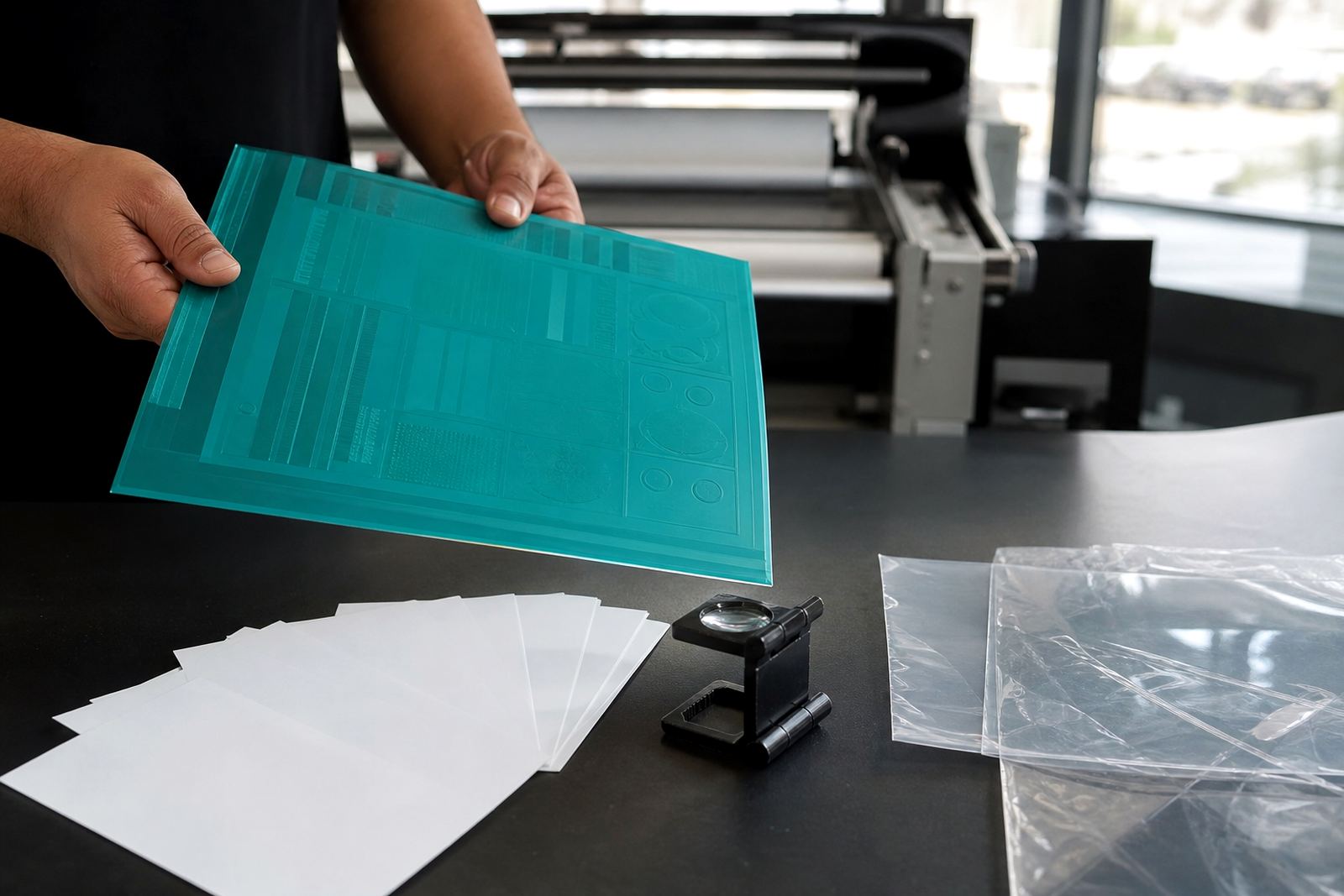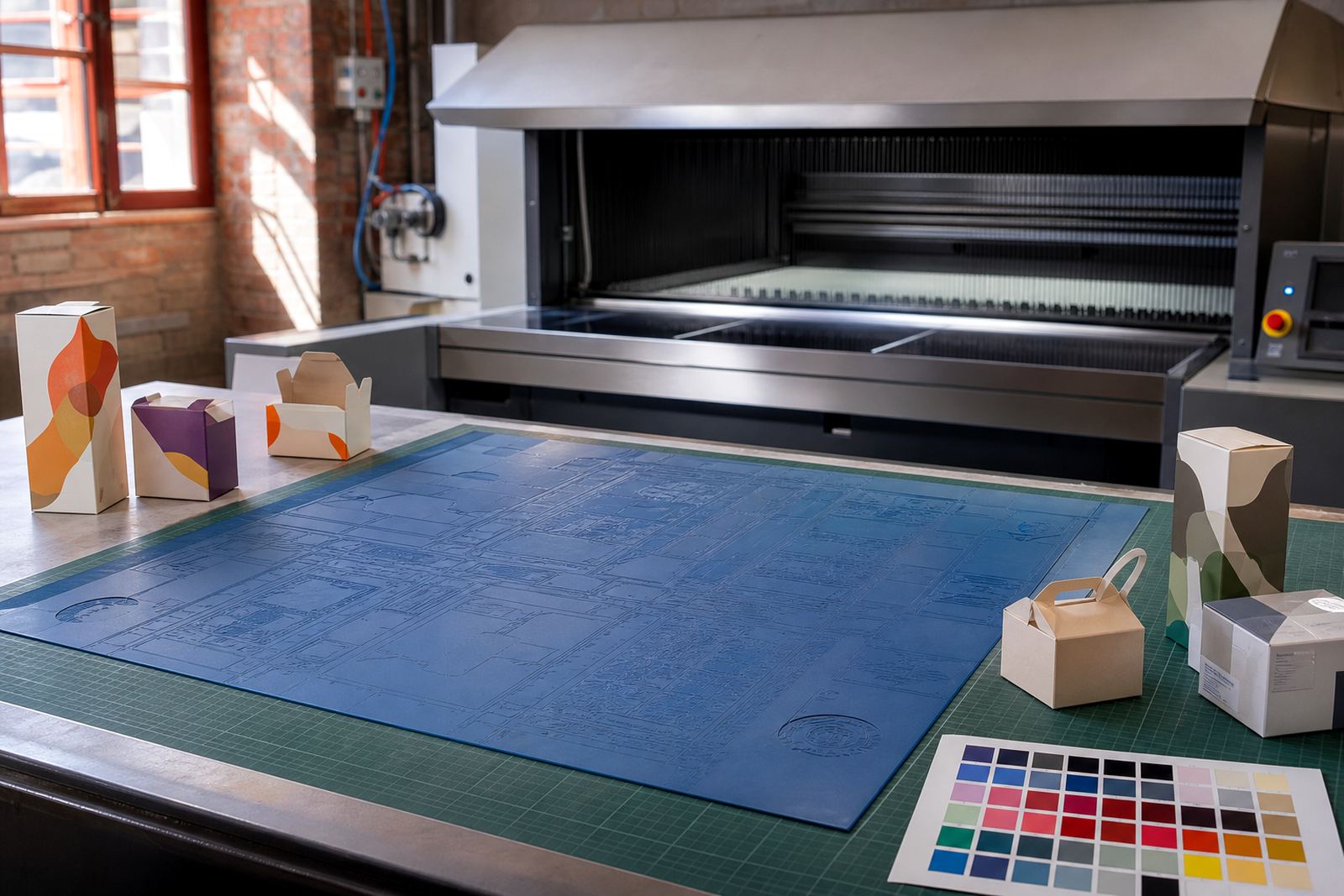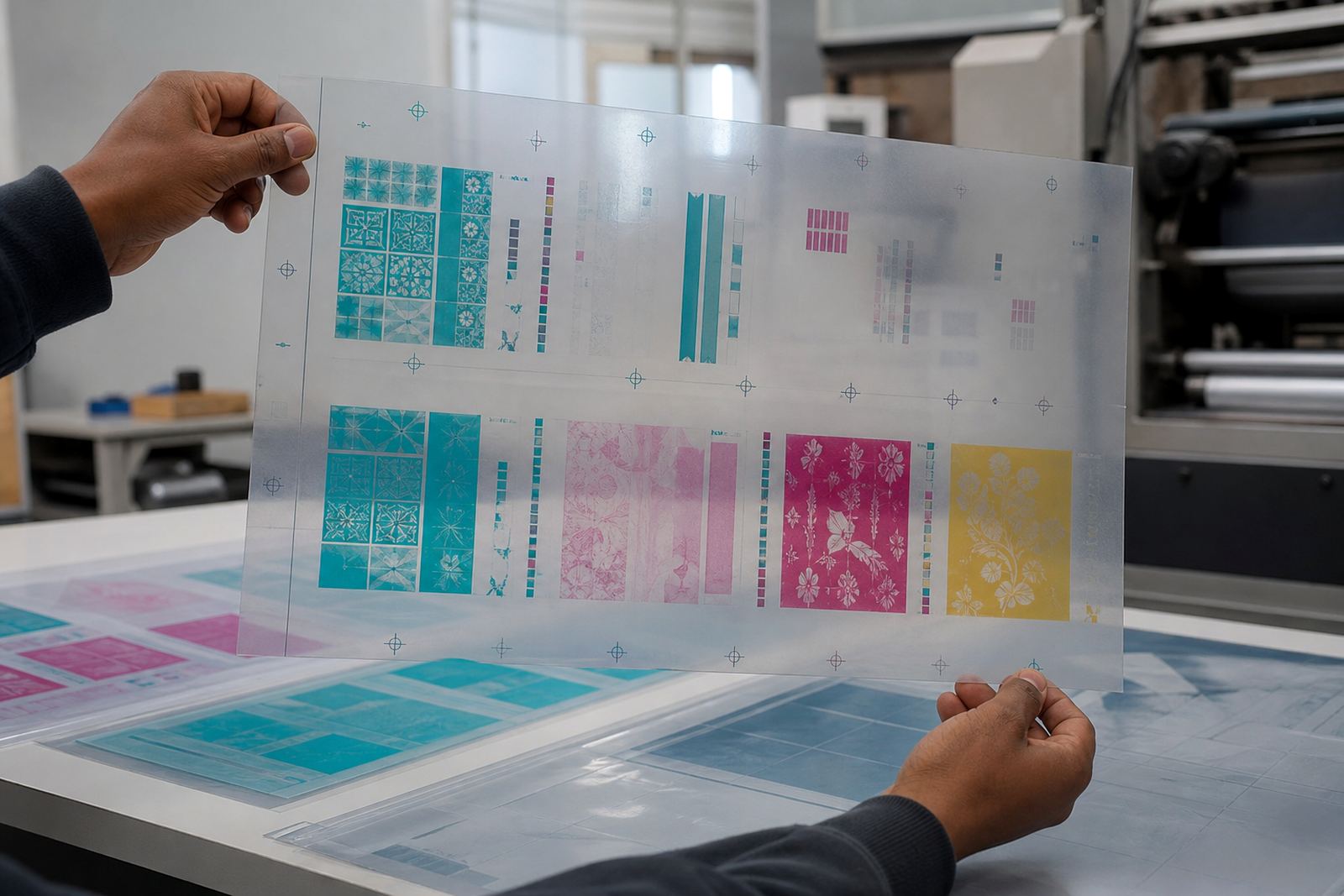
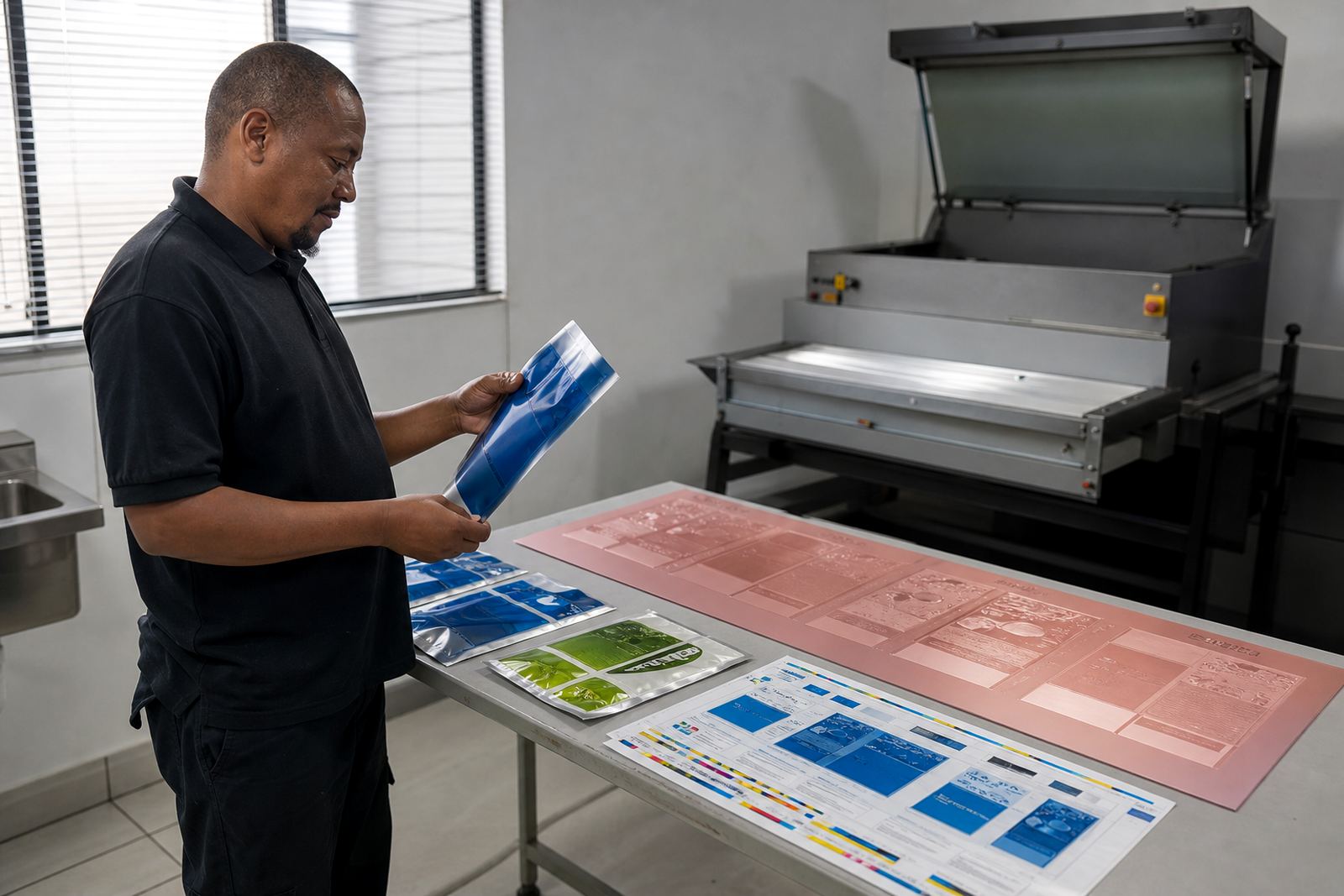
Plates for pouch work need more than a simple image transfer
Pouch packaging places different demands on the plate than straight label work. The print area often runs close to seals, gussets, registration marks and variable information panels, so the plate layout must be planned around the finished pouch shape and the press conditions that will run it. A good pouch plate setup helps keep solids even, fine text readable and seal areas clear where they must stay free of ink.
We make flexo photopolymer plates for pouch printers in Midrand, Gauteng, with courier delivery across South Africa including Johannesburg, Pretoria, Durban, Cape Town and Gqeberha. The work suits short runs, repeat packaging jobs and ongoing production where artwork changes from time to time. Because pouch materials and press set-ups vary, we look closely at artwork, repeat size and print side before a plate is made.
- Suitable for printed pouches, sachets and small-format packaging
- Useful where seals, zip areas and tear notches affect image placement
- Prepared for flexo presses used by label and packaging printers
Sizes, thicknesses and options for different pouch formats
Pouch jobs are rarely one-size-fits-all. Some packs need a narrow print width with strong registration control, while others use broad artwork across the front and back panels. We can supply plates in practical sizes to suit the job layout and press cylinder or sleeve arrangement, with attention to repeat length, image direction and mounting allowance.
Common options include single-colour plates, multi-colour plate sets, solids and fine-detail areas, and separate plates for each panel or colour station. For many pouch jobs, we also check screening requirements so that gradients, tints and small type hold up properly on the chosen substrate. If the artwork includes barcode panels, nutrition blocks or safety text, these areas are checked for readability before production.
- Photopolymer plate production for pouch printing
- Thickness and relief selected to suit the print job
- Plate trimming and labelling available for easier press-room handling
- Remake support for repeat work where artwork changes
Where pouch print plates suit best
Pouch print plates are used on packaging that carries product, protects contents and needs clear shelf presentation. They suit food pouches, dry goods packs, pet food packaging, small chemical sachets, health and beauty packs, and other flexible packaging where the printed image must sit neatly around seals and folds. If the pouch includes a reseal strip, hanging hole or gusset, the plate plan should account for these features from the start.
These plates are especially useful when a printer needs consistent image placement across repeat jobs. On packaging lines, even a small shift can affect code placement, seal clearance or the look of the finished pack. We work with the pressroom to make sure the plate set supports the intended finished pouch dimensions and the production method used on site.
- Food and dry goods pouches
- Pet food and small retail packs
- Single-dose sachets and sample packs
- Flexible packaging with seals, gussets or zip features
Installation needs and what the press room should have ready
Photopolymer plates themselves do not need power or gas, but the press room must be set up properly for mounting and running them. Clean handling space, correct storage, accurate mounting tools and stable press conditions all matter. If the job is being run in a facility with load-shedding, make sure the team has backup for imaging, inspection and mounting equipment so the workflow is not interrupted when plates arrive.
For installation, the printer should confirm the mounting cylinder or sleeve size, adhesive system, register marks and the direction of print. If the pouch material is sensitive to heat, static or handling marks, that should be noted before the job is released. In humid coastal conditions, plates and mounting materials should be stored carefully to avoid dust pickup and handling issues. We also advise checking the press line for the correct anilox, ink system and impression settings before the plates go on press.
- No direct gas connection needed for plate installation
- Power is only required for the pressroom equipment used with the plates
- Stable storage area recommended, away from dust and direct sun
- Use clean mounting surfaces and proper registration checks
Care, storage and servicing between repeat jobs
Good care extends the life of a pouch plate and helps repeat jobs run with less adjustment. After use, the plates should be cleaned with suitable materials that do not damage the relief or swell the photopolymer. They should then be dried properly and stored flat or on the correct curve, depending on how they are mounted. Pressure marks and bent edges can affect the next run, so handling matters just as much as the original plate making.
For repeat work, we can assist with remake support, plate trimming, plate labelling and file checking if the artwork has changed. If the job is coming back after a period of storage, it is worth checking the plate surface, registration marks and the condition of any mounting tape. A quick inspection before dispatch can save time on press and reduce waste during make-ready.
- Keep plates clean, dry and away from direct heat
- Store with matching job labels and repeat details
- Check edges, relief and mounting condition before reuse
- Ask for technical job advice if the pouch format has changed
What to check before you place an order
Before ordering pouch print plates, send through the final artwork and confirm the finished pouch size, repeat length and print positions. We also need to know whether the artwork runs on the front, back or both sides, and whether any areas must be left open for seals, cut-outs or product codes. If the pouch is wide or uses multiple colours, the press plan should show the order of print stations and any areas where solids or fine text need extra care.
It helps to include substrate details, press type, mounting size and whether the job is a new release or a repeat. If there are previous plates, proofs or sample packs, those can be checked against the new file. Our team in Midrand can help with artwork preflight, file checking, imposition planning, screening support, proof comparison, collection coordination and dispatch packing. Clients reach us through the enquiry form on our contact page, and we arrange courier delivery to Johannesburg, Pretoria, Durban, Cape Town, Gqeberha, the East Rand and the West Rand.
- Final pouch dimensions and repeat length
- Artwork file and any previous proof or sample
- Number of colours and print side
- Substrate type and press or mounting details
Key facts
| Product type | Flexo photopolymer plates for pouch packaging |
|---|---|
| Base location | Midrand, Gauteng |
| Coverage | Courier delivery across South Africa |
| Typical applications | Pouches, sachets, flexible packaging and seal-sensitive print areas |
| Artwork support | Preflight, file checking, imposition planning, screening support and proof comparison |
| Handling services | Plate trimming, plate labelling, remake support, dispatch packing and collection coordination |