
What tamper label plates do on press
Tamper label plates are made for labels that must print clearly and stay readable on security-related applications, where the printed result often carries instructions, batch details, numbering or warning text. A good plate helps keep fine type open, barcodes cleaner and solids even across the sheet or web. That matters when labels are applied to cartons, seals, closures or product packs that need a neat, consistent finish.
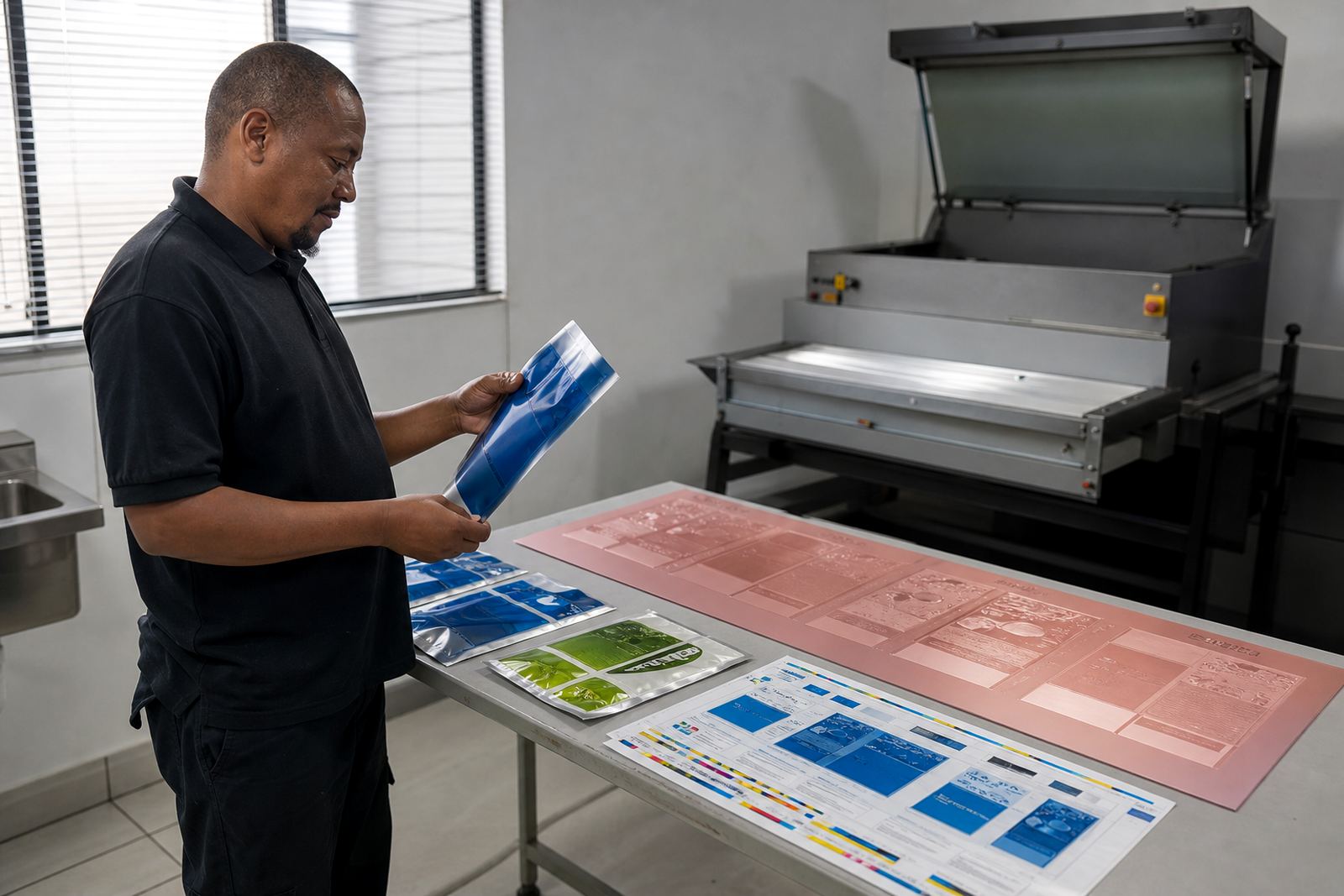
We produce photopolymer plates for flexo printers who need repeatable results on short and long runs. The plate choice depends on the artwork, substrate, ink system and the press setup. On label work, small differences in dot gain, impression and plate depth can affect the final result, so we look closely at file setup and the intended use before platemaking starts.
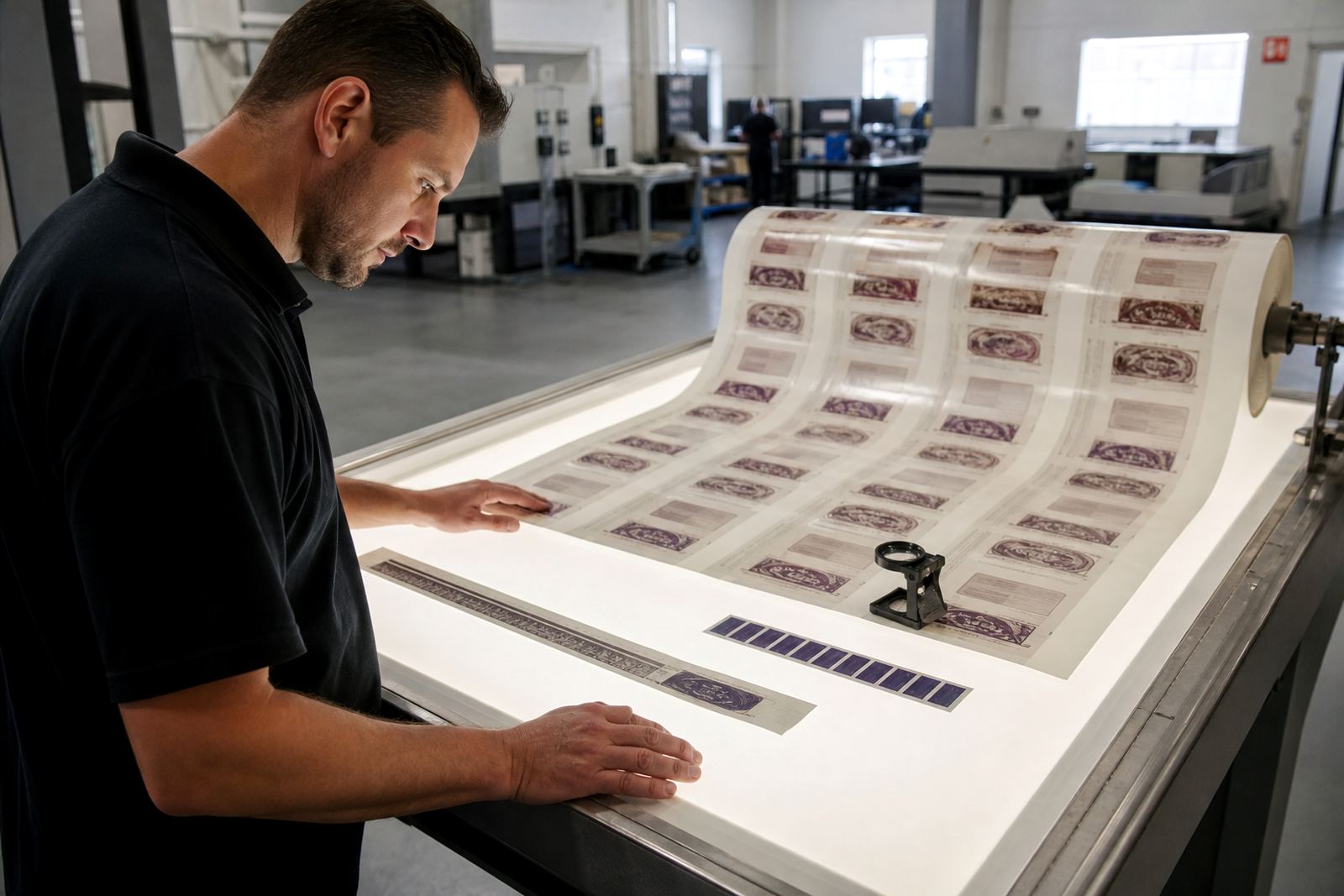
For tamper label work, the aim is simple: the print must look clean, hold detail, and stay legible where the label is handled, scanned or checked by eye. That is why we treat prepress, plate making and packing as one job rather than separate steps.
Plate sizes, thicknesses and finish options
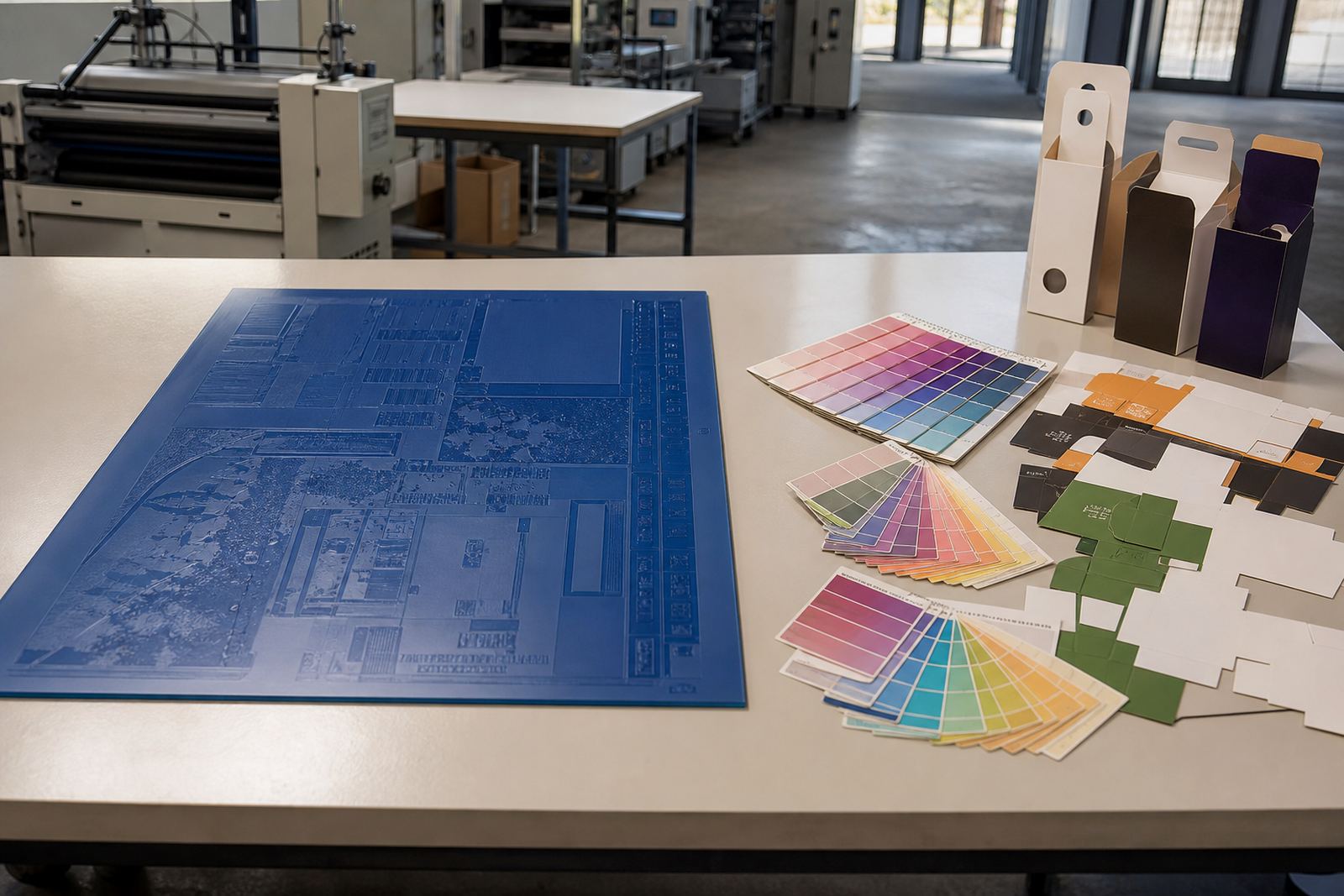
We make plates to suit the job size and press requirements, from narrow label work to wider repeat jobs. Common plate thickness options are selected to match the substrate, mounting tape and cylinder or sleeve setup. Where needed, we can advise on the best thickness for solid coverage, fine reversed text and line work.
Options are based on the artwork and the print requirement, not a one-size-fits-all approach. Typical choices include:
- Plate thickness suited to the press and mounting build-up
- Fine-screen options for text and small graphic detail
- Solid area support for cleaner coverage on blocks and backgrounds
- Trimmed and labelled plates for easier handling on press
- Remake support where a revised file or press change is needed
If your tamper label job includes small fonts, serial numbers or reversing out of a dark field, we will check whether the file holds enough detail before plate output. That avoids avoidable press waste later.
Where tamper label plates suit best
These plates suit printers producing labels for cartons, seal labels, control labels and other packaging that needs clear communication. They are useful where the label carries product warnings, inspection marks, logistics data or visual signs that the pack has been opened. In many cases the job also needs strong ink transfer on coated or uncoated stock, so plate quality plays a direct role in the final result.
They work well for printers handling day-to-day label production in Johannesburg, Pretoria, Midrand, Durban, Cape Town, Gqeberha and surrounding areas. We also courier plates to East Rand and West Rand businesses that need a dependable supply without collecting in person.
Because tamper labels often support operational control, the printed area must stay consistent from the first pull to the last. We check artwork flow, repeat length and image placement so the plate suits the press route and the label application method.
What we check before platemaking starts
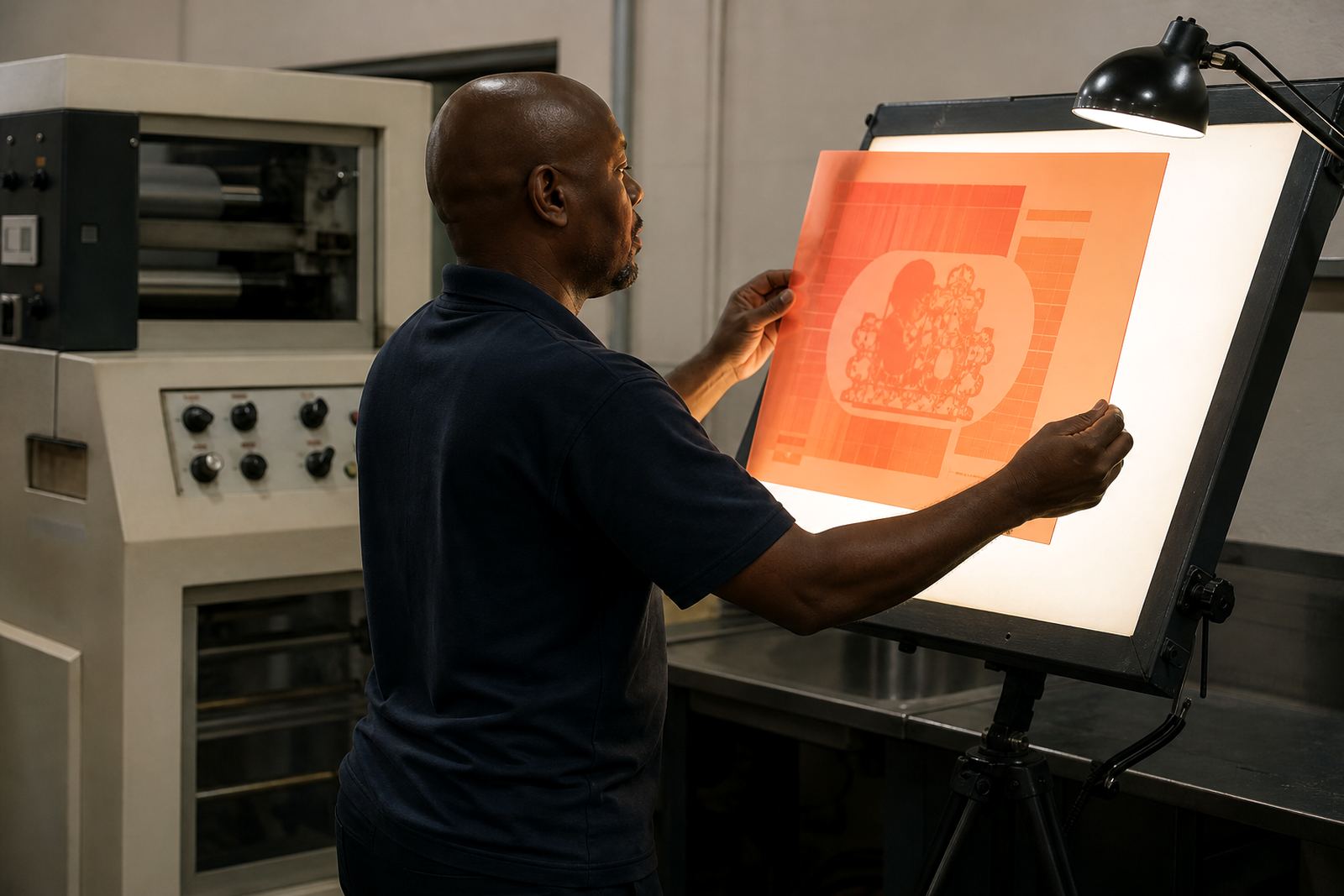
Good plate work begins with file checking. Before output, we look for missing fonts, low-resolution images, trapping issues, barcode clarity, overprint settings and layout problems. If a job needs imposition planning, we check the repeat and arrange the artwork so the press sheet or web runs efficiently with minimal waste.
For tamper label plates, these are the points we usually confirm:
- Final artwork size and repeat length
- Text size, especially small legal or security wording
- Barcode and numbering placement
- Ink coverage on solids and tint areas
- Any reverse type or fine line detail
- Press direction and mounting position
Where a proof is supplied, we can compare it against the file and flag differences before plate making. That helps reduce set-up delays at the press and keeps the job closer to what was approved.
Installation, mounting and power requirements
Photopolymer plates do not need gas or on-site power once they leave our production area. They arrive ready for mounting, trimming and press setup. The main requirement is careful handling. Keep the plate flat, avoid sharp bends and do not expose it to direct heat or sunlight for long periods before mounting.
For installation, the plate should be mounted cleanly on the correct tape or cylinder surface, with alignment checked against the repeat and register marks. A small mounting error can affect the whole run, especially on narrow label work where text and marks sit close together. We can advise on plate labelling so press staff can identify each section quickly.
In humid coastal conditions, store plates in a dry, shaded area away from dust and oil. In Gauteng, where heat and load-shedding can interrupt normal workflow, orderly packing and correct storage help prevent delays when the press is ready again.
Care, storage and remake support
To get the best life from the plates, keep them clean and flat before mounting and after use. Wipe off loose dust with a soft cloth and avoid solvents that may damage the surface. If the plate is being stored for a repeat job, keep it labelled and separated from heavier items that could mark the face.
We also offer remake support where a plate needs correction after a file change, a press adjustment or a revised customer instruction. In label work, this often happens when copy changes late or the barcode position shifts. If the original artwork is not safe to reuse, we will advise on the next step so the replacement plate matches the updated job.
For printers in Midrand and nearby business parks, collection coordination is available if you want to arrange local pickup. For other areas, dispatch packing is done to suit courier handling, so the plates arrive with less risk of edge damage.
What to send when ordering tamper label plates
When you place an order, the more complete the job information, the better the plate will fit the press. Send the final artwork file, the required size, repeat length, substrate type and any notes on ink, barcode reading or special label use. If there is a previous plate or approved proof, that helps us match the job more closely.
Please also tell us whether the job needs:
- Single or multiple plate sets
- Trimmed plates or sheeted output
- Mounting reference marks
- Special handling for security wording
- Advice on screening or fine text
Our team handles plate making, artwork preflight, file checking, proof comparison, plate trimming, plate labelling and dispatch packing from our Midrand base. Clients reach us through the enquiry form on the contact page, and we assist printers across South Africa with practical job advice and courier delivery.
Key facts
| Product type | Flexo photopolymer plate for tamper label printing |
|---|---|
| Typical use | Clear text, warning copy, numbering and security-related label work |
| Common options | Plate thickness matched to press, repeat and mounting build-up |
| Artwork checks | Fonts, barcode clarity, trapping, overprint and repeat length |
| Power or gas needs | None for installation or use after delivery |
| Delivery areas | Midrand, Johannesburg, Pretoria, Durban, Cape Town, Gqeberha, East Rand, West Rand |