
What Warehouse Label Plates Are Used For
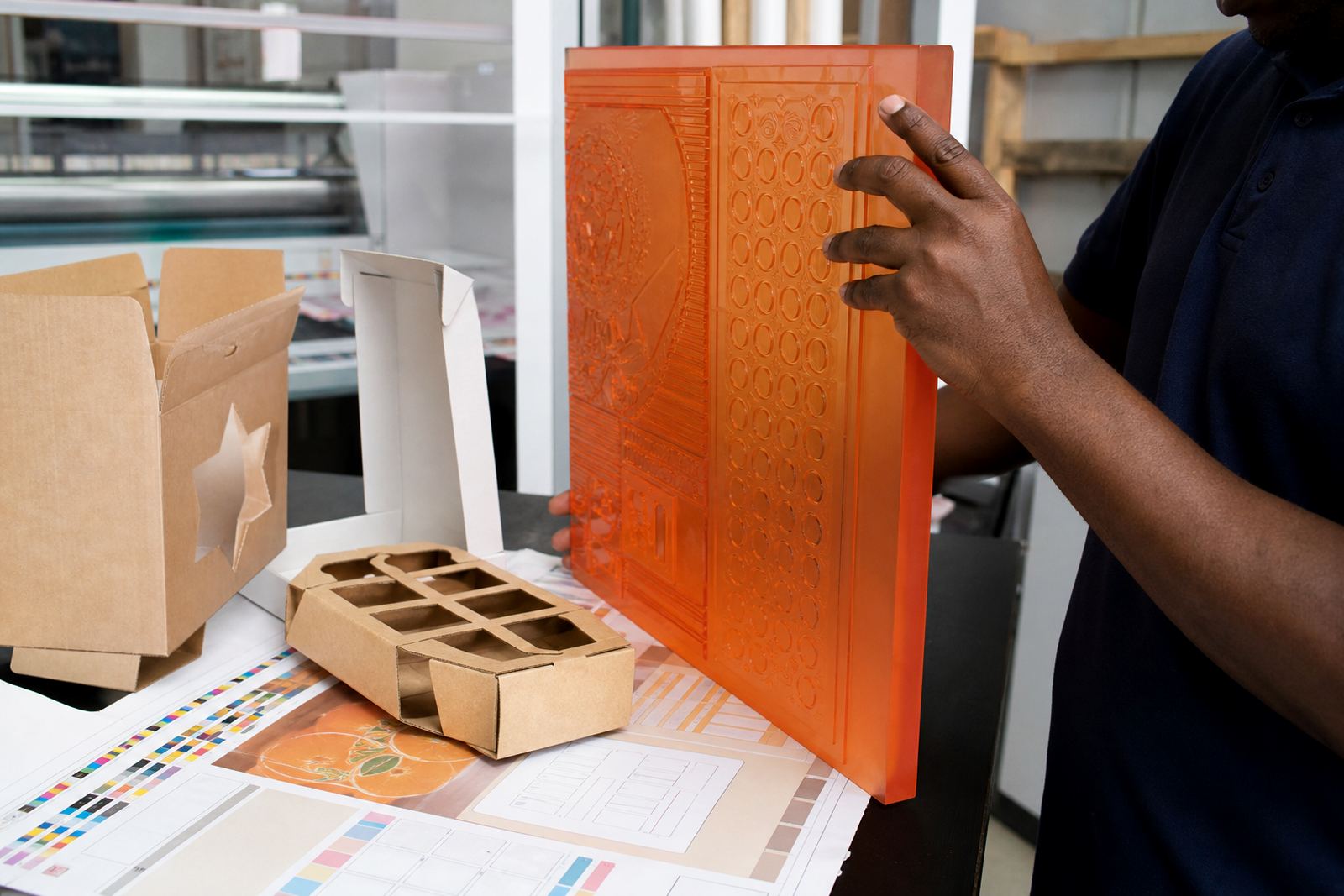
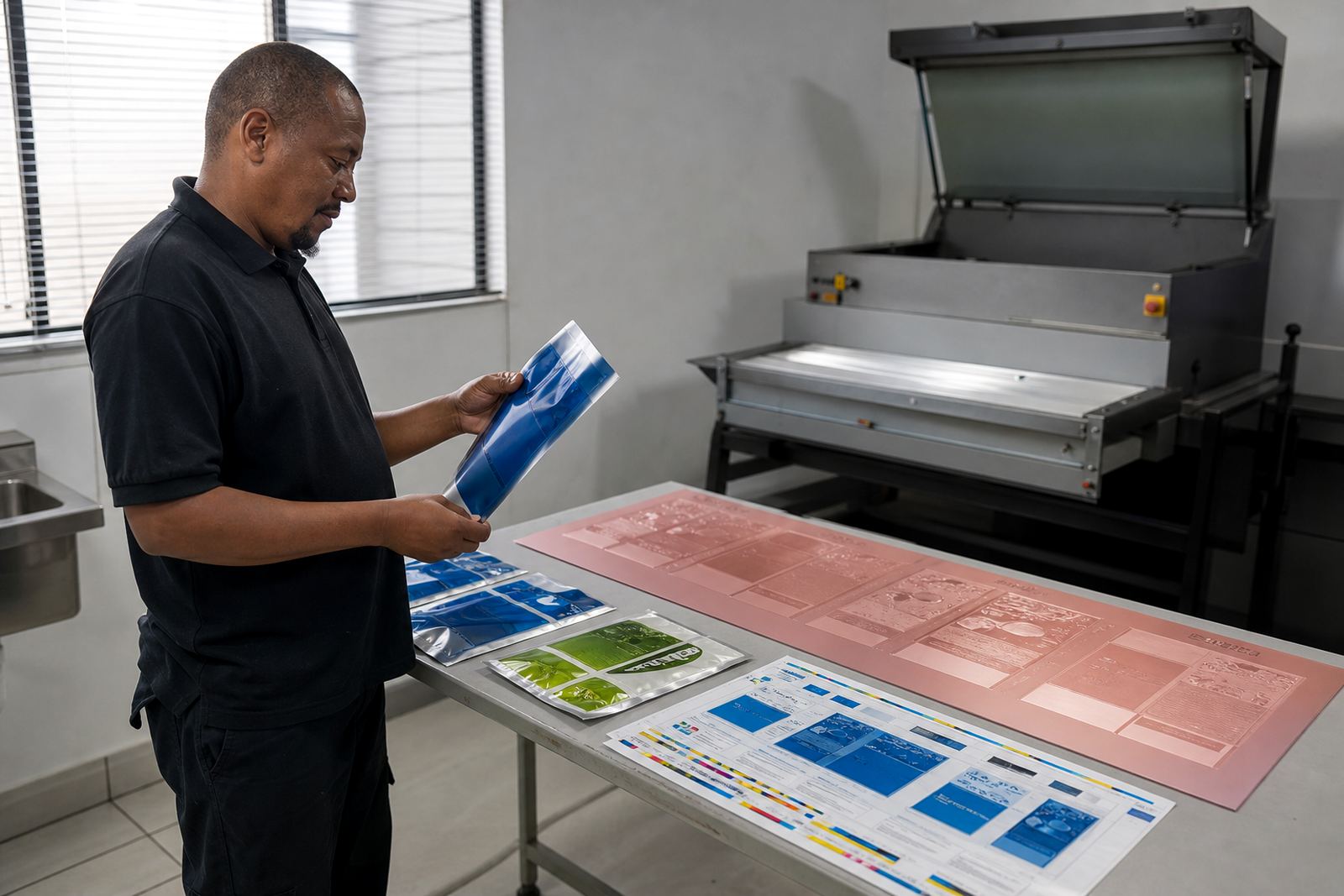
Warehouse label plates are flexo photopolymer plates made for labels that carry barcodes, batch numbers, box marks, shelf labels and dispatch information. The focus is on legibility first, then clean solids and enough detail for small type, rules and simple colour blocks. When a label must be scanned quickly or read by staff at a glance, plate quality matters as much as ink and substrate choice.
These plates suit label printers working with rolls or sheets for internal logistics, product movement, stock control and packaging identification. They are used on papers, films and other common label stocks, with settings adjusted to suit the print line and the level of detail on the artwork. In busy warehouses, a label that prints crisply saves time at receiving, packing and despatch.
Sizes, Thicknesses And Plate Build Options
Plate size depends on the label format, repeat length and press cylinder or sleeve setup. We prepare plates for small labels with fine text, as well as larger warehouse panels with multiple fields and code areas. Common plate thickness options are available to suit the press and mounting system, and the final choice depends on impression, dot gain and the kind of substrate being printed.
- Single-image and repeat plates for standard label runs
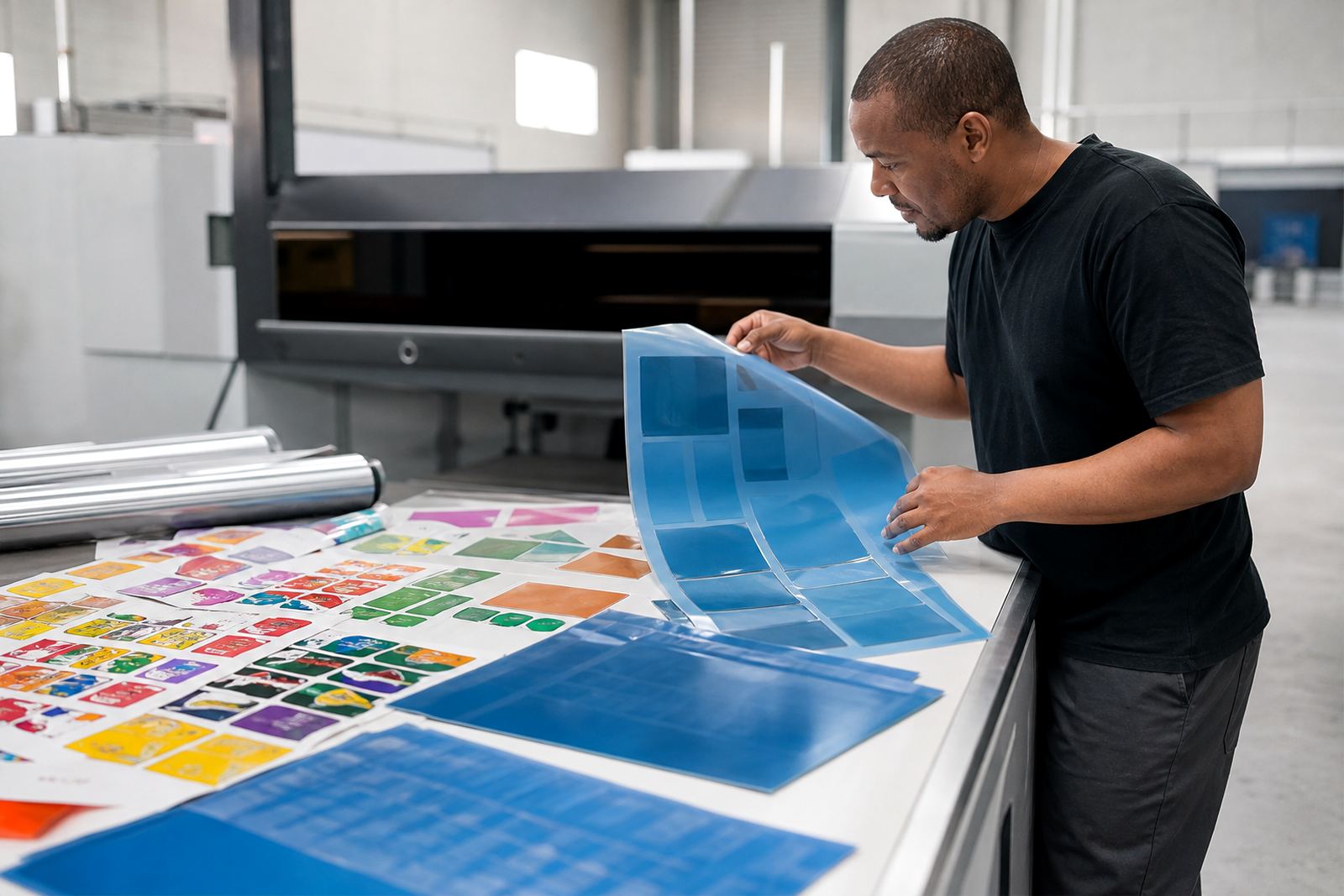
- Multi-up imposition for several labels across one sheet or web
- Light screening support for tints, shading and logo areas
- Plate trimming and labelling for easier handling on site
Where a job has mixed content, such as a barcode, warning block and colour band, we check the artwork before making plates so the layout matches the print method. That helps reduce waste and avoids press stoppages when the labels must move quickly through production.
Where These Plates Suit Best
Warehouse label plates are practical for printers serving distribution centres, manufacturing sites, cold stores and shipping depots. They are also suitable for carton labels, pallet labels, bin labels, compliance labels and internal stock labels where the message is functional rather than decorative. If the print needs to stay readable under handling, dust and routine warehouse movement, these plates are a good fit.
They work well for clients in Midrand, Johannesburg, Pretoria, the East Rand and West Rand, and we courier plates to Durban, Cape Town and Gqeberha as well. Coastal humidity can affect storage and handling, so plates should be kept flat, dry and away from heat until they are mounted. In Gauteng, dusty loading bays and frequent movement mean the plate surface must be handled carefull, especially at the edges.
- Warehouse and logistics labels
- Carton and outer-case identification
- Stock movement and location labels
- Dispatch and receiving mark-ups
Installation, Mounting And Press Setup
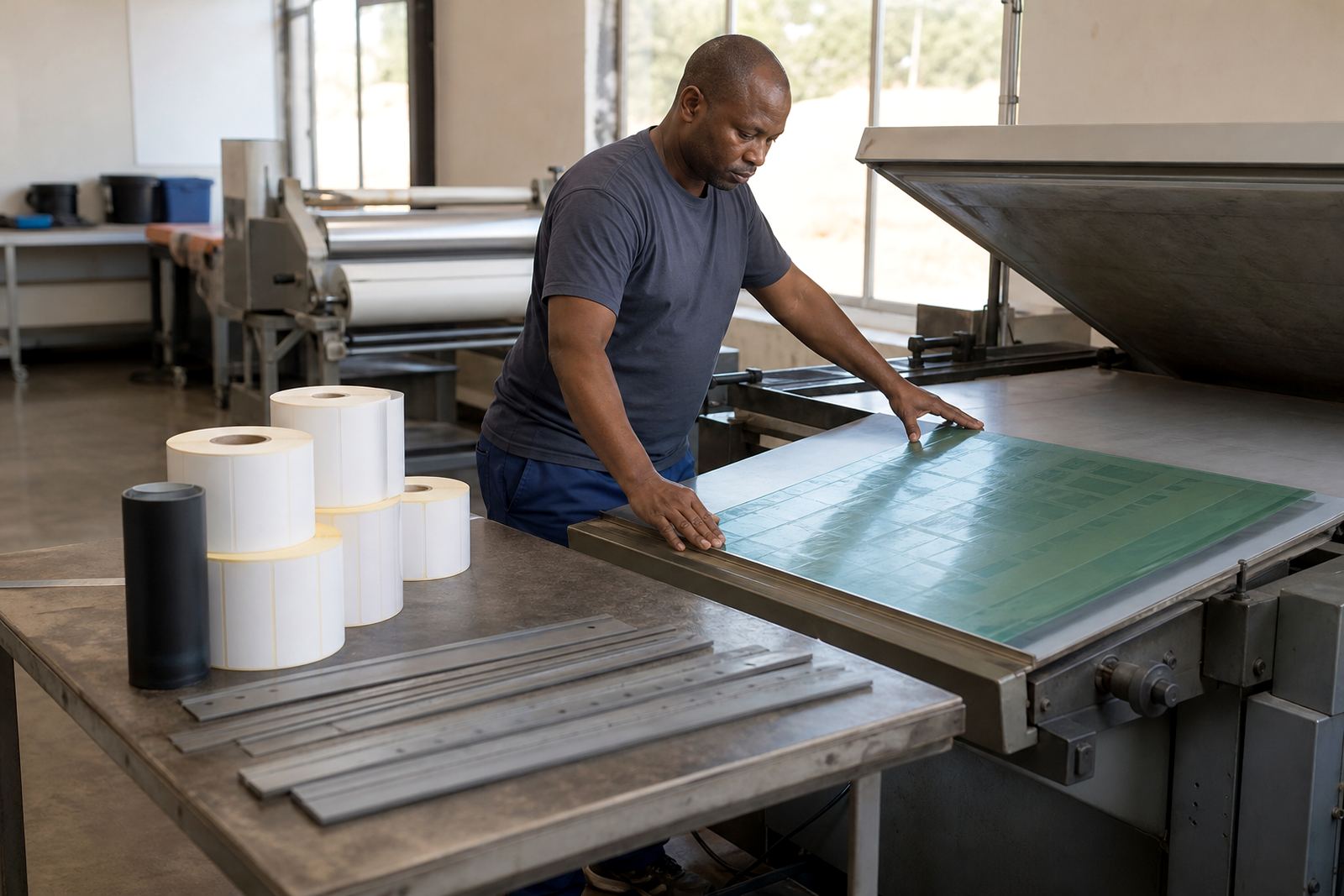
Photopolymer plates do not need power or gas to use, but they do need correct mounting on the press and a clean, level surface. Before mounting, the cylinder or sleeve should be checked for damage, adhesive residue and any uneven build-up. A small fault at this stage can show up as poor registration or patchy print across the full run.
For best results, the press area should be free of loose dust, offcuts and solvent spillages. Plates should be aligned carefully, then checked against the job proof before full production starts. If the label design includes fine codes or small text, a short make-ready run is worth the time because it shows up any issue with pressure, impression or artwork position.
We can assist with technical job advice, proof comparison and file checking before plate-making, so the plate set arrives ready for the press room. This is useful when a warehouse job has been revised a few times and the final artwork needs one last check before production.
Care, Storage And Reuse Notes
Good plate care starts with proper handling. Plates should be kept flat, clean and out of direct sun, with no heavy weight on top. If they are folded, bent or stored against a hot wall, the image area can distort and the plate may not sit properly on the press. A little care here prevents trouble later.
After use, plates should be cleaned according to the ink and pressroom practice used on site. Avoid harsh scraping and do not leave solvent sitting on the plate for longer than needed. If a job is likely to be repeated, the plate should be labelled clearly so it can be identified quickly and kept with the correct repeat. For busy teams, that small step helps a lot.
- Store flat in a dry, cool area
- Keep away from direct sunlight and heat sources
- Separate job sets clearly for repeat use
- Check edge condition before remounting
What To Check Before You Place An Order
Before ordering warehouse label plates, check the final artwork size, repeat length, ink colours, substrate and the press type it will run on. It also helps to confirm whether the job needs barcodes, small type, reverse text or simple colour blocks, because each detail affects the plate setup. If a barcode must scan first time, the artwork should be checked carefully for line weight and quiet zones.
Send the final approved file if possible, not a version with changes still pending. If the label will be used on a wet or dusty site, mention that too, because it may influence the print recommendations and plate handling. For collection or courier dispatch, tell us the delivery area and any site access notes so the plates get to the right place without delays.
- Final label dimensions and repeat length
- Artwork version and approval status
- Print substrate and ink set
- Press or mounting system details
- Delivery area and collection preference
From our Midrand base, we prepare warehouse label plates for label and packaging printers across South Africa, with support for Johannesburg, Pretoria, Durban, Cape Town and Gqeberha. Founded in 2007, our team handles plate making, artwork preflight, screening support, plate trimming, remake support and dispatch packing with practical attention to the job at hand.
Key facts
| Product type | Flexo photopolymer plate set for warehouse labels |
|---|---|
| Common use | Barcodes, stock labels, carton labels and dispatch marks |
| Artwork support | File checking, imposition planning and proof comparison |
| Finish options | Plate trimming, labelling and dispatch packing |
| Service area | Midrand, Gauteng with courier delivery across South Africa |
| Power or gas need | None for the plate itself; press setup depends on the printing line |