
Why multi up layouts matter before the plate is made
Multi up layout planning is one of the most practical ways to get more value from a flexo photopolymer plate run. When two, four, six or more repeats are positioned correctly, the press crew has a clearer path to register, trimming, and mounting. That matters whether the job is for pressure-sensitive labels, folded cartons, sleeves, or other packaging work.
At our Midrand base, we see jobs where the artwork is sound but the layout has not been thought through for the plate size or press cylinder. That often leads to extra trimming, awkward plate mounting, or unnecessary remakes. A better layout can help reduce waste, keep plate edges cleaner, and make press set-up more predictable. In busy periods, that practical planning is often the difference between a smooth shift and a long one.
For South African printers, the value is not only in speed. It also helps when material costs are high, power interruptions slow the day, or a customer needs a repeat order packed and dispatched without delay. If the plate layout is planned properly from the start, the production team has fewer small problems to solve later.
How smart plate planning reduces waste and handling
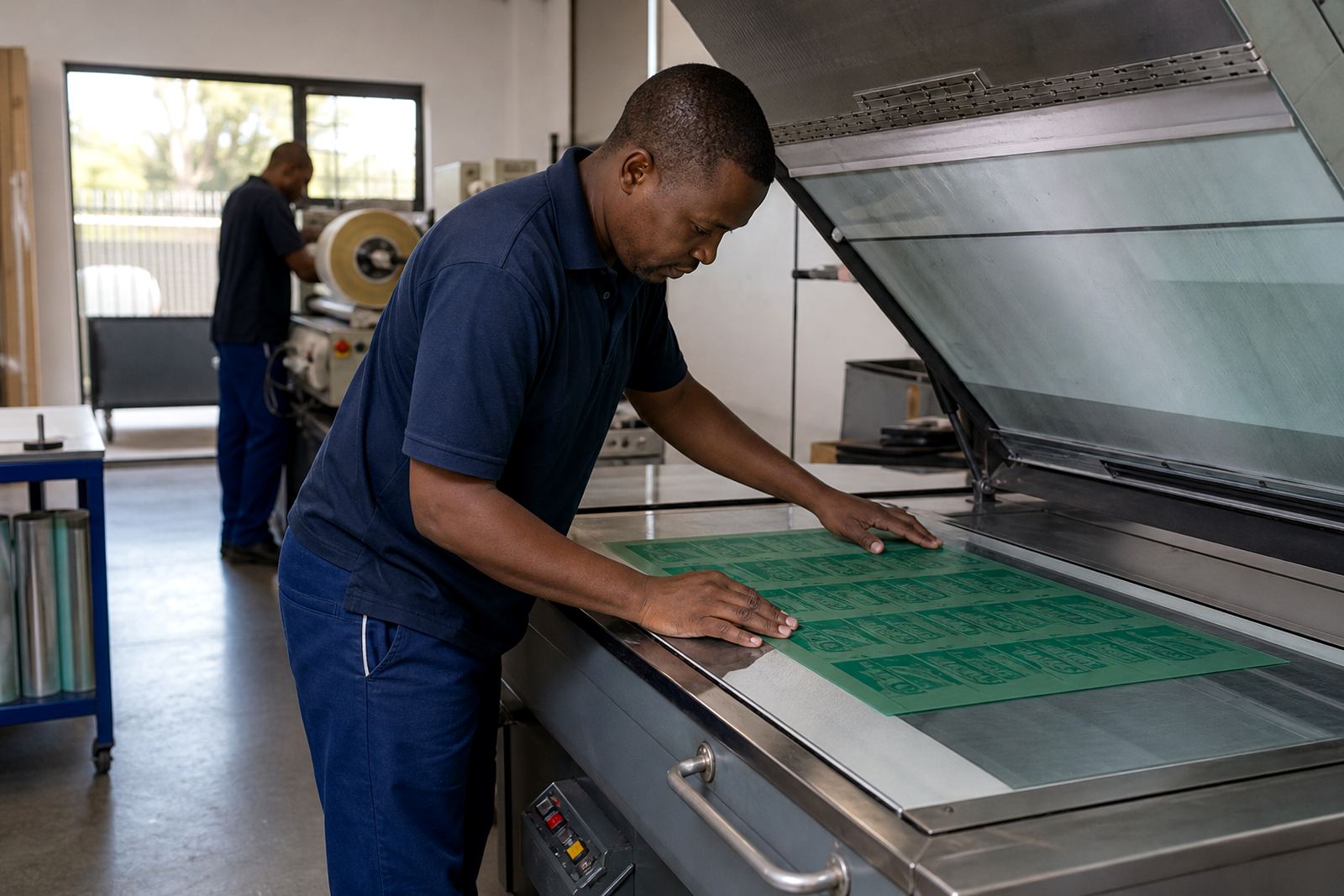
A good multi up layout uses the plate surface efficiently while keeping enough space for clean cuts, labels, and handling marks. It also helps avoid placing fine details too close to the edge where damage can happen during trimming or mounting. On some jobs, a few millimetres of thought at the planning stage saves a full remount later.
The aim is not to cram as many repeats as possible onto one plate. It is to place repeats in a way that suits the press, the substrate, and the job spec. In label work, for example, a narrow repeat may allow more across the plate, while a carton job may need more spacing for stability and clean registration. The best layout is the one that supports production, not just the one that looks full on screen.
- Less plate waste from poor nesting and excessive offcuts
- Fewer handling marks when plates are trimmed and packed
- Cleaner mounting because repeats are easier to align
- Lower chance of remake caused by crowding or uneven spacing
When a job is planned this way, the printer spends less time compensating for a bad layout and more time printing.
What to check during artwork and imposition planning
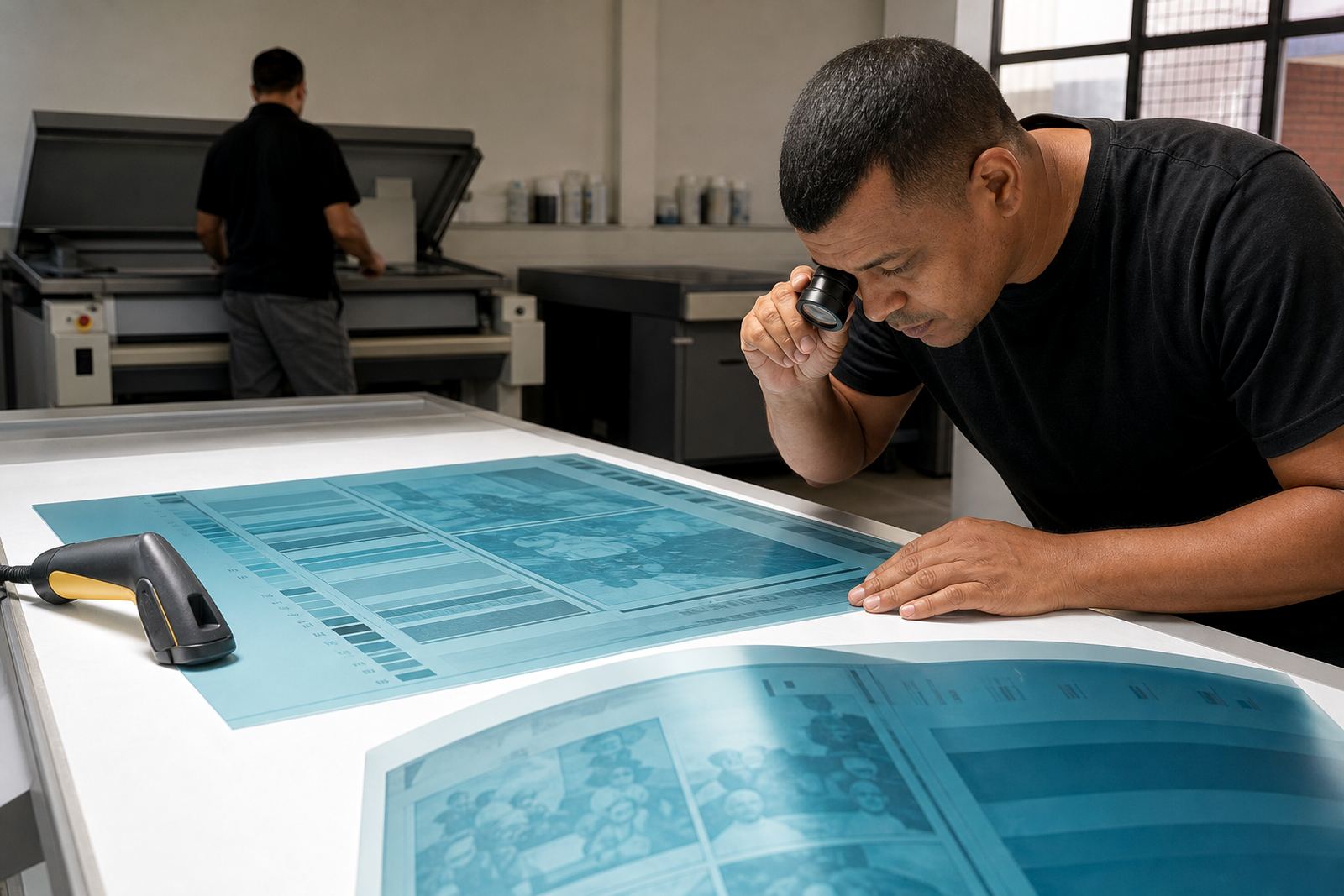
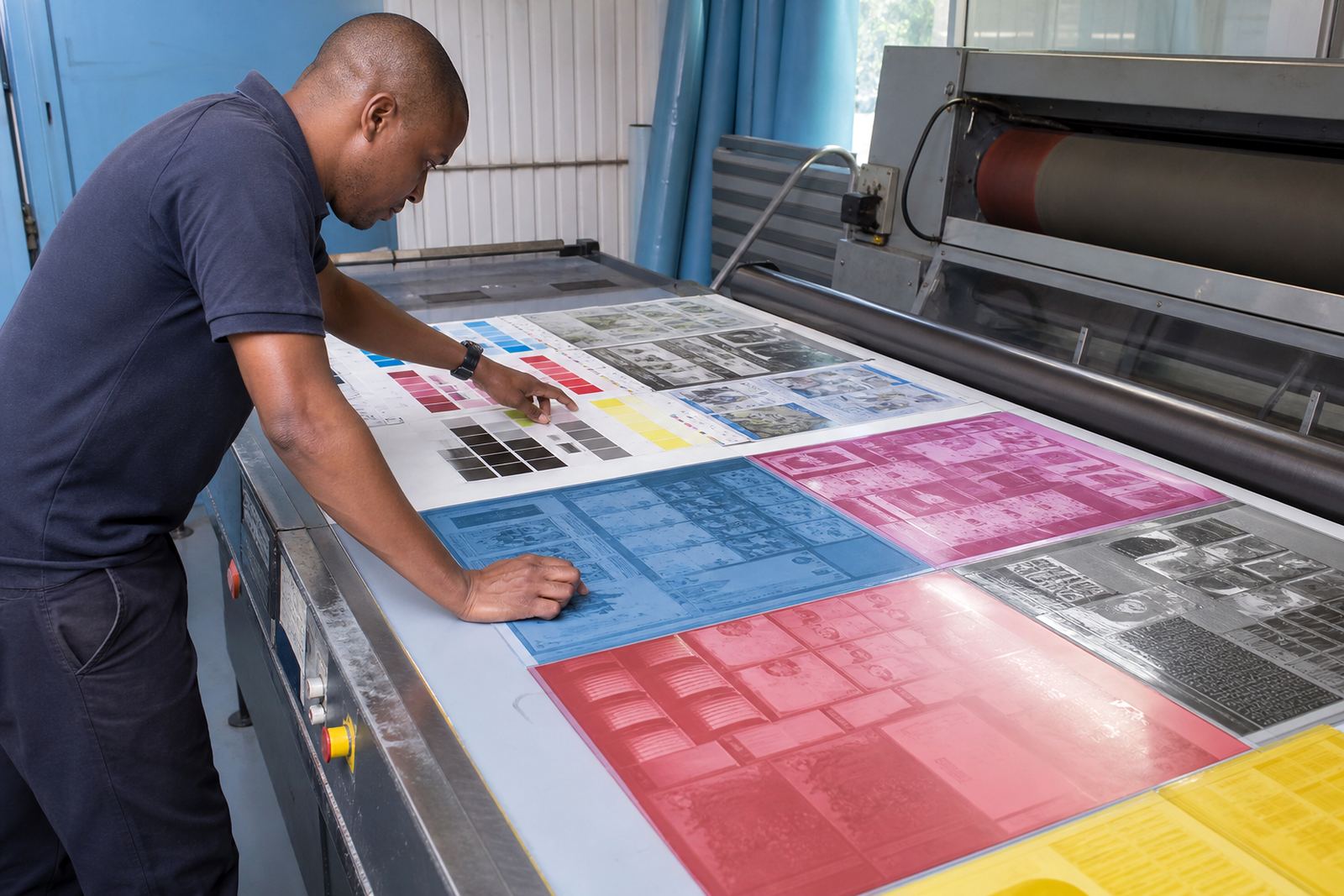
Multi up layouts should be checked before platemaking begins. Artwork may look ready, but the actual plate layout needs to account for repeat count, screen direction, trap, sheet size, and the physical limits of the press. That is why artwork preflight and imposition planning sit so close to plate making in a proper production flow.
Some of the common checks include image position, cut line placement, bleeds, and whether the repeats are balanced across the plate. If there are solids, fine reverses, or small type, those elements need extra attention because they can show problems quickly on press. A plate that is technically correct but badly arranged can still cause trouble during make-ready.
- Check repeat size against the press and plate size
- Confirm where the image sits in relation to trim and cut marks
- Review screening support for fine detail and tonal work
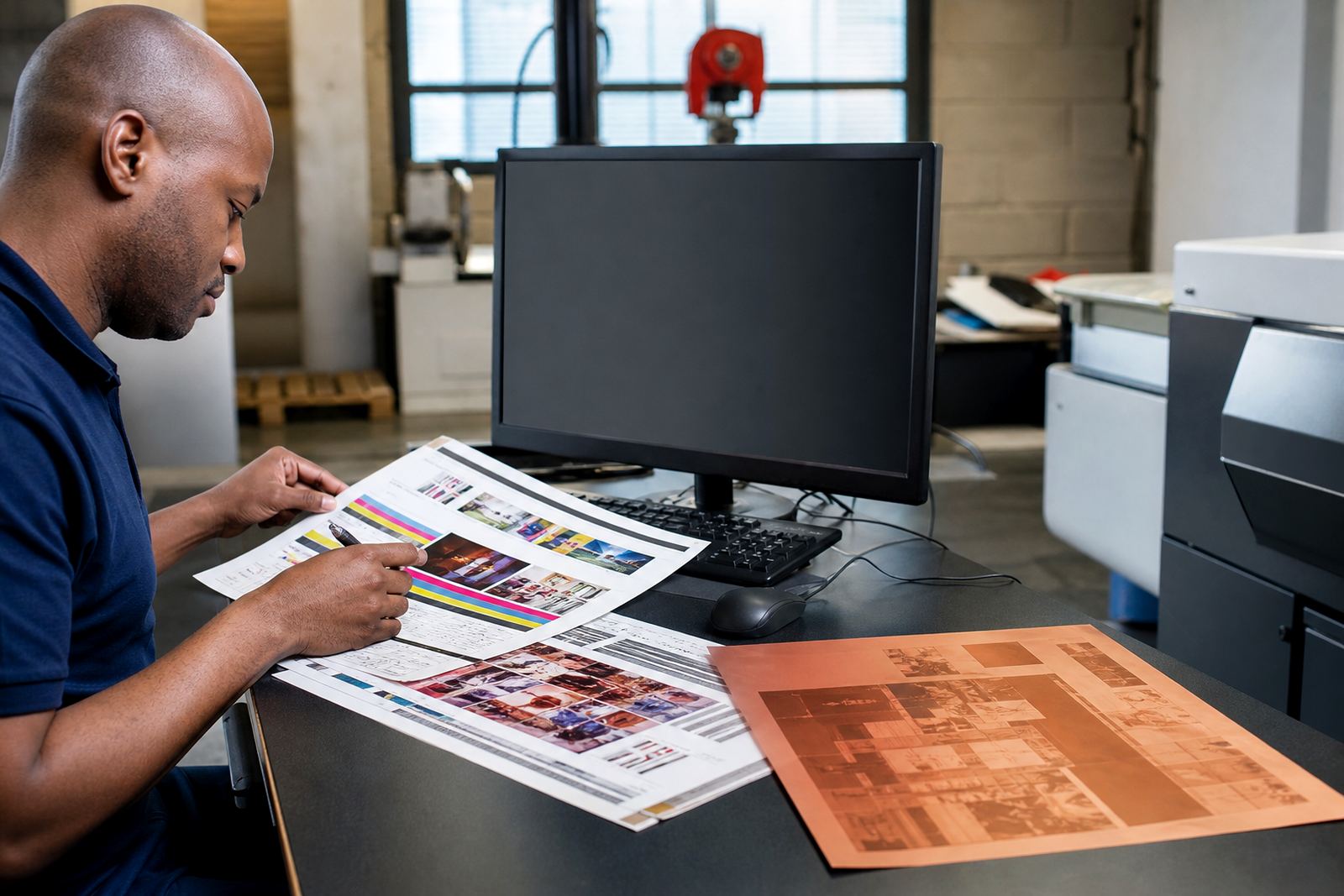
- Compare proofs so the final layout matches the approved job
- Allow space for labelling and identification after trimming
At Flexo Printer Plates in Midrand, this stage is often where a small adjustment makes the rest of the job easier. A simple change to repeat spacing can help the whole run behave better on press.
A local example from Midrand to Durban
Consider a packaging printer in Midrand handling a short run of labels for a Durban customer. The job needs several repeats on each plate, with fine text, a barcode, and a solid background. If the layout is set without enough thought, the printer may face uneven mounting and slow registration. That costs time and can affect the first cartons or labels off the press.
With proper planning, the repeats can be positioned to suit the press cylinders and the trimming method. The plate arrives labelled, packed for easy identification, and ready for mounting with less guesswork. The same approach helps when the finished job has to move by courier to Johannesburg, Pretoria, Cape Town or Gqeberha, because the pack-out is neater and easier to check on arrival.
In practice, this is where technical job advice matters. A printer may know the final product well, but the plate team can help match the artwork to the reality of the pressroom. That support is especially useful when a customer is switching between substrates or needs a repeat order adjusted for a new line speed.
Practical benefits for short runs and repeat orders
Multi up layouts are useful on both small and larger jobs. On short runs, the printer wants less handling and quicker make-ready. On repeat orders, the goal is consistency from one run to the next. A disciplined layout keeps the plate set easier to store, identify, and remount later.
This is also helpful for businesses working through load-shedding, tight dispatch windows, or shared press time. When the plate is prepared well, the crew can get on with the job instead of checking basic details again. For packaging and label printers, that kind of preparation can support better scheduling and fewer surprises at the machine.
- Cleaner repeatability for future reorders
- Faster set-up on multi station presses
- Better storage and identification after plate trimming
- More predictable output when the same job is run again
Our team in Midrand includes production, prepress, mounting, logistics, and client service roles, so each job can be checked from more than one angle. That helps keep the layout practical, not just neat on paper.
When to ask for plate layout advice
It is worth asking for advice before the file is sent for platemaking if the job has multiple repeats, tight deadlines, or unusual dimensions. The same applies when a customer is unsure how the artwork will sit on the press, or when a remake needs to match an earlier job exactly. A quick review at the start can save a great deal of back and forth later.
Our service is built around plate making, file checking, proof comparison, plate trimming, plate labelling, remake support, dispatch packing, and collection coordination. That means the question is not only whether the plate can be made, but whether the layout will work in a real production environment. For printers in Gauteng and across South Africa, that sort of practical support can be useful when jobs have to move quickly and still stay accurate.
Clients reach us through the enquiry form on our contact page, and we work with printers in Midrand, Johannesburg, Pretoria, Durban, Cape Town, Gqeberha, East Rand and West Rand. If a multi up layout can make the job easier, we will point it out before the plate goes to press.