
Why packaging plate planning starts before the plate room
When a packaging order lands, the pressure is usually on the print result, but the real work starts much earlier. Plate planning is where the artwork, repeat length, trim allowance, mounting layout and press setup are checked together so the job can run with fewer surprises. For label and packaging printers in Gauteng and across South Africa, that early coordination can make the difference between a clean first run and a pile of avoidable adjustments.
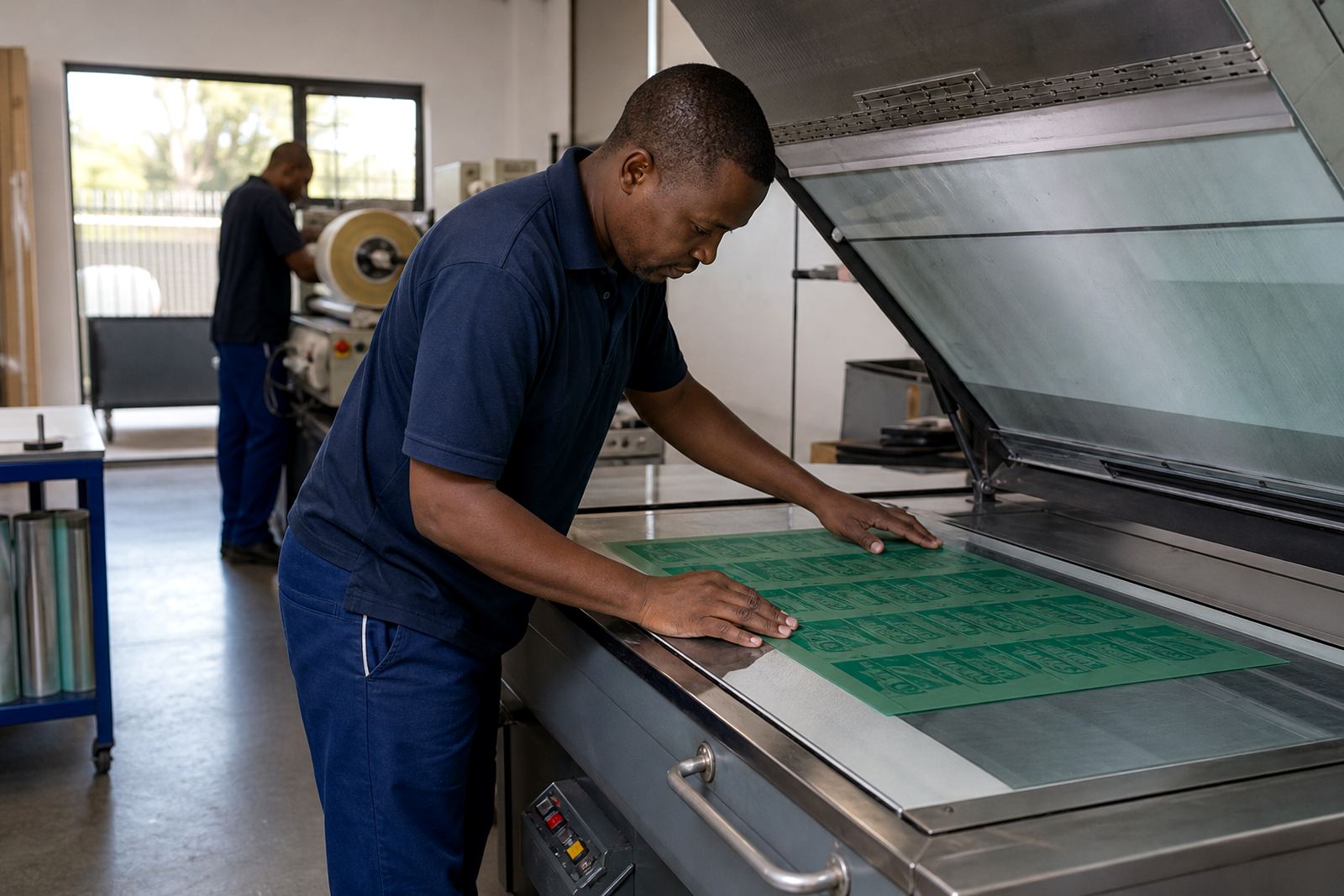
Flexo photopolymer plate-making is rarely just a matter of making a plate to size. Packaging jobs often have small type, fine lines, solids, varnish areas and repeat-based artwork that all need to line up properly. If the image is not planned for the press cylinder, the substrate and the finishing process, there is a risk of distortion, waste and extra handling. That is why a practical prepress conversation matters before anything is trimmed or labelled.
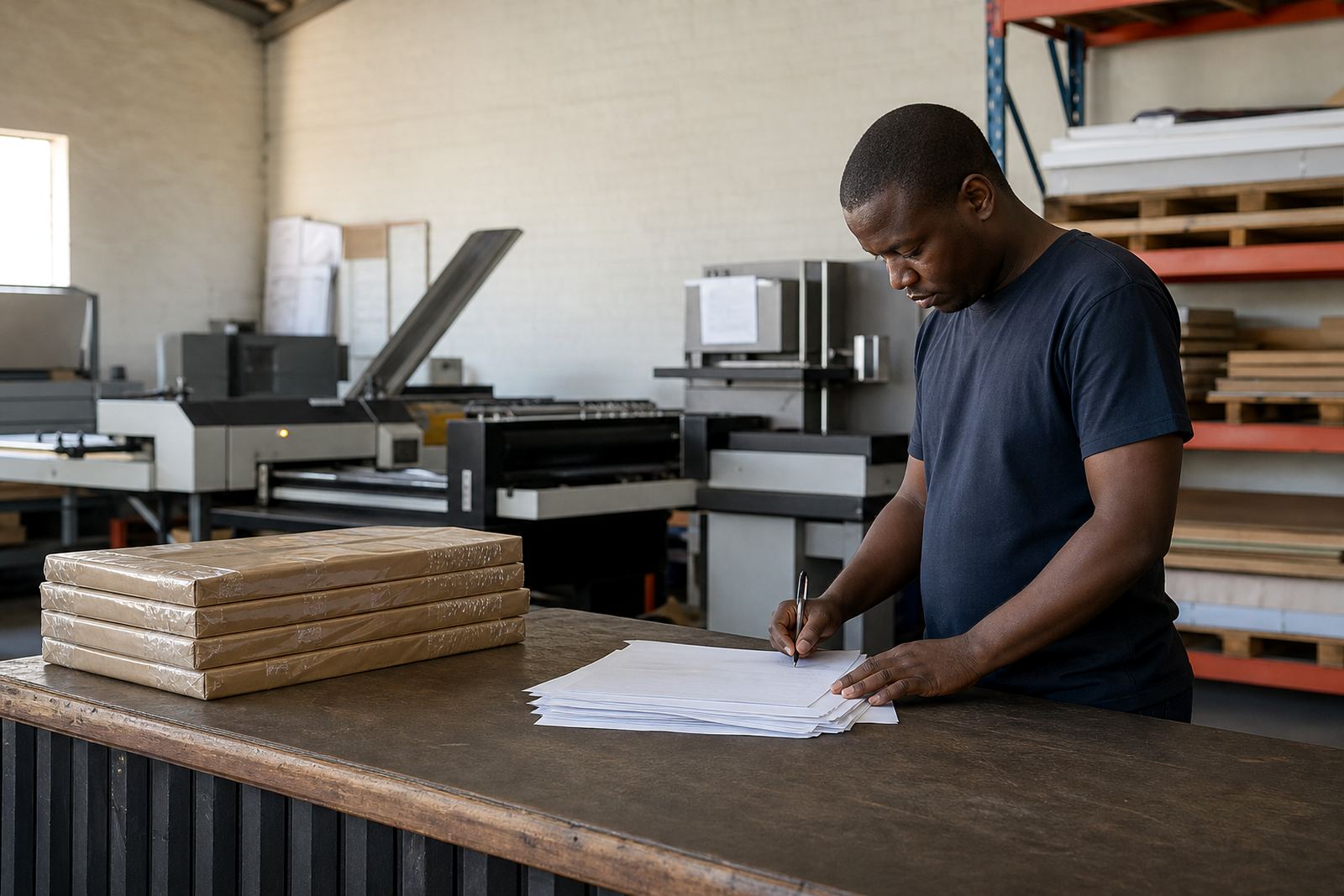
At our Midrand base, the focus is on work that has to travel well too. Many customers need courier delivery into Johannesburg, Pretoria, Durban, Cape Town and Gqeberha, so plates must be packed and identified carefully. A job that leaves the plate room with clear labels, correct orientation and proper dispatch packing is far easier to manage once it reaches the press floor.
The checks that save time on packaging repeats
Before a packaging plate is made, the artwork should be checked for technical details that affect print quality. These checks are especially useful when the design includes repeated panels, panels that change on each pack size, or small copy that sits close to a fold or seam.
- Confirm the repeat length against the press setup and finished pack size.
- Check that barcode areas, small text and legal copy have enough space.
- Review solid areas for ink build-up and possible trapping issues.
- Look at reverse type carefully because thin strokes can fill in on press.
- Make sure dieline marks, cut lines and registration points are easy to follow.
Artwork preflight and file checking are not box-ticking exercises. They help spot problems such as missing elements, low-resolution images, incorrect overprints and file corruption before the job is committed to plate production. On packaging work, even a small fault in a repeated image can show up across the whole run, so it pays to catch it early.
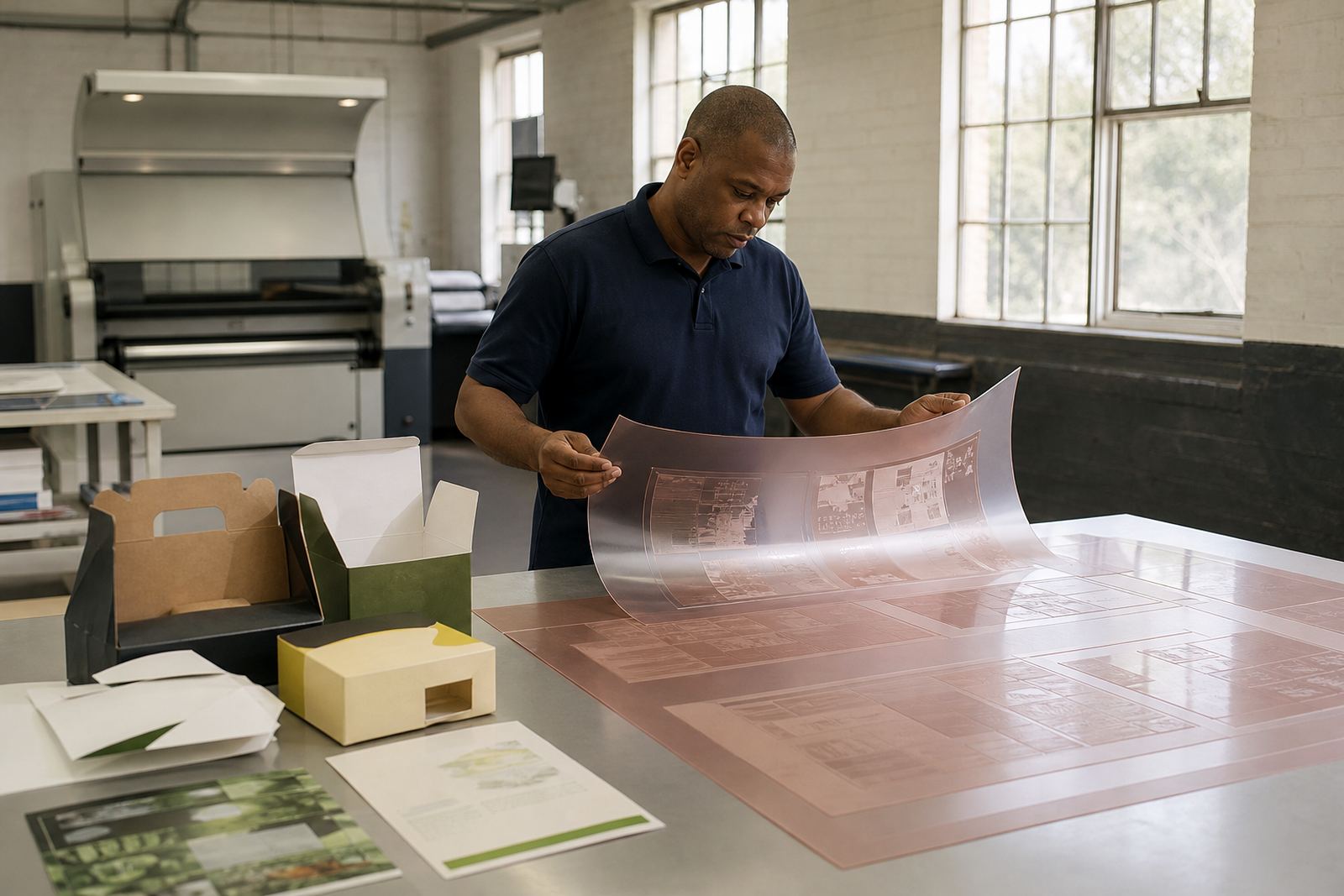
A good proof comparison also helps. It gives the printer and client a shared reference for what should appear on the finished plate and what should not. That matters when there are multiple panel sizes, different pack counts or a version change to the artwork.
How imposition and screening affect the final print
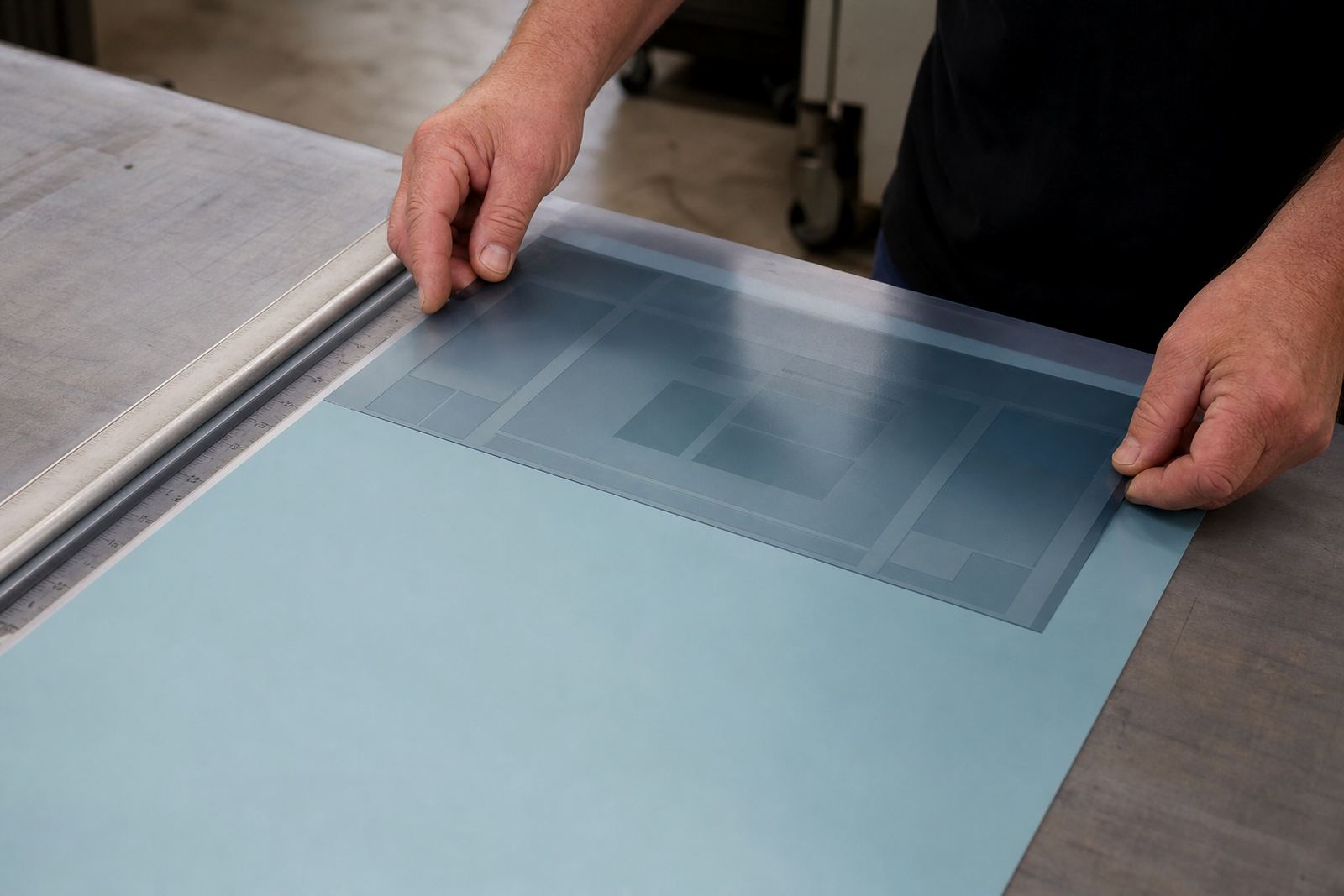
Imposition planning is the part where the layout is arranged for practical printing. It is not only about fitting artwork onto a sheet or cylinder, but about placing the image in a way that supports the press setup, the substrate width and the trimming plan. If the imposition is off, the operator may have to compensate later and that is where time gets lost.
Screening support is also important for packaging. Fine screens can improve tonal detail, but they must suit the plate, the ink system and the material. A label printer running on coated stock may need a different approach from a packaging printer working on corrugated board or film. The wrong screening choice can make highlights disappear or solids look uneven.
In South African print rooms, load shedding and variable humidity can also affect handling conditions. Plates need to be stored and moved in a way that avoids dust, bending and heat exposure. In coastal areas, moisture can add another layer of care, especially when jobs are being moved between the plate room, warehouse and courier collection point.
A Midrand example: a short-run label order for a pack change
Picture a Midrand label printer handling a pack change for a food product. The job has a new ingredient panel, a revised barcode and a slightly longer warning line. The customer wants the plates sent to a plant in Gauteng, with extra sets going by courier to another site in Durban. There is no room for guesswork because the repeat must match across all versions.
In a case like this, the planning process would usually cover the artwork version, the repeat length, the trim allowance and the order in which the plates will be mounted. If the text block sits too close to the edge, it may need a small adjustment before plate production. If the barcode needs cleaner contrast, that should be reviewed during proof comparison, not after the press has started.
Plate trimming and plate labelling are also critical here. The printer needs to know which plate is for which colour, side and version. Clear labels reduce confusion on press, especially when a job is split across more than one site or mounted later in the week. A small mistake in identification can slow the whole run, so the packing and dispatch stage matters as much as the plate-making itself.
What packaging printers should send with every order
Good pack jobs are easier to handle when the job ticket is complete. The more useful information that arrives upfront, the fewer follow-up calls are needed and the faster the plate room can work through the order.
- Final artwork files or the latest approved version.
- Finished size, repeat length and any panel changes.
- Press details where available, including cylinder size or mounting setup.
- Any special notes on screening, solids or reverse type.
- Delivery instructions for collection coordination or courier dispatch.
Technical job advice is often valuable here too. Some jobs need a small artwork adjustment, while others only need better sequencing. In both cases, the goal is to avoid avoidable remake support later. When the first batch of plates is right, the press team can stay focused on production instead of fixing preventable issues.
For printers working under tight schedules in Johannesburg, Pretoria, East Rand or West Rand, the cleaner the handover, the better the flow. That is especially true when a packaging order includes multiple SKUs or several language versions, because every extra variation needs its own careful check.
How plate dispatch supports printers across South Africa
Once plates are made, the job is not finished until they are on site and ready to use. Dispatch packing should protect the plates from bending, scuffing and heat during transport. Clear outer labelling helps the receiving team identify the correct set quickly, which is useful when several jobs arrive on the same day.
From our Midrand base, we support collection coordination and courier delivery across South Africa, including Johannesburg, Pretoria, Durban, Cape Town and Gqeberha. That reach matters for packaging printers who manage work across more than one facility, or who need a plate set sent directly to a remote production site. The aim is simple: the right plate, in the right condition, at the right place.
Flexo Printer Plates, founded in 2007 and led by Sibusiso Mthembu, works with a team that handles production, prepress, mounting, client services and logistics in a practical way. That structure helps with the full chain, from file checking to plate labelling and dispatch packing. For packaging work, that chain needs to hold together because the pressroom only sees the final product, while the real success starts much earlier.