Why plate thickness changes the way ink prints
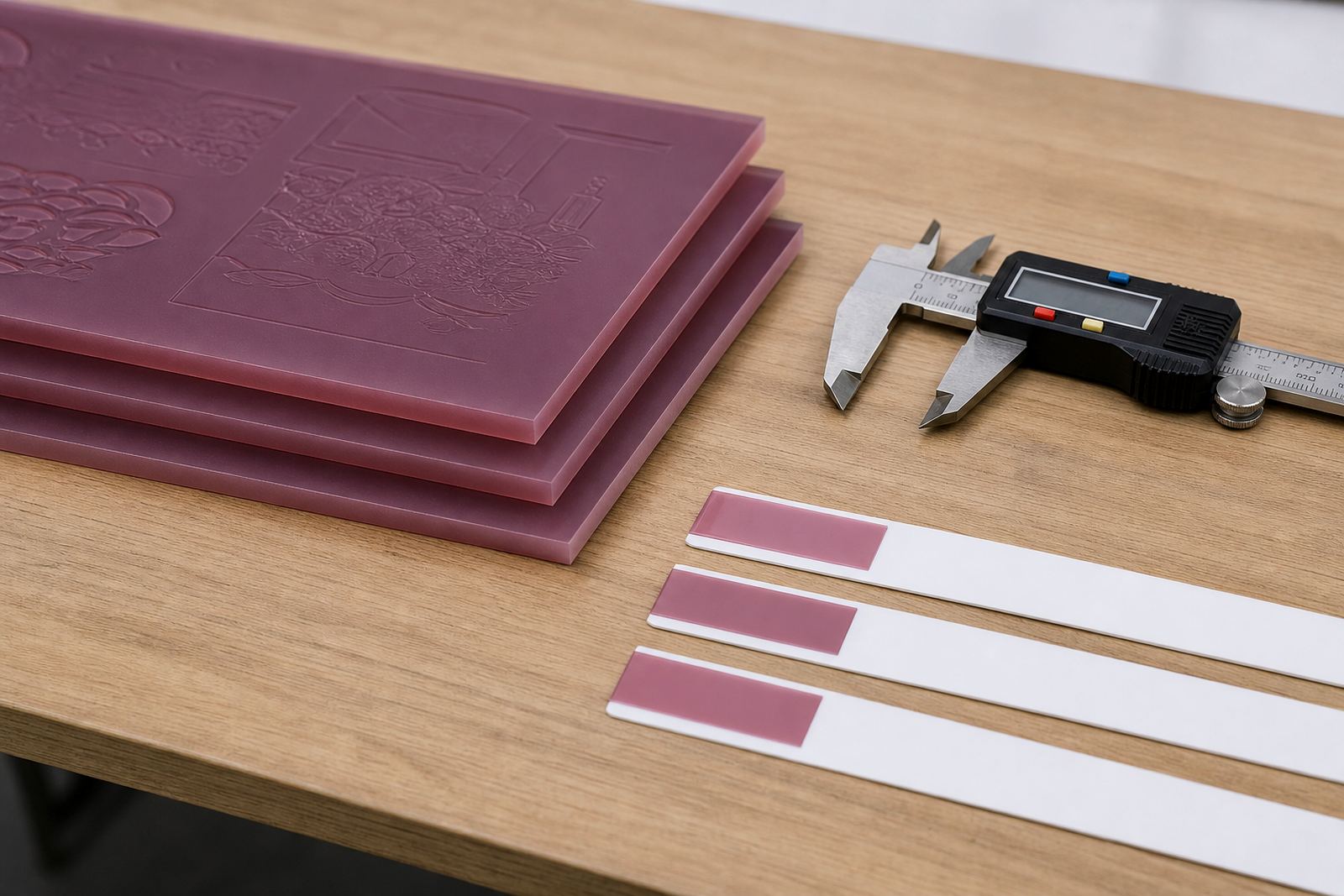
In flexo photopolymer plate-making, thickness is not just a materials choice. It affects impression, relief depth, dot support and how the plate behaves under pressure on press. A plate that is too thin for the job may not carry solids properly. One that is too thick can make fine detail harder to control, especially on shorter runs or narrow-web label work.
For label and packaging printers in Midrand, Johannesburg or Pretoria, the right thickness often depends on the print substrate, the artwork and the press setup. Film, paper, board and corrugated all ask different things from the plate. If the plate does not suit the application, operators may fight with gain, uneven laydown or text that looks soft at normal reading distance.
As a rule, plate thickness should be chosen with the whole job in mind, not only the image file. That means thinking about anilox selection, substrate tension, press speed and whether the job has fine reverses, solids or small type. It also means checking what the customer expects on shelf or in the pack house, because a neat proof can still print differently once the plate and press are working together.
Common thickness choices for label and packaging work
There is no single thickness that suits every flexo job. Thin plates are often used where fine detail matters, while thicker plates may be better where stronger impression is needed or where the press setup calls for it. The right choice usually comes from the combination of artwork and machine conditions, not from guesswork.
When we check a file for plate making, we look at the smallest text, line weights, screen values and whether the design carries solid areas that must stay even. A plate that suits a simple product label may not suit a carton or a heavy coverage packaging job. Coastal humidity can also affect handling and storage, so it helps to keep plate materials stored properly before mounting and dispatch.
- Fine text and small rules need careful thickness selection so edges stay clean.
- Solid areas need enough support to print without patchiness or banding.
- Longer runs benefit from a plate that stays stable under repeated pressure.
- Mixed artwork, such as text with screening and solids, often needs a balanced choice.
For printers working across South Africa, consistency matters as much as speed. If the plate thickness is matched well from the start, press crews spend less time correcting set-up problems and more time keeping the job on colour and register.
How substrate and press type affect the choice
The same artwork can print differently on self-adhesive labels, shrink sleeves, cartons or corrugated packaging. A thinner plate may suit a smooth label stock, while a more suitable thicker option may be needed on a rougher surface where the image has to bridge texture. Paper board, for example, can absorb ink differently from film, so the plate needs to work with that behaviour rather than against it.
Press type matters too. Narrow-web presses used for labels usually need tighter control on fine detail and repeat accuracy. Wider packaging lines may call for a different setup where impact, coverage and mounting tolerance become more important. If the plate thickness is not matched to the press, registration can drift and make plate adjustment more difficult during the run.
In practice, a good prepress conversation saves time. For a Durban label printer handling a hot, humid week, or a Cape Town packaging line working through load-shedding schedules, the plate choice should support stable running conditions and simple handling. That is why technical job advice, file checking and imposition planning are worth doing before production starts.
What happens when plate thickness is wrong
Plate issues often show up on press before anyone sees them in the file. If a plate is too thin for the job, the print can look weak, especially in solids and heavier coverage areas. If it is too thick or not suited to the press, small reverses may fill in, text can lose sharpness and the job may need repeated adjustment.
There are also practical handling problems. A mismatched plate may trim poorly, mount unevenly or sit awkwardly on the cylinder. That can create unnecessary waste and slow down the team. In busy production, those delays are costly, particularly when collections and courier dispatches have to line up with customer deadlines.
- Poor plate match can cause uneven pressure across the sheet or web.
- Fine detail may close up or print softer than expected.
- Solids may show streaks, weak patches or mottled coverage.
- Press operators may need more make-ready time and extra remakes.
Where a job needs a remake, it is better to fix the root cause than to keep reprinting the same problem. That is why plate trimming, labelling, remake support and proof comparison are part of a sensible workflow, not just extras added at the end.
A Midrand example: matching plates to a short-run label job
Consider a Midrand printer handling a short-run label for food packaging with small ingredient text, a barcode and a solid brand block. The customer wants crisp text, clean barcode reading and even colour on a smooth self-adhesive stock. If the plate is chosen without checking the detail, the job can start with avoidable issues.
In a case like this, the prepress team would check the file, confirm the smallest text size, review the barcode area and compare the artwork against the expected press conditions. If needed, the plate setup can be adjusted so the fine text stays readable while the solid block still prints with enough strength. The result is a cleaner run and less time spent on correction at the press side.
That kind of thinking is useful for printers across Gauteng and further afield too. Whether the job is going to Johannesburg, Pretoria, East Rand or West Rand, the aim is the same: choose the plate thickness that supports the print rather than forcing the press to compensate.
How to brief your plate supplier before production
The more useful information you give at the start, the better the plate choice will be. A supplier can only advise properly if the job details are clear. That includes the substrate, the press type, the repeat size, the artwork features and whether the run is for labels or packaging. If there is a known issue from a previous job, mention it early so the remake support team can look at the cause.
Before sending artwork, check the file for traps that can affect plate thickness decisions. Extremely small type, thin positive lines, reversed text and dense solids all matter. So does the finished size of the piece and whether it will be mounted with other forms on the same cylinder. Good imposition planning saves rework and keeps the job organised for dispatch packing or collection coordination.
- Send the final artwork and confirm the intended substrate.
- Share press details, including whether the job is for labels or packaging.
- Flag any problem areas such as fine type, reverses or heavy solids.
- Ask for proof comparison if you want to check key elements before plate output.
When the brief is clear, the plate-making process is steadier from start to finish. That helps the team at our Midrand base prepare plates for courier delivery to Durban, Cape Town, Gqeberha and other centres without unnecessary back-and-forth.
Getting the thickness right saves time on press
Plate thickness basics are really about control. A well chosen plate helps the press run cleaner, keeps the print closer to expectation and reduces the chance of repeated adjustments. For label and packaging printers working in South Africa, that means fewer interruptions, better use of materials and less pressure on the production line.
If you are unsure which thickness suits a job, it is worth asking before plate making begins. A practical discussion about artwork, substrate and press conditions can prevent a lot of trouble later. In flexo, a good plate is not just about making an image visible. It is about making the whole job work properly.