
Why pouch artwork needs a different plate plan
Pouch packaging gives you a bigger canvas than a small label, but that extra space can work against you if the plate plan is loose. A pouch often includes front and back panels, side gussets, a bottom seal, a top seal and sometimes a zip or tear notch. Each of those areas changes how the artwork should be set up before plate making starts.
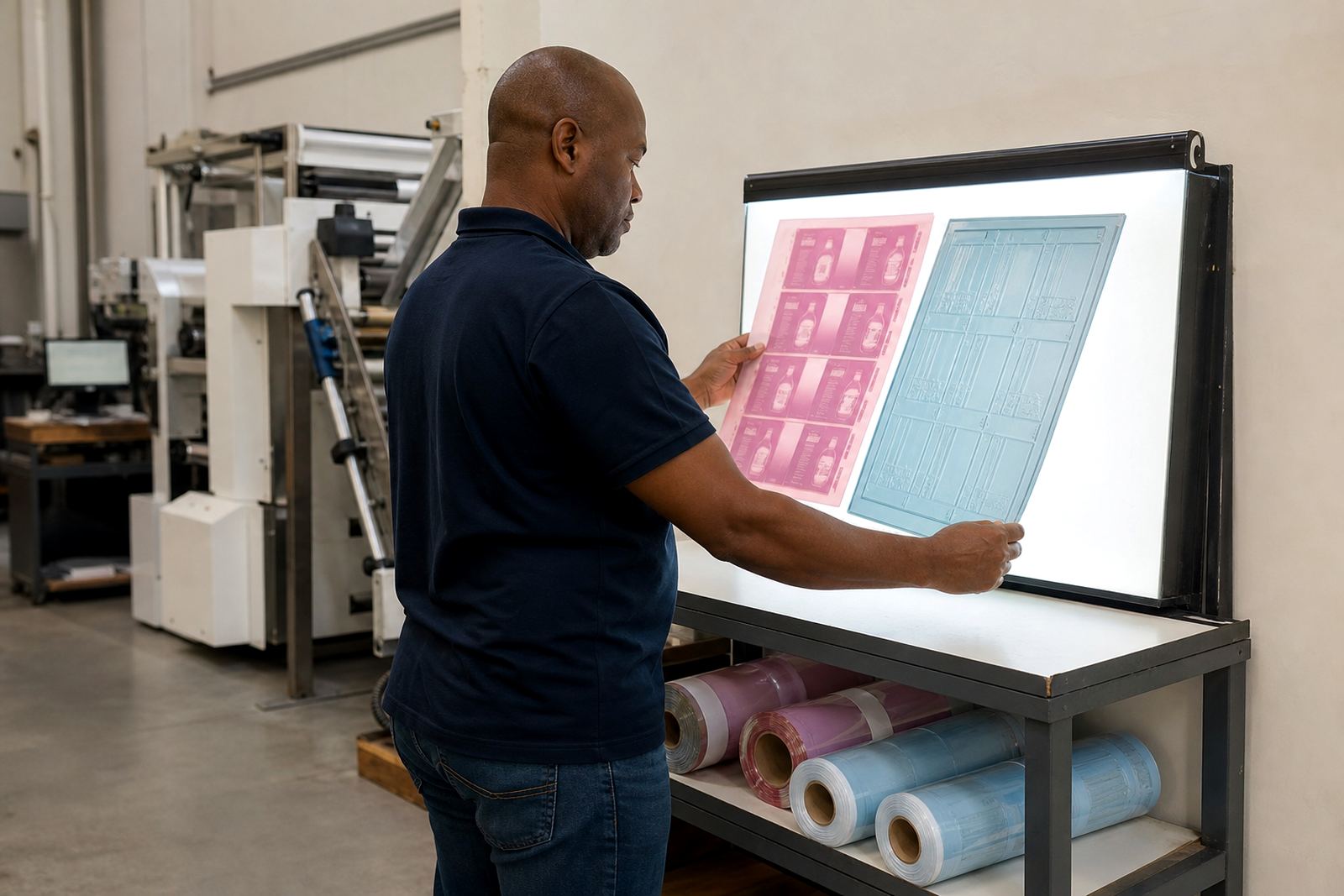
For flexo photopolymer plate-making, the key is to separate decoration from function. A striking image across the front panel is fine, but it must not clash with heat seal areas, registration marks, barcode zones or product information that needs to stay readable after filling and handling. If the artwork crosses a seal line in the wrong way, the result can be a print that looks good on screen but gives problems on press.
At Flexo Printer Plates in Midrand, the first question is often simple: what does the pouch need to do? That answer shapes artwork checks, imposition, screening choices and plate trimming. A pouch for dry goods has different requirements from a retort pouch, stand-up pouch or sachet style pack.
Keep the functional zones clear from the start
Good pouch graphics begin with clear zones. Before any final plate is made, the artwork should show where the seals, cut lines, gussets and closures sit. This makes it easier to protect important text and keep heavy solids away from areas that may distort during sealing or handling.
- Keep legal copy, ingredients and barcodes away from folds and seals.
- Allow enough quiet space around tear notches and zips.
- Check that fine reversed type will still read clearly after printing.
- Make sure image edges do not sit too close to trim or crimp lines.
- Plan large blocks of colour so they do not flood onto seal areas.
On pouch work, a few millimetres matter. A small shift can push a logo into a gusset or make a batch code harder to read. That is why artwork preflight and file checking matter just as much as the plate itself.
How large graphics behave on flexible packaging
Large graphics can look impressive on a pouch, but they need careful screening support to print cleanly. Bold backgrounds, gradients and photographic areas can reveal banding, uneven solids or moiré if the plate setup is rushed. The bigger the printed area, the more important it becomes to manage ink laydown and tonal consistency.
Photopolymer plates are well suited to this kind of work when the file is prepared properly. Fine detail on a pouch front panel can hold well, but only if the image is set up with the press process in mind. For example, a dark block behind white text needs enough contrast to remain readable after lamination or varnishing. A soft fade across the pouch may need screening support so it does not break up in production.
Printers in areas such as Midrand, Johannesburg and Pretoria often run mixed pouch jobs in the same week, from short promotional runs to ongoing packaging lines. That makes consistency important. The plate set should be checked against the approved proof, and any remake support should be planned before the job reaches press if a correction is needed.
Practical checks before plates are approved
Before a pouch job is mounted and packed for dispatch, it helps to work through a clear prepress list. This avoids avoidable remakes and keeps the pressroom moving, especially when deadlines are tight and labour or power interruptions can compress production time.
- Confirm the dieline or pouch layout against the final artwork.
- Check all overprints, knockouts and small reversed text.
- Review image resolution and line weight for flexo print.
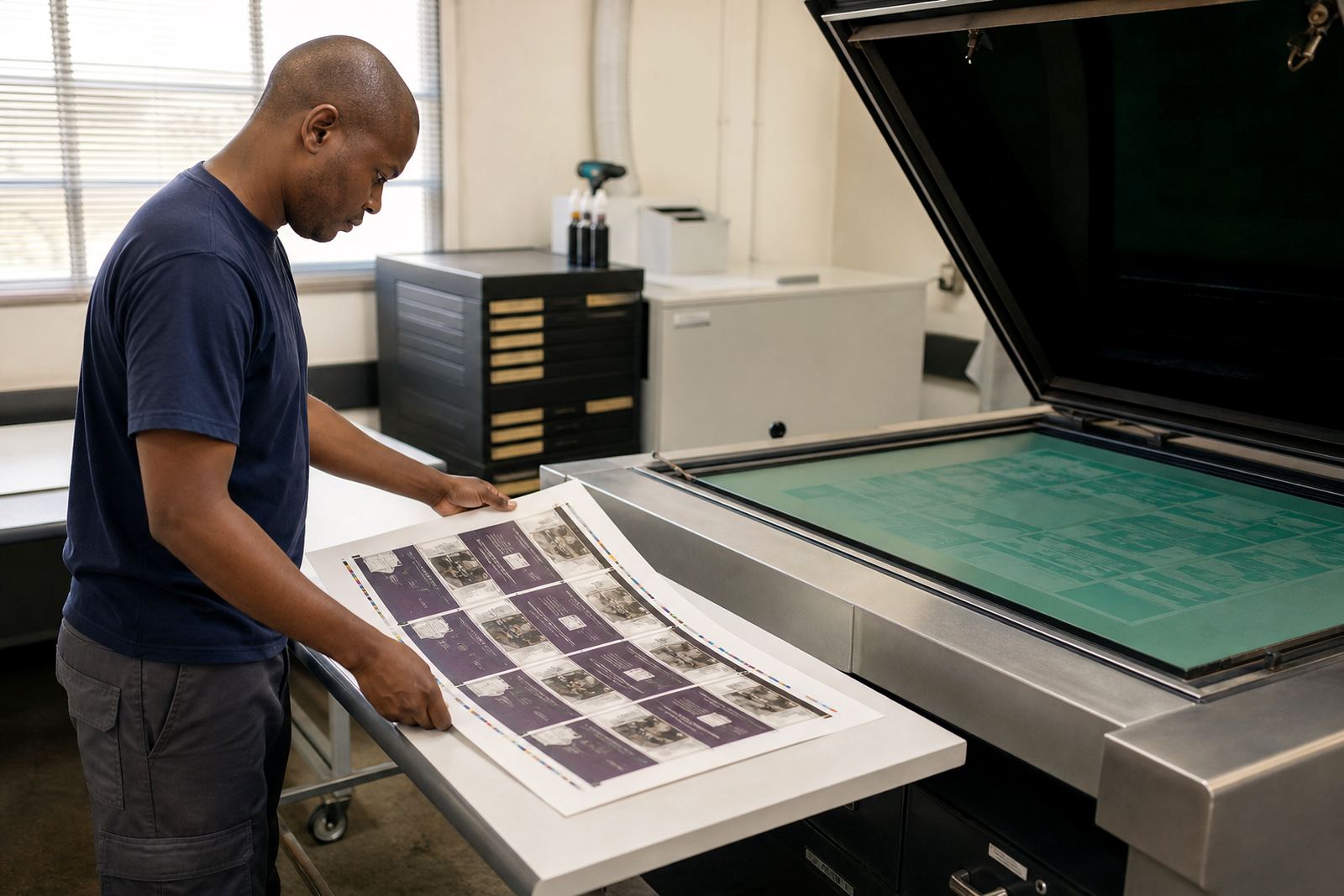
- Compare the proof with the artwork for colour breaks and text changes.
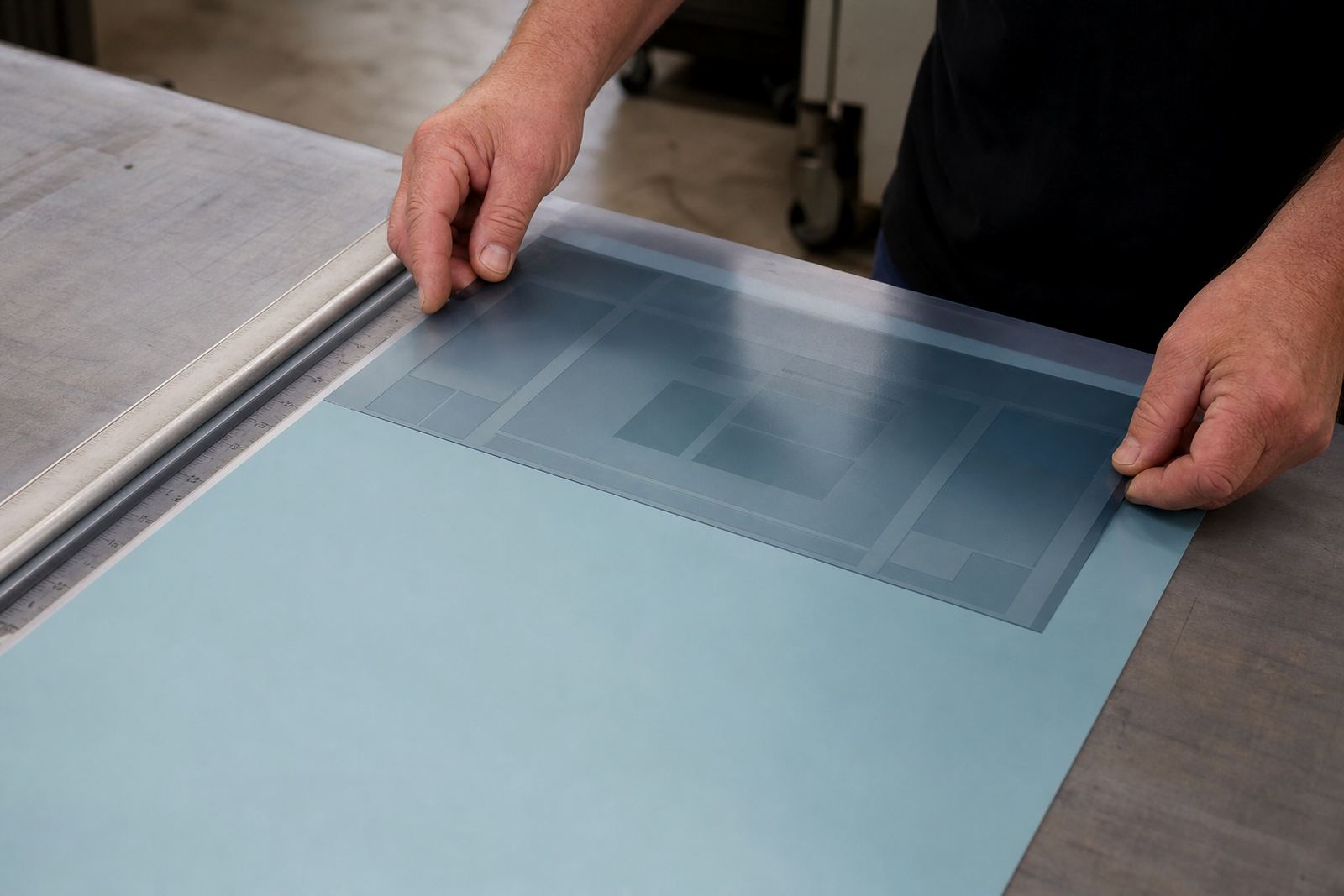
- Verify plate numbering and labelling before plate trimming.
A proper proof comparison is useful where the pouch contains more than one language, or where the same layout is used for several pack sizes. Small changes in the repeat can affect how the pack sits in the bagging line and how the graphics land on the finished pouch.
A local example from Midrand to the coast
Consider a label and packaging printer in Midrand supplying a pouch range to a food producer in Durban. The front panel carries a full-colour product image, the back panel carries ingredients and instructions, and the top seal must remain clean for reliable packing. The job also has a barcode, a batch area and a small logo that has to stay sharp in one colour.
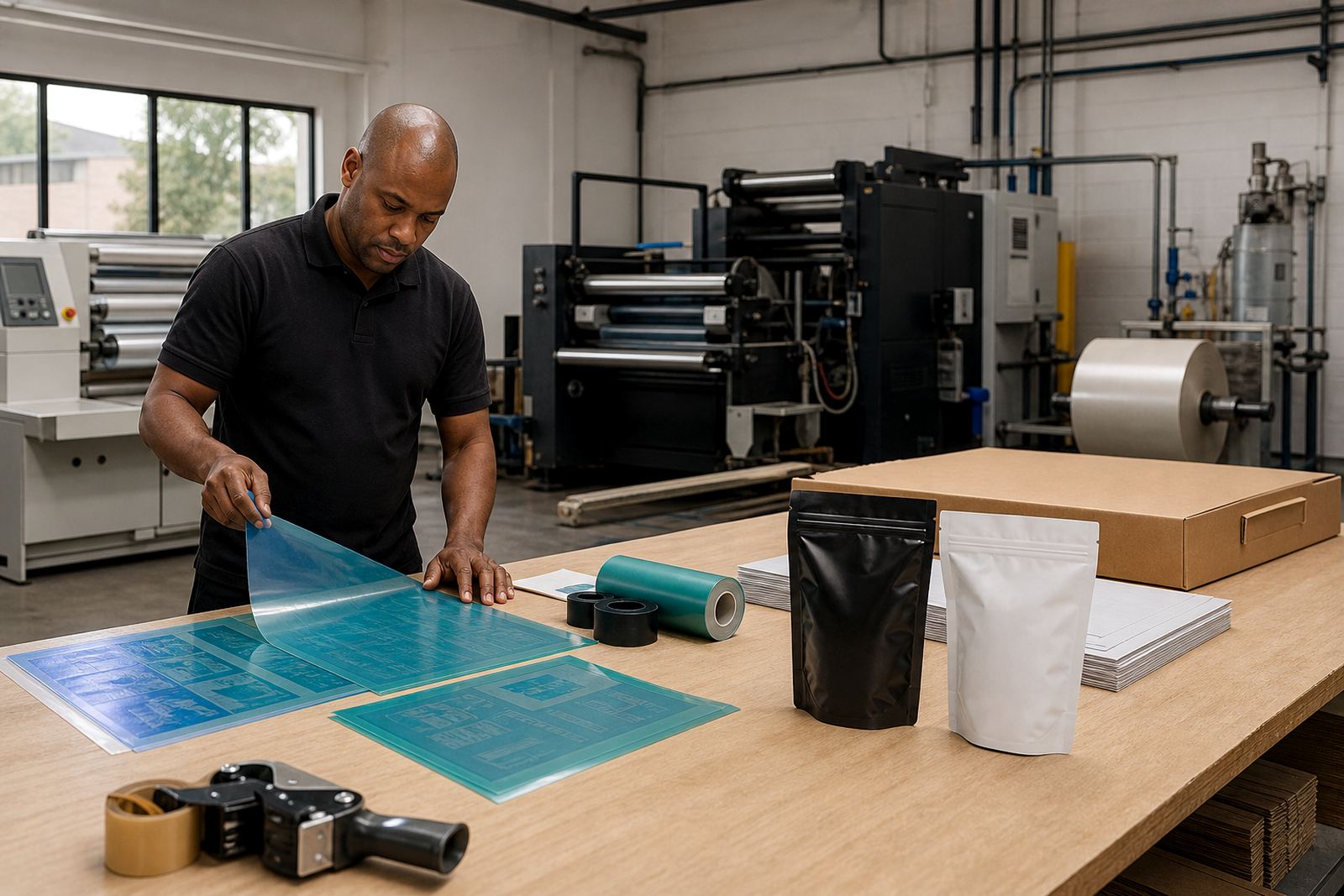
In that case, the plate plan cannot be treated as a simple repeat. The prepress team needs to check the artwork, align the imposition carefully and watch the seal zones closely. If the pouch is travelling by courier to Durban, Cape Town or Gqeberha, the plate set must be packed neatly, labelled clearly and protected well enough to arrive ready for press. Coastal humidity can affect storage conditions, so careful packing matters even when the journey is short.
This is the kind of job where technical advice helps. The right plate choice, the right trim and the right packing sequence can save time on the pressroom floor and reduce back-and-forth after delivery.
What printers should expect from plate-making support
For pouch work, the plate room should do more than just make plates. It should help spot issues early, especially where artwork is carrying a lot of information in a limited space. That is where services such as file checking, imposition planning, proof comparison and plate labelling add real value.
At Flexo Printer Plates, pouch jobs are handled from the Midrand base with courier delivery across South Africa, including Johannesburg, Pretoria, Durban, Cape Town, Gqeberha, East Rand and West Rand. The team can also assist with collection coordination and dispatch packing when a job needs to move quickly between production stages.
The point is simple: pouch graphics work best when the plate plan respects the pack structure. If the artwork is prepared with the seals, folds and functional zones in mind, the finished pouch looks better and prints with fewer surprises.
The short version for pouch jobs
Pouch packaging gives you space for strong visuals, but it also asks for discipline. The artwork must support the product, the pack shape and the press setup at the same time. When the plate plan is built around those needs, the result is cleaner print and fewer production headaches.
For printers handling pouch work across South Africa, careful prepress is not extra work. It is the part that keeps the job moving when the final pack has to look right on shelf and run properly on line.