When a single-up layout makes sense
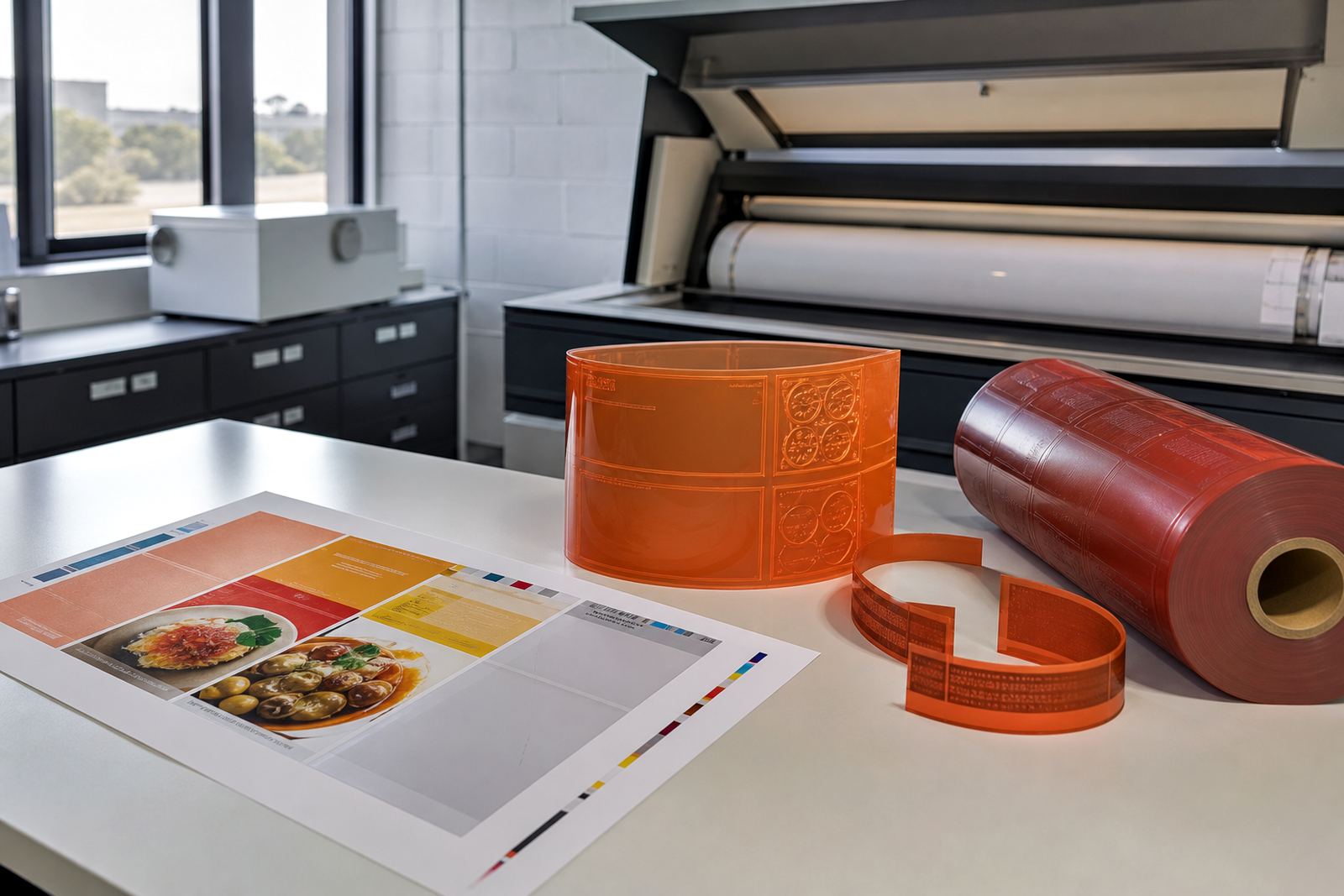
A single-up layout places one image per plate area, rather than nesting several repeats across the same sheet. That sounds basic, but in practice it can save time where the job is straight forward, the repeat is fixed, and the press setup needs to stay uncomplicated. For many label and packaging runs, especially shorter batches or repeat orders with stable artwork, a single-up approach keeps the plate path clear from prepress through to mounting.
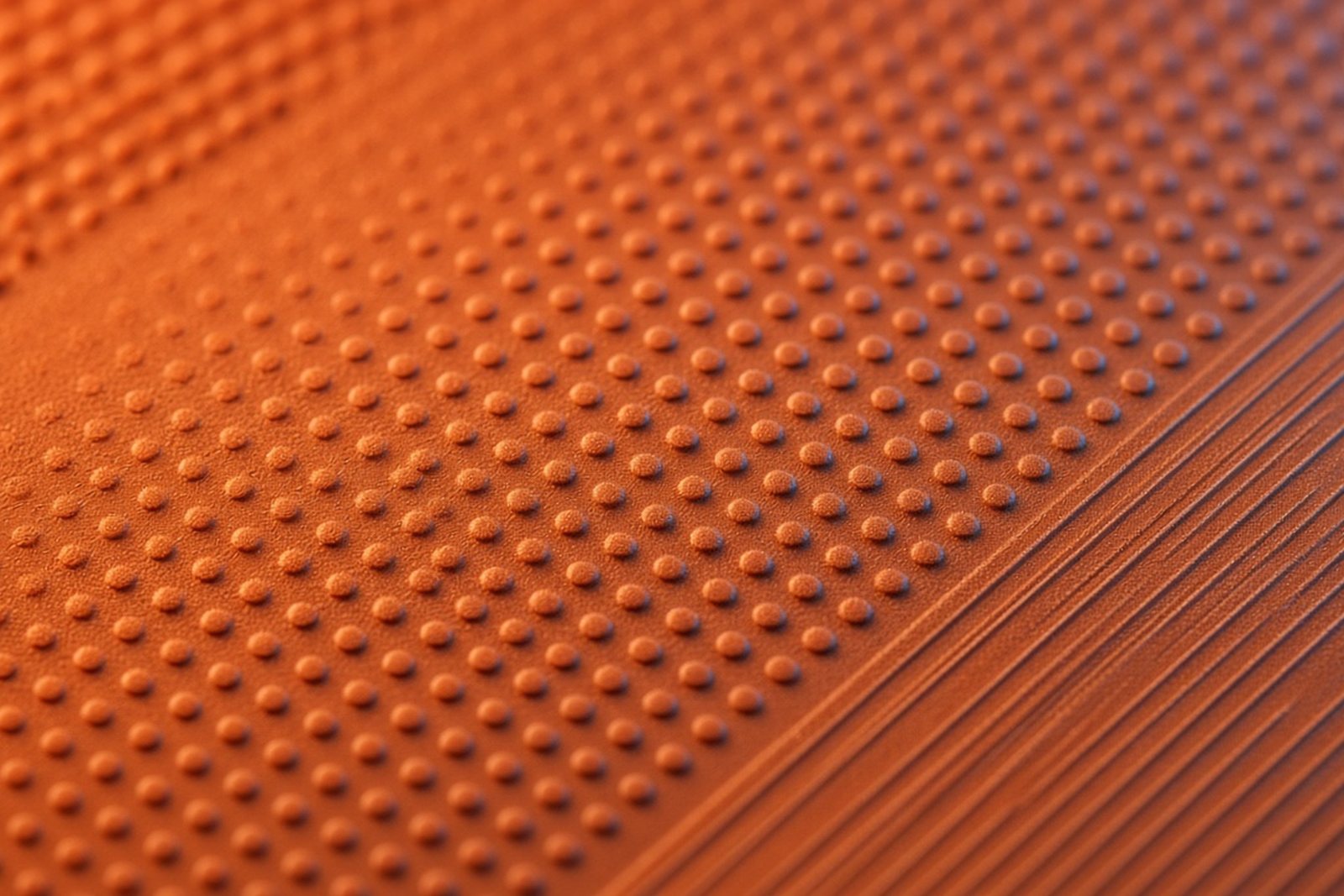
It also helps when the print image needs room to breathe. Fine text, barcode areas, small reverse type and tight traps can be easier to control when the layout is not crowded with extra repeats. On certain jobs, a single-up plate also makes checking easier because there is less noise in the file and fewer chances of confusing one repeat with another.
In a Midrand production environment, that matters. A printer handling day to day work for Gauteng clients may need plates that slot into the schedule without much fuss, especially when the factory is coping with load-shedding, rushed collections, and press time that must be used carefully.
What to check before the plate is made
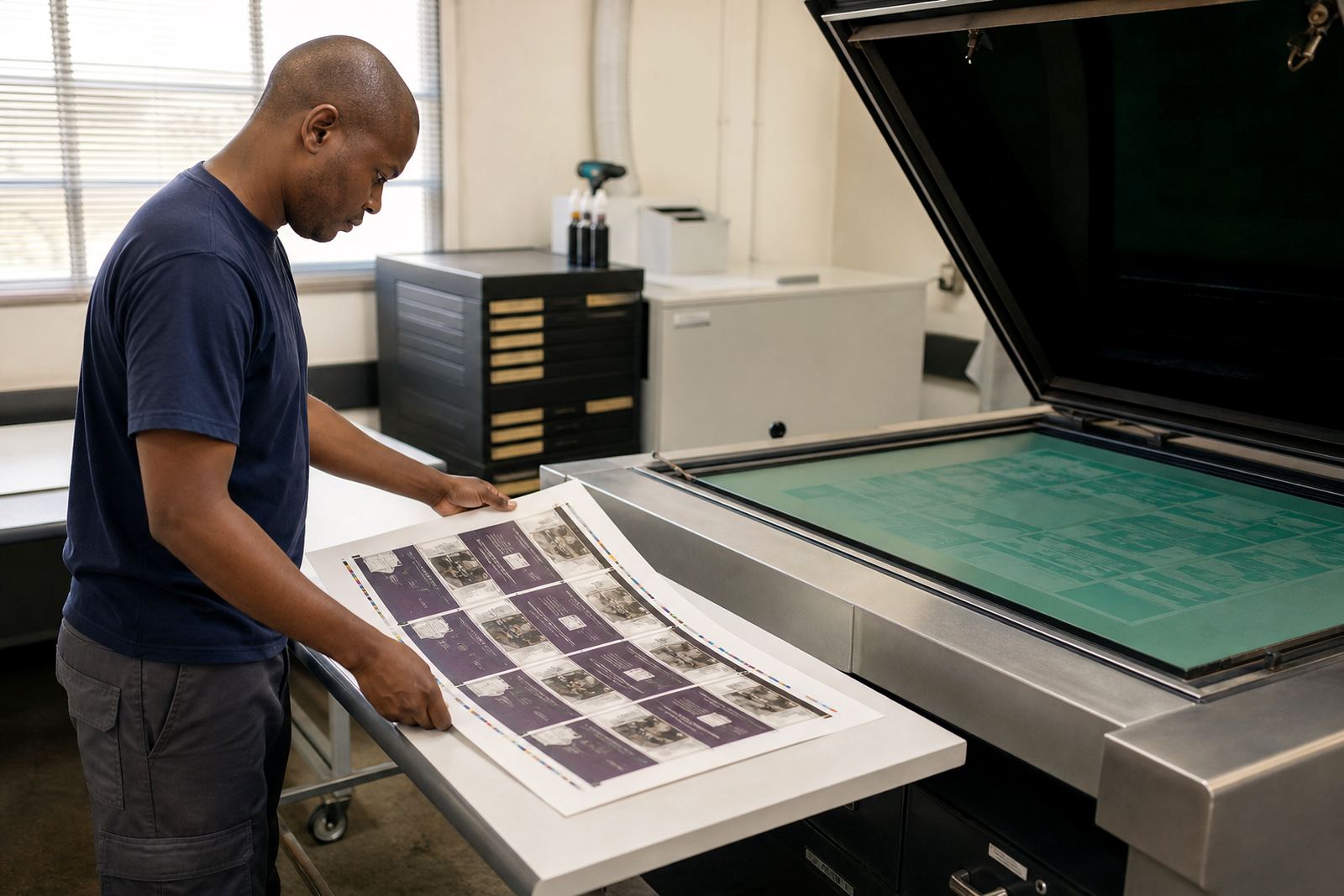
Single-up work still needs proper checking. A simple layout is not the same as a careless one. Before plate making starts, the artwork should be reviewed for size, orientation, screen values, overprints, and any detail that may break down on flexo. If the file is not set correctly, the plate may be accurate to the file but wrong for the press.
Our production process usually starts with file checking and artwork preflight, then moves into imposition planning if the job needs a specific orientation or press direction. For single-up layouts, the main question is whether the plate matches the cylinder, sleeve or mounting system being used. That includes repeat length, spacing, and where the cut or trim will land.
- Confirm the final artwork size in millimetres, not an estimate.
- Check that the barcode and small type remain legible at print speed.
- Make sure colours and spot areas are named clearly in the file.
- Allow for mounting marks and any trim requirement.
- Verify that the press direction is the same as the approved layout.
These steps reduce back-and-forth later on, and help avoid remake work that costs time and money.
Why single-up plates can help with repeat consistency
When one image sits on the plate by itself, repeat consistency is easier to maintain across the run. The printer is dealing with one image zone, one set of edges, and one mounting position. That can be useful for labels with brand panels, flexo packaging with a fixed format, or short runs where the same image must land in the same place each time.
Single-up plates also make proof comparison simpler. If a sample sheet comes back with a colour shift, a broken fine line, or a problem on the reverse, the team can compare the approved proof against one plate position rather than multiple repeats. That can save a lot of time in the pressroom. It is not magic, just less room for confusion.
For printers working in coastal areas like Durban or Gqeberha, or on the Highveld where temperature swings can still affect handling, clean plate labelling and careful dispatch packing matter too. Photopolymer plates should be moved and stored properly so they reach the press in good condition, not bent or marked.
Practical uses in labels and packaging
Single-up layouts are common on jobs where the artwork is already fixed to one panel or one label position. Think product labels, overwraps, simple cartons, sachet text, or promotional packaging with a single design area. These jobs often rely on tidy prepress and accurate mounting rather than complex layout tricks.
They can also suit smaller businesses that need dependable printing without complicated plate sets. A printer in Pretoria might need a straightforward label plate for a local food producer, while a Johannesburg packaging client may want a remake of an established design with no change to the structure. In both cases the plate should support clear ink transfer and consistent registration.
- Single label designs with one fixed repeat.
- Packaging panels that print one image per station.
- Jobs with tight artwork, small text or barcodes.
- Short to medium runs where setup simplicity matters.
- Remake work where the original format must be matched closely.
The common thread is control. If the layout is clean, the plate can do its job without adding complications on press.
How our team handles a single-up plate order
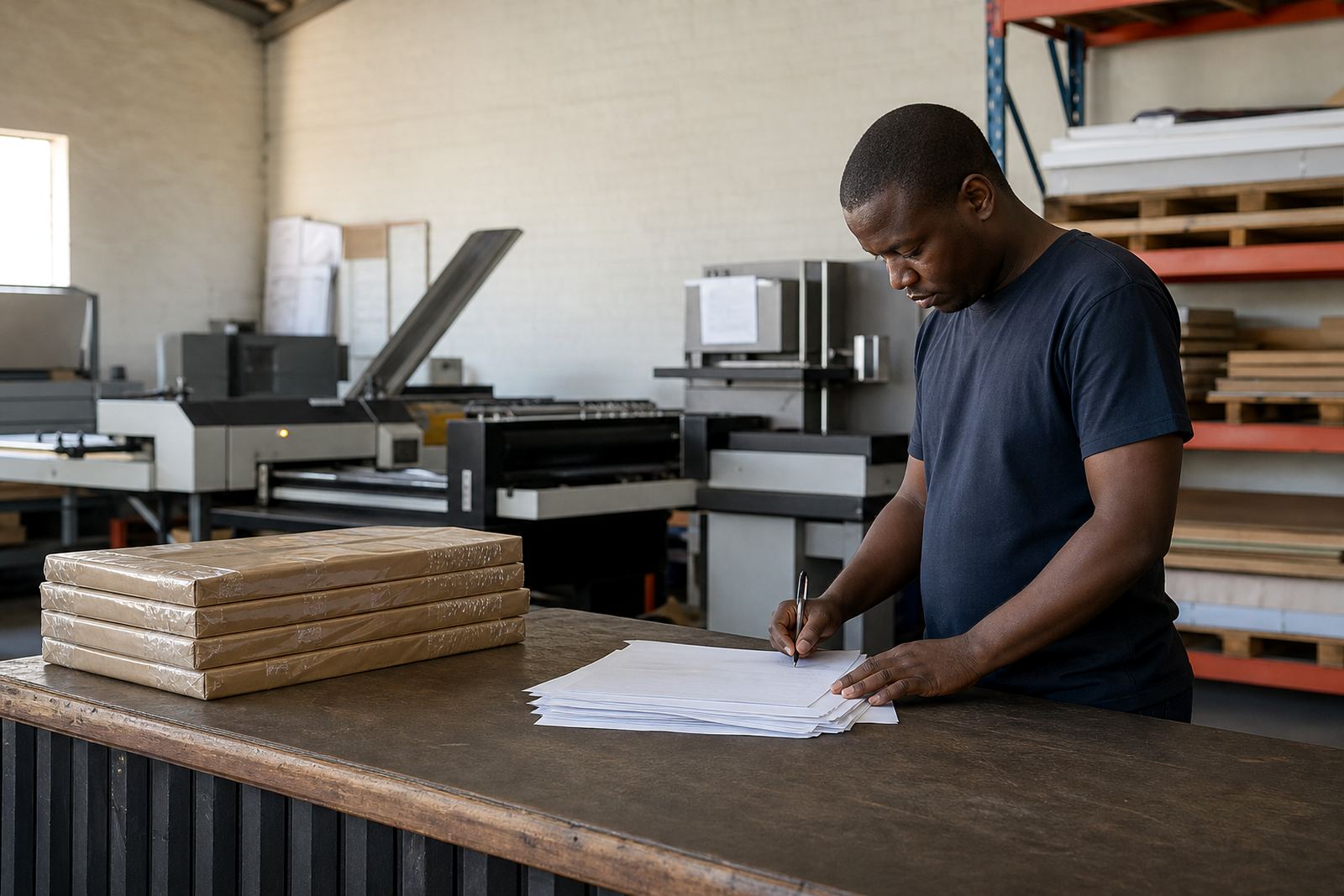
Our Midrand base supports plate making for printers across Gauteng and beyond, with courier delivery to Johannesburg, Pretoria, Durban, Cape Town and Gqeberha. A typical order may come in through the enquiry form, then move through job review, file checking, plate making, trimming, labelling, mounting coordination and dispatch packing. If the printer wants collection, that can be arranged too.
The team working on these jobs includes Sibusiso Mthembu as Managing Director, Ayesha Naidoo in production, Pieter van Wyk on prepress, Lerato Molefe in client services, Morne Jacobs on plate mounting, and Zinhle Dlamini coordinating logistics. That structure helps when a job needs technical advice, a quick check on the layout, or a remake for an urgent press slot.
Single-up jobs may look simple, but they still benefit from a careful hand. A plate that is trimmed neatly, labelled clearly and packed properly is easier for the printer to use on site. It sounds small, but small details add up when the factory is busy.
What printers should send with the job
The smoother the handover, the cleaner the plate result. Even on a basic single-up layout, missing information can slow things down. The file should show the correct repeat, the intended press width, and any special instruction on screening support or proof comparison. If there is a remake, the existing plate details should be supplied so the new work matches the original as closely as possible.
Good job notes also help when a client wants technical advice before making the plate. That may include what stock is being printed, whether the print is for labels or packaging, and whether the job will run on a press that is sensitive to mounting or plate thickness. On coastal jobs, humidity can also affect handling, so packing and storage should be considered from the start.
- Final artwork file and version name.
- Repeat size and layout direction.
- Press details if the printer wants matching advice.
- Any proof notes or corrections.
- Collection or courier preference for dispatch.
With that information in hand, the plate-making process is more predictable and the result is easier to run on press.
A local example from the South African print floor
Picture a label printer in the East Rand handling a new order for a packaged dry goods range. The artwork is already approved, the label size is fixed, and the client only needs one image position per plate. In that case, a single-up layout is often the practical route. There is no reason to crowd the plate with extra repeats if the press only needs one clean image area.
The file is checked, the plate is made, the edges are trimmed, and the plate is labelled for the correct station. Then it is packed for courier delivery back to the printer. If the customer later needs a small artwork correction or a remake, the same structure makes it easier to track what changed and keep the next set aligned with the first.
That is the real value of single-up work. It is not about making the job look clever. It is about keeping the process clear, the pressroom calm, and the finished print consistent from first sheet to last.