
Why Shrink Sleeve Artwork Needs Extra Care
Shrink sleeve artwork behaves differently from a flat label. Once the film is heated, the image moves around the pack, so a tidy layout on screen can still print poorly if the artwork was not prepared with shrink in mind. This is where prepress checks save time and waste, especially for printers handling food, beverage, household and personal care packs.
At our Midrand base, we look at the practical side of the job before imaging starts. That includes panel direction, reading order, seam position and where important text lands after shrinking. A small mistake in orientation can leave a barcode twisted, a logo off centre, or copy sitting too close to the seal area. For label and packaging printers across Gauteng and beyond, that is the difference between a clean run and a costly remake.
- Check how the artwork sits on the sleeve after shrink
- Confirm where the seam will fall on the pack
- Keep critical copy away from high distortion zones
- Allow for the final shape of the container, not only the flat size
Setting Up the File for the Right Direction
Shrink sleeves often need the artwork rotated or mirrored depending on how the press, form and application process are set up. That sounds simple, but it must be done properly because the reading side of the sleeve changes once it wraps around a bottle or tub. If the file is imposed incorrectly, the final sleeve can read backwards or appear upside down on press.
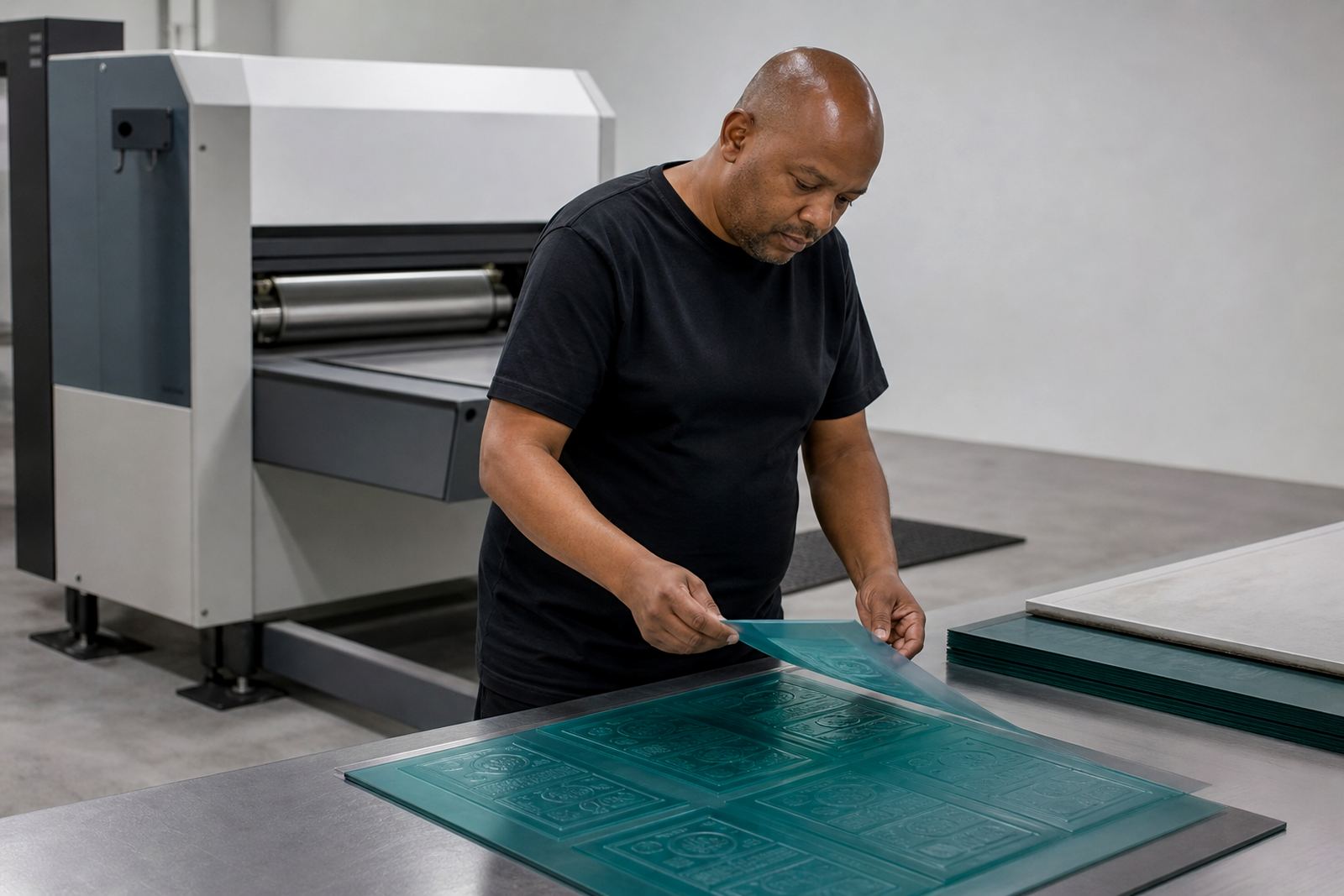
Our artwork preflight and file checking service focuses on the parts that matter before a plate is made. We check image direction, panel placement, bleed, overprints and basic structure so the file is easier to handle in production. For a printer in Durban working on chilled drinks packaging, for example, a sleeve may need extra care around condensation, gloss and copy placement, while a Gauteng job for a household product might need a different seam position to suit the application line. It is the same principle, but the set-up is not the same.
- Confirm the reading direction of every panel
- Allow for top and bottom trim after shrinking
- Check overlap, seam and glue zones where applicable
- Review barcodes and small text at final size
Distortion, Traps and the Shape of the Container
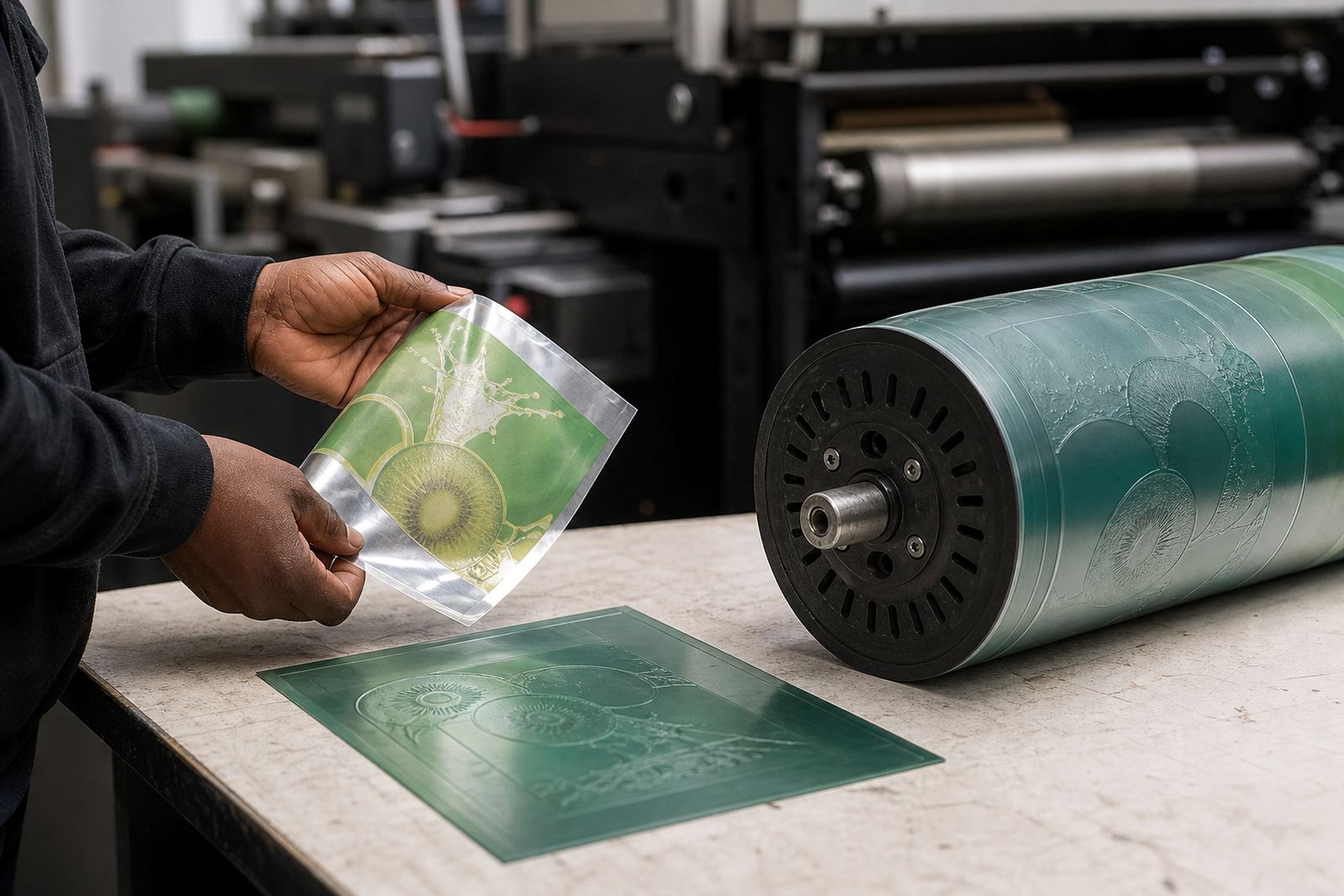
One of the biggest mistakes in shrink sleeve prep is treating a curved pack like a flat carton. When film shrinks, the image changes shape. Round bottles, tapered containers and square jars all behave differently. A design that looks fine on a proof can pull badly on corners or thin out around shoulders and bases. That is why distortion planning must happen before plate work starts, not after the first sample comes back.
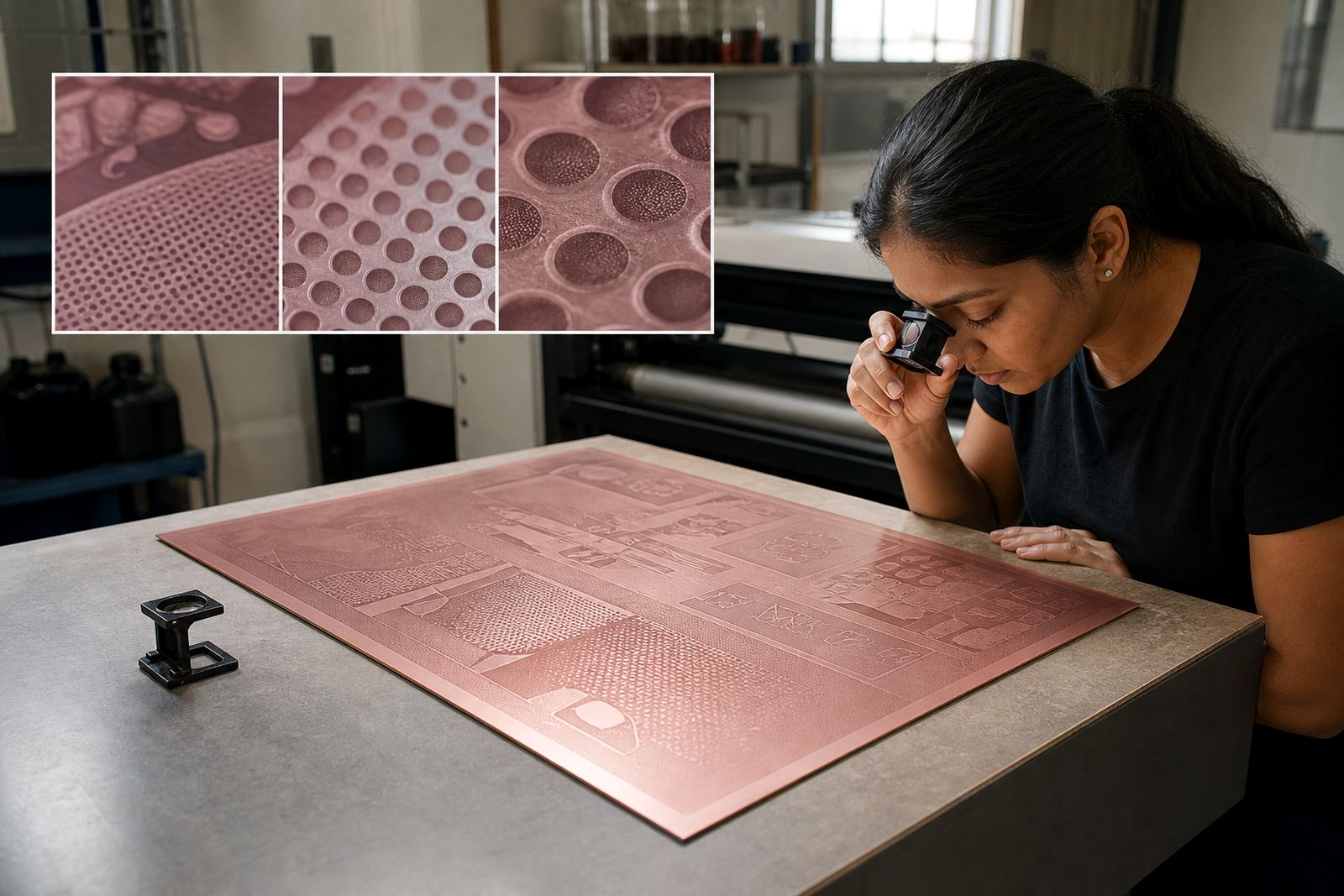
We work with printers who need practical guidance, not guesswork. Where necessary, we check whether the image needs to be stretched in one area or eased in another so the finished sleeve looks balanced on the pack. Small text, hairline rules and fine registration marks can become fragile in shrink applications, so they need more attention than standard labels. There is no one-size-fits-all setup, and that is something many production teams learn the hard way.
Prepress Checks That Protect the Job
Before a plate goes into production, the file should be checked for issues that can affect both the print and the sleeve application. This is particularly important when the job is moving between design studios, printers and application teams. A clean file makes the whole process faster and reduces the chance of rework.
Our technical job advice often covers the basics that are easy to overlook when deadlines are tight. We look at imposition planning, proof comparison and screening support so the plate matches the approved artwork as closely as possible. If a job is being sent from Johannesburg to Cape Town, or from Pretoria to Gqeberha, the file still needs to land correctly at the plate stage. Courier delivery helps move the finished plates, but the prep work has to be right first.
- Compare the proof against the final artwork supplied
- Check colour breaks and line work in fine detail
- Review text size for legibility after shrink
- Confirm that all trims and labels are in the correct position
Local Production Realities Matter
Shrink sleeve prep is not only about artwork theory. In South Africa, printers also deal with power cuts, fluctuating humidity and tight production windows. A plate that is prepared carefully can help reduce press stoppages when the shift is already under pressure. Coastal moisture in places like Durban or Gqeberha can also affect handling and storage, while inland jobs in Midrand or the East Rand may need quicker dispatch to keep the line moving.
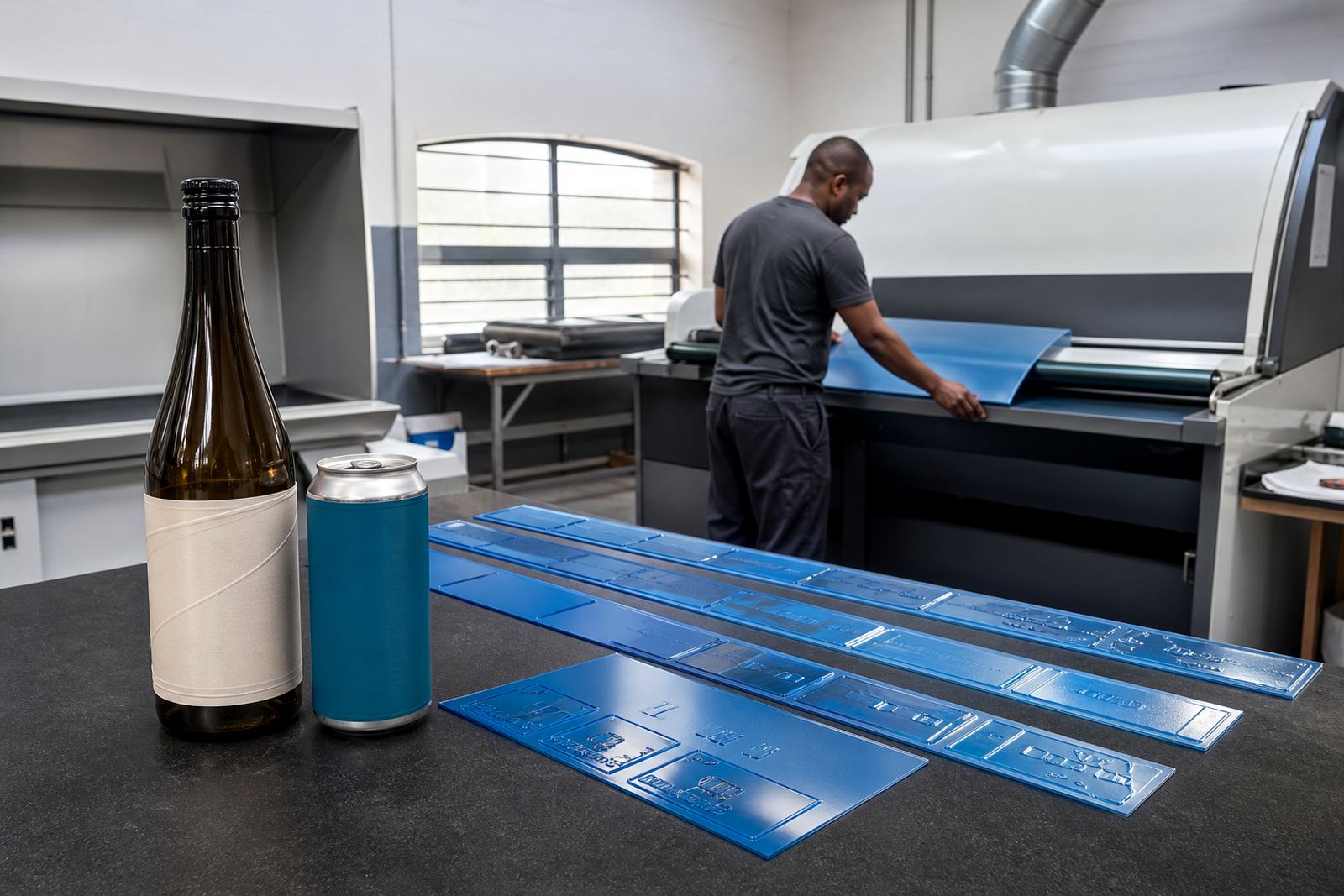
Our dispatch packing, collection coordination and plate labelling services are set up for this kind of practical workflow. A sleeve job for a local drinks pack might need plates trimmed and packed in sequence so the press team can mount them without sorting through loose pieces. That sounds minor, but it saves time when load-shedding has already eaten into the day. Small production details matter, especially when the same line is expected to run more than one format before the week is out.
What a Good Shrink Sleeve Brief Should Include
The best shrink sleeve jobs start with a clear brief. When the printer sends the right information up front, plate-making becomes simpler and the risk of confusion drops. It also helps us advise on whether the file needs extra checks before imaging. A tight brief does not need to be long, it just needs to be complete.
For label and packaging printers, these are the details that help most:
- Container shape, size and fill level
- Seam position and preferred reading side
- Approved proof or reference artwork
- Any copy that must not move during shrink
- Delivery area and required dispatch timing
When these details are clear, we can focus on plate-making, trimming and mounting accuracy instead of chasing missing information. That gives the print team a better starting point and makes the final sleeve easier to apply.
Supporting Printers Across South Africa
Flexo Printer Plates works with printers from Midrand and the surrounding Gauteng areas through to Johannesburg, Pretoria, the East Rand and West Rand, as well as Durban, Cape Town and Gqeberha. Founded in 2007, the team is led by Sibusiso Mthembu, with Ayesha Naidoo, Pieter van Wyk, Lerato Molefe, Morne Jacobs and Zinhle Dlamini supporting production, prepress, client service, mounting and logistics. That mix matters when a shrink sleeve job needs both technical checking and dependable coordination.
Clients usually reach us through the enquiry form on our contact page, and from there we can guide the job through preflight, plate making and dispatch. Whether the work is for a small packaging run or a regular label line, the same principle applies: check the artwork properly before imaging, because shrink sleeves leave very little room for correction later.