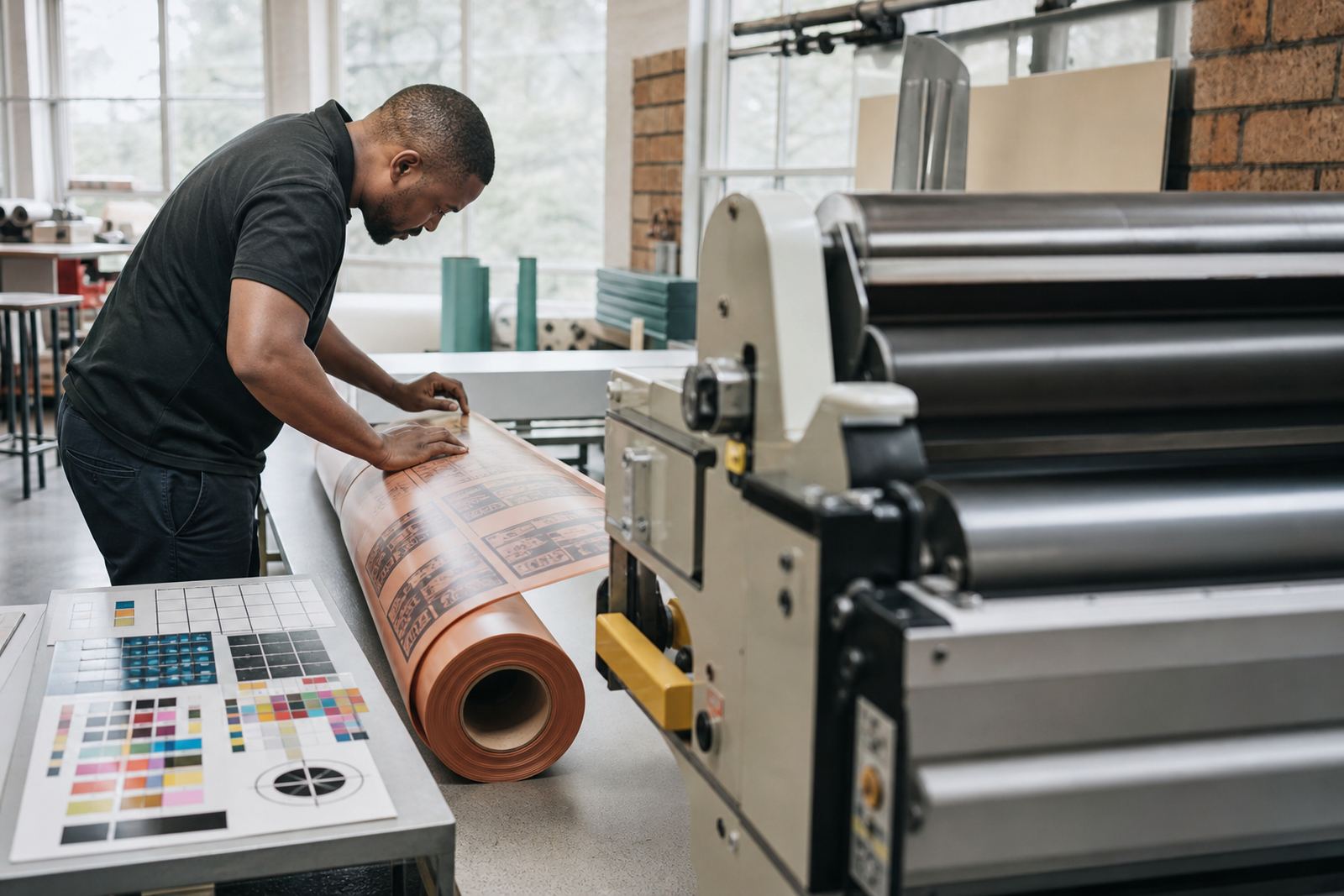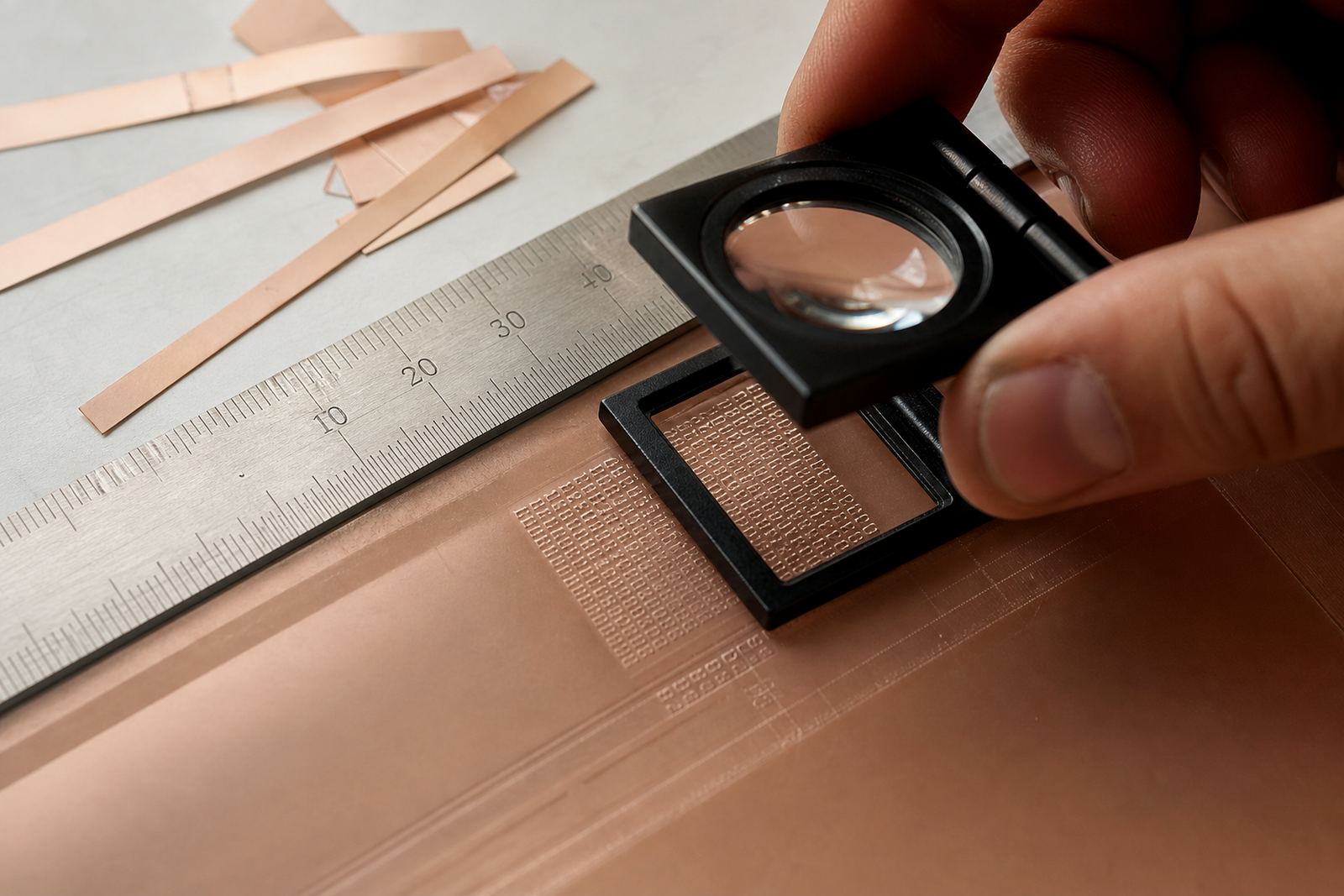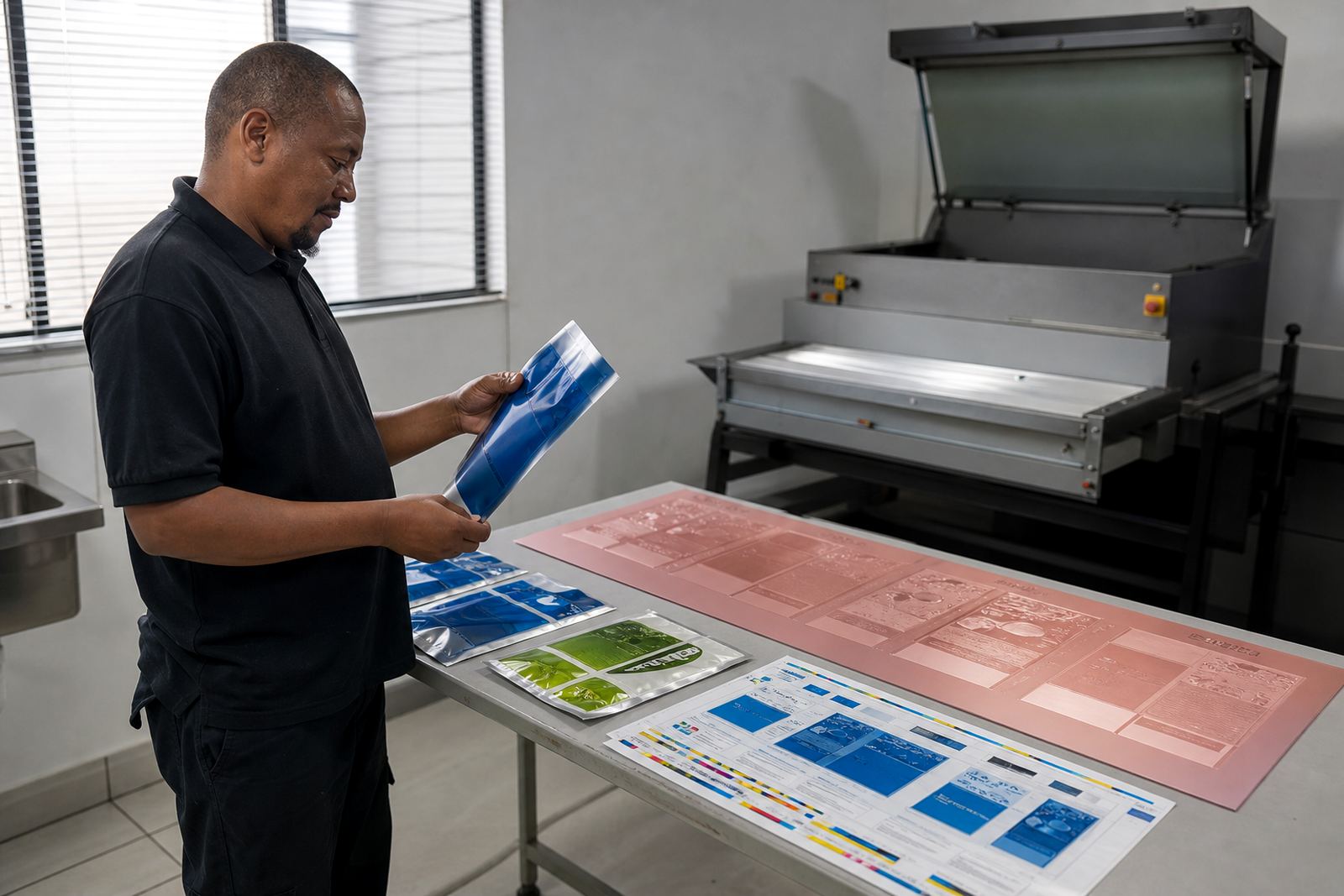

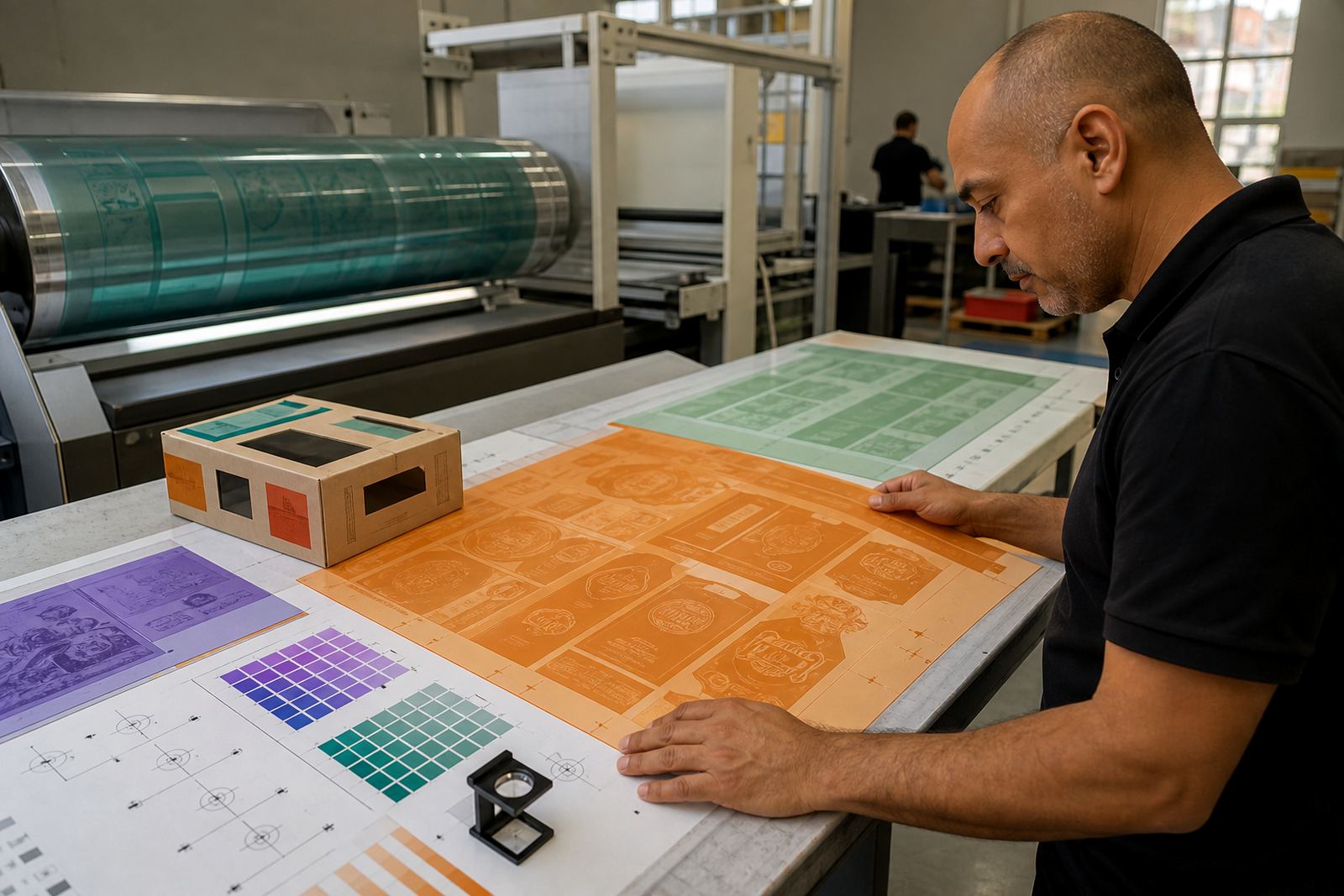
What spot colour plates are used for
Spot colour plates are made for flexo work that relies on named brand colours rather than full process builds. They are often chosen for labels, cartons, sleeves and wraps where the artwork uses clear blocks of colour, fine text, line work or a limited number of inks. In that kind of print run, plate accuracy has a direct effect on the finish on press.
Our plate-making work is based in Midrand, Gauteng, with courier delivery to Johannesburg, Pretoria, Durban, Cape Town, Gqeberha and other areas across South Africa. We prepare photopolymer plates for printers who need repeatable colour areas, tidy solids and proper detail holding on both short and longer runs.
For many jobs, spot colour plates are the practical choice when the artwork is not heavy on photographs or halftone images. They are especially useful where brand colour match and clean overprint behaviour are important, and where the press setup needs to stay predictable from the first sheet to the last.
Plate formats and thickness options
Spot colour plates can be supplied in sizes and thicknesses suited to the job, the press and the substrate. The right choice depends on the print cylinder or sleeve setup, mounting method, ink transfer needs and the level of detail in the artwork. We also check whether the design needs a flat solid area, fine reversals or more open spacing between elements.
- Common flexo plate thicknesses for label and packaging work
- Flat or mounted plate supply depending on press requirements
- Cut-to-size or trimmed sets for easier handling on press
- Plate labelling for job control and repeat ordering
Typical job specs are discussed before production so the plate fits the press and the print intent. If a file has tight solids, hairline type or small knockouts, the layout and relief need to be checked early. That saves time later and avoids avoidable remake work.
For printers in coastal areas such as Durban or Gqeberha, storage and handling also matter because humidity can affect the way plates are kept between runs. Clean storage and sensible packing help keep the plate face in better condition.
Where spot colour plates work best
These plates suit packaging and label work with simple graphics, solid brand blocks, panel borders, product names and short copy. They are used across food labels, household packs, industrial labels, shrink sleeves and carton panels where the design depends on clear colour separation more than tonal images.
They also work well for jobs that are repeated often. If the same artwork is run again, proper file checking and plate records make it easier to remake or replace only the plates needed. That helps when a printer is managing different customer batches, seasonal artwork changes or urgent dispatches. In Gauteng and the major centres, many printers also want quick collection coordination or courier release so plates reach the press room without delay.
- Brand colour panels and solid backgrounds
- Simple packaging layouts with text and line art
- Labels with bold type and clear knockouts
- Repeat orders needing consistent plate reference
Installation, mounting and press setup
Spot colour plates are usually handled as part of the wider press setup, so the way they are mounted and lined up matters. The plate has to sit correctly on the cylinder or sleeve, with clean edges and proper registration against the other colours in the job. If there is a mismatch in plate size or packing, the image can shift and the print result suffers.
We prepare plates with installation in mind and can support the job with technical advice when the file or press setup needs checking. For mounted work, the adhesive and foam build-up must suit the press and the board or film being printed. For unmounted work, the trimming and labelling need to be clear so the operator can fit the plate without confusion.
- Match plate size to cylinder or sleeve measurements
- Confirm register marks, repeat length and plate orientation
- Check mounting tape, foam build-up and edge clearance
- Keep press room surfaces clean to avoid dust transfer
There is no power or gas requirement for the plates themselves. They are supplied ready for use, but they should be stored flat or as advised, away from direct heat, sunlight and damp areas. In premises with load-shedding, dry secure storage is still important so the plates stay in usable condition between shifts.
Care, storage and servicing between runs
Photopolymer plates last longer when they are handled carefully. After a run, the face should be cleaned according to the printer’s own wash-up routine, then dried properly before storage. A plate that is packed away while still damp can pick up marks, distort at the edges or become harder to reuse cleanly.
For busy print shops, a simple system helps: label the job, separate repeat plates from remakes, and keep the plate set in order. If a plate is to be reused, check for wear, swelling, damage at the edges or any contamination from ink or adhesive. Coastal humidity and dusty factory floors can both cause problems if storage is poor.
We also assist with remake support when a plate has been damaged or when the file has changed. That can include checking the artwork again, confirming the imposition and making sure the replacement plate matches the existing set. Small faults can become expensive on press, so it is better to catch them early before the job is printed.
What to check before you place an order
Before ordering spot colour plates, it helps to confirm the final artwork, the substrate, the press format and how the job will be printed. A good file check at the start avoids confusion later and reduces the chance of mismatch between the intended colour areas and the finished plate.
Please check the following before sending the job through:
- Final approved artwork version
- Number of colours and which ones are spot colours
- Repeat length, trim size and bleed allowance
- Press type, mounting method and plate thickness needed
- Any fine text, reversed type or small line work
- Whether a remake, repeat or new plate set is required
Our enquiry form on the contact page is the best way to start. From there, the team can review the file, advise on practical production points and arrange dispatch packing or collection coordination. Sibusiso Mthembu leads the business from Midrand, with support from Ayesha Naidoo, Pieter van Wyk, Lerato Molefe, Morne Jacobs and Zinhle Dlamini across production, prepress, client service, mounting and logistics.
Key facts
| Product type | Flexo photopolymer spot colour plates |
|---|---|
| Typical use | Labels, cartons, sleeves and packaging panels |
| Supply format | Cut-to-size, trimmed, mounted or unmounted |
| Service support | Artwork preflight, file checking, imposition planning, proof comparison |
| Coverage | Midrand base with courier delivery across South Africa |
| Handling note | Store flat, dry and away from heat, sunlight and damp areas |